
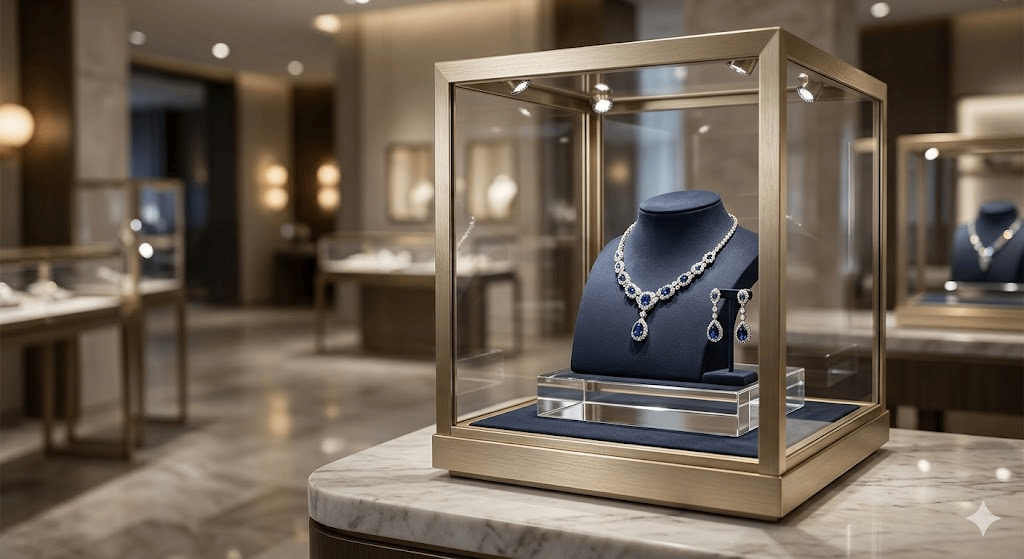
Ask any global procurement manager or wholesale distributor—high-end store planning is always a game of meticulous execution. It is simple, really: the way you present premium merchandise directly dictates global boutique conversion rates. Selecting custom display elements isn’t just a design choice. Perhaps more than anything, it is a calculation of long-term commercial ROI.
Sourcing premium jewelry display cases is a major milestone when expanding retail networks or launching franchise projects. The ultimate goal, of course, is to create an immersive retail environment where every piece of jewelry looks its absolute best. The structural and visual design of your display cases is what silently communicates heritage and worth to the end consumer.
To truly elevate your retail spaces, buyers need custom fixtures that balance structural safety with pure, uncompromised elegance. Using high-grade structural metal allows you to create high-security retail jewelry displays with remarkably ultra-thin profiles. Let’s explore the engineering dynamics that turn your jewelry displays into powerful sales tools.
I. The Geometry of Attraction: Visual Merchandising & Framing
In the world of modern retail space planning, a fundamental truth remains: the display stand should never compete with the merchandise. The goal, after all, is to craft a clean visual flow that lets the cut and sparkle of each piece of jewelry truly breathe. This is where custom geometric metal profiles come in, offering those incredibly slender silhouettes that maximize negative space.
Subconsciously, buyers tend to correlate the structural rigidity of a custom fixture with the authentic monetary value of the goods. If a display stand wobbles or vibrates during an in-store viewing, the perceived value of your jewelry drops instantly. Heavy-gauge, perfectly balanced metal structures provide the physical grounding needed to build tactile trust at the counter.
The Hybrid Layering System
| Display Layer | Premium Material Selection | Strategic Role in Presentation |
|---|---|---|
| 1. Tactile Layer | Premium Velvet / Microfiber Cushions | Soft touchpoint that prevents scratching and cradles the jewelry |
| 2. Contrast Layer | Polished Acrylic Blocks / Tempered Glass | Raises the product focal point and creates elegant light refraction |
| 3. Structural Base | Heavy-Gauge Custom Metal Chassis | Establishes absolute physical stability and a grounded luxury weight |
To build a richer visual narrative, modern showroom designs frequently employ material hybridization in their layouts. However, sourcing metal, acrylic, and leather from different sub-contractors often leads to frustrating dimensional misalignments. At Yishang Display, we eliminate this friction by controlling multi-material physical tolerances to under 0.1 mm. By combining a strong, brushed metal chassis with micro-fiber pads or clear acrylic blocks, you can create a unique, textured landscape. This strategic blending allows retail brands to customize their presentation boards and match specific high-end watch collections.
II. Balancing Security and Elegance in High-Value Sourcing
High-security boutique showrooms often present a unique challenge, demanding robust structures capable of supporting exceptionally heavy glass panels. When you are dealing with thick, anti-reflective security glass, a high-strength metal chassis is almost non-negotiable to resist warping over time. By utilizing premium-grade metal alloys, engineers can keep those vertical frame profiles surprisingly ultra-thin without compromising weight limits.
Precision metal-to-glass and metal-to-wood transitions must be engineered with strict, zero-tolerance flush seals. Eliminating raw gaps between materials ensures there are no leverage points for potential smash-and-grab attempts. This seamless integration enhances loss-prevention capabilities while providing clients an unobstructed view of the jewelry.
Seamless Transition Joint Architecture
- Upper Interface: 15mm Laminated Armored Glass Plate
- Core Security Seal: Zero-Tolerance Flush Mechanical Seal (Concealed connection points)
- Lower Substructure: Micro-welded Custom Metal Frame (No visible fasteners or rivets)
Furthermore, modern interactive displays require clean, integrated wiring paths to support smart biometric locks or RFID sensors. Using hollow-core structural metal tubes allows engineers to run complex wiring systems completely out of the shopper’s sight. This clever design keeps all power tracks hidden, maintaining a clean look and turning your retail jewelry display into a secure system.
III. Thermal Dynamics: Protecting Valuable Inventory from Heat Traps
Lighting, as we know, is the absolute lifeblood of retail presentation, quietly dictating how intensely a diamond or sapphire will sparkle. A layered lighting strategy—ideally with a Color Rendering Index (CRI) of 90 or higher—is vital for true color representation. Think of cooler-spectrum lights highlighting platinum, while warm-spectrum lights softly accentuate gold collections.
But there is a catch: high-powered LED spotlights trapped inside sealed glass cabinets quickly turn into miniature thermal traps. While wood or MDF cabinets trap heat due to incredibly low thermal conductivity (less than 0.2 W/m·K), metal behaves entirely differently. Left unchecked, persistent heat buildup can quietly ruin delicate organic gems, causing opals to crack and pearls to lose their natural luster. Excessive internal cabinet heat can also degrade watches by drying out fine internal lubricants and warping delicate leather linings.
Passive Thermal Management Flow
- Heat Generation: High-CRI LED Spotlights produce intense thermal energy inside the closed showcase air.
- Thermal Conduction: The Custom Aluminum Fixture absorbs this ambient heat instantly due to high-conductivity metal engineering (approximately 200 W/m·K).
- Passive Dissipation: Heat is drawn rapidly away from the delicate gemstones and dissipated through the metal structure, maintaining a cool interior micro-environment.
Aluminum and steel alloys possess exceptional thermal conductivity (approximately 200 W/m·K for aluminum). Using engineered metal display structures as passive heat sinks naturally conducts warmth away from high-intensity light sources. This thermal management system preserves valuable jewelry and prolongs the operational lifespan of expensive LED systems.
IV. Metallurgy Aesthetics: Finishes, Precision, and Compliance
In luxury retail sourcing, the surface finish of a metal stand does something subtle: it sets the emotional tone of the entire showroom. Hand-brushed brass and champagne gold, for instance, offer a classic, warm feel that perfectly complements heritage collections. On the other hand, matte black, gunmetal, or polished chrome provide that high-contrast, sharp backdrop that appeals to contemporary tastes.
| Metal Finish Selection | Visual Profile | Associated Brand Mood & Emotion |
|---|---|---|
| Brushed Brass | Soft metallic grain with warm golden tones | Heritage, Timeless Opulence, Warmth, Tradition |
| Champagne Gold | Subtle, muted pale yellow gold luster | Classic Sophistication, Modern Prestige, Soft Luxury |
| Matte Black / Gunmetal | Non-reflective, deep carbon slate tones | Avant-Garde, Contemporary, High-Contrast, Bold |
| Polished Chrome | Mirror-like, highly reflective silver surface | Futuristic, Hyper-Modern, Sterile Clean, Technical |
Because boutique display cabinets are lit by intense spotlights, any tiny weld defect or paint flaw is instantly magnified. This requires working with manufacturers that enforce zero-defect quality standards at every stage of production. Relying on a partner with an established ISO 9001 quality system guarantees precise joints, flawless welds, and smooth finishes.
Additionally, global procurement managers must verify that all metals and surface finishes comply with international standards. Sourcing RoHS-compliant display fixtures ensures that no harmful chemicals or heavy metals are used during electroplating. In sealed showcases, this compliance prevents chemical outgassing, protecting silver and gold jewelry from tarnishing.
V. The Global Logistics Matrix: Optimizing Shipping and Deployment
Taking a design from a single prototype to a global store rollout is, quite frankly, a logistical nightmare. Fully assembled, oversized frames are not only highly prone to transit damage but also incur astronomical shipping rates. That is precisely why we design modular, knockdown (KD) metal structures—to bypass these exact shipping bottlenecks.
The Road to Global Rollout
| Phase | Core Milestone | Key Execution Details |
|---|---|---|
| 1. Abstract Concept | Designer’s Sketch | Translating the brand’s aesthetic vision into a tangible display concept |
| 2. Engineering Phase | Custom OEM/ODM Prototyping | Stress-testing load-bearing joints, micro-tolerances, and electronics |
| 3. Manufacturing | ISO 9001 Quality Control | Enforcing zero-defect welding, flawless coatings, and certified materials |
| 4. Distribution | Container-Optimized Shipping | Knockdown (KD) flat-packing to maximize volume and prevent damage |
Take a recent project we handled for a global watch retail franchise. By re-engineering their fully welded cases into modular KD frames, we managed to slash their container ocean freight volume by 42%, saving them over $15,000 in shipping costs per store. Flat-packed, container-optimized modular metal frames do more than save space; they protect your bottom line. By manufacturing high-tolerance joints, these fixtures can be assembled quickly on-site by local store staff without specialized tools. This logistical efficiency reduces local setup times, ensuring a smooth and timely global rollout for retail brands.
From a commercial standpoint, choosing the right displays must be guided by the Total Cost of Ownership (TCO). While plastic or wood stands may cost less initially, they chip, scratch, and wear down quickly in busy commercial environments. Investing in long-lifecycle metal fixtures yields a far higher ROI, offering durable performance year after year.
VI. Sourcing Intelligence: FAQ for B2B Retail Procurement
How do you prevent metal display finishes from showing fingerprints and tarnishing in high-traffic stores?
We apply advanced nanometer anti-fingerprint lacquers or electrophoretic protective layers to all custom metal surfaces. This invisible barrier repels finger oils and sweat, making it easy for retail staff to clean the stands with a quick wipe.
Can ultra-thin, minimalist metal frames safely support thick, heavy security glass?
Yes, by utilizing high-tensile structural-grade aluminum and steel alloys combined with precision-engineered corner joints. These slim metal structures distribute weight evenly across the base, preventing structural warping or glass breakage.
What are the essential manufacturing standards required for international boutique store rollouts?
We highly recommend sourcing display systems certified under ISO 9001 for quality control and RoHS for environmental safety. These certifications guarantee consistent manufacturing tolerances, safe materials, and complete compliance with global import standards.
VII. Elevate Your Presentation with Yishang Display
Partner with Yishang Display, the premier choice for custom retail installations, to bring your next boutique concept to life. Contact our B2B procurement team today to discuss your customized OEM/ODM project requirements and receive a competitive quote.