
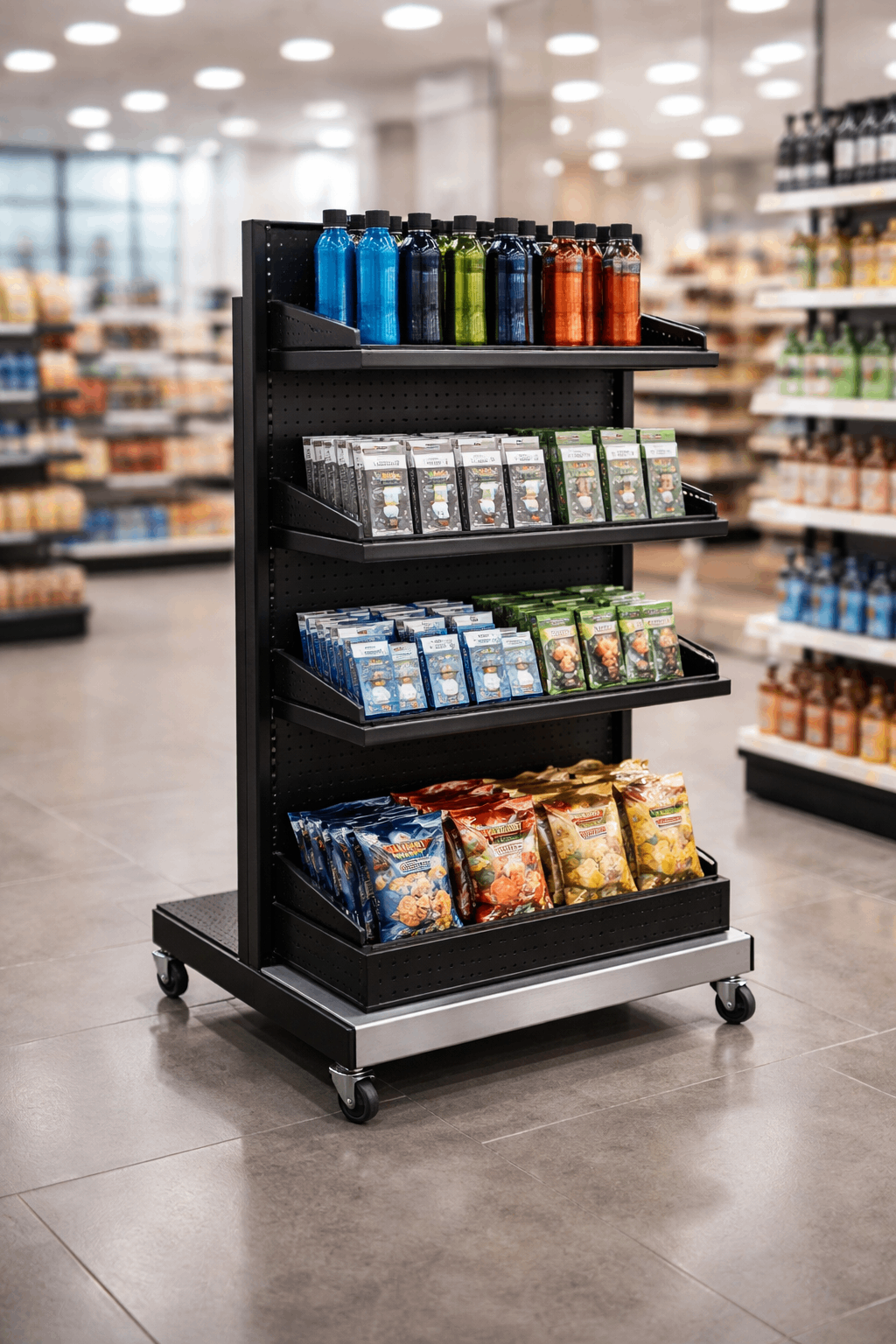
A floor display can look strong in a mockup and still create avoidable problems after rollout.
That is a common issue in wholesale display sourcing. A unit may appear attractive in a presentation, yet prove difficult to assemble, inefficient to ship, or too weak for repeated replenishment. For overseas buyers, floor standing displays are rarely judged by appearance alone. They are judged by whether they remain stable in store, protect product presentation, and stay practical from sampling to bulk production.
This is why custom floor standing projects should be approached as retail execution tools, not just branded fixtures. Buyers usually want more than visual impact. They want a display solution that supports packaging efficiency, lead-time reliability, finish consistency, and merchandising performance across multiple stores or markets.
In that context, the better question is not whether a display looks good by itself. The better question is whether it can support a real retail program without creating extra freight cost, assembly problems, or store-level maintenance issues. That is where thoughtful standing displays design becomes commercially valuable.
What Buyers Usually Mean When They Ask for a Custom Floor Display
In B2B sourcing, “custom” rarely means graphics alone. Buyers may begin with branding, but their next questions are usually more practical. Can the structure support the product weight? Can it ship efficiently? Is it easy to assemble? Can the approved sample be reproduced consistently in mass production?
That is why a serious custom display project should connect product requirements, store conditions, and logistics planning from the beginning. A display for bottled beverages needs different support from one built for literature, automotive accessories, or pet products. A fixture planned for six weeks of promotion is also very different from one expected to stay in chain stores for a much longer cycle.
For overseas procurement teams, this early definition reduces sourcing risk. Clear requirements make it easier to compare suppliers, estimate cost drivers, and avoid redesign later. A manufacturer that understands those issues is usually easier to evaluate than one that talks only about style.
Why the Retail Goal Should Define the Design Brief
A floor display performs better when its job is clear before the design direction is fixed.
Many projects begin with appearance first and only later address weight capacity, carton size, display lifespan, or refill logic. For wholesale buyers, that usually leads to unnecessary revision rounds. A launch display, a permanent branded unit, and a short seasonal promotion do not require the same structure, the same material balance, or the same packaging strategy.
This is why the retail goal should define the design brief from the start. Buyers looking for impactful retail displays are usually not searching for a generic format. They want a display that fits a specific product type, store environment, budget range, and rollout plan. Once that purpose is clear, design decisions become easier to cost, easier to approve, and easier to scale.
1. Visual Clarity Matters More Than Visual Noise
The first task of a floor display is to be noticed. The second task is to make the product easy to understand.
This sounds simple, but many concepts fail because they focus too much on decoration and not enough on communication. A strong header, disciplined branding, and clear product zones can help stop the shopper. But once attention is won, the display still needs to show the product range clearly and support quick comparison.
For buyers, this matters because a display that confuses shoppers often underperforms even when production quality is acceptable. Good display stands should support product visibility, shelf branding, and easy product recognition. Brand messaging needs to be clear without taking attention away from the merchandise.
A practical rule is that the shopper should understand the offer within seconds. If the unit carries too many graphic elements, too many SKUs in one sightline, or too much text, the display starts to work against the product. Clear communication usually performs better than visual overload.
2. Structure and Material Choice Shape Total Cost, Not Just Appearance
Material choice is one of the most important procurement decisions in a display project. It affects strength, lifespan, finish quality, shipping weight, and replacement risk.
For short campaigns, lighter materials may be commercially reasonable. For longer-term programs, especially where products are heavier or replenishment is frequent, a stronger structure is usually the safer option. This is one reason metal remains a preferred choice in many professional retail programs.
For Yishang Display, this is where manufacturing value becomes practical rather than promotional. Metal structures typically offer better load-bearing performance, stronger dimensional stability, and more reliable repeated use. In categories such as beverages, hardware, automotive accessories, fashion accessories, and pet supplies, that stability helps protect both product presentation and brand perception over time.
Other materials still have clear uses. Acrylic can improve visibility and support a cleaner visual language. Wood can add warmth in premium settings. Cardboard can be effective for short-term promotions. The key is to match the material to the real use cycle instead of choosing based on appearance alone.
| Material | Often suitable for | Main advantage | Main trade-off |
|---|---|---|---|
| Metal | Long-term or heavy-duty programs | Strength, durability, repeated use | Higher initial fabrication cost |
| Acrylic | Premium visibility-led displays | Clean look, strong product visibility | Less suitable for heavier loads |
| Wood | Lifestyle and premium merchandising | Warm appearance | Heavier and less flexible for some export programs |
| Cardboard | Short promotions | Lower cost and light weight | Shorter lifespan |
A buyer comparing quotations should look beyond unit price. A lower-cost structure may become less competitive if it damages easily, ships inefficiently, or requires frequent replacement. In sourcing terms, total use value is often more important than ex-works price alone.
3. In-Store Usability Affects Sell-Through and Daily Execution
A display is not successful only because it stands up well. It also needs to work well for the people using it.
From the shopper’s side, the product should be easy to see, reach, and remove. From the store team’s side, the unit should be easy to refill, clean, and maintain. These details can look minor during concept review, yet they have a direct effect on sell-through and store compliance.
For example, when the front row is too deep, products become difficult to pick up neatly. When shelves are too close together, larger packs or irregular packaging start to look crowded. When key items are placed too low, visibility drops. These are not cosmetic issues. They influence purchasing decisions by affecting convenience and confidence.
This is why the key elements to create impactful retail displays are not only visual. Access, spacing, angle, and refill logic all matter. Buyers often respond better to display concepts that look commercially realistic rather than overdesigned, because realistic concepts tend to scale better in market.
4. Assembly, Packaging, and Rollout Practicality Matter Earlier Than Many Teams Expect
A display can be well engineered and still become a weak sourcing choice if it is difficult to ship or install.
This is especially true in export business. If a program covers dozens or hundreds of stores, even small inefficiencies in carton size, packing method, or assembly time can multiply quickly. A display that is easy to assemble may reduce store labor. A design that packs efficiently may lower freight cost and warehouse pressure.
That is where foldable floor standing options or flat-pack structures can become attractive. They are not the right answer for every category, but they can help when buyers need lower shipping volume, easier storage, and faster distribution. For heavier products or longer-term use, a more rigid structure is often the better fit.
| Sourcing concern | Why buyers care |
|---|---|
| Easy to assemble | Faster store setup and fewer installation issues |
| Packing efficiency | Lower freight cost and easier warehouse handling |
| Replenishment access | Better shelf appearance over time |
| Sample-to-bulk consistency | More reliable approval-to-production transition |
| Lead-time reliability | Better planning for launches and promotions |
| Finish consistency | Stronger brand presentation across locations |
For procurement teams, this is often one of the clearest ways to evaluate a supplier. A manufacturer that can explain how the display will be packed, assembled, and maintained usually appears more credible than one that focuses only on visuals.
5. The Best Displays Are Designed for the Program, Not for a Generic Category
A common market problem is treating every display brief as though the same formula will work everywhere.
In reality, the right design depends on the retail objective, product type, shipment plan, and intended lifespan. A short seasonal promotion needs different priorities from a long-term fixture. A premium product display needs different detailing from a high-volume rollout. A supplier that explains those differences gives buyers more useful information than one offering a broad promise of customization.
This is also where working with a manufacturer becomes more valuable. Buyers do not only need fabrication. They often need guidance on what affects cost, what can be simplified, and which details are worth protecting because they influence in-store performance. A good development process helps narrow those decisions before time and money are spent in the wrong place.
For Yishang Display, that usually means discussing structure, quantity, shipping method, finish, and display lifespan in the same conversation. It keeps the project practical and helps ensure the final unit is aligned not only with brand requirements, but also with sourcing realities.
Why Metal Often Becomes the Preferred Choice in Repeated-Use Programs
Metal is not the only display material, but it often becomes the preferred one when the program demands higher durability.
That is because metal structures are usually better suited to repeated replenishment, heavier merchandise, and longer service cycles. They also allow more flexibility for hooks, baskets, shelves, sign frames, and mixed-material combinations. For buyers who need dependable performance rather than a short-lived promotional unit, that structural margin matters.
A well-designed metal display can still look refined. It does not need to feel industrial. Powder-coated steel combined with acrylic panels, wood accents, or printed graphics can create a finish that is both durable and brand-appropriate. The advantage is that the display keeps its shape and function more reliably during use.
For sourcing teams, that translates into fewer surprises after rollout. It supports a more stable retail presentation and can reduce the hidden cost that comes with early wear, returns, or replacement orders.
What Wholesale Buyers Usually Check Before Sending an Inquiry
By the time a buyer reaches a supplier’s blog, they are often screening for reliability as much as design capability.
They want to know whether the manufacturer understands product weight, fixture lifespan, export packing, finish consistency, and the gap between a showroom sample and a repeatable production order. In other words, they are not only asking whether the supplier can make a display. They are asking whether the supplier can make the right display with fewer surprises.
This is why useful B2B content should do more than describe product use or visual trends. It should help procurement teams compare options, understand trade-offs, and identify what affects total cost and project risk. When a supplier explains material choices, assembly logic, rollout practicality, and where metal structures create a stronger long-term advantage, the content becomes more relevant to real sourcing behavior.
For buyers looking for a supplier partner rather than only a quotation, practical clarity is usually more convincing than broad claims. It shows how the manufacturer thinks before the first sample is requested.
Conclusion
The most effective floor standing display programs are rarely the most complicated. They are the ones that connect visual clarity, structural reliability, in-store usability, and rollout practicality in one coherent solution.
For overseas wholesale buyers, the real value of custom development lies in reducing uncertainty. The display should fit the product, suit the store environment, support the intended lifespan, and remain practical to ship and assemble. When those factors are considered early, the final result is more likely to be commercially successful.
If you are evaluating options for a new retail display project, Yishang Display can help assess structure, material direction, and production practicality based on your product and rollout needs. Share your concept or product details with us, and we can discuss a more suitable display approach for your program.
Frequently Asked Questions
What makes a floor display effective for wholesale retail programs?
An effective display combines visual clarity, stable structure, practical packing, and easy replenishment. Buyers usually look for a design that works well in store and remains reliable from sample approval to bulk order.
Is metal always better than other display materials?
Not always. Metal is often better for repeated use, heavier products, and longer-term placement. For short promotions, cardboard or mixed-material formats may be more cost-effective.
Are foldable floor standing displays a good option?
They can be. Foldable structures are often useful when lower freight cost, easier storage, and faster deployment are priorities. They are less suitable when heavier products require stronger structural support.
What should buyers confirm before requesting a quotation?
It helps to confirm product dimensions, target quantity, intended display lifespan, store environment, shipping method, and whether the unit should be easy to assemble or shipped flat-packed. Clear early information usually leads to better quotations and fewer revisions.