
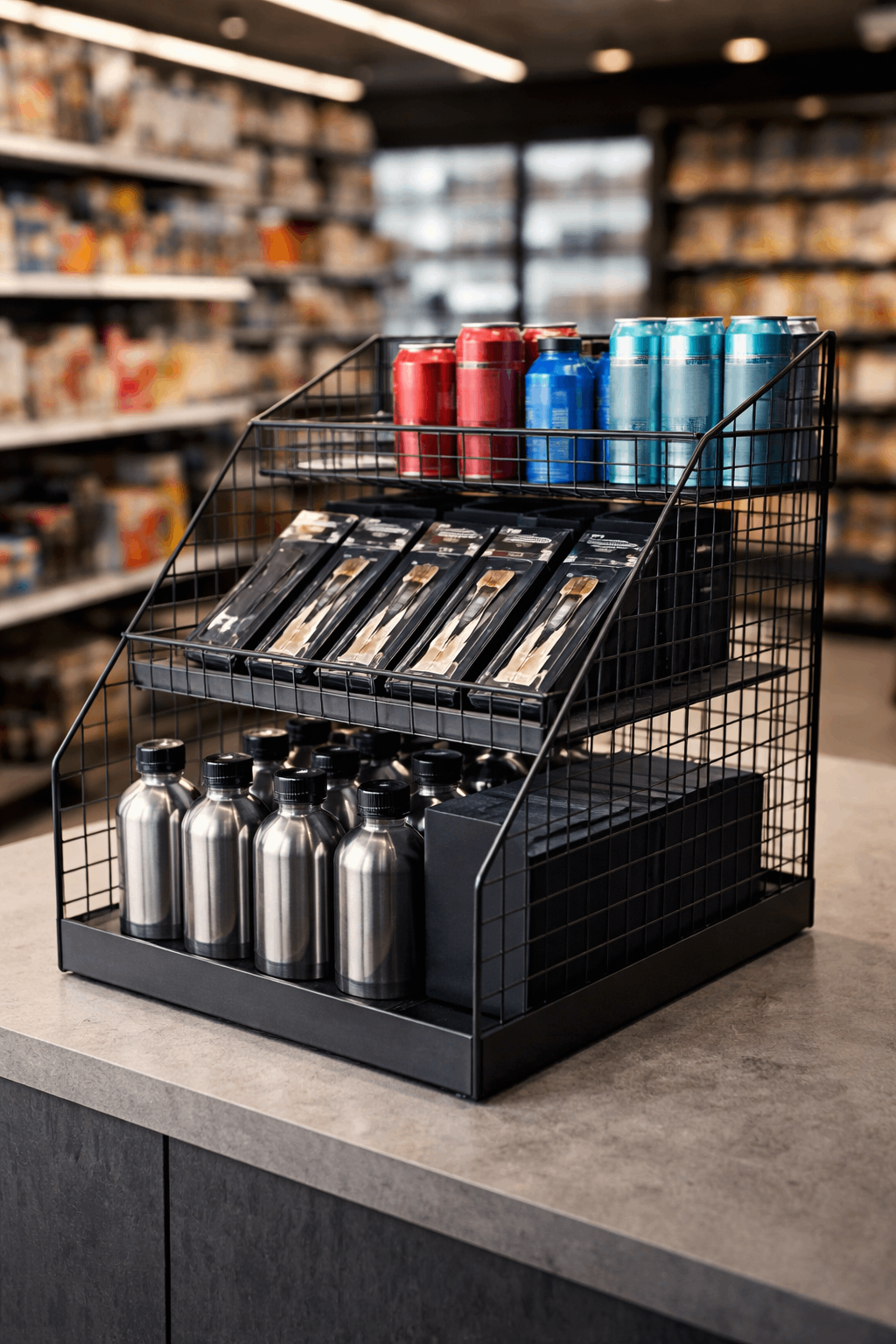
When wholesale buyers search for a custom counter display supplier, they are usually not looking for design theory. They want to know whether a display will fit the counter, protect product presentation, survive repeated handling, and remain consistent across production batches. In other words, they are making a sourcing decision as much as a merchandising one.
That is why custom counter display stands design should be evaluated through retail use, production repeatability, and total project value. A display that looks attractive in a mock-up can still fail after rollout if the structure is unstable, the pickup angle is awkward, or the finish wears too quickly. For importers and distributors, these are not minor details. They affect retailer acceptance, replacement rate, and reorder confidence.
At Yishang Display, the goal is to help buyers assess those practical factors clearly. This article is written for overseas sourcing teams, distributors, importers, and wholesale buyers who need a more reliable way to compare counter display stands, evaluate custom countertop display stand manufacturer capabilities, and select a structure that works in real stores.
Why Counter Display Stands Matter at the Point of Purchase
A checkout counter is one of the few places in retail where product visibility and purchase intent come together in a very short moment. Shoppers do not spend long comparing options here. They notice what is clear, easy to identify, and simple to take. That is why display stands design at the counter follows a different logic from floor fixtures or wall shelving.
For wholesale buyers, this matters because a good counter display stand supports both sell-through and retailer acceptance. It needs to hold products neatly, stay stable during daily use, and avoid taking more space than the retailer is willing to give. If the structure creates clutter or slows down replenishment, even a strong product can lose visibility at the point of sale.
Many traditional display stands fall short for this reason. Some are too large for the actual counter footprint. Others look fine in a showroom but lose order after repeated customer handling. In a crowded retail environment, these weaknesses affect not only presentation but also the buyer’s confidence in long-term use.
Why Many Counter Displays Fail After Store Rollout
A display often fails not because the original concept was unattractive, but because it was not designed around what happens after installation. In real stores, products are picked unevenly, staff restock quickly, and the display is touched many times every day. A structure that works only when fully loaded is rarely a strong commercial solution.
This is a common issue with counter display stands that were designed mainly for visual approval. Product dimensions may fit the tray or hook, but the total load may still be poorly distributed. A base may look compact but become unstable when stock sells down from one side. A tray may hold more units, yet make product pickup harder. These are the kinds of failures that matter to buyers because they turn into complaints, replacement pressure, or lower in-store performance.
From a procurement perspective, supplier content is more useful when it explains these real failure points. It shows the manufacturer understands retail use, not just concept presentation.
A Good Custom Counter Display Is Purpose-Built, Not Just Customized
The word “custom” is often overused in supplier content. Adding a logo panel, changing a color, or adjusting the size slightly does not automatically create a better display. Effective custom counter display stands design starts with the product, the retail setting, and the expected handling conditions.
A boxed personal-care item, a bottled beverage add-on, and a hardware accessory do not behave the same way on a counter. Product weight, pack rigidity, SKU count, and refill frequency all affect how the display should be built. A useful custom solution therefore comes from matching the structure to the product rather than simply decorating a standard stand.
For wholesale buyers, this is also a strong qualification signal. A supplier that asks about product dimensions, unit weight, target counter size, destination market, and campaign duration is more likely to deliver a structure that works in stores. That kind of discussion is more valuable than broad claims about being able to “customize anything.”
Why a Metal-First Approach Often Delivers Better Wholesale Value
For many long-term retail projects, metal remains one of the most practical materials for retail display stands and custom POS display stand programs. The reason is not only strength. Metal gives the designer more control over geometry, balance, and long-term stability. Tray angles, shelf spacing, hook placement, and base weight can all be managed more precisely when the structure is built around metal components.
This matters in categories where the display carries heavier items, compact packs in higher quantities, or products that are picked up frequently. In these situations, product display stands made from metal often hold their shape better and maintain a cleaner presentation over time. That is especially relevant for convenience retail, pet products, hardware accessories, personal care items, and small boxed goods.
Metal can also support better consistency between approved samples and repeat production. For overseas buyers, that is a commercial advantage. A display that is easier to standardize across orders can reduce rejection risk, improve rollout consistency, and support stronger buyer confidence in repeat programs. This is one reason many buyers looking for a metal counter display stand supplier or wholesale counter display stands partner pay close attention to fabrication control, finish consistency, and export packaging.
The Design Variables That Matter Most in Real Stores
A high-performing counter display stand does not succeed because one material choice solves everything. It works because several practical variables are aligned from the beginning. Product weight is one of the first. A single unit may be light, but the total load becomes significant when dozens of pieces are displayed together. Product packaging also matters because some packs slide, lean, or collapse visually once inventory drops.
Product Weight and Counter Footprint
Counter footprint is just as important. A display can fit physically on a counter and still fail commercially if it blocks the cashier, interrupts shopper sightlines, or looks oversized for the available surface. Good counter display stands use space efficiently while keeping products easy to see and easy to reach.
Product Accessibility and Pickup Comfort
Product accessibility is another major factor. If customers need to move other items to remove one unit, conversion usually falls. Tray depth, front-edge shape, hook distance, and pickup angle all influence how natural the interaction feels. Buyers who compare display stands only by appearance often miss how strongly these details affect real store performance.
Base Stability and Finish Durability
Base stability and load distribution are also critical. In everyday retail use, the display rarely stays perfectly full and balanced. Products sell faster from one section, staff refill in a hurry, and customers put units back in inconsistent ways. A stable base and intelligent load distribution help the structure remain neat under changing conditions.
Finish durability deserves equal attention. In many projects, scratches and coating wear become visible before the structure itself fails. A durable powder-coated finish often gives the display a longer visual life and helps protect brand presentation in busy, high-touch environments.
| Design Factor | Why Buyers Should Care | Practical Retail Impact |
|---|---|---|
| Load capacity | Affects safety and product support | Helps the stand keep shape under repeated use |
| Counter footprint | Influences retailer acceptance | Prevents disruption at checkout |
| Product accessibility | Supports pickup comfort and impulse purchase | Makes items easier to take |
| Base stability | Reduces wobble and complaints | Maintains order during partial sell-through |
| Finish durability | Protects shelf appearance | Reduces visible wear in high-touch stores |
| Restocking logic | Improves staff efficiency | Keeps displays neat with less effort |
Where Metal Stands Out, and Where Other Materials Still Make Sense
A sourcing discussion is more credible when it is balanced. Metal is not automatically the best option for every project. If a campaign is short, budget-sensitive, and intended for limited use, corrugated or other lightweight materials can still be practical.
Even so, metal usually stands out where buyers face the most pressure: repeated orders, longer campaigns, higher-touch environments, heavier products, and stronger presentation requirements. In these situations, display stands options should be compared by lifecycle value rather than day-one appearance alone.
That is why many buyers eventually compare metal with acrylic or corrugated based on operating performance. The better question is not which material looks attractive at launch, but which one continues to look acceptable and function reliably after weeks or months in stores.
| Material | Best Fit | Main Advantage | Main Limitation |
|---|---|---|---|
| Metal | Long-term campaigns, heavier products, premium retail programs | Strong structure and better lifecycle value | Higher initial cost |
| Acrylic | Lightweight items and cleaner visual presentation | Good transparency | Lower scratch resistance and lower load reserve |
| Corrugated board | Short-term promotions and low-cost launches | Fast and economical | Shorter lifespan and weaker durability |
What Wholesale Buyers Usually Check Before Sending an Inquiry
Wholesale buyers often visit supplier websites with a shortlist mindset. They are usually looking for enough evidence to decide whether a supplier is worth contacting. That means they respond better to clear content about product fit, structure, finishing quality, export packaging, and production consistency than to generic promotional language.
Many buyers also need to explain their choice internally. A sourcing manager may need to justify one supplier to a merchandising team or purchasing director. Content that clearly explains how the display handles load, how it is packed for export, and how it maintains consistency across orders makes that internal discussion easier.
It also helps when the supplier shows awareness of recognized manufacturing discipline. References to quality systems such as ISO 9001 or material compliance expectations such as RoHS do not replace factory audits or sample review, but they do reduce uncertainty during early qualification.
In practice, buyers often shortlist a custom point of sale display stand manufacturer faster when the content explains not only what can be made, but also how the project will move from product data to sampling, bulk production, and shipment. That kind of clarity supports both trust and faster internal approval.
| Buyer Checkpoint | What It Reveals | Why It Matters in Sourcing |
|---|---|---|
| Product-fit questions | Whether the supplier understands real use | Reduces mismatch risk |
| Discussion of finish and structure | Whether the supplier thinks beyond appearance | Supports quality and durability |
| Export packaging awareness | Whether the supplier understands landed cost pressure | Improves shipping efficiency |
| Bulk consistency focus | Whether repeat orders are manageable | Helps multi-market rollout |
| Compliance and QC awareness | Whether early qualification will be smoother | Supports internal approval |
Common Mistakes That Increase Procurement Risk
One common mistake is selecting a display based only on a visual render. A front-facing mock-up may hide weak pickup zones, oversized headers, difficult replenishment, or poor balance. Buyers who evaluate only the design concept may miss the practical issues that show up after rollout.
Another mistake is treating low unit price as the same as low project cost. If a display damages easily, takes too long to assemble, or loses appearance quickly, the total cost increases through replacement orders, retailer complaints, and weaker shelf impact.
A third mistake is ignoring export and rollout logic. A display that works in a local sample review may still be inefficient if it packs poorly, uses too many loose parts, or creates inconsistent assembly in destination markets. For international buyers, transport efficiency and repeatable setup are purchasing factors, not side issues.
A fourth mistake is comparing suppliers only by sample appearance. For wholesale programs, buyers usually get better outcomes when they compare sample accuracy, finish durability, packing method, and repeat-order stability together rather than judging the project by visuals alone.
Designing Backward from Retail Use Is Usually the Smarter Route
One of the most practical ways to approach display stands design is to start from the retail situation and work backward. Instead of asking what shape looks most impressive, it is more useful to ask where the display will sit, how products will be picked up, how often it will be refilled, and how it should look after part of the stock has sold.
This approach usually leads to stronger decisions on size, structure, material thickness, tray configuration, branding area, and packing method. It also makes collaboration between buyer and supplier more efficient because both sides are discussing function, not only appearance.
For wholesale projects, this often translates into fewer revisions, more accurate samples, and smoother volume production. In practice, it is what separates a useful custom program from one that is merely attractive in concept.
Final Thoughts
A well-designed counter display stand can make a meaningful difference in a crowded retail space, but only if it is built around real usage conditions. For wholesale buyers, the strongest solutions are rarely the most decorative ones. They are the ones that balance visibility, accessibility, durability, production consistency, and shipping practicality.
That is why a metal-first approach often makes sense for serious retail programs. It supports stronger structure, more reliable finishes, and better repeatability across bulk orders. When custom counter display stands design is treated as a purchasing and merchandising decision rather than only a visual exercise, the result is usually a better retail tool and a safer sourcing outcome.
If you are reviewing a new counter display stand project, Yishang Display can help assess your product, target retail environment, quantity plan, and shipment needs to recommend a more suitable metal display solution. Feel free to send your product details or drawings for discussion.
Frequently Asked Questions
What makes metal counter display stands suitable for wholesale programs?
Metal counter display stands are often a strong fit for wholesale programs because they combine structural durability, stable presentation, and better repeatability in production. They are especially useful when the project involves heavier products, longer campaigns, or multi-store rollout.
What information should a buyer prepare before requesting a quotation?
It helps to prepare product dimensions, unit weight, packaging type, target counter size, estimated order quantity, shipping destination, and the expected campaign duration. This allows the supplier to recommend a more accurate structure and packing solution.
Are lower-cost materials always a better choice for promotion?
Not necessarily. Lower-cost materials can work for short-term campaigns, but they may create higher replacement rates or weaker in-store appearance. The better choice depends on campaign length, handling intensity, and the image the brand wants to maintain.
What matters most in a custom counter display for retail use?
The key factors are usually product visibility, pickup comfort, counter footprint, base stability, finish durability, and restocking efficiency. These points affect both shopper interaction and retailer acceptance.
How can a buyer compare suppliers more effectively?
A useful method is to compare how each supplier discusses structure, finishing, export packaging, repeat-order consistency, and project communication. Suppliers that explain these details clearly usually provide a better basis for evaluation than those that focus only on visuals or generic claims.
What products are often a good fit for metal counter display stands?
Metal counter display stands are often a strong fit for hardware accessories, bottled or heavier packaged items, pet products, personal care goods, and small boxed products sold in convenience or checkout areas. These categories usually benefit from better load support, cleaner presentation, and stronger long-term stability.