
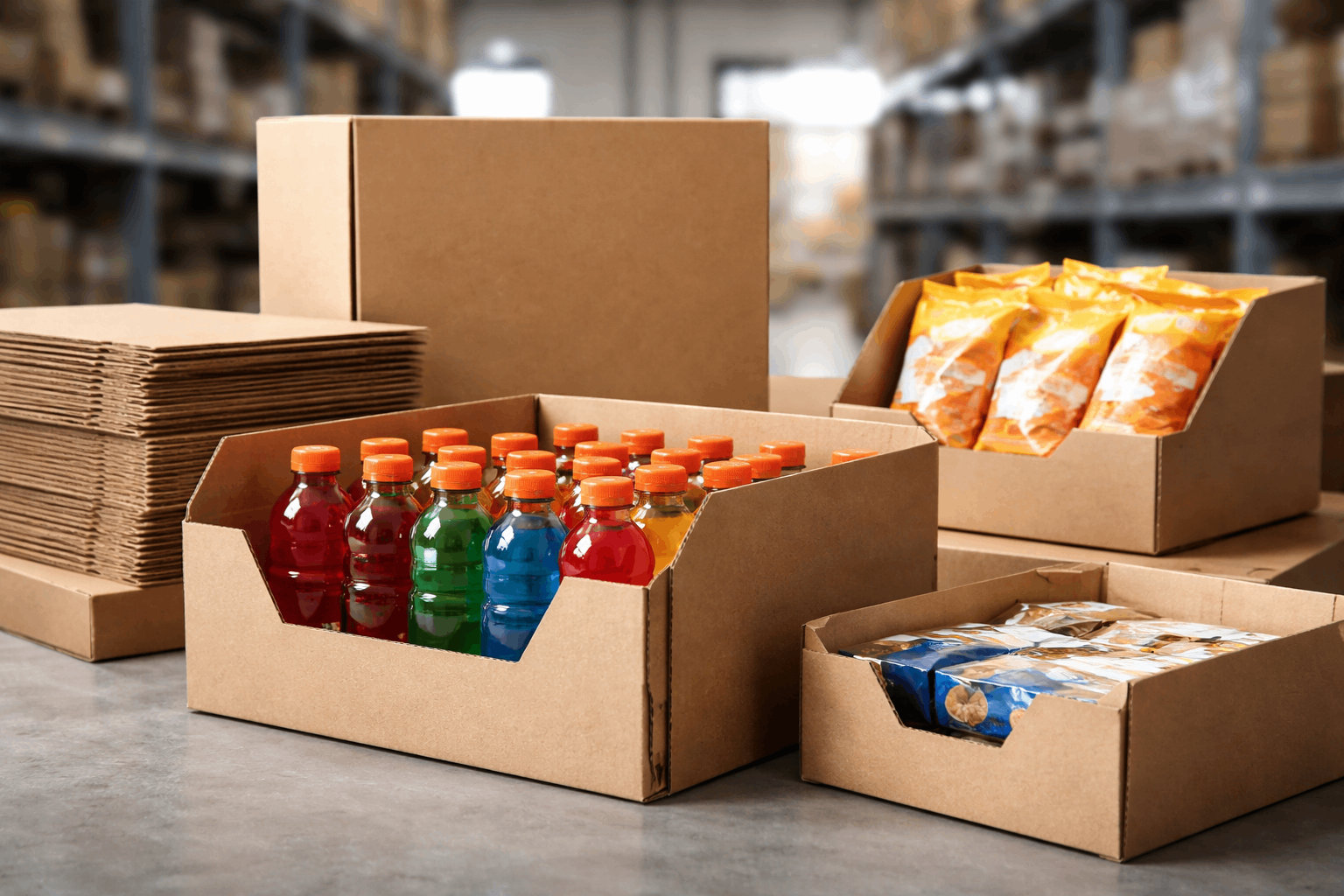
Overseas wholesale buyers rarely search corrugated and cardboard retail store packaging out of general curiosity. In most cases, they compare structures for a live project. They want to know which option better supports shipping, shelf setup, replenishment efficiency, product weight, and display duration.
That is why this topic matters in B2B procurement. The decision does not simply shape packaging style. It influences landed cost, store execution, damage risk, replenishment efficiency, and how consistently products appear across different retail locations.
For buyers managing retail rollouts, private label programs, or export orders, a more useful question is not “Which packaging sounds better?” It is “Which structure will perform better in the actual channel?”
What Overseas Wholesale Buyers Usually Want From This Topic
A wholesale buyer does not read a supplier article the way a consumer reads brand content. Procurement teams usually scan first, then read more closely only when the article looks practical. They check whether the supplier understands retail operations, not just packaging terms.
That means they watch for very different signals. They want the article to address real project factors such as shipping stress, setup time, refill frequency, display life, and in-store handling. When content stays too general, it often feels promotional rather than useful.
Search behavior reflects the same pattern. Buyers often use terms such as retail display packaging, display packaging boxes, shelf-ready packaging, retail-ready packaging, POP packaging, PDQ packaging, or custom printed retail packaging because they evaluate use cases, not because they browse for inspiration.
Why Buyers Compare Corrugated and Cardboard So Often
Buyers often compare corrugated and cardboard because both appear frequently in retail product packaging. But procurement teams should not treat them as interchangeable. Each usually suits a different retail task.
Corrugated includes a fluted center layer, which improves cushioning and compression resistance. That makes it more suitable for grouped shipments, shelf-ready outers, temporary promotional units, and retail formats that need more structural support during transport and restocking.
Cardboard, which buyers usually mean as paperboard or carton-style packaging in retail use, often works better for lighter products and cleaner shelf presentation. Buyers commonly choose it when print finish, compact form, and product-facing communication matter more than load-bearing strength.
Start With the Retail Task, Including Shelf-Ready and Retail-Ready Requirements
Better buying decisions often start here. Instead of starting with a preference for corrugated or cardboard, buyers usually get better results when they define the retail task first. What does the packaging need to do after it leaves the factory?
If the unit must survive export handling, convert to a shelf-ready case, and stay usable during frequent refill, corrugated often becomes the stronger option. This is especially true in shelf-ready packaging and retail-ready packaging programs where store teams need faster opening, cleaner shelf placement, and fewer handling steps. If the product is lighter and the package mainly needs to communicate clearly on shelf, cardboard may be the better fit.
This approach also matches the way large buyers evaluate suppliers. They are not just sourcing a box. They are sourcing a structure that must work within a retail system and, in many cases, within a broader merchandising program.
Three Questions That Make Packaging Evaluation Clearer
A practical way to compare retail packaging boxes is to test them against three questions. First, can they protect the product through storage, transit, and store delivery? Second, can they convert efficiently into the intended retail format? Third, can they stay presentable enough to support sales during the target display cycle?
These questions help buyers avoid vague evaluation. A packaging format may look attractive in concept, yet still fail if it opens poorly, refills badly, or loses structure too soon. Retailers generally prefer formats that teams can identify, open, place, shop, and remove with minimal friction because those details influence labor time and on-shelf consistency.
This framework also helps the article stay focused. Instead of repeating the same point under branding, packaging benefits, and display value, it keeps the discussion tied to a clear user need.
Where Corrugated Packaging Usually Performs Better
Corrugated tends to be the stronger choice when structural performance matters as much as presentation. It works well for grouped shipping units, shelf-ready retail cases, temporary promotional packs, PDQ trays, and launch programs where stores need quick setup and frequent replenishment.
This explains why grocery, beverage, pet, hardware, and other high-turn retail categories still use it so often. In those channels, the package needs to do more than protect the product. It also needs to move efficiently from distribution to shelf with minimal handling and support faster restocking at store level.
Corrugated also appeals to buyers because it offers a strong weight-to-protection balance. In the United States, corrugated boxes are among the most widely recovered packaging materials, which helps explain why many buyers view them as a practical option when sustainability requirements shape sourcing discussions.
Where Cardboard Packaging Usually Performs Better
Cardboard often becomes the better choice when products are lighter and shelf-facing presentation carries more weight. This is common in smaller accessories, printed materials, literature, lightweight beauty products, and giftable retail items, especially when the carton itself carries most of the product message.
In those settings, printed retail packaging and custom retail packaging may contribute more directly to product communication. Better print clarity and a more compact pack format can make products easier to understand and easier to shop, especially in space-limited retail environments.
Cardboard can also deliver strong commercial value in shorter campaigns where the display period stays limited and shipping demands remain moderate. It is not the strongest material for every use case, but it often fits presentation-led packaging decisions better.
Where Paper-Based Packaging Reaches Its Limit
For B2B buyers, this is one of the most important parts of the discussion. Corrugated and cardboard both offer real value, but neither can solve every retail challenge. As products become heavier, retail cycles become longer, or shopper interaction becomes more frequent, paper-based structures can lose stability faster than buyers expect.
This usually appears in worn edges, weaker tray rigidity, or a display face that no longer looks clean enough after repeated refill. That does not mean the packaging was poorly designed. More often, the format is simply doing more than its role should cover.
At that point, the project usually becomes less about packaging alone and more about total display strategy. Paper-based packaging may still work well for grouping, graphics, or short-cycle promotion, but buyers often get better results when they pair it with a stronger display structure. For higher-volume programs, buyers may also review packing efficiency, assembly consistency, and whether the structure fits standardized fulfillment and store execution requirements.
Why More Buyers Now Think in Systems
Experienced procurement teams increasingly compare projects as packaging-led, display-led, or mixed. That way of thinking often helps more than debating one material against another in isolation.
A temporary seasonal promotion may work perfectly with corrugated. A compact branded carton may be ideal for lighter products. But a heavier or longer-running display may need the communication value of paper-based packaging and the durability of metal, acrylic, wood, or hybrid support at the same time.
This also explains why the topic fits Yishang Display. As a supplier best known for display fixtures and metal display racks, while also supporting other materials, the company can explain where packaging works well on its own and where it performs better as part of a wider retail display system.
A Practical Comparison for Procurement Teams
The table below keeps the comparison tied to sourcing priorities. That makes it easier for buyers to align packaging decisions with store conditions and rollout expectations.
| Procurement factor | Corrugated packaging | Cardboard packaging | More durable display structure |
|---|---|---|---|
| Shipping and stacking | Strong | Moderate | Usually secondary to transport pack |
| Shelf-ready conversion | Very suitable | Suitable for lighter formats | Usually supports display rather than pack conversion |
| Print and shelf appearance | Good | Very good | Depends on added graphics |
| Temporary promotions | Very suitable | Suitable | Suitable where stronger support is needed |
| Heavy product support | Moderate to good | Limited | Strong |
| Longer display life | Limited to moderate | Limited | Strong |
| Repeated restocking | Moderate | Limited | Strong |
| Premium fixture effect | Limited | Moderate | Strong |
For many wholesale buyers, this kind of comparison helps more than a generic list of packaging types. It connects the decision directly to retail conditions, which is usually how internal sourcing conversations are framed.
What Buyers Should Confirm Before Choosing a Direction
Before choosing a packaging structure, buyers usually benefit from confirming a few practical points. What is the target retail channel? How demanding is the shipping route? How often will store staff refill the unit? How long must the display remain presentable? And does the package need to act only as transport, or also as part of the retail display?
These questions matter because the lowest quoted cost is not always the lowest working cost. A format that seems economical at the factory stage may create extra cost later through damage, slower setup, weak shelf presentation, earlier replacement, or avoidable labor at store level.
Technical terms such as ECT, compression strength, load-bearing stability, and dieline accuracy can help here. Buyers may also check recyclability, material consistency, and market-specific compliance expectations depending on the destination market. These factors should not make the process more complicated. They should help buyers compare options more clearly and discuss requirements with suppliers more effectively.
Final Thoughts
For overseas wholesale buyers, corrugated and cardboard retail store packaging should be judged by retail fit rather than by familiarity alone. Corrugated usually performs better in grouped shipping, shelf-ready conversion, and temporary promotional formats. Cardboard usually performs better when lighter products need stronger print-led presentation.
The most effective answer, however, is not always corrugated or cardboard alone. In many projects, the strongest result comes from assigning each material the role it performs best, then aligning packaging with the wider display strategy.
If you are reviewing a new rollout, Yishang Display can help assess which packaging or display structure is more suitable for your product, channel, and rollout goals.