
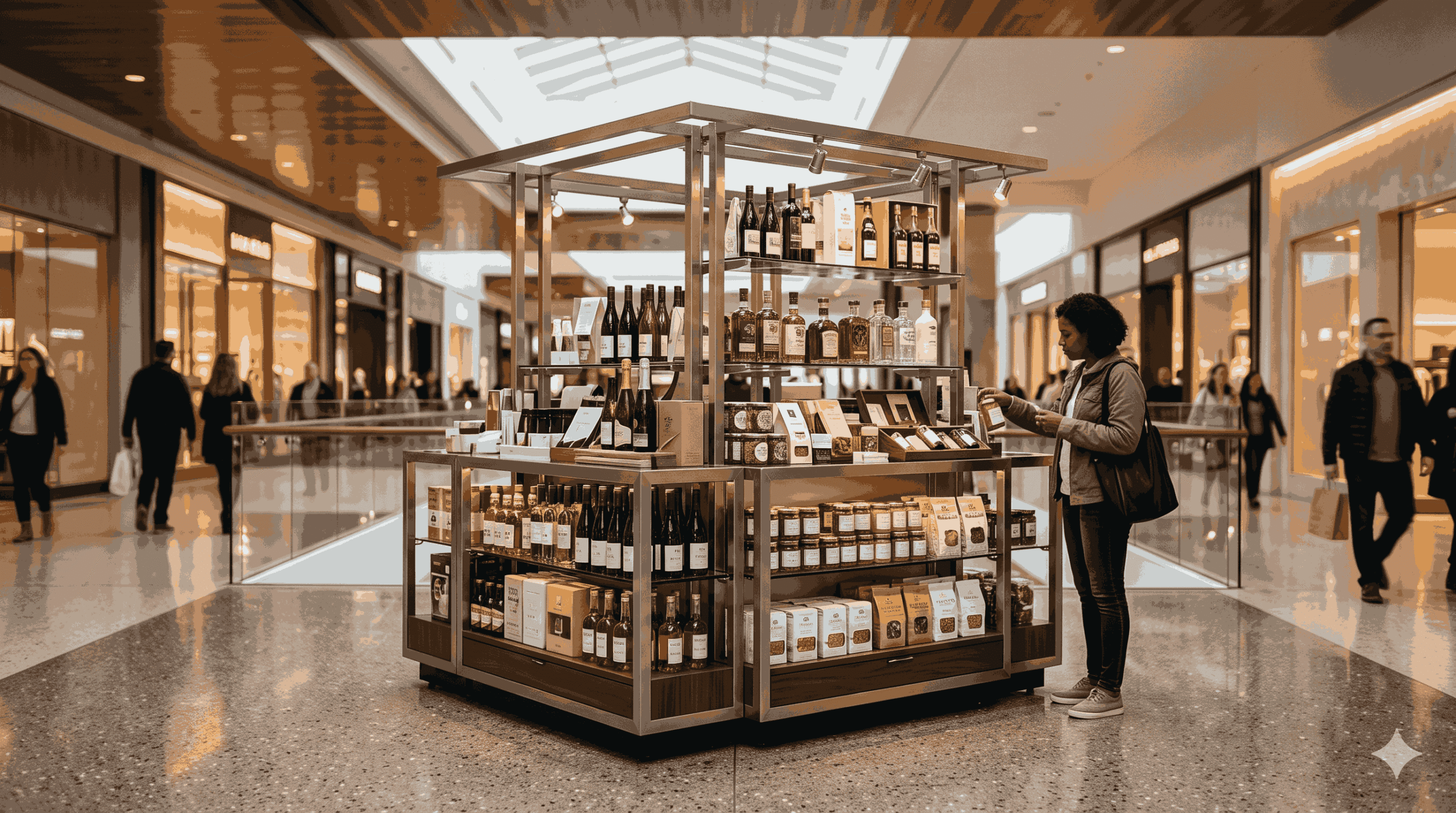
Executive Summary: The Micro-Retail Reality
A retail merchandising unit (RMU) operates in a state of constant vulnerability. Freestanding kiosks face a non-stop wave of heavy shopping carts, strollers, and intense daily cleaning. To protect your investment, procurement must treat shopfitting not as a cosmetic design project, but as a serious structural engineering challenge.
Choosing Your Foundation: Material Intelligence in RMU Construction
Permanent RMUs must withstand continuous weight loads and physical impacts without showing structural fatigue. Standard materials like medium-density fiberboard (MDF) or thin acrylics often sag or chip within months of deployment. Opting for high-durability metals, such as SPCC cold-rolled steel, keeps the frame perfectly straight and stable under heavy inventory load.
Precision-engineered steel serves as a resilient backbone that handles daily wear and tear. Wood absorbs moisture and warps, while acrylic cracks under sudden pressure, but high-grade metal keeps its shape. For global buyers, this material choice means fewer replacement cycles and a much longer operational lifespan for your fixtures.
Shipping costs are another major piece of the procurement puzzle. A heavy-duty metal chassis can be designed with complete knock-down (KD) assembly, a massive advantage over shipping fully assembled wooden kiosks. Using precise metal-to-metal interlocking fasteners allows the entire unit to be packed flat.
This knock-down approach slashes the total cubic meter (CBM) volume per container by up to 40%. Buyers can significantly cut shipping fees while still getting a rigid, durable system. Once on-site, these systems assemble quickly with basic tools, reducing setup times and local labor costs.
Deflecting Daily Stress: Engineering for High-Traffic Corridors
Placing your RMU in the center of a busy mall corridor maximizes brand exposure, but it also exposes the lower frame to constant kinetic force. Heavy strollers, shopping carts, and floor scrubbers hit these units daily. Without structural reinforcement, standard designs quickly degrade at the floor level.
To solve this, rugged custom metal bases are integrated to act as protective bumpers and stabilizing anchors. These heavy-gauge steel chassis keep the kiosk from tipping in high-velocity transit walkways. The engineering goal here is simple: keep the unit safe and perfectly stable without blocking visual access.
A prominent location also means your display is fully visible from all 360 degrees. Because there is no back wall to hide raw wiring or messy connections, every angle must look flawless. Even small flaws can quickly damage a premium brand’s image.
Experienced manufacturing partners solve this by using seamless MIG/TIG welding and hidden internal fasteners. An electrostatic powder coating adds a durable 60-to-80 micron protective layer. This shield resists scratches from keys and hangers, keeping the corporate-grade finish looking brand new.
Balancing Act: Maximizing SKU Density Without the Clutter
Maximizing product capacity inside a small footprint is a balancing act. Retailers need to showcase high SKU density without making the space look cluttered or messy. Traditional wooden shelves require thick, bulky supports that eat up to 30% of your usable display area.
Custom metal display racks solve this by using high-tensile steel brackets and ultra-slim shelving profiles. These components let you display more products in less space. Specialized OEM ODM services can tailor these shelves to match your exact packaging, optimizing every square inch.
Modern retail spaces often look best when you combine different materials to create visual depth. While metal serves as the strong, load-bearing core, adding acrylic showcases or wooden trim brings in a high-end feel. These hybrid materials create a striking display without sacrificing safety.
Brands like Yishang Display integrate glass shelves, acrylic drawers, and wooden accents onto a single, cohesive metal chassis. The high-strength steel frame carries the main load, preventing any bowing or warping. Meanwhile, the lightweight materials highlight premium products close to the customer.
To capture attention, many RMUs incorporate moving or motorized parts. Adding rotating display tiers to the metal chassis makes it easy for shoppers to browse from a single spot. This subtle movement naturally draws the eyes of passing shoppers.
Adding electrical features in a public space requires strict safety engineering. Wiring paths must be completely hidden inside the hollow channels of the metal display frame. This protective routing shields the cables from wear, prevents electrical hazards, and meets commercial building codes.
The Bottom Line: Calculating Total Cost of Ownership
For procurement directors, evaluating a kiosk program goes far beyond the initial purchase price. Buying cheap, uncertified fixtures often leads to early structural failures and frequent maintenance. When a busy RMU goes offline for repairs, lost sales quickly erase any upfront savings.
A reliable way to calculate these variables is through a total cost of ownership model. This calculation adds the initial purchase price to the cost of maintenance downtime and any early replacement costs. It shows that buying premium fixtures saves significant money over time.
Choosing high-durability displays built by Yishang Display lowers your long-term operating costs. Premium powder-coated metal displays handle years of daily chemical cleanings without fading. They stay in service longer, securing a much higher return on your investment.
Acquiring high-grade durability does not have to break your budget. Working directly with a large-scale manufacturer unlocks great factory-direct pricing. With an annual production capacity of over 10,000 units, advanced facilities keep costs low while maintaining strict quality.
Risk Mitigation: Navigating Global Compliance for High-Premium Retail Spaces
Setting up an RMU in a premium shopping center requires passing strict landlord and developer approvals. Mall gatekeepers will quickly reject non-compliant fixtures. Sourcing displays that fail to meet global standards can stall your rollout and lead to costly shipping delays.
We mitigate these supply chain risks by sticking to international manufacturing standards. Our facility runs under a strict ISO 9001 quality management system, ensuring perfect batch consistency. Whether you order 10 or 1,000 units, every piece meets the exact same high standards.
Environmental safety is another critical gatekeeper for global rollouts. Using RoHS-compliant surface treatments ensures all displays are completely free from toxic heavy metals. This environmental compliance speeds up approvals in strict markets like North America and the European Union.
Choosing certified materials builds trust with commercial landlords and insurance underwriters. This compliance security accelerates the sign-off process, helping your retail kiosks open on schedule. Ultimately, investing in compliant metal fabrication protects both your capital and your reputation.
❓ Deep-Dive Technical FAQ
1. How does a custom metal display rack improve the sales per square foot of an RMU?
Custom metal displays utilize high-tensile steel, allowing for much thinner profiles than bulky wood. This engineering choice reduces the physical footprint of the shelving by up to 30%. Importers can showcase more product volume within the same commercial space without creating clutter. This directly increases your product density and boosts overall sales per square foot.
2. Can electric or motorized display components be safely grounded in a pure metal RMU fixture?
Yes, precision-engineered metal displays are designed with dedicated internal hollow channels. These channels separate high-voltage wiring from the exterior chassis, allowing safe grounding. Yishang Display integrates UL and CE-compliant wiring pathways directly into the metal frame. This guarantees complete electrical safety and efficient heat dissipation for motorized retail displays.
3. Why do high-end retail brands prefer a combination of metal and glass for kiosks?
This hybrid combination offers the perfect harmony of structural strength and premium aesthetics. The high-strength metal chassis provides the weight-bearing integrity needed for daily durability. The integrated glass panels and LED lightboxes create a clean, modern, and highly visible presentation. This layout attracts passing shoppers while ensuring the RMU remains resilient against wear and tear.
Contact Our Engineering Team Today
If you are looking to scale your retail footprint with high-durability displays, we are here to help. Contact Yishang Display today to discuss your customized OEM/ODM requirements with our engineers.