
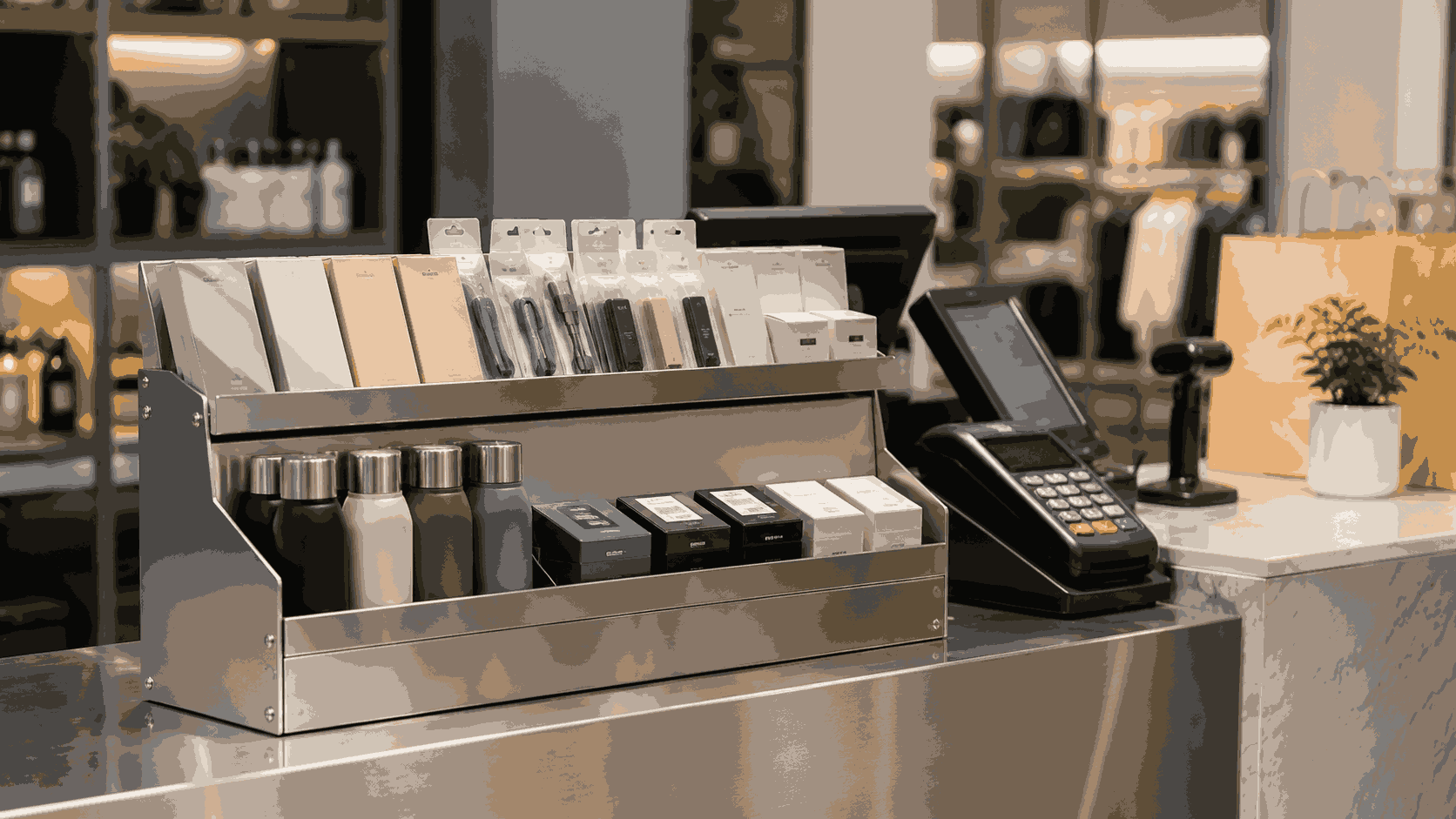
A retail store counter may look like a small area, but for wholesale buyers it often carries more weight than it first appears. It is where products meet customer attention, where checkout flow can either stay smooth or become crowded, and where a display fixture has to work quietly in the background every day.
For importers, distributors, brand buyers, and retail procurement teams, choosing a counter display is rarely just about appearance. A rack may look polished in a product photo, yet still cause problems if it cannot hold the product weight, fit the counter footprint, survive shipping, or stay consistent across repeat orders.
That is why retail counter features should be reviewed with sourcing in mind. A good counter display should support product visibility, easy access, stable structure, restocking, safety, packaging efficiency, and long-term use. When these details are handled well, the fixture becomes more than a product holder. It becomes a repeatable merchandising tool for retail chains, distributor programs, and branded promotions.
Metal counter display racks are often selected for this type of project because they offer stronger structure, longer service life, and more flexible customization than many short-term materials. The best results come when the display is designed around the product, the counter environment, and the buyer’s rollout plan.
Yishang Display focuses on custom metal retail display fixtures and mixed-material display solutions. The following seven features reflect what overseas wholesale buyers often need to consider before sourcing a custom countertop display rack.
Start with the Buying Purpose, Not the Rack Shape
A counter display project usually works better when the buyer defines the purpose before discussing the style. A fixture for lightweight brochures does not need the same structure as a rack for canned drinks, tools, pet products, or automotive accessories.
A buyer may need to promote small impulse items near the point of sale. Another may need a display that organizes multiple SKUs for a retail chain. A distributor may care about packing volume and assembly time, while a brand buyer may focus on logo placement, color matching, and product visibility.
These goals lead to different design choices. Product size affects shelf layout. Product weight affects material thickness and hook strength. Counter size affects the footprint. Shipping needs may influence whether the structure should be welded, assembled, or packed in a knock-down format.
A clear brief helps avoid unnecessary revisions. Before requesting a quotation, buyers are usually better prepared when they can share product dimensions, unit weight, display quantity, SKU count, target order quantity, preferred finish, packing expectations, and expected service life.
1. Clear Product Focus for Faster Counter Decisions
Customers at the counter rarely have time to study a complicated product range. They may be paying, waiting, talking to staff, or simply glancing around before leaving the store. A counter display has only a short moment to make the product easy to notice and understand.
For wholesale buyers, this matters because one unclear display can be repeated across many locations. If the fixture carries too many unrelated items, the retail counter may look busy rather than useful. A more focused display often performs better because it gives the customer one simple message.
A metal counter display rack can support this clarity through physical structure. Shelves, hooks, trays, dividers, and raised tiers help separate products into clean zones. Instead of relying only on printed graphics, the rack itself guides how products should be placed.
This is especially useful for distributors and brand buyers who need consistent merchandising across different stores. When the product layout is easy to follow, retail staff can refill the display correctly without special training or complicated instructions.
2. Load-Bearing Strength Based on Real Product Weight
Many counter products are compact, but compact does not always mean light. Small tools, canned food, bottled drinks, hardware accessories, pet products, and automotive items can place real pressure on shelves, hooks, joints, and bases.
This is where metal becomes valuable. A durable metal counter display rack can be designed around the actual product weight rather than only the visual layout. Material thickness, shelf depth, hook diameter, welding quality, base size, and center of gravity all influence how the display performs in daily use.
A rack should stay stable when fully loaded, but also when products are removed unevenly. In a real store, customers do not pick items in a perfectly balanced order. One side may empty faster than the other, and the fixture still needs to feel safe and steady.
For bulk orders, this detail becomes even more important. A weak structure in one sample may become a repeated problem across hundreds or thousands of units. Buyers can reduce that risk by discussing unit weight, total display load, shelf load, and product placement before confirming the drawing.
3. Counter Space Efficiency Without Blocking Store Operation
A retail counter is rarely empty. It may already hold a POS system, payment terminal, scanner, receipt printer, bags, staff tools, and handover space for customers. A display that takes too much horizontal space can quickly become a problem for the store.
A good counter display uses height and structure carefully. Tiered shelves, vertical frames, compact trays, brochure slots, and hanging hooks can increase product capacity while keeping the checkout area usable. The goal is not to fill every inch of the counter, but to create useful selling space without slowing daily operation.
For wholesale buyers, space efficiency also affects market acceptance. Retail partners are more likely to use a display that fits easily into their counter area and does not interfere with payment or staff movement.
Metal helps because it can create slim but strong structures. A custom metal frame can support several product levels while keeping the footprint controlled. For overseas shipments, a compact structure may also help reduce carton volume and improve packing efficiency.
4. Product Visibility from Real Customer Viewing Angles
A display should be judged from the customer’s position, not only from a front-facing drawing. At the counter, customers may see the product while waiting in line, standing near the payment area, or reaching toward the fixture.
Good visibility means the product face, price message, and brand panel remain easy to see. If the packaging is hidden behind a thick frame or placed too low, the rack may hold the product well but fail to present it well.
Angled shelves, raised tiers, front-facing hooks, open-frame structures, and header signs can make the product easier to understand within a few seconds. For branded products, this can make a real difference because packaging and logo placement are part of the retail message.
During sample review, buyers should place real products on the rack and view it from normal customer height. This simple check often reveals issues that are not obvious in a technical drawing or product rendering.
5. Easy Access for Customers and Store Staff
A counter display should make products easy to pick up. If customers need to stretch, move other items, or ask staff for help, the display may lose some of its selling value.
Access also matters for store staff. A rack that blocks payment devices, scanners, receipt areas, or bagging space can create friction during busy hours. Retailers are more likely to keep using a fixture when it works smoothly with daily store routines.
A custom countertop display rack can be designed with both sides in mind. Customer-facing hooks or shelves support quick pickup. Staff-facing openings make restocking easier. This small design detail can help the display stay organized long after installation.
Rotating displays can be useful for small packaged products, but they should be tested carefully. The turning radius needs to fit the counter environment. A rotating rack that touches nearby equipment may create more inconvenience than value.
6. Restocking, Cleaning, and Long-Term Maintenance
For wholesale buyers, the true cost of a display is not limited to the purchase price. It also includes how long the rack lasts, how often it needs attention, and how well it keeps its appearance after repeated use.
A display that is difficult to restock may look empty during peak hours. A surface that scratches, stains, or rusts easily can weaken the brand image. These details may look small during sampling, but they matter once the display is placed in many stores.
Metal retail display fixtures can be designed with open shelves, removable trays, smooth edges, separated product rows, and accessible refill areas. These features help store staff keep the counter organized with less effort.
Surface finish should match the product category and retail environment. Powder coating is commonly used for color consistency and surface protection. Plating, polishing, or painted finishes may be selected when a specific visual effect is needed. For food, beverage, pet, and hardware displays, cleaning requirements and corrosion resistance should be discussed before sample approval.
7. Safety, Stability, and Loss-Control Awareness
Safety should be reviewed separately from load-bearing strength. A rack may hold the product weight, but still feel unstable if the base is too narrow, the frame is too tall, or the product weight sits too high.
A stable retail display fixture should have a balanced base, smooth edges, secure joints, and controlled product placement. These details help reduce tipping risk, product damage, and discomfort for customers standing at the counter.
Loss-control awareness is also useful for small, high-value, or easy-to-remove items. A display does not always need locks. In many cases, secure hooks, staff-facing product zones, clear sightlines, or limited-access sections can help reduce casual loss while keeping the counter open and customer-friendly.
Sample approval is the best time to review these details. Buyers should test the rack when fully loaded and partially loaded, check whether the edges feel smooth, and confirm that hooks, shelves, and frames remain secure during normal handling.
Why Metal Often Fits Wholesale Counter Display Projects
Metal is not necessary for every retail display. Cardboard may work well for lightweight short-term promotions. Acrylic is useful when transparent presentation matters. Wood can create a warmer or more premium retail style.
Metal becomes a stronger choice when the project involves heavier products, repeated restocking, export shipping, long-term use, or consistent bulk production. It is widely used for hardware, beverage, pet product, automotive accessory, food, sports goods, and promotional retail displays.
The material also supports flexible customization. Metal can be formed into shelves, hooks, trays, sign holders, brochure slots, rotating frames, and reinforced bases. It can also be combined with acrylic, wood, cardboard, or printed graphics to balance structure and branding.
For buyers working with a wholesale metal display rack supplier, the real value is not simply a strong fixture. It is the ability to align product weight, counter space, packaging, branding, assembly, and order quantity before production begins.
Pre-Production Checks That Reduce Bulk Order Risk
Before mass production, buyers should review the display from both retail and procurement perspectives. The retail review looks at whether the product is visible, easy to pick up, stable on the counter, and simple for staff to restock.
The procurement review looks at drawings, materials, finish samples, carton size, assembly method, packing protection, and inspection criteria. These details may not be visible to shoppers, but they affect freight cost, damage rate, installation time, and repeat order consistency.
A practical approval process may include drawing confirmation, material confirmation, finish approval, sample review, packing test, and final inspection standards. This does not need to make the project complicated. It simply helps prevent avoidable issues before larger production begins.
For retail chains, distributors, and multi-market programs, this step is especially valuable. A display that performs well at the sample stage is more likely to remain stable during bulk production and future repeat orders.
How to Brief a Retail Display Fixture Manufacturer
A clear brief helps the manufacturer provide a more accurate design and quotation. Useful information includes product size, product weight, SKU quantity, display quantity, available counter space, store type, brand requirements, preferred finish, target order quantity, packing needs, and expected service life.
Each detail affects the final structure. Product weight influences shelf strength. SKU quantity affects layout. Counter size affects footprint and height. Branding affects color, logo position, and header design. Shipping needs affect knock-down structure and carton protection.
For OEM and ODM projects, it also helps to explain whether the display is for a short promotion, long-term retail use, or a multi-store rollout. This allows the supplier to balance appearance, durability, cost, and production feasibility more accurately.
Yishang Display supports custom metal display rack projects for wholesale buyers who need practical structures, brand-ready finishes, and export-oriented packing. Sharing product details and target quantity early can make the design and sampling process more efficient.
FAQ
What retail counter features matter most for wholesale buyers?
Wholesale buyers usually focus on product visibility, load-bearing strength, counter space efficiency, customer access, restocking convenience, safety, packing method, and production consistency. These factors affect both retail performance and bulk purchasing value.
Why are metal counter display racks suitable for bulk orders?
Metal counter display racks are suitable for bulk orders because they provide strong structure, long service life, flexible customization, and stable production quality. They are especially useful for heavier products, high-traffic stores, and repeated retail campaigns.
What information should buyers provide before ordering a custom display rack?
Buyers should provide product size, product weight, SKU quantity, display quantity, counter dimensions, brand requirements, preferred finish, target order quantity, packing requirements, and expected service life.
Is metal better than acrylic, wood, or cardboard for counter displays?
Metal is usually better for heavier products, long-term use, and repeated handling. Acrylic is useful for transparent presentation, wood supports a warmer retail style, and cardboard works well for lightweight short-term promotions.
How can buyers reduce risk before mass production?
Buyers can reduce risk by confirming drawings, reviewing samples with real products, checking stability, approving surface finish, testing packaging, and agreeing on inspection standards before bulk production begins.
Conclusion: Better Counter Displays Start with Better Sourcing Decisions
For overseas wholesale buyers, a retail counter display is a repeatable merchandising tool, not just a small fixture. It needs to support product visibility, checkout flow, store operation, packing efficiency, and long-term durability.
A custom metal counter display rack is a strong option when the project requires stable structure, bulk order consistency, export-ready packaging, and flexible branding. Buyers can share product details, target quantity, and display requirements with Yishang Display to start a practical sourcing discussion.