
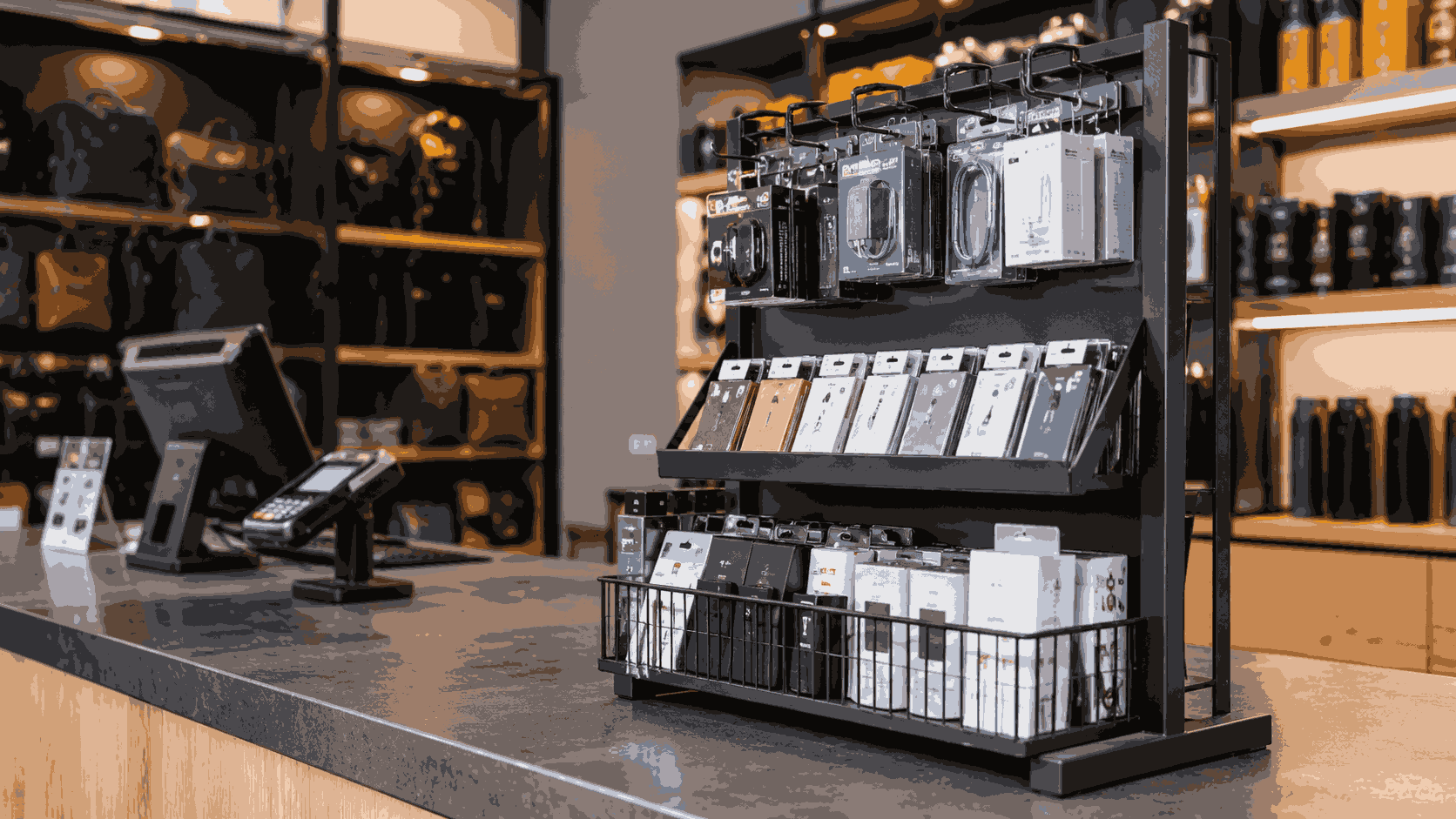
For overseas wholesale buyers, a counter display rarely functions as just a small fixture for a retail store. It plays a role in a larger sourcing decision. The right display can improve product visibility, protect brand presentation, reduce replacement risk, and make store execution easier across different retail locations.
A product photo may make a display look clean and attractive, but real performance starts after the rack carries merchandise, travels through export shipping, reaches the store, and faces daily customer handling. If a counter display shakes when customers touch it, scratches during transit, or varies from batch to batch, the lowest unit price can quickly create higher long-term cost.
Many importers, distributors, and brand purchasing teams therefore evaluate metal counter display racks with both retail and procurement in mind. They need a display that helps stores use limited counter space well, and they also need clear specifications, stable production, proper packaging, and a supplier that understands bulk order requirements.
Why Counter Displays Matter to Wholesale Buyers
A retail counter is one of the few places where almost every customer slows down. Customers wait, pay, ask questions, collect products, and often notice small add-on items before leaving the store. A well-positioned counter display gives compact products a stronger chance to stand out without taking up extra floor space.
For wholesale buyers, the challenge extends beyond one store. A counter display may need to work in convenience stores, hardware shops, pet stores, beverage retailers, automotive accessory shops, or brand promotion counters. Each location may have a different counter size and customer flow, but the display still needs to look consistent and perform reliably.
The best counter display for a retail program is not always the biggest or most decorative one. It is the design that fits the counter, holds the product safely, supports customer access, and allows repeat production with stable quality.
A well-designed metal countertop display brings order to a busy counter. Instead of allowing products to spread across the surface, it uses vertical structure, fixed product positions, and compact display zones to keep merchandise visible while leaving room for checkout and service.
What Buyers Usually Want to Know Before an RFQ
When overseas buyers browse a supplier’s website, they often scan quickly before deciding whether to send an inquiry. They look for signs that the supplier understands product structure, materials, customization, packaging, and bulk production. A strong display image helps, but it cannot answer the full sourcing question.
Some buyers want to know whether the rack can ship in a knock-down structure to reduce freight volume. Others may ask whether the powder-coated finish can match a brand color, whether hook spacing can adjust to a new package size, or whether coated parts can avoid friction damage during ocean shipping.
These details affect quotation accuracy, sample approval, shipping cost, and after-sales risk. A useful supplier article should speak to both display performance and sourcing practicality. Buyers are not only searching for retail display ideas; many are looking for a counter display rack manufacturer who can help turn a product concept into a bulk-ready solution.
Balancing Footprint, Height, Visibility, and Reach
A practical counter display needs balance. If the footprint grows too large, the display may block the checkout area. If the rack rises too high, customers may struggle to reach products on the upper levels. If the structure becomes too compact, it may look efficient but lose stability after full loading.
Buyers should consider footprint, height, visibility, and reach together. The display needs to occupy limited counter space, create enough vertical capacity, make products easy to notice, and allow customers to pick up and return items comfortably. When one of these points falls short, the issue often appears later in daily retail use.
Metal gives manufacturers more control over this balance. A metal frame can support tiered shelves, hooks, baskets, trays, rotating bases, sign holders, or mixed structures. This flexibility helps suppliers match the display to product packaging instead of forcing the product into a generic rack.
Hardware accessories often need hooks with accurate spacing. Beverage add-ons may work better on front-facing shelves. Pet treats may need baskets for quick restocking. Printed literature needs upright slots so brochures do not turn into messy piles on the counter.
Why Metal Is Often the Stronger Choice for Bulk Counter Displays
Different materials serve different retail display needs. Cardboard can support short promotional campaigns. Acrylic can create a clean, premium look. Wood can add warmth for lifestyle brands or boutique environments. Metal often works better when a project requires strength, stability, and long-term retail use.
Retail counters face frequent contact. Customers touch the display, staff move it, products require regular refilling, and cleaning happens around the fixture. A weak structure may bend, shake, or lose balance after regular use, especially when the displayed products carry more weight or customers handle them often.
Manufacturers can build metal display racks with reinforced frames, smooth edges, powder-coated finishes, anti-rust treatment, stable bases, and product-specific load points. These technical details influence how the display looks after months of use and how much replacement risk the buyer may face.
Metal also works well with other materials. A powder-coated metal frame can carry acrylic logo panels, cardboard header graphics, wooden accents, or printed brand boards. This combination helps buyers keep the core structure durable while matching the display with brand identity and retail style.
Matching the Rack Structure to the Product
A reliable display project should start with the product, not the drawing. Product size, weight, packaging type, display quantity, refill frequency, and customer interaction all shape the final structure.
Tiered metal shelves suit boxed goods, jars, bottles, packaged food, and small products that need clear front-facing visibility. Metal hooks work better for hanging products such as hardware accessories, automotive parts, pet items, sports accessories, and packaged add-ons.
Wire baskets and trays handle flexible packaging or irregular shapes well. Upright literature slots keep brochures, catalogs, cards, and printed materials neat. Rotating counter displays help buyers present multiple small SKUs in a compact footprint without making the counter feel overcrowded.
This product-based approach makes supplier communication much easier. Instead of asking for a general counter display, buyers can share product dimensions, packaging style, expected display quantity, retail position, and branding needs. With that information, the supplier can suggest a more practical structure before sampling begins.
Custom Countertop Display Development for Wholesale Projects
A custom countertop display should not add complexity without purpose. It should make the product easier to present, easier to handle, and easier to roll out across stores.
For wholesale buyers, useful customization may include shelf height, hook spacing, basket depth, base size, logo panel position, header sign design, powder-coated color, and knock-down packaging. These details help the display fit the product, the counter, the brand image, and the shipping method.
OEM and ODM counter display racks help buyers who need one repeatable design for multiple stores, distributors, or seasonal campaigns. A well-planned structure can keep the visual system consistent while allowing updates to graphics, product mix, or accessories.
Yishang Display focuses on metal as the core structure, while also supporting acrylic, cardboard, and wood when mixed-material presentation fits the project. This gives buyers both structural strength and visual flexibility, especially for custom countertop display projects that need to balance durability with brand presentation.
What to Check Before Bulk Production
Buyers should treat a sample as more than a visual reference. They should test whether the rack stays stable when fully loaded, whether the product spacing feels practical, and whether store staff can assemble and restock the display without difficulty.
Surface finish also deserves close attention. The powder coating should look even and clean. Edges should feel smooth where customers or staff may touch the rack. If the display includes printed panels, acrylic parts, or logo boards, buyers should confirm how the factory fixes and protects these parts during shipping.
Packaging can decide whether a good display arrives in good condition. A rack may perform well after assembly but still suffer damage during transit if coated parts rub against each other or corners lack protection. For export orders, buyers and suppliers should discuss carton strength, inner protection, part separation, and assembly instructions before mass production.
Bulk consistency matters as much as sample approval. The supplier should repeat the same size, color, finish, structure, and packing method across production batches. For a single store, small variation may create little trouble. For multi-store retail programs, the same variation can turn into a larger operational problem.
Modularity and Flexibility for Changing Retail Programs
Retail programs often change faster than store fixtures. A distributor may need one frame for several product lines. A brand owner may update promotional graphics each season. A retailer may use the same counter area for different campaigns throughout the year.
A modular counter display can include removable hooks, adjustable shelves, detachable baskets, replaceable header cards, or interchangeable side panels. This gives buyers more flexibility without replacing the entire fixture every time the product mix changes.
The design still needs practical limits. Too many adjustable parts can increase assembly time or create quality risks if the structure lacks careful planning. A useful modular display should remain easy to assemble, easy to restock, and strong enough for repeated retail use.
For wholesale buyers, the best modular design saves time and money without sacrificing stability. It supports today’s merchandise while leaving room for reasonable product or branding updates later.
Supplier Capability Beyond the Product Photo
A product photo shows appearance, but it does not show the full project capability. For custom metal counter display racks, buyers usually need drawing support, sampling communication, structure adjustment, surface treatment, packaging planning, and quality control.
Yishang Display has more than 26 years of retail display rack manufacturing experience, exports to 50+ countries, supports OEM and ODM services, and holds RoHS and ISO 9001 certification. These points matter most when they connect to real buyer needs: stable production, export packaging awareness, and custom structure development.
In many projects, buyers do not simply send a final drawing and wait for production. They may need advice on material thickness, shelf angle, hook spacing, base stability, finish selection, packaging method, or assembly design. Clear communication at the early stage often helps reduce sample revisions and sourcing delays.
For importers, distributors, and brand owners, this support can make the project smoother from concept to sample, and from sample approval to repeatable bulk production.
Common Sourcing Mistakes to Avoid
One common mistake is choosing a counter display only by unit price. Price matters in wholesale purchasing, but buyers should compare it with material thickness, structure, finish quality, packaging, assembly, and expected service life.
Another issue appears when buyers request a quotation without enough product information. If the supplier does not know the product dimensions, weight, packaging type, target quantity, or branding requirements, the first quote may not match the real project.
Packaging is also easy to underestimate. A display that performs well in a showroom can still arrive damaged if the carton, inner protection, or part separation lacks proper planning.
A smoother sourcing process starts with clear product data, realistic retail use conditions, and early discussion about packaging and assembly. This helps create a display that works in photos, shipment, installation, and daily retail use.
Conclusion
Metal counter display racks help retailers turn limited counter space into a cleaner and more visible merchandising area. For wholesale buyers, their stronger value lies in durability, packaging reliability, customization flexibility, and bulk production consistency.
If your team is developing a custom countertop display for wholesale or retail rollout, Yishang Display can help evaluate structure, material, branding, and packaging options for bulk-ready production.
FAQ
What is a metal counter display rack?
A metal counter display rack is a countertop fixture that organizes and displays small retail products near checkout counters, service counters, promotional areas, or point-of-purchase zones. It helps improve product visibility while keeping limited counter space organized.
Why do wholesale buyers choose metal counter display racks?
Wholesale buyers choose metal counter display racks because they offer durability, stable structure, good load-bearing performance, and long-term use. Metal also supports custom shelves, hooks, baskets, trays, branding panels, and rotating designs.
What information should buyers provide before requesting a quotation?
Buyers should provide product dimensions, weight, packaging type, display quantity, counter size limits, branding needs, surface finish requirements, target market, and packaging expectations. This helps the supplier provide a more accurate design and quotation.
Can Yishang Display provide OEM and ODM services?
Yes. Yishang Display provides OEM and ODM services for custom retail display racks, including size adjustment, shelf layout, hook spacing, logo panels, header signs, powder-coated colors, mixed materials, and knock-down packaging.
Are metal counter displays suitable for international bulk orders?
Yes, when the display design considers structure, surface finish, packaging protection, assembly, and shipping efficiency. Buyers should confirm sample quality, carton protection, and bulk production consistency before placing large orders.