
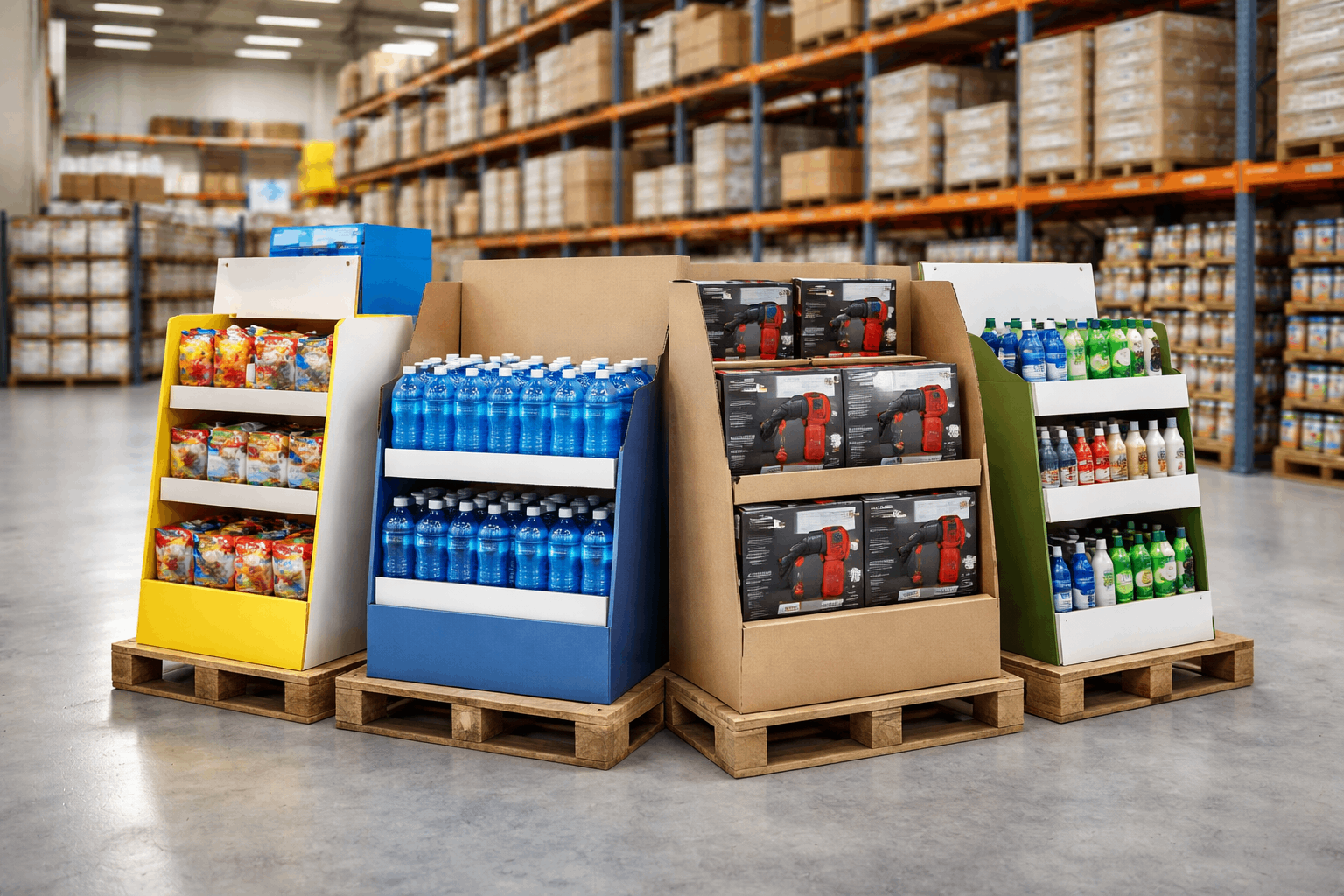
For overseas wholesale buyers, a launch display is more than a marketing tool. It shapes shipping efficiency, store execution, product safety, and campaign cost. Buyers should judge displays for product launches by store performance, not just by mockups.
When buyers search for the best corrugated displays for product launches, they usually compare fit, risk, and cost at the same time. They want to know whether corrugated displays match the product, the channel, the shipping method, and the campaign length. In many cases, they also compare corrugated, metal, and mixed-material options, even when the search starts with corrugated.
Yishang Display approaches the topic in that way. Instead of pushing one material, we explain where corrugated works well, where its limits appear, and when a stronger structure makes more commercial sense.
Why Corrugated Displays Are Often Considered First for Product Launches
For many buyers, corrugated is the starting point. It fits temporary retail programs, short lead times, and lower upfront investment. That makes it useful for trial launches, seasonal campaigns, and promotional rollouts where speed and flexibility matter more than fixture lifespan.
Corrugated displays also support lightweight products well. In convenience retail, supermarket aisles, and temporary promotion zones, a corrugated display can create fast visual impact without the cost of a more durable fixture system. Buyers often use corrugated displays for your product launch when they need to build brand awareness and grab customer attention in a short selling window.
Flexibility adds to that appeal. Teams can customize corrugated display units to fit pack sizes, campaign graphics, and store requirements with relatively low setup complexity. That is one reason corrugated displays remain a popular choice for product launches.
What Buyers Should Evaluate Before Choosing Corrugated Displays
The real decision starts when the launch moves from concept to execution. At that point, appearance matters less than fit. Buyers need to think about product weight, replenishment frequency, campaign duration, shipping method, assembly conditions, and store consistency.
Effective POS design goes beyond creativity. A display for product launches must attract attention and stay stable after repeated use. It should showcase your product clearly and let store staff refill it without damaging the structure. It should also support a smooth customer experience while staying practical for transport, setup, and store handling.
A successful product launch depends on visibility and presentation. It also depends on durability, ease of installation, and how well the unit handles normal retail pressure. Buyers who compare displays in this way usually make stronger sourcing decisions and avoid mid-campaign corrections.
Where Corrugated Displays Can Start to Lose Their Advantage
Corrugated displays work very well in some launch scenarios, but not all of them. Once products get heavier, campaigns run longer, or store traffic increases, the limits of corrugated become easier to see. A unit may still hold product, yet lose the clean appearance that helped it make a lasting impression at the start.
Repeated replenishment creates one of the biggest pressure points. Shelves can start to lean. Edges can soften. The display may no longer look organized after several selling cycles. Shipping and storage can add more stress, especially when different store teams assemble units in different markets.
These issues matter more with beverages, hardware, automotive products, pet items, and other dense packaged goods. In those categories, load capacity is not a minor detail. It affects safety, visual stability, and retailer confidence. A corrugated display for a new product can still work, but the margin for structural error becomes much smaller.
Why Material Choice Changes the Buying Decision
In procurement terms, this is often the point where buyers shift the question. Instead of asking which display looks better, they ask which option suits the launch model. A temporary launch, a semi-permanent rollout, and a reusable display program do not need the same structure, cost logic, or material strategy.
Corrugated displays usually work best when the product is light, the launch is short, and the buyer wants a cost-effective solution that teams can customize quickly. They fit programs where the display acts as a promotional tool rather than a long-life retail fixture.
The logic changes when products are heavier, campaigns last longer, or the brand needs a more stable and premium presentation. In those cases, the best corrugated displays are not always the best overall solution. Buyers may need a structure that stays presentable for longer, handles more physical stress, and keeps a consistent appearance across stores.
From a sourcing perspective, this is not about liking one material more than another. It is about reducing risk. As launch conditions become more demanding, structural reliability, useful display life, and predictable store execution matter more in the buying decision.
When Metal Displays Make More Sense
Metal display racks usually make more sense when the display must do more than create short-term attention. They fit semi-permanent retail programs, heavier products, and launch plans where the fixture must stay presentable beyond the first promotional window. They also suit programs that need a cleaner, more durable, and more premium retail image.
This matters in categories where the fixture influences the brand experience for your customers. A premium beverage launch, a hardware promotion, or an automotive accessory rollout often needs more than a lightweight temporary unit. Buyers in these categories usually look for structure, order, and a display that stays credible after several weeks of use.
Metal can also improve long-term commercial value. The upfront cost is higher, but a reusable or semi-permanent structure can lower replacement risk and create more value across future campaigns. For importers and distributors who manage repeat programs, that trade-off often makes sense.
A Practical Framework for Corrugated vs. Metal
In practical terms, corrugated displays for your product launch often make sense when the goods are lightweight, the campaign is temporary, and quick rollout matters most. They fit test launches, promotional bursts, and retail programs where visual speed and budget control take priority.
Metal often becomes the better choice when goods are heavier, launch periods are longer, or displays must handle higher traffic without losing order. It also works better when buyers need stronger consistency between stores or want the fixture to support a more premium sales environment.
For some programs, the most effective solution is not purely corrugated or purely metal. A mixed-material display can combine printed promotional panels with a stronger frame. That gives buyers more flexibility without giving up too much structural confidence.
| Decision factor | Corrugated displays | Metal display racks |
|---|---|---|
| Upfront cost | Lower | Higher |
| Speed to market | Fast for short runs | Moderate |
| Load suitability | Better for lighter products | Better for medium to heavy products |
| Shipping efficiency | Strong | Moderate |
| Visual life in store | Moderate | High |
| Reusability | Limited | Strong |
| Best fit | Temporary launch campaigns | Longer or heavier-duty programs |
Designing a Launch Display That Performs in Stores
Good POS design does more than help a display stand out. It helps the unit work after shipping, setup, and the first week of sales. The best displays for product launches respond to shopper movement, product dimensions, refill patterns, and the actual retail environment.
That means focused graphics, simple product access, and realistic replenishment. Buyers usually prefer displays that store teams can understand quickly and maintain without extra effort. If a display creates a unique and engaging presence but cannot stay organized during normal use, the design is incomplete.
The best launch displays balance customer attention with store practicality. That balance often separates a display that photographs well from a display that supports sell-through.
Looking at Cost More Realistically
Many buyers start with unit price, but a better sourcing view looks at cost over useful display life. A lower-priced display can still become the more expensive option if it creates replacement pressure, loses presentation quality too early, or needs more maintenance in stores. That risk grows when the campaign spans multiple locations.
A stronger comparison looks at total campaign value. How long will the display stay presentable? How well will it hold product? How much support will it need from store teams? Can buyers reuse or adapt it later? These questions matter when teams compare corrugated displays with stronger alternatives.
| Cost consideration | Why buyers care |
|---|---|
| Unit price | Sets the starting budget |
| Useful display life | Affects value in market |
| Replacement risk | Can increase real campaign cost |
| Assembly and maintenance | Influences store execution |
| Reusability | Improves longer-term return |
What Buyers Should Check Before Approval
At approval stage, wholesale buyers usually want fewer surprises. Pre-launch checks should focus on whether the display can move through packing, shipping, setup, replenishment, and store use without creating avoidable problems.
Before approving a display program, buyers should look beyond visuals. They should check whether the structure suits the full product load, whether the packaging protects the display during transit, and whether store teams can assemble it quickly without confusion.
It also helps to check performance after repeated handling. Can the display stay square and organized? Will it still showcase your product clearly after several replenishment cycles? Can it maintain a consistent appearance across different stores and markets? These questions directly affect launch results.
A supplier that can discuss these points clearly is usually more helpful than one that talks only about appearance. For wholesale buyers, that clarity reduces uncertainty and supports better decisions.
Conclusion
The best corrugated displays for product launches are the ones that fit the real demands of the program. For lightweight products, short campaign windows, and fast-moving promotions, corrugated can be a practical and cost-effective choice. For heavier products, longer programs, and more demanding retail environments, a stronger structure may be the better option.
For Yishang Display, the goal is not to overstate one material. It is to help buyers choose the display solution that best supports rollout speed, product safety, store execution, and total campaign value. If you are comparing corrugated, metal, or mixed-material options for an upcoming launch, we would be glad to discuss the most practical direction for your project.