
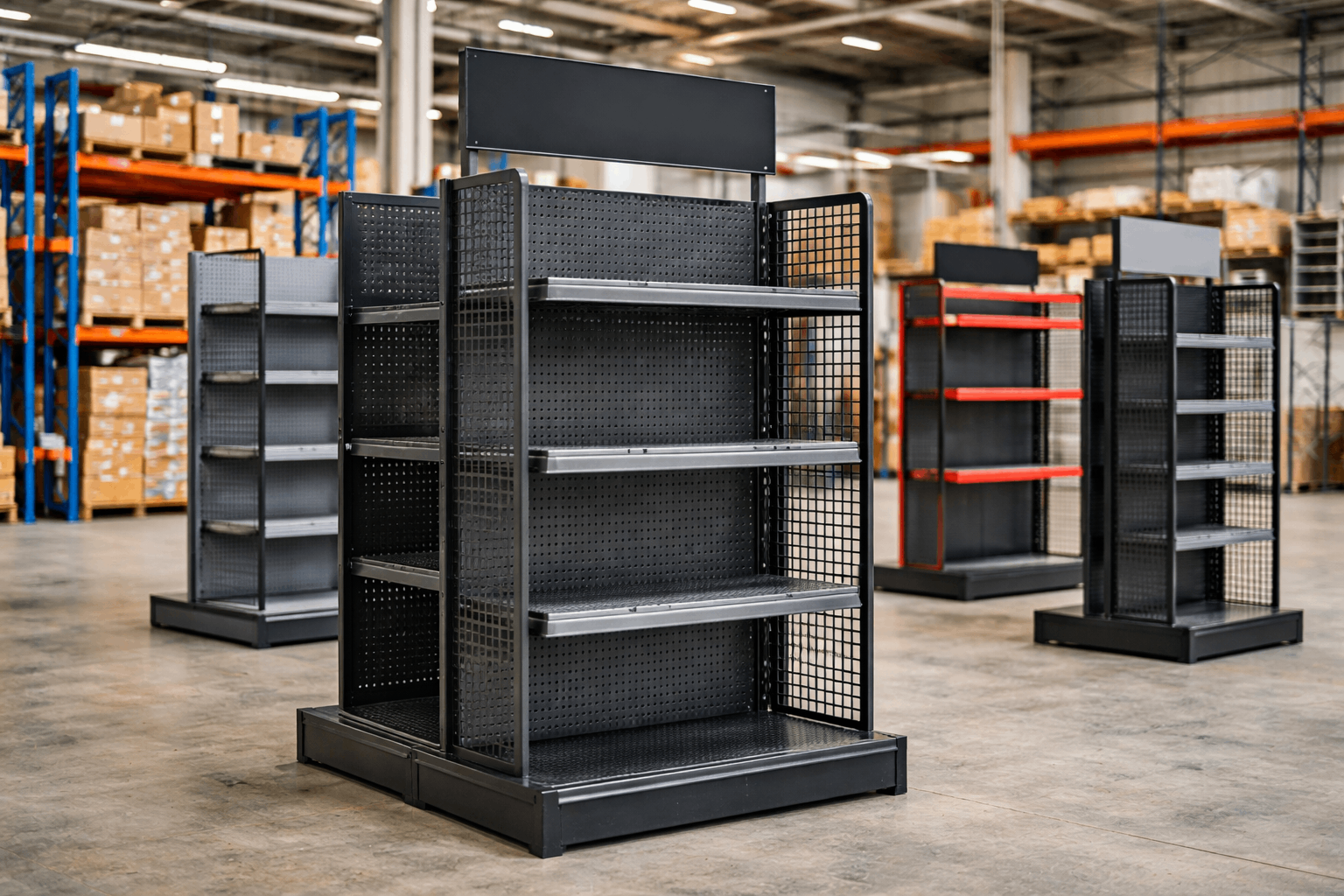
Overseas wholesale buyers usually do not read supplier blogs the way end consumers do. They scan for practical answers: whether the structure is reliable, whether the display can ship efficiently, whether the finish will last in retail use, and whether the same design can be reproduced consistently for repeat orders. That is the real business context behind most custom shelf display projects.
At Yishang Display, we see that buying decision every day. Importers, distributors, and retail project teams are not only choosing a display that looks good in a concept drawing. They are assessing sourcing risk, service life, packaging efficiency, installation effort, and long-term value. For that reason, good display units design should help buyers make better decisions before sampling and mass production begin.
This article focuses on the points that matter most in wholesale buying: what makes a display effective, how product data should shape the structure, why store conditions affect design choices, and when metal becomes the better material option. It also addresses issues buyers often review before sampling or mass production, such as freight efficiency, repeat-order consistency, and whether the display specification is realistic for rollout rather than only attractive on paper.
What Makes a Shelf Display Unit Effective
An effective display should improve product visibility first. In a busy retail environment, the fixture has only a short moment to help shoppers understand what is being offered. When shelf proportion, front-facing layout, and product grouping are clear, the display supports faster product recognition and cleaner category presentation.
It also needs to be easy to shop and easy to refill. Retailers care about this as much as brands do. If shelves are difficult to reach, too crowded, or awkward to restock, even a strong-looking display can become inefficient in daily use. That is why experienced buyers pay close attention to shelf spacing, access, and refill logic.
The final test is whether the unit stays presentable over time. In many retail programs, the first weak point does not appear during sample review. It appears after repeated restocking, cleaning, and stock movement in store. Buyers who have handled rollout projects usually pay close attention to this because visual decline often leads to retailer complaints long before a display is considered structurally failed. Good effective retail displays do not lose stability or visual order after repeated handling. For wholesale buyers, that matters because replacement cost, retailer complaints, and inconsistent in-store presentation can quickly reduce the value of a display program.
Start with the Retail Task Before the Design Starts
A display should be designed around a clear retail job. Some units are built to support promotions and fast visual impact. Others are meant to organize a category, carry higher stock volume, or remain in store for a longer program. Each of these goals leads to a different design approach.
A lightweight promotional unit may allow simpler construction. A long-term display for beverages, hardware, pet supplies, or automotive accessories usually needs more attention to stock weight, shelf reinforcement, and finish durability. A compact premium range may benefit from cleaner spacing, while a larger multi-SKU assortment may need dividers or more flexible shelf planning.
This is one reason buyers often prefer direct, practical content over generic design language. The more clearly the retail task is defined, the easier it becomes to create effective custom shelf solutions that match the real brief instead of trying to cover too many purposes at once.
Let the Product Define the Structure
In professional display unit design, the starting point should be the product itself. Shelf depth, shelf spacing, width, and support features should be based on actual product dimensions. A shelf that is too deep can reduce front-facing clarity and waste selling space. A shelf that is too shallow may limit packaging compatibility or create handling problems.
Product weight matters even more. In categories such as food, beverages, tools, cleaning products, pet supplies, and auto accessories, the display needs to stay stable under repeated load. This is one of the main reasons many buyers choose custom shelf display units made in metal. In beverage, hardware, and pet supply programs, repeated loading can expose shelf weakness much faster than a showroom sample suggests. A properly engineered metal structure reduces that risk and usually gives buyers more confidence when approving a program for wider rollout. A properly engineered metal structure provides better control over load-bearing performance, reinforcement, and long-term alignment.
SKU count changes the design logic as well. A narrow assortment may work well with a fixed layout. A wider product mix often benefits from dividers, adjustable shelves, or modular accessories that keep the presentation organized as the assortment changes. These details are closely tied to sourcing quality because they affect real store performance, not just visual presentation.
Technical Reference for Better Display Planning
| Design factor | Why buyers care | Influence on sourcing decisions |
|---|---|---|
| Shelf depth | Affects product fit and front-facing visibility | Impacts retail footprint and product presentation |
| Shelf spacing | Controls browseability and refill speed | Determines SKU flexibility |
| Stock weight | Defines structural support needs | Affects material choice and long-term reliability |
| Finish type | Influences appearance retention | Impacts durability in different store conditions |
| Assembly method | Changes setup speed and labor need | Affects rollout efficiency |
| Packing structure | Influences carton size and freight cost | Important for export and bulk orders |
Store Conditions Should Shape the Final Design
A display that works in one retail setting may underperform in another. A freestanding fixture in a specialty store often prioritizes controlled assortment and visual impact. An aisle display or endcap in a supermarket may need stronger stock capacity, faster refill access, and a tighter footprint to avoid interfering with traffic flow.
This is why practical buyers search with practical intent. Terms such as retail fixture manufacturer, freestanding metal display, aisle display rack, and custom merchandising display usually reflect a sourcing decision rather than casual browsing. They are trying to find a display solution that fits a real environment, not only a design concept.
Traffic level also changes the durability requirement. A fixture placed in a high-traffic environment will face more trolley contact, more frequent wiping, and more handling from both staff and shoppers. For that reason, durability should be judged by actual use conditions, not only by whether the initial sample looks clean. A fixture in a high-volume store will see more contact, more cleaning, and more replenishment. In those conditions, finish quality, weld stability, and structural balance matter much more than they do in a short-term showroom setup.
Why Material Choice Matters in Wholesale Buying
Material choice affects more than factory cost. It influences service life, freight efficiency, visual consistency, and how confidently a buyer can approve a rollout. Lightweight materials can still work well for short promotional programs, especially when the product is light and the display is not intended for long use.
However, when a project requires higher stock loads, longer service life, or stronger repeat-order consistency, metal usually becomes the more dependable option. Traditional display stands made from lighter materials may still be suitable in some cases, but they often lose efficiency once a project moves into daily retail use.
That is also why buyers compare foldable display stands and fixed structures by more than appearance. In export projects, the better option is often the one that balances storage and shipping efficiency with assembly speed and structural confidence after setup, not simply the one with the lowest initial unit cost. They look at storage and shipping efficiency, assembly effort, durability, and replacement frequency. In many wholesale projects, the real cost difference appears after the display enters the supply chain, not before.
The Design Variables That Matter Most in Metal Shelf Display Units
In metal programs, performance usually depends on a few key details. Shelf depth and spacing affect both visibility and usability. More shelf space does not always improve a display. If the shelf is too deep, products may disappear visually. If spacing is too tight, the unit becomes harder to shop and refill.
Weight distribution matters just as much. Even strong material needs correct reinforcement points and base logic. A stable frame, balanced load path, and reliable base help prevent movement or distortion once the unit is fully stocked. For wholesale buyers, this is tied directly to service life and claims prevention.
Flexibility should also be used carefully. Adjustable shelves are useful for categories that change often, while fixed shelf layouts can work better for stable product ranges. Finish choice matters too. Powder-coated steel is widely used because it supports color consistency, abrasion resistance, and a cleaner appearance over time. Accessories such as hooks, baskets, sign holders, and dividers should be added only when they improve the retail task clearly.
Practical Engineering Checkpoints Before Approval
For many wholesale buyers, this type of checklist is what turns a display concept into a sourcing decision. It helps separate attractive samples from specifications that are ready for repeat production.
| Checkpoint | Why it matters in wholesale purchasing |
|---|---|
| Load capacity confirmed | Reduces risk of failure after rollout |
| Base stability checked | Helps prevent tipping and store complaints |
| Finish matched to environment | Supports longer service life |
| Assembly time reviewed | Helps buyers estimate store setup cost |
| Carton plan optimized | Can improve container loading and shipping efficiency |
| Repeatability verified | Supports consistent quality across future orders |
Professional Presentation Still Supports Commercial Value
Wholesale buyers are practical, but they still care about how a display looks in store. A fixture that appears clean, balanced, and well finished gives more confidence to retailers and brand teams. Good presentation helps products look organized, easier to understand, and easier to compare.
Metal also provides more visual flexibility than many buyers expect. Powder coating, textured finishes, custom colors, and mixed-material combinations can support different brand styles without losing structural strength. Metal combined with wood, acrylic, or printed panels can create a more refined retail appearance while keeping the frame reliable.
The most useful design is rarely the most dramatic one. It is the one that makes the products look credible, keeps the assortment readable, and remains visually consistent throughout the retail cycle.
Common Problems Buyers Want to Avoid
Many sourcing problems begin before production. A concept may look appealing, but if stock weight was underestimated, shelf spacing was not based on real SKUs, or shipping and installation were not considered early, the program can become expensive very quickly. This is why experienced buyers focus on specification clarity, not only appearance.
Overdesign is another common issue. Complex shapes can increase tooling cost, packing inefficiency, setup time, and freight expense without creating equal retail value. In many projects, the better solution is the one that performs consistently, ships efficiently, and is easier for store teams to maintain.
Storage and shipping should therefore be considered part of the design process. Even small improvements in knock-down structure, carton planning, or part count can affect container utilization and installation efficiency, especially in multi-store programs. Even a modest improvement in carton planning or assembly logic can affect freight cost, warehouse handling, and rollout speed across multiple stores.
Why This Approach Fits Wholesale Buying Decisions
For overseas procurement teams, a useful supplier article should reduce uncertainty. It should show that the manufacturer understands retailer expectations, material behavior, export requirements, and production realities. Content that stays too broad may attract traffic, but it does not always help buyers compare suppliers.
A stronger article uses the language buyers actually search. Terms such as metal shelf display units for heavy products, custom metal display racks for retail rollout, powder-coated retail display racks, and display units for repeat orders reflect a more commercial search intent than broad consumer-facing phrases. Aligning content with those queries can improve both relevance and lead quality. It explains how a custom display affects freight efficiency, how finish selection changes service life, how shelf structure supports replenishment, and how design decisions influence long-term value. That kind of content is more likely to support qualified inquiries because it connects directly to sourcing decisions.
This approach also fits Yishang Display well. It keeps the article close to what the company actually does: metal display manufacturing, export-oriented project development, and custom retail solutions for wholesale buyers. That makes the content more useful and more believable at the same time.
Conclusion
The best display units design starts with the retail task, the real product data, and the actual store environment. Once those elements are clear, it becomes easier to define the right structure, material, finish, and packing method. That is how buyers reduce risk and improve rollout results.
For importers, distributors, and project buyers looking for reliable shelf display units, the strongest solution is usually the one that balances visual presentation with structural reliability, shipping efficiency, and repeat-order consistency. If you are evaluating a new project, Yishang Display can help you develop a display solution that works not only in a concept drawing, but in real stores, export packing plans, and repeat orders as well.
Send us your product details, target market, or display brief, and we can discuss a structure that fits both retail performance and wholesale sourcing needs.