
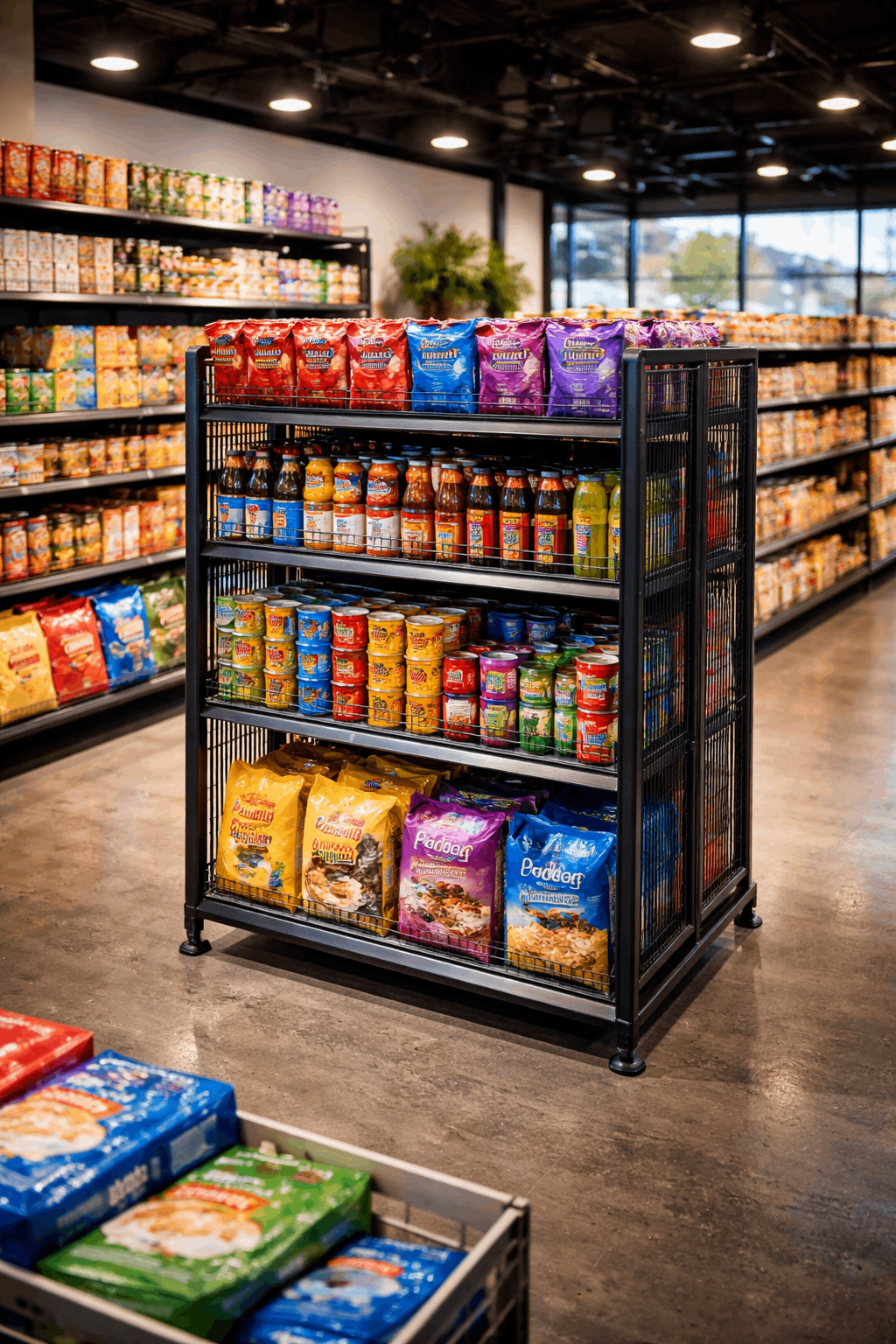
Buyer-focused guidance on display durability, rollout readiness, and long-term retail performance
In consumer packaged goods retail, a display only creates value when it still works after shipping, setup, replenishment, and daily store use. That is the point many display programs miss. A sample can look impressive, but buyers usually care more about whether the unit will stay stable, easy to refill, and consistent across a wider rollout.
For overseas wholesale buyers, that is the real decision point.
- They are not comparing displays only by appearance.
- They are comparing risk, repeatability, and total use value.
- They want to know whether products will stand out in crowded retail space, whether the structure matches the product load, whether the unit is practical for store staff, and whether the same display can be produced again without quality drift.
This is why an effective display should be discussed as a commercial tool, not just as a branded fixture. At Yishang Display, the most useful conversations usually begin with store reality, material logic, packing method, replenishment needs, and long-term performance. Those are the factors that shape whether a program is easy to source, practical to repeat, and worth scaling.
For B2B readers, that framing matters. The real question is usually not whether a display looks good in isolation, but whether it supports a smoother buying program with fewer surprises after approval.
What an Effective CPG Display Needs to Achieve
Why effectiveness means more than visual appeal
Why effectiveness means more than visual appeal
A strong display does more than attract attention. It needs to help shoppers recognize the product quickly, understand the offer without effort, and remove the item easily. In fast-moving categories, that sequence happens within seconds. If the display creates hesitation, weak visibility, or poor access, the product loses momentum at the point of purchase.
For that reason, the most effective display programs usually combine four qualities. They create visibility, keep the message clear, support smooth product access, and remain dependable after installation. These points sound simple, but they are what separate a retail-ready display from a display that works only in a sample review.
For procurement teams, this definition is useful because it connects design to buying risk. A display should not be judged only by the first quote or the first mockup. It should also be judged by whether it is practical to produce, durable enough for the intended use, and easy enough to maintain across multiple stores.
Why Good-Looking Displays Still Fail in Stores
Many display concepts are designed to win approval rather than to work under retail conditions. During the review stage, the focus is often on graphics, shape, novelty, and brand expression. Once the unit reaches the store, different pressures become more important. Traffic flow, aisle width, neighboring fixtures, store routines, and replenishment speed begin to determine whether the concept can keep performing.
Another common weakness is information overload. A display may try to present product benefits, variant choices, promotional language, price cues, and brand messaging all at once. That often slows recognition instead of improving it. When products need to stand out, simpler message hierarchy usually performs better than dense communication.
Buyers also notice the hidden costs behind an attractive concept. If a display takes too long to assemble, depends on too many parts, or needs frequent adjustment, the program becomes less efficient after rollout. This is where total cost often changes. The initial price may look competitive, but the real project cost becomes less attractive when labor, replacements, and service issues are added.
Start with the Buying Situation Before Choosing the Format
A practical display strategy starts with the buying situation. Many teams first discuss whether they need an endcap, freestanding rack, sidekick, or countertop unit. That question matters, but it comes later. The better starting point is how the product is bought in that retail environment.
For quick-turn categories such as beverages, snacks, and convenience items, the display should prioritize fast recognition and easy access. The shopper is not looking for a long explanation. The structure needs to make the product visible, reachable, and easy to take while still staying neat after repeated use.
For categories that invite more comparison, such as pet products, premium packaged foods, and selected lifestyle goods, the display should support browsing. Here, assortment logic matters more. The shopper may compare size, use, flavor, or perceived value, so the display needs tSuppliers show their expertise most clearly at this point.is one of the clearest signals of supplier expertise. When a supplier can explain why a fast-moving beverage program should be engineered differently from a premium giftable product program, the discussion becomes more useful for procurement teams. It shows ca## A Practical Framework Buyers Can Use to Evaluate a Display Program
The five factors that shape retail performance
mework Buyers Can Use to Evaluate a Display Program
A useful way to review a display program is to focus on five linked factors: visibility, recognition, shopability, durability, and executability. These factors work together. If one is weak, the rest usually become less effective.
Visibility is the first filter. The unit needs enough contrast and presence to interrupt routine browsing. Recognition comes next. Once seen, the display should help the shopper understand what the product is and why it matters within seconds. Shopability follows immediately after that. The product should be easy to reach, easy to compare, and easy to remove.
Durability and executability are especially important in B2B sourcing. Durability protects the unit from losing structure, finish quality, and visual order too early. Executability determines whether the design is realistic for mass production, packing, export shipment, assembly, replenishment, and repeat orders. A concept that works only in ideal conditions is not a strong commercial solution.
For wholesale buyers, this is also where supplier comparison becomes clearer. Two display concepts may look similar in a proposal, but the stronger one is usually the one that is easier to pack, easier to install, easier to replenish, and easier to reorder without introducing avoidable variation.
| Factor | What Buyers Usually Care About | What Good Performance Looks Like |
|---|---|---|
| Visibility | Will the unit stand out in crowded retail space? | Clear contrast, visible product presentation, clean header |
| Recognition | Will shoppers understand the offer quickly? | Simple message hierarchy, easy category cues |
| Shopability | Will shoppers and staff use it easily? | Easy reach, logical grouping, smooth access |
| Durability | Will the structure stay reliable over time? | Stable frame, neat appearance, repeated-use strength |
| Executability | Can the program scale with low friction? | Easy setup, practical packing, efficient replenishment |
Placement Changes the Specification
Placement is not a final detail. It changes what the display needs to do, and it often changes the specification as well. Endcaps usually need stronger visibility from a distance. Checkout displays work under a much shorter decision window and therefore need simpler communication and faster product access.
Secondary placements can be effective when they support a clear purchase occasion. A beverage near snacks or a pet accessory near treats can create a more natural buying link than a standard category shelf alone. In-store display tactics like these can increase relevance without forcing the structure to become more complex.
For procurement teams, placement also affects practical choices around size, load support, finish level, and refill access. A premium-zone display may need cleaner presentation and tighter finish control. A high-traffic convenience display may need stronger structure and faster replenishment. When placement is considered early, the program is easier to specify correctly.
This is also one reason why rollout planning should begin before final sampling is approved. If a display is intended for different store formats, buyers should confirm footprint, refill clearance, carton size, and installation logic early rather tha## Material Choice Is Also a Cost-Control Decision
Why material choice affects lifecycle value
Material Choice Is Also a Cost-Control Decision
lay. It influences load capacity, shipping efficiency, breakage risk, replacement frequency, and service life. This is why experienced buyers usually review materials as part of total project risk, not only as a design preference.
Metal display racks often perform well in demanding CPG environments because they provide better load support and long-term stability. This is especially relevant in beverages, pet products, food multipacks, automotive accessories, and other categories where a lighter structure may lose shape too quickly. A durable retail display is valuable because it helps reduce performance decline during the program.
At the same time, metal is not automatically the answer to every brief. Acrylic can improve presentation in premium zones. Cardboard can work well for short campaigns and fast rollouts. Wood can support selected brand aesthetics. In many cases, a hybrid structure is the most practical answer because it balances strength, branding flexibility, and product presentation.
For buyers, the real question is not which material sounds better. It is which material system fits the commercial use case. A lower-cost option can become more expensive if it shortens display life or raises damage rates. A stronger structure may increase the initial price, but lower the total cost of use by reducing replacements and service issues.
This is where metal often has an advantage in long-term programs. When displays are expected to stay presentable under repeated loading and frequent handling, the purchase decision is rarely about the cheapest structure. It is about which structure protects performance over time.
| Material | Typical Procurement Advantage | Best-Fit Use Case |
|---|---|---|
| Metal | Strong structure, long service life, repeat-use value | Heavy-duty or long-term programs |
| Acrylic | Clean look, high product visibility | Premium visibility zones |
| Cardboard | Lower upfront cost, fast production | Short campaigns and seasonal promotions |
| Wood | Distinctive appearance, warmer brand expression | Selected premium or natural-style displays |
| Hybrid | Balanced performance across multiple needs | Programs requiring both strength and presentation |
Replenishment, Maintenance, and Repeat Orders Are Part of the Design
Why post-installation performance affects sourcing value
A display that store staff struggle to refill will usually lose impact quickly.. If store stafngs break down, and the unit stops supporting the product well. Easy replenishment is part of selling performance, not a secondary convenience.
Maintenance matters for the same reason. Buyers are often judged not only by what they source, but by how smoothly that decision works after installation. A display that scratches too easily, shifts under load, or needs constant adjustment creates downstream problems that reduce the value of the original purchase.
Repeatability is just as important in export projects. Buyers often need confidence that future orders will match earlier production, that finish quality will stay stable, and that packaging will support international handling without avoidable damage. This is where production discipline matters more than broad marketing claims.
A useful supplier should be able to discuss these points clearly: how the unit is packed, where the structure is most exposed during transit, which components carry the most stress, and how repeat orders will be controlled. Those details often matter more to buyers than general statements about creativity or service.
Better Results Usually Come from Better Discipline
Some of the most useful improvements in display performance come from small decisions made well. Cleaner product grouping can improve browsing. Better shelf angles can improve pick-up speed. Simpler messaging can improve recognition. These changes may look minor, but they often produce better retail results than adding more visual elements.
This is also why scalable programs usually benefit from restraint. A display that works in one sample review may become difficult to pack, install, or refill across a larger rollout if the structure is too complex. In B2B projects, the most effective solution is often not the loudest one. It is the one that balances presentation, usability, and repeatability with fewer avoidable risks.
For procurement teams, that is a practical advantage. Simpler programs are easier to quote, easier to revise, easier to ship, and easier to repeat. That does not make them basic. It makes them commercially disciplined.
How Buyers Can Assess a Program Before Approval
Buyers do not always have the opportunity to test a display in live retail before production approval, so early evaluation matters. A useful supplier discussion usually includes questions about product weight, placement, replenishment frequency, packing method, assembly time, service life, expected store handling, and repeat-order requirements. These questions often reveal more than the render alone.
A strong program usually shows a good balance between presentation and practicality. The message is easy to understand, the product flow is clear, the structure looks stable, and the design appears realistic for repeat production and shipment. These are good signs that the supplier is thinking beyond the first sampThese signs usually show that the supplier is thinking beyond the first sample.low, weak material logic, or a design that depends too heavily on ideal store conditions can all point to future problems. In wholesale sourcing, the best supplier is often the one that helps reduce uncertainty before rollout.
Conclusion
Effective displays for CPGs are built for retail reality, not just for presentation. They need to help products stand out, support fast buying behavior, and remain reliable after shipping, setup, and replenishment.
For wholesale buyers, the most useful supplier is usually the one that understands both display design and procurement reality. Yishang Display can help develop programs that are practical to source, strong enough to perform, and easier to scale across real retail environments.