

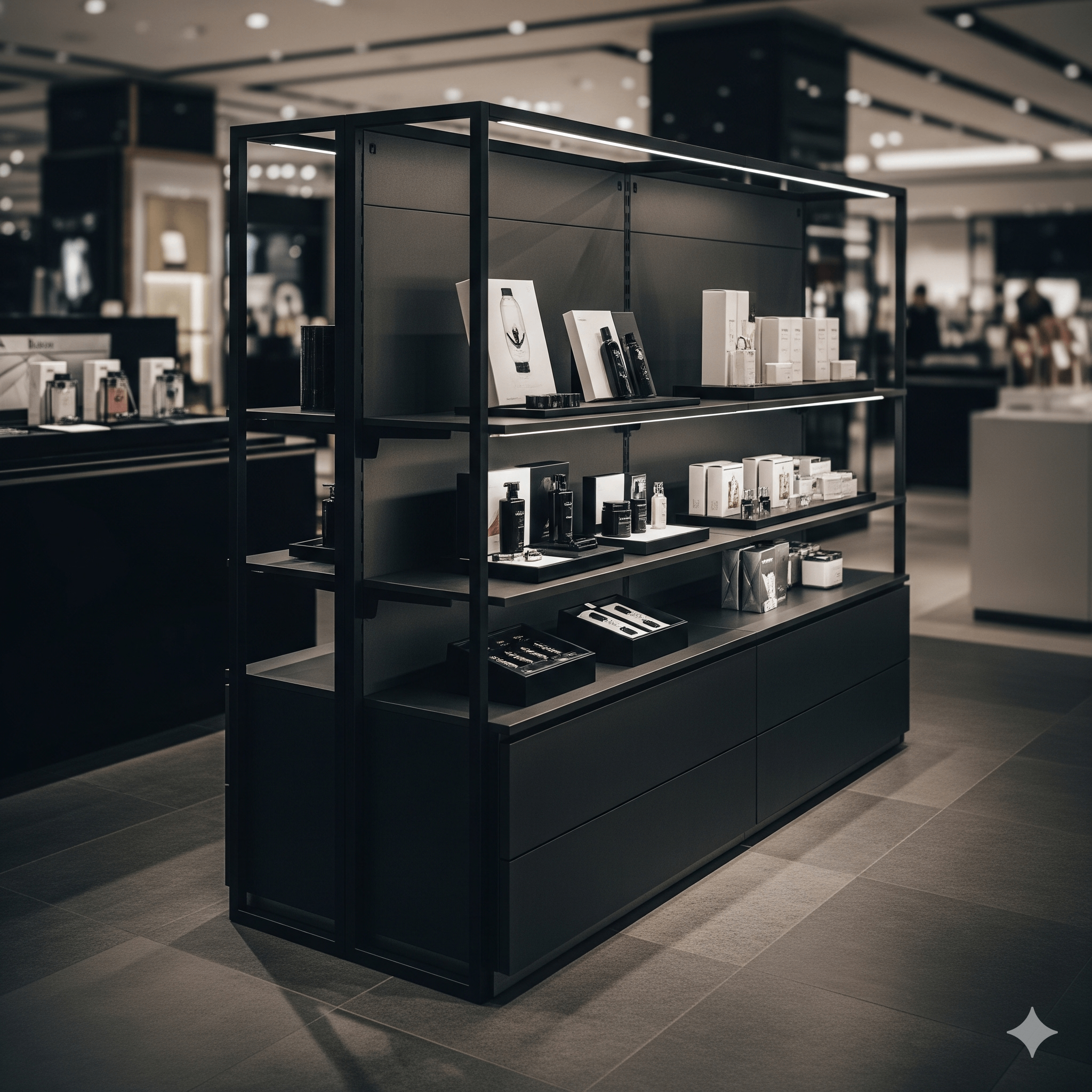
In the intensely competitive landscape of global retail, securing valuable shelf space represents a multi-million dollar supply chain investment. Consequently, multinational brands and wholesale purchasers view the execution of a flawless, scalable merchandising strategy as their primary operational challenge. A successful placement strategy must actually convert foot traffic into measurable revenue to justify the high entry costs.
If a brand relegates a superior product to a dead zone on the store floor, that product essentially becomes invisible. Experts believe that the invisible hand guiding consumer choices remains deeply connected to the precise geometry of spatial merchandising. Therefore, understanding how location impacts purchasing decisions serves as a highly measurable, data-driven science that bridges consumer behavior with rigorous physical engineering.
However, a critical disconnect often plagues global retail campaigns. Specifically, procurement teams frequently invest heavily in heat-mapping analytics and visual aesthetics, only to undermine their efforts by deploying flimsy, off-the-shelf fixtures. When brands secure a coveted retail location through expensive slotting fees, they must ensure the physical foundation supporting that product is indestructible and fully compliant with retailer standards.
The Role of Custom Displays in TCO
Custom retail displays function not merely as passive units, but as active brand ambassadors and critical assets in your Total Cost of Ownership (TCO). Maximizing retail ROI requires a collaborative B2B approach where structural integrity perfectly matches the psychological intent of the placement. Consequently, this guide explores the intersection of behavioral science and advanced custom metal display manufacturing, revealing how strategic placement drives measurable profitability.
The Psychology of Retail Space: Data for Vendor Negotiations
To effectively pitch major retail buyers and secure prime floor space, wholesale purchasers must arm themselves with hard data. Understanding how a consumer navigates a commercial store provides the empirical justification for demanding high-visibility zones.
Furthermore, when planning an aggressive merchandising rollout, procurement teams often face choice paralysis. With so many display formats available, they frequently wonder where to start. Ultimately, the most critical step involves aligning physical assets with the natural physiological responses of the shopper to maximize Gross Margin Return on Inventory Investment (GMROI).
This strategic alignment drastically reduces the risk of poor inventory turnover and wasted marketing budgets. Consequently, by presenting retail category managers with displays optimized for specific traffic patterns, brands can aggressively negotiate better floor positions and secure long-term success.
The Decompression Zone and Sensory Adaptation
The moment a shopper walks through the sliding doors, they enter what retail architects define as the “Decompression Zone.” This critical area, typically spanning the first ten to fifteen feet of the store, serves as a rapid transitional space. In this zone, the shopper physically and mentally adjusts to the new lighting, temperature, and ambient noise.
Because the human brain momentarily overwhelms itself with this sensory recalibration, shoppers remain virtually blind to specific product offerings. Indeed, industry data indicates that consumers completely overlook a significant percentage of products placed directly in this threshold.
Moreover, for B2B brands, understanding this zone remains critical for mitigating wasteful supply chain spending. Procurement managers recognize that placing complex, conversion-oriented fixtures immediately in the decompression zone represents a statistically proven misstep. The shopper is simply moving too fast to make a calculated buying decision at this stage.
Leveraging Broad Brand Building
Instead, wholesale merchandising solutions pitched for this initial area should focus exclusively on broad brand building. Specifically, this zone requires unobstructed sightlines and high-level brand messaging. This approach allows the shopper to acclimate fully before they face a financial commitment deeper in the store.
As a result, brands that respect the decompression zone often see higher engagement rates in subsequent aisles. By strategically holding back complex sales pitches, the brand builds a subtle layer of trust before the shopper reaches the high-conversion zones.
The Biomechanics of the “Invariant Right” Bias
Once the shopper has navigated the decompression zone, another powerful behavioral phenomenon heavily dictates their movement. Specifically, extensive retail studies and foot-traffic analytics have consistently demonstrated the “Invariant Right” bias. Up to ninety percent of consumers will naturally drift to the right upon entering a commercial space.
This subconscious preference stems from the biomechanical reality that the vast majority of the population is right-handed. Consequently, shoppers experience a natural, unforced inclination to step, reach, look, and turn toward the right side of the main aisle.
Furthermore, for brands fighting for premium retail real estate during intense vendor negotiations, this data remains incredibly valuable. The right-hand wall and the immediate right-side primary aisles represent the most lucrative, high-velocity zones in the entire store.
- Strategic Takeaway: Leveraging this shopper navigation bias means prioritizing your highest-margin products along this specific traffic flow pattern. Furthermore, a custom retail display engineered specifically for this right-hand power wall will organically generate vastly more impressions and higher sales velocity.
Combating Decision Fatigue with Visual Isolation
Furthermore, the modern retail environment presents an inherently overwhelming space, making “Decision Fatigue” a primary enemy of sell-through targets. When store aisles become cluttered with an endless array of competing products, the consumer’s cognitive load spikes uncomfortably.
In response, shoppers quickly develop defensive shopping habits to protect themselves from this aggressive sensory overload. They actively ignore surrounding stimuli to complete their core shopping mission faster and exit the ecosystem. Therefore, procurement teams must implement physical design elements to successfully break this visual monotony.
Strategic display placement serves as the ultimate weapon to combat this decision fatigue by intentionally creating visual isolation. Specifically, by deploying standalone physical structures surrounded by negative space, brands provide the highly stimulated brain with a momentary rest.
Consequently, a well-placed, physically distinct metal display acts as a cognitive oasis on the retail floor. It forcefully draws the eye away from chaotic inline shelving and makes the purchasing decision feel effortless, premium, and highly intuitive for the modern buyer.
Macro-Placement Strategies: Dominating Key Retail Zones
Understanding the macro-environment of the store layout allows B2B brands to deploy specific structural assets with surgical precision. Each retail zone dictates a completely different shopper mindset, requiring a tailored approach to manufacturing and material selection.
To leverage the following placement strategies effectively, procurement teams must carefully evaluate the physical risks associated with each zone. Now, let’s examine how to optimize these high-traffic locations to maximize long-term supply chain efficiency and retailer compliance.
Action Alleys and Freestanding Interruptions
Action alleys, often referred to as the main traffic arteries of a retail store, accommodate the highest volume of uninterrupted foot traffic. Brands frequently use heavy-duty floor displays for retail to capitalize on these central veins. This represents an aggressive merchandising tactic designed to function as a physical and visual “speed bump.”
The explicit operational goal here involves intentionally disrupting the shopper’s autopilot state. Ideally, you want to gently force them to decelerate, alter their physical path, and acknowledge the product offering. Because these displays stand untethered from standard wall shelving, they command attention from long distances.
Optimizing 360-Degree Shoppability
To maximize the ROI of these critical speed bump displays, the physical unit must offer true 360-degree shoppability. Consumers will approach these fixtures from multiple, unpredictable angles. Therefore, every single facing must present a structurally sound and compelling merchandising narrative.
However, this high level of exposure introduces severe engineering challenges for wholesale buyers. Furthermore, since brands place these displays directly in the middle of heavy store traffic, they remain highly vulnerable to high-impact collisions. Specifically, shopping carts, restocking pallet jacks, and industrial floor scrubbers pose a daily threat to structural integrity.
Consequently, brands executing massive global rollouts must partner with a custom metal display manufacturer who specializes in heavy-duty bases. Lightweight corrugated shippers placed in a high-traffic action alley will inevitably warp or collapse within weeks. Such failures not only destroy premium brand perception but also present severe safety liabilities, potentially leading to costly retailer chargebacks.
The Endcap Powerhouse and Structural Load Demands
If action alleys are the major highways, endcaps represent the premium billboards located at the busiest intersections. Retail endcap displays sit at the exact end of standard shelving gondolas, facing directly out into the main aisles.
These units function as undisputed, high-velocity powerhouses specifically engineered to entice customers to make unplanned purchases. Indeed, retail analytics frequently show that successful endcap placements can exponentially increase a product’s sales velocity. Moreover, this remains especially true during peak seasonal promotional events compared to standard inline aisle placement.
Material Sourcing for High-Volume Turnover
The sheer volume of product turnover expected from endcaps necessitates an absolutely unyielding, industrial-grade physical structure. Specifically, high-traffic retail zones require fixtures that can securely hold massive amounts of dense inventory simultaneously. This prevents the display from looking picked-over and empty during peak weekend shopping hours.
Furthermore, for industries like automotive hardware, bulk liquid beverages, or pet food, this explicitly means deploying high load-bearing racks. Holding hundreds of pounds of dense inventory demands robust, flawless metal fabrication to prevent floor collapse.
Consequently, wholesale buyers must seek out manufacturing partners capable of utilizing high-grade cold-rolled steel and precision robotic welding. This approach ensures the merchandising remains perfectly stable over a multi-year lifespan. Additionally, such durability ensures full compliance with maximum weight-per-square-foot restrictions mandated by major global retailers.
Point of Sale (POS) and the Engineering of Compact Density
The checkout counter represents the final, highly lucrative opportunity to influence a consumer before they exit. Point of sale display stands brilliantly capitalize on a psychological concept known as “dwell time marketing.”
As customers stand idle waiting to process their planned purchases, their psychological guard significantly lowers. Consequently, they become highly susceptible to rewarding themselves with small, low-cost, high-margin items. Many procurement professionals actively research pop vs pos formats to determine the optimal solution for these crowded areas.
Understanding Footprint Restrictions
When evaluating pos displays and what’s the difference compared to standard aisle shelving, the operational answer lies entirely in footprint restrictions. Retailers fiercely protect checkout counter space to ensure rapid transaction times and maintain strict ADA compliance.
Therefore, comparing standard racks vs pos displays reveals that checkout units must provide extremely compact density. The critical point of purchase display engineering challenge involves maximizing product visibility while occupying an absolute minimum physical footprint.
Moreover, this complex requirement often necessitates the sophisticated development of mixed-material POS displays. Leading manufacturers like Yishang Display routinely recommend combining heavy, low-profile stainless steel bases with crystal-clear molded acrylic tiers. As a result, this intelligent material synergy prevents tipping hazards while allowing the visual focus to remain entirely on the product rather than the structural fixture.
Outside-The-Entrance Interception and Weather Degradation
Forward-thinking brands do not wait for the customer to enter the climate-controlled store to begin executing their strategy. Instead, they deploy outdoor retail displays strategically outside the primary entrance to intercept foot traffic early.
These robust sidewalk racks act as a physical invitation, showcasing seasonal promotions or bulk hardware items. Ultimately, engineers design these displays to draw the consumer’s eye from the parking lot and proactively compel them to enter the store.
Engineering for Harsh Environments
However, the engineering demands for these outside displays represent the most extreme end of the manufacturing spectrum. These fixtures face relentless daily barrages of UV radiation, humidity, and heavy rain.
Standard indoor fixtures utilized outdoors will rapidly oxidize, peel, and degrade structurally within a matter of days. Consequently, to protect the brand’s premium image and avoid retailer penalties for unsightly fixtures, global wholesale buyers must source uncompromisingly weather-resistant display stands.
Furthermore, this mandates advanced, industrial-grade surface treatments like galvanized steel bases with rigorous anti-corrosion chemical baths. Only through specialized metal fabrication and strict salt-spray testing can an outdoor rack maintain its structural integrity across multiple punishing retail seasons.
Micro-Placement: The Engineering of Merchandising Agility
Once the macro-location of the physical fixture is successfully negotiated, the complex science of placement zooms in. The precise positioning of the product on the rack itself profoundly impacts both consumer interaction and daily operational efficiency.
Experienced supply chain managers recognize that a display is only as good as its ease of restocking and retail floor planogram compliance. Therefore, let’s explore how micro-merchandising techniques directly affect consumer behavior and critical wholesale purchasing decisions.
Vertical Zoning and Tool-Less Adjustability
A foundational principle of visual merchandising remains perfectly encapsulated in a famous industry adage. Presenting your most profitable items exactly at eye level constitutes the ultimate strategy for driving maximum sales volume.
This vertical merchandising strategy mathematically divides the physical display into distinct cognitive and biomechanical zones. Indeed, decades of deep sales data analysis have proven definitively that the retail strike zone receives the vast majority of engagement.
Consequently, products placed precisely within this golden vertical focal point sell at significantly higher velocities. Therefore, brands must meticulously map their planograms to ensure their proven best-sellers sit squarely within this highly coveted visual strike zone.
Overcoming Operational Limitations
However, executing this precise vertical placement flawlessly across thousands of global retail locations remains incredibly difficult. Because product packaging sizes constantly evolve, rigid, one-size-fits-all welded shelving quickly becomes an operational liability on the floor.
Ultimately, high-quality custom metal display racks must feature precision-engineered slotted uprights and highly modular, heavy-duty brackets. Crucially for B2B applications, this allows retail staff to effortlessly micro-adjust shelf heights without specialized tools. Furthermore, this engineering agility ensures high planogram compliance rates, guaranteeing revenue-driving items remain perfectly aligned regardless of packaging updates.
Strategic Cross-Merchandising and Custom Tooling
Beyond vertical alignment, the relational placement of different products serves as a highly effective tactic for driving Average Order Value. Cross-merchandising strategically moves away from organizing stores strictly by rigid, isolated product categories.
Instead, this strategy organizes merchandise by consumer solution and broader lifestyle context. Complementary product placement groups items that naturally go together in the consumer’s actual life. For example, retailers might place high-margin artisan cheese and premium metal corkscrews on a dedicated shelf integrated into a wine display.
Managing Structural Complexity
Executing this multi-category strategy remains highly complex for wholesale buyers navigating display and packaging design variations. A single physical fixture must gracefully accommodate vastly different packaging formats, volumetric weights, and spatial dimensions simultaneously.
Therefore, this requires the immediate deployment of highly versatile, multi-purpose display racks. Furthermore, partnering with a manufacturing facility capable of advanced custom tooling is absolutely essential to achieve this level of seamless integration.
Ultimately, the brand will likely need a customized structural chassis that integrates various holding mechanisms without looking cluttered. Specifically, this might include heavy-duty pegboard hooks, flat reinforced metal trays, or even integrated gravity feed displays for cylindrical bottles. Unifying these diverse elements on one cohesive, structurally sound metal frame requires immense manufacturing expertise.
The Hidden ROI: Logistics, Flat-Packing, and Total Cost of Ownership (TCO)
For highly experienced wholesale purchasers, evaluating a display strategy does not stop at the visual aesthetics on the store floor. Indeed, the true financial success of strategic display placement depends heavily on the Total Cost of Ownership (TCO).
This comprehensive metric includes raw manufacturing costs, international ocean freight, domestic warehousing, and in-store assembly labor. Consequently, a beautifully designed metal display results in a financial failure if it costs too much to ship across the ocean in a container.
Moreover, this is exactly where advanced knock-down display engineering directly impacts your bottom line. Elite OEM manufacturers like Yishang Display design retail fixtures utilizing Knock-Down (KD) or sophisticated flat-pack engineering principles.
Enhancing Freight Optimization
By designing complex metal displays that can be securely disassembled and packed flat, manufacturers drastically reduce volumetric weight. Furthermore, this allows wholesale buyers to fit significantly more units into a standard 40HQ shipping container, exponentially driving down landed costs.
In addition to shipping savings, flat-pack retail displays reduce the storage footprint in regional distribution centers. This allows brands to maintain a more agile inventory, responding quickly to fluctuations in market demand without incurring excessive warehousing fees.
Strategy for Labor Reduction
Furthermore, these KD designs must be engineered for rapid, intuitive assembly on the retail floor. If a display takes a retail associate two hours and complex power tools to assemble, it quickly becomes an operational nightmare.
Consequently, displays must feature interlocking metal components and pre-threaded inserts to ensure rapid, frustration-free deployment. A fast assembly time directly correlates to higher execution rates across retail chains. If the assembly process is too complex, retailers may simply leave the fixture in the backroom, destroying the meticulously planned strategic placement campaign.
The Physical Prerequisite: Why Prime Locations Demand Certified Manufacturing
Strategic display placement functions, at its core, as a high-stakes financial negotiation between global brands and massive retail chains. Brands leverage their market share and pay premium slotting fees to secure coveted action alleys and endcaps.
However, this massive financial investment instantly vaporizes if the physical display rack structurally fails under immense pressure. Therefore, when evaluating the ultimate return on investment over a multi-year campaign, the pedigree of the manufacturer remains paramount.
Ultimately, custom metal display racks serve as the undisputed prerequisite for dominating and retaining prime retail locations over long periods. High-grade steel and aluminum offer unparalleled tensile strength and structural fatigue resistance that cheap extruded plastics simply cannot match.
Furthermore, this ensures that a properly engineered metal frame will absolutely not bow or warp under extreme weight. Nor will it shatter when inevitably struck by heavy restocking equipment during late-night store operations.
Engineering Standards and Mitigating Retailer Chargebacks
For global brands, the decision to invest in durable retail fixtures extends far beyond simple visual aesthetics. Indeed, it remains strictly a matter of uncompromising retail safety standards, liability mitigation, and complex international trade compliance.
Major global retail chains maintain incredibly rigorous retail vendor compliance standards to protect their customers and facilities. Consequently, any fixture that poses even a subtle tipping hazard or features sharp unfinished metal edges will face immediate rejection at the distribution center.
As a result, such rejections lead to catastrophic logistical delays, massive financial chargebacks, and permanently damaged vendor scorecards. Therefore, exploring different types of retail fixtures requires a deep, uncompromising understanding of these hidden operational compliance risks.
Certified Manufacturing as a Strategic Asset
This is precisely where the certified capabilities of your manufacturing partner become the ultimate deciding factor. Sourcing complex displays from a facility with proven, internationally verifiable credentials remains non-negotiable for large-scale B2B buyers.
Procurement managers must verify that their suppliers adhere to strict quality control protocols. Without these certifications, the risk of a global rollout failing due to structural inconsistency becomes unacceptably high.
Rigorous Engineering Standards for B2B Wholesale Compliance:
| Critical B2B Standard / Requirement | Strategic Implication for Wholesale Brands | Required Engineering & Manufacturing Solution |
|---|---|---|
| Extreme Load-Bearing Capacity | Prevents structural collapse; mitigates brand liability and protects vendor compliance scorecards with major retailers. | Precision CNC laser-cut 14-gauge cold-rolled steel; reinforced robotic welding; 3D dynamic weight load testing. |
| Logistical Efficiency (Volumetric Weight) | Drastically reduces international ocean freight costs and domestic warehousing expenses across global rollouts. | Advanced Knock-Down (KD) engineering; flat-pack retail displays; tool-less assembly design. |
| Environmental & Trade Compliance (RoHS) | Exporting fixtures to strict international markets legally requires the total restriction of hazardous substances. | Exclusive use of RoHS compliant raw materials; application of non-toxic, lead-free powder coating. |
| Unwavering Quality Consistency (ISO 9001) | Guaranteeing that a massive wholesale order of 10,000+ units performs identically with zero defect tolerance. | ISO 9001 certified manufacturing protocols; mandatory multi-stage QA/QC inspections; automated precision stamping. |
Looking at creative displays now, it remains evident that top-tier brands need considerably more than just a basic metal fabricator. Partnering with an established, highly sophisticated manufacturer like Yishang Display guarantees that these rigorous physical prerequisites are consistently met.
Furthermore, a dedicated facility capable of flawlessly producing high-quality custom displays annually ensures your strategy scales globally without friction. Additionally, stringently maintaining ISO 9001 and RoHS compliance ensures your ambitious campaigns are exported globally without costly delays or retailer rejection.
Conclusion: Turning Merchandising Strategy into Unbreakable B2B Assets
The comprehensive science of strategic display placement proves unequivocally that geographical location fundamentally alters purchasing velocity. Mastering the physical retail floor constitutes a masterclass in applied behavioral psychology, spatial analytics, and strict supply chain management.
However, for B2B procurement professionals, this psychological strategy remains highly vulnerable until it is anchored by a logistically optimized structural fixture. Maximizing retail ROI demands a definitive transition away from disposable, risky, off-the-shelf racking solutions.
Ultimately, securing, holding, and dominating premium high-traffic locations requires wholesale retail displays custom-engineered from the ground up. These assets must withstand the punishing environment of modern commerce while continuously optimizing your Total Cost of Ownership.
By partnering with a seasoned global manufacturer like Yishang Display, brands can seamlessly transform abstract strategies into indestructible physical assets. Therefore, do not leave your retail floor performance to chance or subpar engineering. Give us a call today or ask an expert to evaluate your structural requirements. Ultimately, let us help you close displays by engineering a fully customized, compliant, and highly profitable wholesale solution for your next global rollout.