

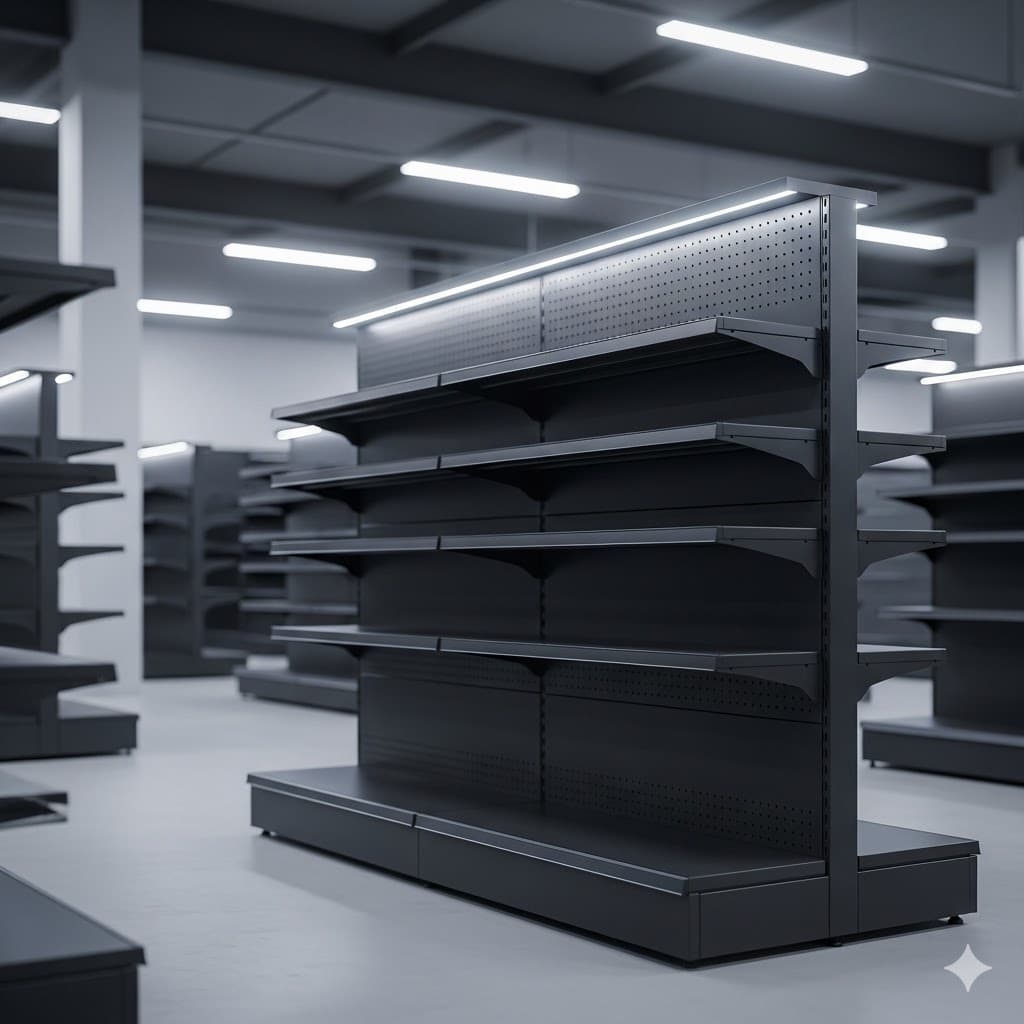
In the competitive landscape of global distribution, the margin on retail fixtures isn’t just found in the markup—it’s secured in the logistics, the lifecycle, and the engineering precision. For wholesalers and procurement directors, a display rack is not merely store furniture; it is a scalable asset that dictates the efficiency of your supply chain.
As we approach 2026, the market is shifting. Retailers are demanding modularity to match their changing planograms, and they are rejecting “disposable” infrastructure. The degradation of low-quality legacy fixtures has become a silent liability, leading to increased warranty claims and damaged client relationships.
This guide is not a basic introduction to displays. It is a strategic guide to changing and upgrading your procurement standards. It is written for the buyer who needs to balance brand awareness and structural integrity with the hard realities of ocean freight costs.
At Yishang Display, we approach this not just as manufacturers, but as supply chain partners. With over 26 years of data from 50 global markets, we have identified the specific engineering flaws that drain wholesaler profits—and the “Total Landed Cost” strategies that restore them.
I. The Wholesaler’s Diagnostic: Identifying Hidden Liabilities
The decision to refresh your product catalog is often driven by aesthetic trends. However, the decision to upgrade your structural specifications should be driven by risk management. Waiting for retailer complaints about retail display fatigue is a reactive strategy that damages your vendor rating.
Leading distributors perform proactive audits. They look beyond the paint job to identify the clinical symptoms of engineering failure that occur in high-traffic environments.
The Cost of “Value Engineering” Mistakes
Display fatigue and mistakes in procurement often stem from “Value Engineering” gone wrong—reducing material thickness to save cents, only to lose dollars on failures.
- The Joint Failure: In big box stores, dynamic loading (restocking) stresses welding points. Standard low-carbon steel without proper reinforcement develops micro-fractures.
- The “Wobble” Factor: Wobbly display stands are a safety violation. If a rack deflects more than 1/200th of its span under load, it fails international safety standards (such as ASTM or ISO).
Retail displays are subject to rigorous abuse. A proactive upgrade strategy mitigates this liability, positioning your inventory as the “Commercial Grade” choice in a market flooded with residential-grade alternatives.
II. Strategic Inventory Management: Consolidating Your SKUs
One of the biggest pain points for wholesalers is SKU proliferation. Carrying a different rack for every retail sector is inefficient. A smart refresh strategy focuses on modular versatility.
Instead of asking “What types of retail displays do I need?”, savvy buyers ask: “How can one system serve multiple verticals?”
The Modular Ecosystem Approach
- Universal Uprights: Sourcing systems with standard slotting pitches (e.g., 25mm or 50mm) ensures that a single upright column can accept heavy-duty shelves for hardware stores and light-duty hooks for pharmacies.
- Interchangeable Headers: Your product displays to the retailer should be blank canvases. By stocking standard frames with interchangeable magnetic or slide-in branding headers, you allow retailers to update their marketing without replacing the steel structure.
This approach reduces your warehousing burden. Most fixtures fall into one of these modular categories. By focusing on systems where display includes multiple cross-compatible parts, you increase your inventory turnover rate.
Creative displays now mean “Logistically Smart Displays.” Wholesalers who adopt this modular mindset can respond to market shifts faster, offering immediate solutions to retailers who need to know their supplier is agile.
III. The Engineering Audit: Specs That define Longevity
When reviewing factory bids, the specifications sheet is your first line of defense against future claims. While retail displays offer visual appeal, their ROI is determined by metallurgy.
Displays not sure of their structural engineering will fail in the field. Here is what an expert procurement officer looks for in a manufacturing partner.
Material Science: SPCC vs. The Rest
The industry standard for high-end distribution is Cold-Rolled Steel (SPCC).
- Why it matters to B2B: Unlike hot-rolled steel, SPCC offers tighter dimensional tolerances. This ensures that when a retailer buys an add-on shelf from you three years later, it fits perfectly.
- The Surface Bond: Product displays a distributor ships must withstand humidity in sea containers. We utilize a multi-stage pre-treatment (acid pickling and phosphating) before powder coating. This ensures the coating bonds at a molecular level, preventing the “under-film corrosion” that creates rust bubbles.
Testing Protocols as a Value Add
Does your current supplier provide load test reports? Big box stores often require certified proof of capacity.
- Salt Spray Testing: Essential for coastal markets.
- Load Deflection Testing: Ensuring shelves return to true flat after the load is removed.
Partnering with a factory that provides this data allows you to market your products as “Certified Commercial Grade,” justifying a premium price point over generic competitors.
IV. Logistics Economics: Optimizing the “Landed Cost”
This is the section that impacts your bottom line the most. The ex-works price is irrelevant if the freight kills your margin. Transporting assembled fixtures is essentially paying to ship air.
Some of the reasons profitable wholesalers switch suppliers are purely logistical.
The Flat-Pack (K/D) Revolution
To combat volatile shipping indices, Yishang Display engineers for density. We utilize rigorous Knock-Down (K/D) design.
- The Math: A pre-assembled gondola might take up 1.5 CBM. An optimized K/D version takes 0.3 CBM.
- The Result: You fit 5x more units in a 40HQ container. This dilutes the shipping cost per unit significantly.
Displays are a fundamental volume eater. By optimizing the packaging, we effectively lower your cost basis.
The “Last Mile” Assembly Factor
However, K/D design must be intuitive. If it takes a retailer 2 hours to build a rack, they won’t buy from you again. It’s essential to balance density with simplicity.
- Tool-Free Assembly: Utilizing keyhole slots and snap-lock designs.
- Visual Instructions: Providing QR codes linked to assembly videos, not just paper manuals.
This attention to the “unboxing experience” reduces technical support calls to your sales team and builds trust with your downstream retailers.
V. OEM & ODM: The Power of Customization
In a market flooded with standard catalogs, the ability to offer “Semi-Custom” solutions is a powerful differentiator. Changing and updating your service offering to include OEM capabilities opens doors to larger retail chains.
Adapting to Planograms
Retailers don’t want to design their store around your rack; they want your rack to fit their store.
- Dimensional Agility: A factory with laser-cutting capabilities can adjust the width of a standard back-panel by 50mm to fit a specific aisle without retooling molds.
- Branding Permanence: Laser-cutting a retailer’s logo into the steel header offers a permanence that stickers cannot match.
Learn more about how Yishang Display handles high-mix, low-volume customization requests. This flexibility allows wholesalers to bid on tenders that require specific branding or dimensions, expanding your addressable market.
VI. Sustainability as a Procurement Mandate
Sustainability is no longer a “nice to have”; it is a compliance requirement for many global brands. Upgrading your retail inventory to meet these standards future-proofs your business.
- Recyclability: Steel is 100% recyclable. Unlike mixed-material or plastic fixtures, end-of-life disposal is net-positive.
- Compliance: Ensuring your powder coatings are RoHS compliant (free of lead and heavy metals) is non-negotiable for entering markets like the EU or California.
By promoting the sustainability of your metal fixtures, you align with the ESG goals of major retailers, making your catalog the preferred choice for procurement officers at big box stores.
VII. Conclusion: The Strategic Refresh
The decision to update your wholesale catalog is a strategic calculation. It involves balancing risk (liability), cost (logistics), and longevity (engineering).
The ROI for a wholesaler is realized through:
- Reduced Freight Costs via high-density packaging.
- Minimized Warranty Claims via superior metallurgy.
- Increased Market Share via modular versatility.
Retail displays offer the foundation for your clients’ success. Ensure that foundation is solid.
If you are not sure where to start with an inventory audit, or if you need an expert close to the manufacturing floor to review your specs, we are here to assist.
Give us a call or reach out to our engineering team. Let’s discuss how we can optimize your fixture inventory for the coming fiscal year. Ask an expert at Yishang Display about streamlining your supply chain today.
Frequently Asked Questions (FAQ) for Wholesalers
Q: How does SPCC steel differ from standard steel for retail applications? A: Product displays made from Cold-Rolled Steel (SPCC) offer superior surface smoothness and consistency compared to hot-rolled steel. For a distributor, this means fewer finish defects and higher consistency across large batches, which is critical when supplying rigorous clients like big box stores.
Q: What is the target “pack density” I should look for to optimize freight? A: You should aim for a K/D (Knock-Down) factor that reduces volume by at least 60-70% compared to assembled dimensions. Displays are a fundamental logistics cost; optimizing this ratio is the fastest way to increase margin.
Q: How do modular systems reduce my inventory risk? A: By stocking universal uprights and bases that accept various accessories (shelves, hooks, baskets), you reduce dead stock. You aren’t stuck with “shoe racks” that don’t sell; you have “universal racks” that can become shoe racks or hardware stands.
Q: Can Yishang Display handle OEM requests for small regional chains? A: Yes. We understand that wholesalers serve diverse clients. We offer flexible MOQ terms for OEM modifications, allowing you to win contracts with regional chains that need specific creative displays now.