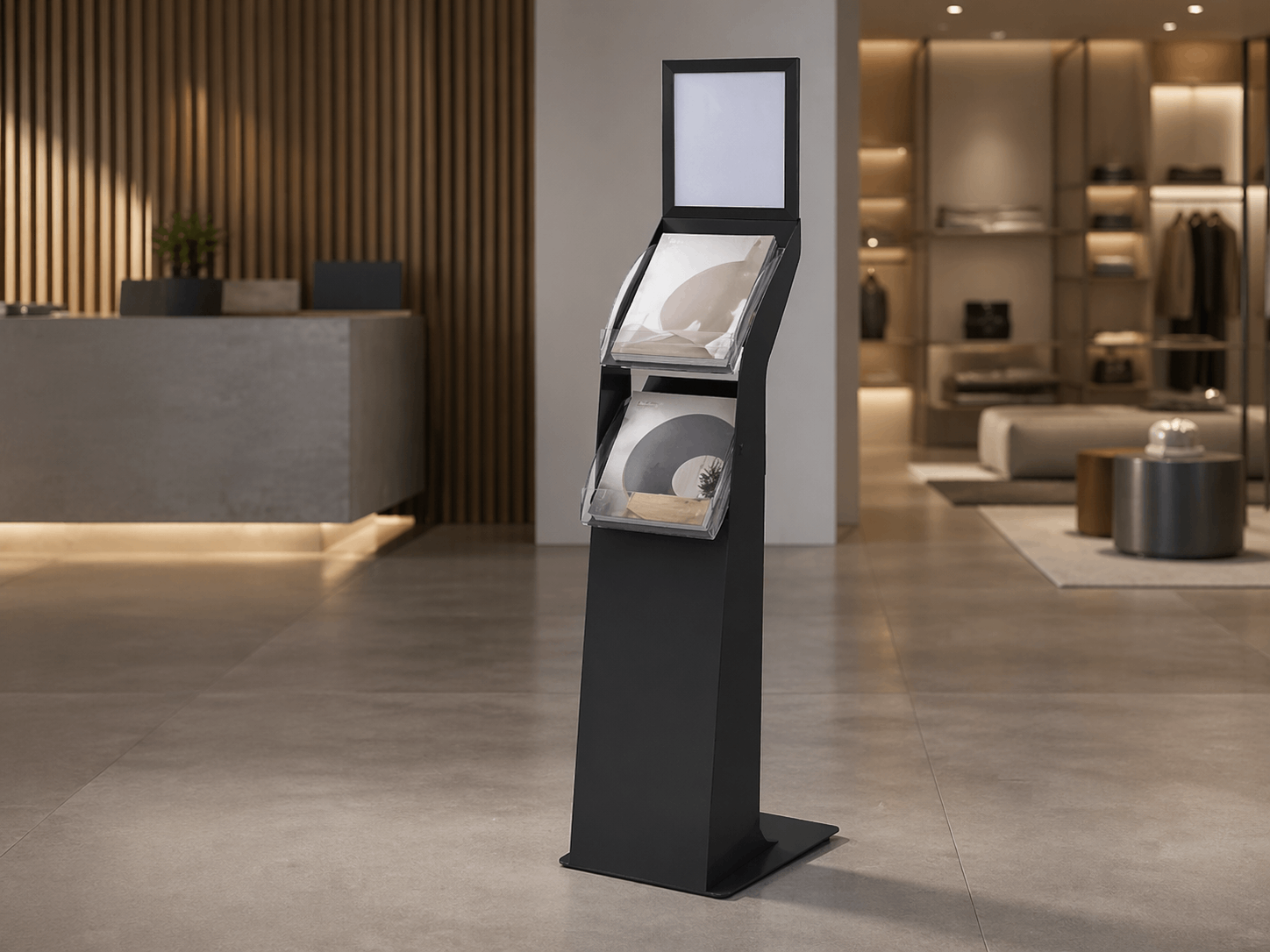
A free stand display with brochure holders brochure floor display stand keeps brochures, catalogs, flyers, magazines, and promotional literature visible, neat, and easy to take. For overseas importers, wholesalers, distributors, and retail project buyers, it works as more than a simple literature holder. It can become a repeatable display solution for bulk retail programs, showroom projects, and promotional campaigns.
The stand shown in the image has a slim black upright body, clear front-facing brochure holders, a stable metal floor base, and a top header panel for branding. The metal structure gives the product the strength needed for stores, showrooms, exhibitions, reception areas, and service spaces. When a project needs better brochure visibility or stronger promotional graphics, buyers can add acrylic pockets, printed panels, or other visual details.
In B2B sourcing, appearance is only part of the decision. Buyers usually look closely at pocket size, base stability, surface finish, packing volume, and repeat-order consistency before placing a bulk order. Those details affect not only how the display looks in a store, but also how smoothly the order moves through sampling, production, shipment, and resale.
A countertop brochure holder depends on available counter space. A wall-mounted holder depends on the wall condition and installation method. A freestanding brochure floor display stand gives buyers more freedom because it can stand near entrances, waiting areas, product zones, service counters, and exhibition booths without extra installation work.
That flexibility helps wholesalers and distributors serve several downstream markets with one product format. The same style can suit retail stores, car dealerships, hotels, offices, print shops, exhibition contractors, and service providers with only small adjustments to graphics, color, or pocket layout.
For buyers building a resale product line, this kind of flexibility has real value. A neutral version can work as a standard literature display rack, while a branded version can support a retail rollout or promotional campaign. The same metal structure can support stock-style purchasing as well as project-based customization.
The pictured configuration uses a single-sided, front-facing structure rather than a rotating wire rack. This style suits buyers who want a clean brand-facing presentation with a header sign, rather than a high-capacity carousel display with literature on multiple sides.
The narrow upright design helps the stand fit into aisles, reception corners, showroom walkways, and booth spaces without taking up too much floor area. In commercial spaces, every display position needs to balance visibility, customer traffic, and space efficiency. A slim floor display stand makes that balance easier.
The clear front-facing holders keep printed covers visible, so customers can identify product sheets, service guides, catalogs, or campaign leaflets before picking them up. A suitable pocket angle also leaves enough finger space, making the stand easier to browse and easier for staff to refill.
The metal body and base support the full display during daily use. Staff may move, refill, or reposition the stand many times. A stable metal frame helps reduce shaking, leaning, and deformation, especially when the display holds thicker catalogs or several types of printed literature.
The image shows a compact literature presentation style with transparent holder sections and a branded top sign. During custom production, buyers can adjust the number of pockets according to brochure size, paper thickness, and display capacity.
Pocket size makes a noticeable difference in daily performance. A4, A5, DL, letter-size flyers, folded brochures, magazines, and catalogs all need different pocket widths, depths, and angles. A narrow pocket may bend the paper. An overly deep pocket may hide the cover. A shallow pocket may not support heavy catalogs well.
For wholesale supply, standard pocket sizes often sell more easily because they fit common printed materials used in retail and service industries. For brand projects, buyers can adjust the pocket layout around a specific brochure, catalog, or campaign kit, so the literature fits the stand instead of being forced into a generic holder.
| Literature Type | Pocket Design Focus | Typical B2B Use |
|---|---|---|
| Flyers and leaflets | Easy pick-up, shallow depth, clear cover exposure | Promotions, events, service notices |
| A4 or letter-size brochures | Standard width, stable front visibility | Product sheets, service guides, catalogs |
| DL brochures | Narrow pocket, neat vertical presentation | Hotels, tourism, finance, healthcare |
| Magazines and booklets | Wider opening, deeper support, stronger holder angle | Publishing, lifestyle retail, showrooms |
| Mixed literature | Divided pockets or custom pocket layout | Exhibitions, reception areas, multi-product displays |
The top header panel gives the stand more marketing value. It can show a logo, QR code, category name, product image, campaign slogan, or promotional message. A clear header helps customers understand the literature before they take it.
For distributors, this header area makes the product more adaptable. The same metal body can carry different printed graphics for different buyers, markets, or seasonal campaigns. When a campaign changes often, buyers can choose a replaceable board or insert-style panel.
This detail may look simple, but it matters in repeat business. A customizable header allows the display to support different retail programs without redesigning the entire stand. That can save time for buyers who manage several brands, regions, or campaign cycles.
Metal works best for the main frame, support body, and base because these parts determine strength, balance, and service life. In high-traffic retail spaces and repeated commercial use, a metal brochure display stand usually gives buyers more confidence than temporary lightweight structures.
Buyers can choose powder coating, painting, or a customized finish. Black, white, grey, and brand-matched colors often fit retail display projects well. A consistent finish helps the product look professional when buyers order it in quantity.
Acrylic pockets improve brochure cover visibility. Printed panels support campaign graphics, while wood accents may suit hospitality, lifestyle, or premium retail environments. These optional materials should support the display purpose while the metal structure remains the main strength of the product.
| Item | Details |
|---|---|
| Product Type | Freestanding brochure floor display stand |
| Main Material | Metal |
| Optional Materials | Acrylic, wood, printed panel, cardboard graphic |
| Pocket Options | A4, A5, DL, letter size, catalog size, or custom size |
| Display Structure | One-sided, front-facing floor-standing literature display |
| Base Style | Flat metal base for stable floor placement |
| Pocket Style | Clear front brochure holders or customized pocket design |
| Header Panel | Logo, QR code, slogan, product image, or campaign message |
| Surface Finish | Powder coating, painting, or custom finish |
| Common Colors | Black, white, grey, or brand color |
| Assembly Option | Knock-down or assembled structure |
| Buyer Type | Importers, wholesalers, distributors, retail chains, display solution companies |
| Payment Terms | EXW, FOB, or CIF can be discussed according to shipment plan |
| Product Origin | China |
| Service | OEM and ODM customization |
| Lead Time | Around 30 days, depending on quantity and project details |
| Certification | RoHS, ISO 9001 |
Buyers get a clearer picture when they review these specifications as a complete purchasing set. Pocket depth affects paper visibility and may also affect packing space. A larger base improves stability but may increase carton size. A knock-down structure may save shipping costs, but the end user still needs a simple assembly process.
Good customization starts with the literature the stand needs to hold. Buyers should confirm paper size, paper thickness, expected refill quantity, number of pockets, display location, and branding requirements before quotation. These details influence the frame, base, pocket layout, packaging, and final unit cost.
For wholesale distribution, a standard model with flexible branding often works well. It allows the buyer to sell the same core structure to different customers. For retail chain or brand project orders, the design may need a special header panel, color matching, private-label packaging, or modified pocket arrangement.
Packaging should enter the discussion during design, not after production. A knock-down structure can reduce carton volume and improve container layout, while an assembled unit may reduce installation time. The better choice depends on order quantity, destination market, warehouse handling, and downstream customer expectations.
Before mass production, a drawing, rendering, or sample helps confirm the key details. Buyers can review the pocket layout, base proportion, header position, color, finish, logo placement, and packaging method. After the buyer approves the sample or drawing, the production team can use it as the reference.
This step matters for overseas buyers because a procurement team, distributor, or retail client may need to review the sample. A clear approval process reduces misunderstandings before production and makes bulk production more predictable.
Bulk production may include metal cutting, bending, welding, polishing, surface treatment, assembly checking, and packaging inspection. When buyers need shipment support, Yishang Display can discuss shipment arrangements according to agreed trade terms and project requirements.
Quality for this product involves more than appearance. The display should stand steadily, hold literature neatly, and remain easy to use after repeated refilling. Inspection should cover overall dimensions, base balance, pocket alignment, pocket angle, surface finish, header graphic position, assembly fit, and packaging protection.
For wholesale orders, consistency matters. One good sample does not help if the bulk order has uneven color, unstable bases, weak carton protection, or inconsistent pocket angles. Reliable batch quality helps buyers reduce complaints, protect resale margins, and build trust with downstream customers.
Packaging quality also adds product value. Metal surfaces, acrylic holders, printed boards, and coated parts can suffer damage during transport if inner protection is weak. Proper carton design, protective material, and clear markings help reduce transit damage and make distribution easier after arrival.
For this specific style, buyers should first decide whether they need a slim branded display or a high-capacity rotating brochure rack. A rotating black wire rack works well when the goal involves many leaflet categories from multiple sides. This model works better when the buyer wants selected brochures, a cleaner front-facing brand image, and a controlled display position.
When comparing suppliers, unit price should not become the only factor. Overseas buyers often evaluate total purchasing value, including structure, material thickness, surface finish, packing method, shipping volume, lead time, customization ability, and repeat-order reliability.
A display with a very low price may become expensive if it has poor balance, high damage risk, inefficient packing, or unclear assembly. Buyers should review the product as a complete purchasing project, not only as a metal stand with brochure pockets.
The final sales channel should also guide the design. A distributor may prefer a neutral model with standard pockets. A retail chain may need brand color and consistent packaging. A trade show buyer may care more about easy transport and fast installation.
Yishang Display develops metal retail display racks and customized display structures for overseas B2B buyers. For this brochure floor display stand, the support focuses on stable metal construction, practical pocket design, flexible branding, export packaging, and bulk order production.
Customization can include metal structure, acrylic holders, color finish, printed header panel, logo graphics, packaging method, and OEM or ODM requirements. RoHS and ISO 9001 certification support quality management, while export experience helps buyers discuss packing, trade terms, and shipment planning more efficiently.
Yes. Buyers can customize pocket width, height, depth, angle, and layout for A4, A5, DL, letter-size brochures, catalogs, flyers, magazines, or special printed materials.
Yes. It suits importers, wholesalers, distributors, display solution companies, and retail project buyers who need repeatable production, custom branding, and export packaging.
Yes. Acrylic can work as clear brochure holders, while metal remains the main structure for strength and stability.
Yes. The header can show a logo, QR code, campaign slogan, product image, category sign, or replaceable printed graphic.
Please provide brochure size, pocket quantity, display size, material preference, target quantity, logo artwork, color requirement, packaging needs, and preferred trade terms such as EXW, FOB, or CIF.
Send Yishang Display your brochure size, target quantity, branding file, and packaging preference. Our team will help evaluate a practical custom display solution for your wholesale or project purchasing needs.


Yishang Display specializes in crafting bespoke display solutions. From initial concept and prototyping through to full-scale production, our in-house team manages every phase—delivering a seamless, one-stop experience for your brand.
If you have any questions or need a quote, please send us a message. One of our specialists will get back to you within 24 hours and help you select the correct valve for your needs.
All of our products are available for sampling