In beauty retail, small products need clear and stable presentation. Lipstick lip gloss items, mini testers, and slim cosmetic tubes can look premium in the right format. They lose impact fast when the layout feels crowded or the structure does not support easy browsing. A well-designed cosmetic display stand solves that issue in a practical way. It improves product visibility, keeps the assortment organized, and gives the brand a stronger retail presence without overwhelming the counter.
Overseas wholesale buyers rarely judge a display by one photo alone. They want to know whether it fits real product sizes. They also check whether it can repeat across multiple stores, whether the finish stays consistent in bulk production, and whether the structure works well in daily retail use. This design addresses those concerns from the start. It serves commercial programs, not light-duty storage.
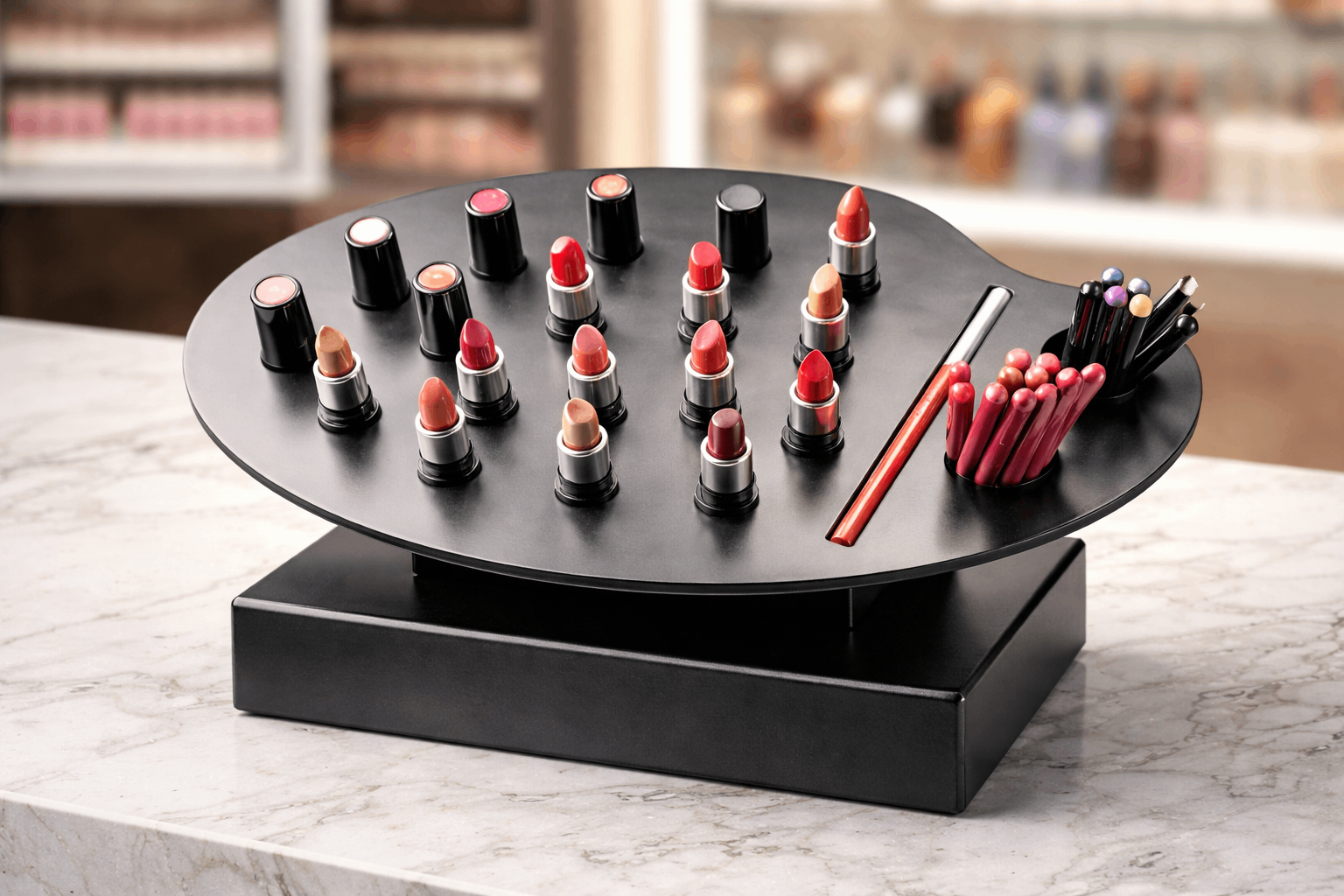
This product is a countertop gloss display stand for lipstick lip gloss collections and similar beauty items. The metal body creates a stable structure. The raised top and branded base make the assortment easier to notice at normal browsing height. For wholesalers, distributors, and private label buyers, this compact format works well when retail space is tight but the presentation still needs to feel branded and intentional.
The stand suits shade-driven assortments, tester-led merchandising, and focused launches. In these cases, buyers want to show a selected range clearly instead of overloading the counter. The oval top keeps several shades visible in one compact view. That helps the unit look organized while still feeling full enough for a retail program. Because the structure can match actual product dimensions, it usually performs better than standard organizers built on rough sizing. That improves product fit, reduces presentation issues, and makes approval easier before rollout.
Metal remains the main structural material for good reason. It gives the display better durability, shape control, and long-term stability in store use. Acrylic panels, printed graphics, wood accents, or mixed-material details can still support a different visual direction. That gives buyers flexibility without weakening the core strength of a metal display stand.
The angled presentation surface makes products easier to view from the front. That is how most shoppers approach color cosmetics in store. On this design, the oval face lets the shade lineup spread more naturally than a tight rectangular tray. The assortment looks clearer, yet the unit does not look oversized. It is a small design choice, but it can make shade comparison quicker and the display easier to read at a glance.
The slot layout adds another practical benefit. The hole pattern keeps lipsticks upright and leaves a separate open area for slim items such as lip liners, gloss pencils, or small promotional pieces. That makes the display more flexible for mixed beauty assortments. Each item stays separated and easy to identify. As a result, the stand tends to look cleaner throughout the day. For wholesale buyers, this is not only about appearance. A controlled layout also reduces maintenance pressure for store staff and makes replenishment simpler after repeated customer handling.
The branded base gives the logo and visual message a clear position. It does not crowd the product area. Its lower, block-style form also gives the display a stable visual center. That matters on busy counters, where the unit needs to look grounded rather than top-heavy. This detail helps the stand work as noticed cosmetic display furniture. Shoppers can register both the product and the brand in one view.
This type of cosmetic display stand performs best in retail settings that need clear presentation within a controlled footprint. Beauty specialty stores, department store counters, small-format brand corners, and travel-retail style counters are all strong use cases. In these environments, buyers usually want a display that can show key shades or hero SKUs without taking the space required by larger floor fixtures.
The stand also works well in launch programs, tester zones, checkout counters, and limited-range promotions. Many buyers do not need full cosmetics display shelves for every project. In many cases, a focused countertop unit works better because it tells a tighter product story and keeps replenishment simpler for staff. A compact format like this can make the assortment feel more edited and easier to shop.
Distributors and private label buyers also value standardization. This structure stays compact and self-contained, so teams can repeat it across store programs more easily than many larger cosmetics display shelves. Buyers can then adjust local graphics, product count, or campaign messaging while keeping the same display logic across several markets.
A generic organizer may hold products, but it rarely meets the commercial needs of a serious retail program. Most ready-made holders do not match exact product dimensions. They also do not support repeat production standards or daily store wear. They may look acceptable in a photo, yet still create avoidable problems after rollout.
This custom cosmetic display stand starts with retail use in mind. It is easier to brand, easier to maintain, and better suited to repeated handling in store. For wholesale procurement, that can reduce issues such as unstable product fit, inconsistent presentation, or displays that lose quality too quickly after installation. In other words, the display needs to keep working, not just look good on day one.
The difference becomes clearer when buyers compare this unit with general countertop organizers or unrelated display rack jewelry fixtures. Jewelry racks and general storage stands may look similar at first glance. They are not built for lipstick lip gloss dimensions, tester access, or beauty merchandising flow. A purpose-built stand often delivers the better result because the structure follows both the product category and the retail objective.
The most useful customization starts with product fit. Buyers usually need the slot diameter, depth, spacing, and visible quantity to match the exact items they plan to display. If the fit is too tight, products are hard to remove. If it is too loose, the display can look unstable. Small spacing changes can also affect whether the assortment feels premium or crowded. These details matter more than they may seem at first.
Branding is the next priority. Buyers often want a clean place for the logo, campaign message, or color system without overwhelming the display. On compact cosmetic display furniture, this requires restraint. The best result usually comes when graphics support the browsing path instead of competing with it. Too much messaging on a small unit often weakens the presentation.
Teams also discuss structure and material changes during procurement. Some projects need a single-brand focus. Others need mixed-SKU presentation. Some buyers want a permanent metal structure, while others need a mixed-material display for seasonal cost control. A flexible design path helps match the fixture to the actual retail brief.
For long-run retail use, metal is usually the most reliable base material. It gives the display stronger structural stability, better durability during repeated handling, and more consistent performance across bulk production. In multi-store programs, those advantages matter because a display must survive transport, setup, replenishment, and everyday customer contact without losing shape too quickly.
Metal also gives buyers better control over finish quality. Powder coating and paint systems can create a clean retail surface that is easier to standardize from one production batch to the next. That helps wholesale buyers who care about repeatability, especially when they deliver the display to multiple customers or regions. Finish consistency is not always the first thing people mention. It often affects brand perception more than expected.
Other materials still have value. Acrylic can help when the design needs transparency or a lighter visual effect. Wood may suit a warmer beauty concept. Cardboard can work for short-cycle promotions. In many projects, the most practical answer is a metal-led structure with selected secondary materials added where they improve cost or presentation.
For B2B sourcing, a product page becomes more useful when it covers the details buyers usually confirm before asking for samples or quotations. In this category, the key areas include product compatibility, display format, branding method, finish, order conditions, and packing. Clear specification language reduces back-and-forth and helps buyers compare options more efficiently.
| Item | Typical Specification |
|---|---|
| Product Type | Countertop cosmetic display stand |
| Suitable Products | Lipstick, lip gloss, lip liner, mini testers |
| Main Material | Metal |
| Optional Materials | Acrylic, wood, cardboard, mixed materials |
| Structure Type | Angled top with branded base |
| Size | Custom to product size and retail footprint |
| Color | Custom brand color matching |
| Logo Option | Screen print, UV print, decal, engraved or applied logo |
| Surface Finish | Powder coating, paint, lamination, mixed finishes |
| OEM / ODM | Supported |
| MOQ | Based on structure and material mix |
| Sample | Available before bulk order |
| Packaging | Export-safe protective packaging |
| Lead Time | Based on sample approval and quantity |
In real procurement, buyers focus on fit, finish consistency, production repeatability, and packing security. If the display ships from Guangdong Province China to several overseas destinations, protective packaging becomes more than a routine detail. Packaging strength affects arrival condition, replacement cost, and store rollout speed. Finish quality matters too. If it shifts from batch to batch, the brand image can suffer even when the structure itself is correct.
Most projects begin with a practical brief. Buyers typically share product dimensions, planned SKU count, target quantity, preferred material direction, and the intended retail environment. That information helps define priorities such as tester access, compact capacity, launch visibility, or long-term standardization.
The next stage covers layout and structure confirmation. Teams may use reference images, drawings, simple renderings, or a sample proposal. Sample development then confirms product fit, viewing angle, and graphic placement before bulk production starts. In beauty categories, this step matters because small dimensional changes can affect browsing quality in visible ways.
After sample approval, the project moves into bulk production, quality review, and export packing. Procurement teams do not only ask whether one prototype looks good. They want to know whether the same standard can carry across the full order. That is why buyers often judge suppliers on repeatability as much as on design.
Before placing an order, buyers often confirm whether the stand fits exact lipstick lip gloss dimensions. They also check whether the visible layout matches the number of shades they want to show and whether branding can fit cleanly into the base or top surface. Some also ask whether the design can adapt later for new SKUs without changing the full display concept.
Material choice is another common topic. Buyers may ask whether metal is the best long-term option or whether a mixed-material version could control cost for a shorter promotion. Price discussions usually focus on structure complexity, material combination, branding method, finish, quantity, and packaging level. Clear answers here help reduce delays in quotation and sampling.
For larger projects, buyers may also compare one-time campaign use, semi-permanent use, and wider multi-store rollout plans. That distinction affects cost, lead time, and packing requirements, so teams should confirm it early.
This page stays focused on the product, but buyers still need to know whether the display has the right production logic behind it. Yishang Display focuses on metal display solutions and supports OEM and ODM development for custom projects. That matters because a lipstick or gloss display only succeeds when the structure, finish, and bulk manufacturing standards work together.
For buyers who need a custom cosmetic display stand that can move from concept to sample and then to bulk production, product discipline matters more than broad promises. The goal is straightforward. The display should look right in store, work in procurement, and stay consistent across the order.
If you are planning a lip gloss display, custom cosmetic display furniture, or a branded countertop unit for wholesale supply, share the product size, SKU count, quantity, and target retail use first. That makes it easier to confirm product fit, branding area, and the most practical structure before sampling.
A well-developed display supports better ordering decisions, better retail execution, and better brand visibility where the sale actually happens.



Yishang Display specializes in crafting bespoke display solutions. From initial concept and prototyping through to full-scale production, our in-house team manages every phase—delivering a seamless, one-stop experience for your brand.
If you have any questions or need a quote, please send us a message. One of our specialists will get back to you within 24 hours and help you select the correct valve for your needs.
All of our products are available for sampling