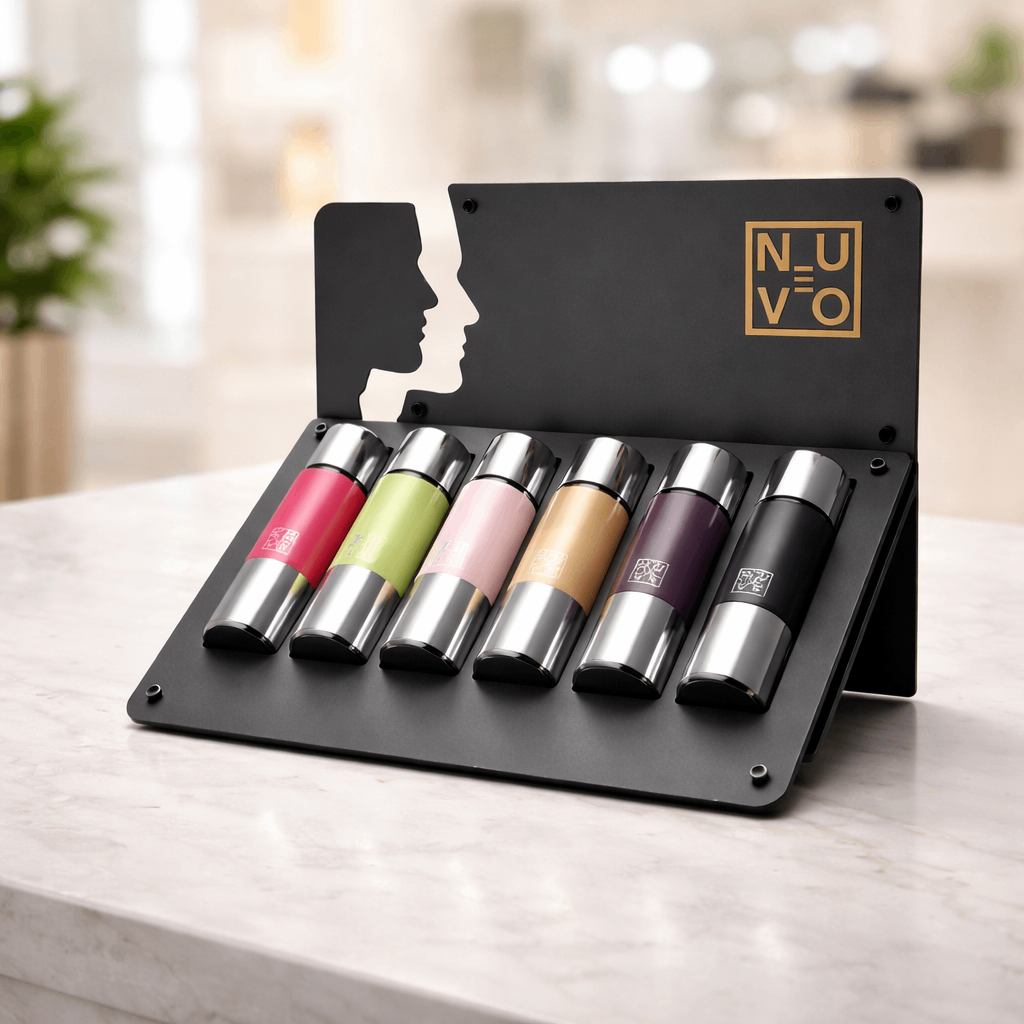
In beauty retail, a countertop display has to do more than simply look neat. It needs to improve visibility, make testers easier to access, and help stores keep presentation standards consistent from one location to the next. With a product like the one shown here, the role is even more specific: it is meant to present a small number of fragrance or beauty testers clearly, without wasting counter space or diluting the brand image.
That is why this cosmetic shop display design works better as a compact, branded display solution for wholesale programs than as a generic holder. Overseas buyers usually ask a straightforward question: will the structure fit the SKU mix, suit the selling environment, and stay consistent from sample approval through to bulk production? If yes, the display is worth serious consideration. If not, even an attractive sample tends to lose value quite quickly.
The format shown here works especially well for mini fragrance tubes, perfume testers, sample perfumes, and other small cylindrical beauty items. These packs need a front-facing presentation in limited counter space. The display can also support selected skincare testers or lip products if the slot size matches the actual pack format. In that sense, this custom beauty product retail display stand is closer to a countertop perfume tester display or fragrance sample display stand than to a broad, general-purpose beauty fixture.
The angled base is one of the most practical features of this metal retail display stand. Small cylindrical or tube-shaped packs often lose visual impact when they are placed flat on a counter. Lift them slightly, though, and the difference is immediate. The assortment becomes easier to scan, the label area is more visible, and shoppers can compare colors, scents, or product variants without picking up every piece.
The back panel matters just as much. It does more than finish the shape. It creates a dedicated branding zone, supports campaign graphics, and gives the display a clearer retail identity. In beauty retail, that detail often makes a real difference. Customers see the product and the logo at the same time. That often strengthens shelf recognition in a natural way.
Then there is the slot-based layout. Defined product positions make replenishment easier and keep the counter looking more disciplined throughout the day. For chain stores or wholesale programs, that consistency is valuable. It supports stronger visual standards across locations and, just as importantly, reduces the messy look that often appears when testers are put back randomly.
Another benefit is footprint efficiency. A compact, single-row structure like this holds a focused assortment without taking over the counter. That is often exactly what buyers want in consultation areas or tester zones: enough display presence to attract attention, but not so much that the unit dominates the space.
This cosmetic shop display performs best in retail settings where close viewing, guided trial, and quick brand recognition all matter at once. Boutique cosmetic stores, department store islands, beauty consultation counters, and selective checkout zones are all suitable examples. In these environments, a countertop unit can create a premium focal point without requiring a large, permanent fixture program.
The value is not only visual. Buyers working in these channels are usually balancing selling space, tester access, refill speed, and shelf discipline all at the same time. A compact display like this tends to support those priorities better than a broad shelf system when the aim is to highlight a focused assortment rather than present an entire product line.
It is also a strong fit for tester programs. When the goal is to highlight a small number of hero products, a clean tester stand often performs better than a larger fixture. This single-row layout is especially effective when the buyer wants every item to remain visible instead of crowding multiple variants into one compact base.
For seasonal promotions and travel-size collections, teams can often refresh the same structure instead of redesigning it. New graphics, adjusted slot spacing, or a revised logo panel may be enough. That makes the concept more reusable and, in many cases, more practical for repeat orders.
The display can also support mixed-channel selling. One version might be used for department store testers, another for distributor showrooms, gift shops, or chain stores. That kind of controlled adaptation is often more useful than a one-time custom shape that looks impressive but offers very little reorder value.
This beauty product display is best suited to small-format SKUs that need a stable, visible, and easy-to-reach presentation. Most naturally, it fits mini perfumes, perfume rollers, sample fragrance packs, and other narrow cylindrical packs. It can also be adapted for selected skincare testers or lip products, depending on the packaging dimensions.
For fragrance programs, separated positions help each scent line remain visible. Instead of letting cylindrical packs blend into one another, the layout gives each unit its own visual space. This improves scent comparison and reduces confusion at the counter. That is one reason countertop fragrance display formats remain popular in boutique stores, department store counters, and perfume tester areas.
For skincare and makeup brands, the same structure can be adjusted in slot diameter, spacing, and panel graphics. This is useful when several related products need to be shown together while the display still feels orderly. In practical sourcing terms, it means the stand can be adapted to the assortment rather than forcing the assortment into a standard format.
Suitability, though, should be judged by packaging behavior rather than by category name alone. Two serum products may require different slot sizes simply because the cap diameter or bottle shoulder shape is different. A display customized around the actual pack format will usually perform better in store and cause fewer replenishment issues later on.
Many of the pieces placed on a stand like this are small, but their packaging still varies by width, cap style, and label orientation. That is why actual product dimensions matter so much before layout is confirmed. When buyers share the SKU range early, sample development tends to move faster and the result is usually more accurate.
Material choice affects both selling appearance and procurement efficiency. In a display like this, metal deserves particular attention because the product image clearly reflects a rigid, powder-coated base and back panel structure. Acrylic is still popular in beauty retail when buyers want a lighter, more open visual effect, but in this case the metal structure is what gives the display its stability and long-term counter durability.
For a metal products manufacturer, the more relevant question is where metal improves the structure. In projects like this, buyers typically choose metal for the base, support panel, and rear brace when they need stronger rigidity, better production consistency, or a finish that remains stable in high-touch environments. That is especially relevant for a metal perfume display stand like the one shown here, where the base and back panel need to stay flat, clean, and visually controlled over time.
Powder-coated metal parts are widely used in display programs for good reason. They support repeat production well, maintain shape over a longer service cycle, and often suit premium black countertop presentations particularly well. Mixed-material construction can also be a sensible choice. Acrylic improves visibility. Metal improves stability, load support, and lifespan. In some cases, wood adds warmth or a more boutique feel.
The right combination depends on product weight, target price, cleaning frequency, and intended display life.ort campaign or long-term store use. Buyers should consider branding early as well. They often ask whether they can add a brand logo, revise the panel graphic, or match the finish to existing store identity. In most cases, they can. The cleanest result usually comes when the team plans the logo area, product spacing, and finish selection together instead of adding them at the last minute.
Surface finish shapes perception too. Matte black often makes color cosmetics look sharper; gloss white tends to suit skincare presentation; transparent acrylic works well when packaging is the hero. These are visual choices, yes, but they also affect how clearly the display communicates price level and brand character.
Wholesale buyers tend to review this kind of display more technically than end consumers do. They want to know whether the structure is durable, whether the unit can be packed efficiently, and whether the supplier can move from sample to volume production without losing finish consistency.
One of the first questions is fit. A beautiful sample has limited value if it does not support the full assortment or if the products sit too loosely in the slots. Buyers therefore focus on slot dimensions, weight support, refill convenience, and whether the stand is intended for testers, retail units, or both.
This is, in many cases, the difference between a display that merely looks custom and one that actually works commercially. Procurement teams compare not only the appearance of the unit, but also whether it can be packed well, repeated accurately, and rolled out with fewer avoidable adjustments.
Brand execution is another concern. Buyers want a display that supports product sales without weakening the visual identity of the line. That means a clear logo area, readable graphics, and materials that suit the product position. A good beauty product display program is not only about holding items properly; it is also about maintaining a convincing shelf story.
Communication speed matters as well. Quantity per store affects pricing, packing strategy, and the accuracy of quotation. When a buyer can provide store count, target market, expected order volume, and the product mix early on, the evaluation usually becomes quicker and more precise.
The table below gives a procurement-friendly overview of the standard customization scope. Many buyers scan this section first because it helps them decide whether the project is commercially feasible before moving into drawings or RFQ discussion. It also defines the product more precisely as a metal-led countertop display for fragrance testers, mini perfumes, and other compact beauty packs.
| Item | Specification |
|---|---|
| Product Name | Cosmetic Shop Display Design Custom Beauty Product Retail Display Stand |
| Display Format | Countertop retail display stand |
| Main Materials | Metal-led construction, with optional acrylic, wood, cardboard, or mixed materials |
| Product Capacity | Customized according to SKU size, weight, and display layout |
| Structure Style | Angled single-row base with branded back panel |
| Size | Custom |
| Logo Option | Printing, engraving, plate, or changeable graphic panel |
| Surface Finish | Powder coating, painting, silk printing, UV printing, lamination |
| Packing Method | Flat pack or assembled pack, depending on project |
| OEM & ODM | Supported |
| Compliance | RoHS, ISO 9001 production management |
| Production Capacity | 10,000+ units per year |
| Export Service | Global shipment support |
These specifications are only the starting point. Product size, unit weight, expected quantity per display, and the intended retail environment all need to be confirmed before the final solution is locked. That is usually the most reliable way to make custom displays that work in stores rather than only in renderings.
A countertop unit often works as one part of a broader merchandising plan. Brands launching across several channels may need matching tester units, counter displays, point-of-sale displays, and floor fixtures. Using one visual language across formats helps the range look more coherent in different retail environments.
This stand can therefore serve as a reference model for a wider display family. The same design language can extend into wall units, promotional shelves, checkout fixtures, or compact freestanding programs. For buyers managing multiple markets, that kind of continuity is often more useful than developing a completely different fixture for every channel.
Mentioning related formats here simply shows that this countertop concept can scale logically when a buyer wants consistency across several store touchpoints.
Most buyers start with product information, not engineering drawings. A sourcing brief, a reference image, an SKU list, or even a packaging size sheet is usually enough to begin. That is why the practical basics matter first: product dimensions, quantity on the display, retail environment, target price range, and any brand direction that already exists.
Once that information is clear, the structure can be adjusted around real retail use. Sample development helps confirm slot fit, display angle, logo area, and finish effect. Sending a sample for approval before volume production is often the safest way to verify both appearance and function. This matters even more when the display is meant to support a launch or a multi-store rollout.
After the sample is approved, production planning shifts to consistency. Hole positions, finish tone, edge quality, and packing method all need to remain controlled across the order. For export projects, those details are just as important as front appearance because stable packing and practical loading reduce transit risk and make delivery smoother.
One common issue in cosmetic display sourcing is choosing materials mainly by appearance. A thin clear panel may look elegant in a concept image yet perform poorly in heavy daily use. A better approach is to match the material to product weight, touch frequency, cleaning routine, and expected display life.
Another issue is overloading the layout. Buyers sometimes try to place too many SKUs into a small footprint. In practice, a focused arrangement usually works better. It keeps the stand readable, easier to refill, and more visually disciplined. In beauty retail, visual order often supports conversion more effectively than maximum unit count.
There is also the risk of weak production transfer. A sample may look strong while bulk units show inconsistent finish, loose tolerances, or inefficient packing. Early discussion of quantity, loading plan, and shipment method tends to reduce that gap.
The closer the development brief stays to real store use, actual product size, and real shipping conditions, the more reliable the final display is likely to be.
Buyers often ask whether the stand can be adjusted for different bottle sizes, whether the back panel can carry seasonal graphics, and whether the same structure can support both tester units and retail sale units. These are sensible questions because variation in cosmetics can be quite high even within a single collection.
Another common question is what information is needed for quotation. In most cases, buyers only need to provide product dimensions, number of SKUs, quantity per stand, expected order volume, and preferred materials. If quantity per store is already clear, quotation and packing evaluation become much more precise.
Some buyers also ask about loading efficiency. If the project volume is significant, a compact pack design may save shipping costs and improve container layout. The right method depends on structure strength, assembly requirements, and target-market handling expectations.
This custom beauty product retail display stand is designed for buyers who want a compact, branded solution that can move from concept to production without unnecessary complexity. Its value lies in clear product presentation, practical customization, and sourcing decisions that stay close to retail reality.
If you are planning a new beauty product display or reviewing a current program, send the product sizes, SKU count, or a reference image. Yishang Display can review the structure direction, sample feasibility, and packing approach, then respond with a practical proposal.
Yishang Display specializes in crafting bespoke display solutions. From initial concept and prototyping through to full-scale production, our in-house team manages every phase—delivering a seamless, one-stop experience for your brand.
If you have any questions or need a quote, please send us a message. One of our specialists will get back to you within 24 hours and help you select the correct valve for your needs.
All of our products are available for sampling