

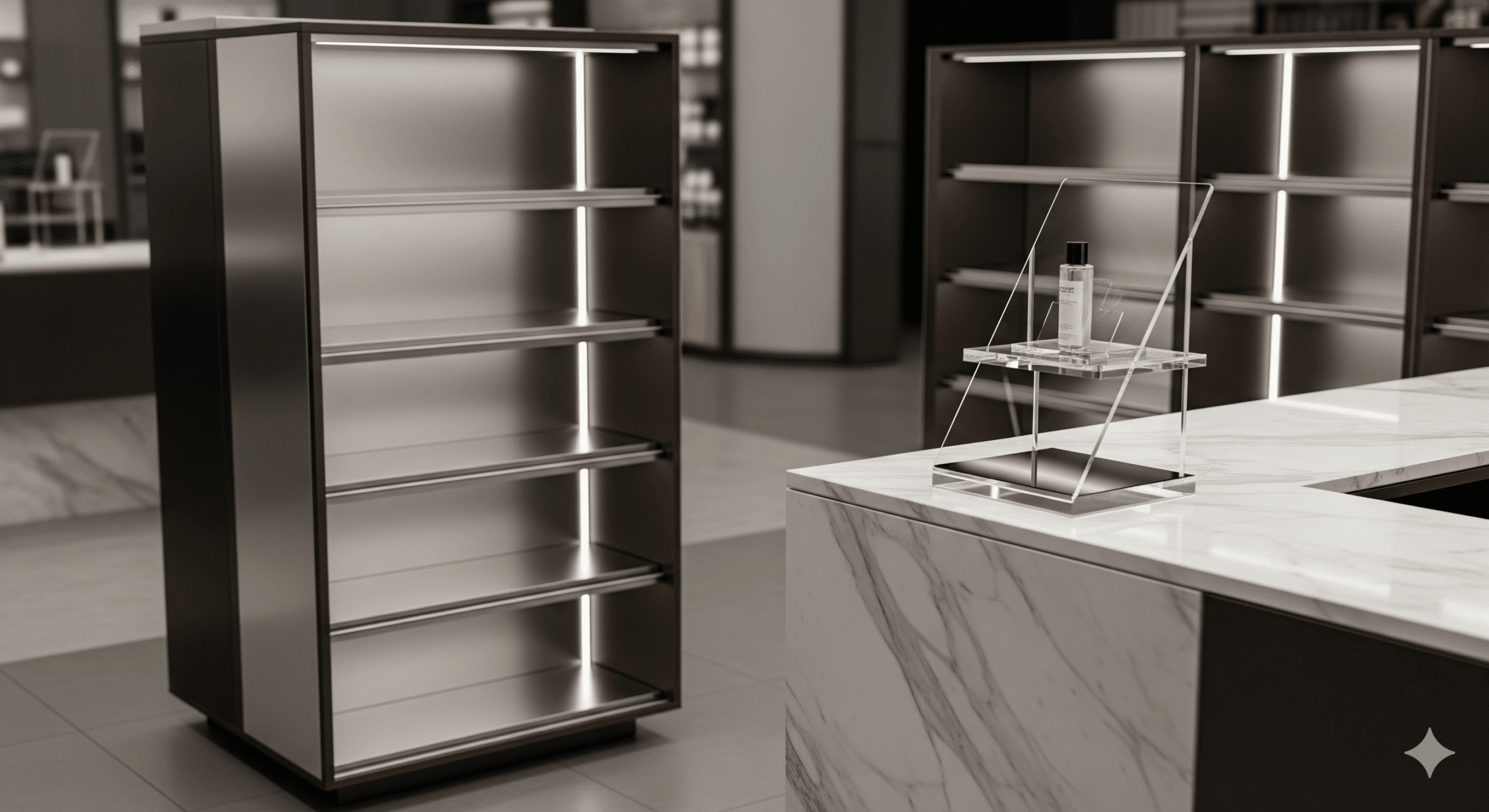
Securing prime physical floor space remains a constant challenge for wholesale buyers and brand managers. While digital channels handle routine transactions, brick-and-mortar stores are still the ultimate experiential environment for brand discovery and high-volume sales.
For procurement teams and supply chain executives, the overarching goal is maximizing the financial return on every square inch of allocated retail space. However, many sourcing professionals find themselves asking: what’s the difference between point-of-sale and point-of-purchase displays?
Treating these two distinct merchandising categories as identical often leads to inefficient global shipping logistics, inflated budgets, and suboptimal in-store performance. This article serves as an advanced, data-driven guide to retail fixtures for B2B buyers seeking to streamline their procurement process.
What You Will Learn in This Guide:
- How spatial constraints dictate precision material engineering.
- The psychology of the shopper and how it impacts structural design.
- Why shifting from temporary cardboard to permanent metal fixtures drastically lowers your Total Cost of Ownership (TCO).
- Strategies to optimize global logistics using Knock-Down (KD) flat-pack designs.
By the end of this analysis, you will have a clear, actionable framework for deciding whether to source heavy-duty POP fixtures or compact POS units, ensuring your next global rollout is both cost-effective and structurally reliable.
At a Glance: POP vs. POS Displays Comparison
| Procurement Factor | Point of Purchase (POP) Displays | Point of Sale (POS) Displays |
|---|---|---|
| Store Location | Main aisles, endcaps, open floor space | Checkout counters, register queuing lines |
| Shopper Mindset | Navigational, exploratory, evaluating options | Transactional, fatigued, seeking a quick reward |
| Core Strategy | Brand education, heavy cross-selling | Frictionless, immediate impulse purchases |
| Ideal Products | Heavy, high-margin, multi-SKU, high-value | Low-cost, fast-moving consumer goods (FMCG) |
| Material Needs | High load-bearing (cold-rolled steel, heavy aluminum) | Lightweight & precise (premium acrylic, wire) |
Defining the Retail Battlefield: Macro vs. Micro Environments
Before analyzing specific material tolerances, gauge thicknesses, and manufacturing processes, it is helpful to establish a clear architectural understanding of the retail space. The physical store floor is highly segmented. Procurement strategies yield the highest ROI when they map directly to these psychological and physical zones.
Understanding these environments helps buyers forecast accurate manufacturing volumes and select the correct structural materials. It also enables supply chain managers to calculate accurate shipping dimensions well before the mass production phase begins.
Procurement Pro-Tip: Where to start your procurement journey depends entirely on defining these specific zones. Mapping out your intended store footprint prior to requesting manufacturing quotes prevents costly over-engineering and aligns your budget with actual retail floor dynamics.
Understanding the Point of Purchase (POP) Environment
A POP display generally operates within the macro retail environment. In practical terms, the point of purchase encompasses the broader store footprint where shoppers navigate, browse, and discover new product lines. This includes the wide main aisles, the long center store shelving runs, and the dedicated promotional spaces scattered throughout a store.
When a consumer is actively comparing bulk beverage prices or evaluating a heavy power tool, they are situated entirely within the POP zone. The overarching goal of POP displays is to interrupt this habitual navigational journey. Buyers utilize these displays to put their flagship products front and center.
Because these displays are positioned in areas where shoppers have the physical space to stop and evaluate, they require exceptional load-bearing capacities. POP displays must safely hold extensive product lines, bulky items, or heavy inventory cases over long periods. They act as permanent, standalone brand ambassadors that pull customers away from standard gondola shelving to engage with your product’s unique value proposition.
Understanding the Point of Sale (POS) Environment
In contrast, a POS display operates exclusively within the highly restricted, heavily trafficked micro retail environment. The point of sale is strictly defined as the exact physical location where the actual financial transaction and barcode scanning occur. This area primarily includes the checkout counters and the immediate queuing lines.
By the time a customer reaches this highly congested zone, their primary shopping mission is complete. Their cognitive mindset has shifted entirely to transactional completion. The role of a POS display is singular and highly focused: to trigger an immediate, frictionless impulse buy before the customer exits the retail location.
Because physical counter space is fiercely contested and strictly regulated by store management, POS displays must be extremely compact. They focus on low-risk, high-margin items. For the procurement manager, acquiring POS displays means prioritizing spatial efficiency, lightweight materials, and precise manufacturing tolerances to ensure placement approval by the retailer.
The 3 Core Differences Between POP and POS Displays
Evaluating the difference between POP and POS requires a multidimensional approach. Successful wholesale buyers evaluate these fixtures as strategic financial assets governed by physical location, consumer psychology, and product economics. Recognizing these core differences helps procurement directors avoid under-engineering load-bearing units or over-spending on temporary solutions.
1. Spatial Constraints and Retail Footprint
The most immediate operational distinction lies in the allocation of retail floor space. POP displays are explicitly designed to conquer the open floor, occupying significant and dedicated square footage. Placed at intersection points or in the middle of an aisle, they have the luxury of three-dimensional physical dominance.
Store layout optimization dictates that POP fixtures can utilize verticality to draw the eye from across the store environment. However, this spatial freedom comes with strict structural demands. A freestanding metal unit in a main aisle must be perfectly balanced to prevent tipping and highly resistant to the constant impact of heavy shopping carts and high-volume foot traffic.
Conversely, absolute spatial constraints define the POS display. Display placement near the checkout is measured in precise millimeters. The engineering challenge here is maximizing product density without creating visual clutter or obstructing security sightlines to the cashier. If a wholesale POS unit is even slightly too bulky, retail partners will simply refuse to place it, jeopardizing your impulse sale strategy.
2. Shopper Psychology and Cognitive Load
To procure a highly effective retail display, sourcing teams must consider the cognitive state of the consumer. The shopper psychology at the point of purchase is characterized by an active evaluation mode. Customers browsing the broad aisles possess the necessary dwell time to read product features and compare options.
Therefore, POP displays can afford to be highly complex. Buyers can take advantage of this prolonged dwell time by designing displays that offer in-depth product education, integrating digital screens or cross-merchandising strategies. These units often serve as a silent salesperson, bridging the gap between discovery and purchase.
In undeniable contrast, the psychology at the point of sale is completely dominated by decision fatigue. After navigating a large big-box store, the customer’s cognitive load is severely depleted. Consumer behavior here is driven entirely by instinct and the desire for instant gratification. Therefore, POS displays must facilitate immediate interaction, making the physical act of grabbing the product completely frictionless for the shopper.
3. Product Profiles and Sourcing Risk
The physical location within the store naturally dictates the specific types of inventory best suited for each display strategy.
- The POP Profile: These environments are the ideal stage for items with a higher retail price point or products that are physically demanding to handle. Heavy-duty products, such as automotive batteries, sets of power tools, or bulk beverage cases, are perfectly matched with robust POP fixtures.
- Cross-Selling Opportunities: POP is the optimal environment for strategic cross-selling. Displaying a premium espresso machine alongside artisanal coffee beans requires the robust, load-bearing nature of a permanent metal fixture to mitigate the risk of structural failure.
Alternatively, POS displays encourage shoppers to make rapid, low-risk decisions. Items like candy bars, mints, travel-sized toiletries, or AA batteries are the lifeblood of POS merchandising. The product must be universally appealing and priced low enough that the shopper adds it to their basket without a second thought during the final transaction phase.
Procurement Economics: CapEx vs. TCO in Display Sourcing
Historically, many entry-level sourcing programs placed a heavy emphasis on temporary, corrugated cardboard displays due to their exceptionally low initial unit cost. However, sophisticated wholesale buyers recognize the hidden supply chain inefficiencies associated with temporary fixtures. To optimize true merchandising ROI, procurement teams are rapidly shifting their budgets toward permanent and semi-permanent custom metal retail displays.
The Hidden Costs of Corrugated Cardboard
While cardboard displays seem inexpensive regarding initial Capital Expenditure (CapEx), they suffer from costly flaws in a rigorous commercial environment. They completely lack moisture resistance, cannot hold significant product weight without warping, and are highly susceptible to tearing from commercial floor buffers and shopping carts.
Once a cardboard display begins to look worn, it actively degrades the perceived premium value of the brand it holds. This rapid degradation inevitably leads retailers to discard the entire unit prematurely, forcing brands into a continuous, expensive cycle of reordering, re-shipping, and re-merchandising, which inflates long-term costs.
The Long-Term ROI of Metal Fabrication
For brands looking to establish a dominant footprint in major retail chains, permanent retail displays offer a vastly superior financial strategy. Engineered primarily from cold-rolled steel, aluminum, and premium acrylics, permanent displays survive the harsh realities of the retail floor for years.
Supply Chain Insight: While the initial cost for a custom-manufactured metal display is higher, the Total Cost of Ownership (TCO) over a 2-to-3-year period is significantly lower. Permanent displays require vastly less frequent replacement cycles, drastically reducing ongoing global freight logistics and warehousing fees.
Furthermore, an OEM manufacturer can design a permanent metal frame with interchangeable magnetic graphics panels. This allows brands to update seasonal marketing messages continuously without repurchasing the heavy structural base, maximizing the lifespan of the initial investment.
Retail Display Examples: High-Capacity POP Solutions
High-capacity POP structures are necessary investments when a global brand needs to showcase a heavy product line or establish a dedicated brand presence.
Freestanding Display Units (FSDU)
A Freestanding Display Unit is an independent, self-supporting fixture placed on the open floor. For industries dealing with heavy consumer goods, a metal FSDU is explicitly engineered to handle massive weight loads safely.
- Risk Mitigation: These units are designed to remain structurally sound and perfectly balanced, significantly reducing the liability risk associated with collapsing fixtures in public spaces.
- Operational Efficiency: A well-engineered metal FSDU maximizes product holding capacity per square foot. Retail staff spend less time restocking the unit, which lowers operational labor costs for the channel partner.
- Durability: Professional manufacturers utilize highly durable powder-coated finishes that resist scratching and prevent rust in high-traffic environments.
Retail Endcaps and Gondola Fixtures
Positioned at the very end of a shelving aisle, endcaps face the main retail traffic flow. A well-designed, permanent endcap often utilizes a heavy-duty steel frame that integrates flawlessly with the store’s existing gondola shelving standards.
Procurement managers favor endcaps because they offer exceptional product versatility and quantity management. These structures are frequently augmented by custom back-lit acrylic signage and heavy-gauge steel shelving brackets capable of supporting hundreds of pounds of high-margin retail products.
Bulk Pallet Displays and Metal Dump Bins
Crucial for massive warehouse club stores, pallet displays require immense and uncompromising structural integrity. Premium B2B pallet displays utilize reinforced steel bases and vertical metal stanchions to safely support thousands of pounds of bulk product, meeting strict club store operational regulations.
Metal dump bins are frequently used for bulk or clearance merchandise. A high-quality permanent dump bin requires strong steel wire mesh construction and heavily reinforced welded bases. Adding high-quality industrial casters allows store staff to effortlessly reposition the heavy volume of shifting products without risking structural integrity.
Retail Display Examples: High-Impact POS Solutions
In the highly restricted, security-conscious checkout zone, spatial efficiency is paramount. Buyers must source fixtures that capture attention without disrupting the essential functions of the retail staff.
Precision Countertop Displays
Counter displays are the most ubiquitous form of POS marketing. These must be engineered with exacting dimensional tolerances, often down to the millimeter, to hold maximum inventory in a minimal footprint. High-end cosmetics or premium consumer electronics frequently utilize these compact structures to secure prime register placement.
Suppliers often use high-grade, diamond-polished acrylic for countertop units, leveraging the material’s flawless transparency. This creates a premium aesthetic that instantly elevates the perceived value of the small items contained within, providing excellent visibility from multiple angles during the final checkout stage.
Gravity Feed Fixtures and Auto-Facing Systems
For products that require highly organized dispensing, gravity feed displays are an exceptional, frictionless solution. Often used for canned beverages or lip balms, these fixtures rely on internal ramps set at highly precise angles.
Procurement Pro-Tip: From a merchandising standpoint, gravity feed displays drastically reduce the labor required for daily store maintenance by ensuring a perfectly auto-faced product presentation. However, the mechanical engineering must be flawless; an incorrect friction angle will cause products to stall or jam, frustrating both shoppers and retailers.
Clip Strips and Parasitic Merchandising
Offering true parasitic merchandising, clip strips hang vertically from existing shelves or register surrounds. Manufactured from durable powder-coated metal wire or thick, shatter-resistant plastics, they utilize absolute zero counter space.
They are highly favored by wholesale buyers who need to secure additional placements without negotiating for expensive primary shelf space. These displays are great for advertising high-impulse items directly at the consumer’s eye level, seamlessly attaching to the sides of larger POP displays to capture last-minute sales.
Industry-Specific Deep Dives for Wholesale Sourcing
A generic, one-size-fits-all approach in display procurement is often disastrous for specialized industries. Different verticals impose entirely different physical demands, stress factors, and regulatory compliance requirements.
Automotive, Hardware, and Industrial Supplies
Products in this sector—such as lead-acid car batteries, motor oil, and iron hand tools—are incredibly dense. POP displays for automotive and hardware must be exclusively constructed from heavy-gauge cold-rolled steel or high-tensile aluminum. Utilizing reinforced, robotically welded joints is an absolute requirement to maintain structural integrity under extreme weight loads.
Because environments like auto parts stores can be inherently harsh, metal display stands require specialized surface treatments. Industrial-grade, scratch-resistant, and grease-proof powder coatings prevent premature rusting and ensure the display can withstand years of heavy, daily abuse without requiring significant maintenance.
Food, Beverage, and Supermarket FMCG
Beverage displays face the dual operational challenge of extreme weight and the constant potential for highly acidic liquid spills. Holding dozens of cases of glass bottles requires permanent metal racks with specialized, multi-layer anti-corrosion treatments to prevent structural decay.
For supermarket applications, hygiene is heavily regulated. Fixtures must be designed with minimal crevices. Visible welds where dust or organic matter can accumulate should be avoided during the advanced manufacturing process. Smooth powder-coated metal and easy-to-clean acrylic surfaces represent the required industry standard for modern grocery environments.
Cosmetics, Beauty, and Consumer Electronics
In the beauty and high-end electronics sectors, inventory security and extreme aesthetic perfection are primary driving factors. Displays in these environments rely heavily on premium, optical-grade acrylics that perfectly mimic glass but offer superior shatter resistance.
These displays often require the seamless, hidden integration of anti-theft locking mechanisms to protect high-value inventory from shrinkage. Sophisticated hidden cable management systems are also strictly necessary for powering electronic display models and integrated LED lighting systems that highlight product details.
Global Logistics and Supply Chain Optimization
Understanding the functional difference between POP and POS is only the first half of the global procurement equation. Mastering the economics of acquisition and optimizing global supply chain logistics is where true sourcing value is created. Sophisticated sourcing teams base their decisions entirely on the total landed cost.
Volume, Scalability, and Shipping Optimization (KD Design)
When a major brand requires thousands of display units annually, moving fully assembled, bulky metal POP displays across oceans is financially inefficient. Buyers end up paying premium ocean freight rates to ship empty air inside the assembled display structure.
Advanced structural engineering yields immediate financial dividends through Knock-Down (KD) design, also known as flat-pack engineering. This allows massive metal structures to be shipped completely disassembled in highly compact, mathematically optimized cartons.
Logistics Math: A fully assembled metal FSDU might only fit 150 units inside a standard 40-foot High Cube container. Engineered with a precision KD design, that exact same display could easily fit 600 to 800 units in the identical container. This approach drastically lowers the landed cost per unit and protects the profit margin of the entire global rollout.
Foolproof In-Store Assembly and Labor Reduction
The true financial value of a flat-pack design is only realized if the in-store assembly process is virtually foolproof. If a display requires specialized tools or hours of expensive labor to erect, the freight savings are quickly negated by high local installation costs.
The engineering design must ensure that retail staff can quickly and intuitively assemble the heavy metal fixture. Utilizing standardized, pre-drilled interlocking mechanisms or tool-less quick-connect fasteners eliminates hidden domestic labor costs and ensures a high compliance rate for campaign execution on the sales floor.
International Compliance and Global Risk Mitigation
For global brands executing retail rollouts across multiple continents, the manufacturing process must adhere strictly to severe international standards. Partnering directly with an ISO 9001 certified manufacturer is highly recommended for B2B procurement risk mitigation.
ISO 9001 certification guarantees that a rigorous quality management system is deeply embedded in the factory’s daily operations, ensuring every display meets exact specifications and material purity grades. This consistency is vital for maintaining brand reputation across different global markets.
Furthermore, if retail displays incorporate electronic elements (like LED lighting or digital screens), ensuring the manufacturer produces RoHS compliant displays is necessary for legally entering European and other global markets. This protects wholesale buyers from costly border delays, retailer fines, and potential safety recalls.
How a Factory-Direct Partner Elevates Your Strategy
Navigating the complexities of the omnichannel retail floor requires a deliberate, data-driven physical strategy. POP displays serve as robust structures designed to bear significant inventory, while POS displays act as frictionless precision instruments at the checkout counter.
Flawlessly executing that strategy requires unparalleled manufacturing expertise and a deep, practical understanding of global supply chain logistics. When your brand’s retail relationships and merchandising ROI are on the line, prioritizing structural integrity and shipping economics is essential for long-term success.
Rather than relying on generic vendors, partnering with a source manufacturer provides distinct procurement advantages. Yishang Display specializes in translating complex merchandising challenges into high-performance, permanent custom display solutions.
Our Capabilities for Wholesale Buyers:
- High-Volume Manufacturing: Annual production capacity capable of supporting massive global rollouts.
- Multi-Material Expertise: Seamless integration of cold-rolled steel, aluminum, premium acrylics, and engineered wood.
- Logistics Optimization: Advanced KD (flat-pack) engineering to maximize container space and reduce your landed costs.
- Certified Quality: Strict adherence to ISO 9001 and RoHS compliance standards for secure international exporting.
Whether you require flat-packed metal POP endcaps engineered for optimized logistics or precision-crafted acrylic POS units, it’s time to take advantage of our expertise. Please contact us to request an estimate for your custom project and let our engineering team optimize your next retail rollout.
Frequently Asked Questions (FAQ)
Are POP displays more expensive than POS displays? Generally, yes. POP (Point of Purchase) displays are much larger, load-bearing structures made from heavy-duty metals to hold significant inventory in main aisles. POS (Point of Sale) displays are smaller, lightweight units designed for the limited space at a checkout counter, requiring less raw material and smaller footprints.
Can permanent metal displays reduce shipping costs? Yes, if they utilize a KD (Knock-Down) flat-pack design. While metal is heavier than cardboard, experienced engineers can design metal FSDUs to be shipped completely disassembled. This allows you to fit up to 70% more units into a standard shipping container compared to pre-assembled or bulky temporary units.
Why is ISO 9001 certification important for display procurement? ISO 9001 ensures that the display manufacturer adheres to strict, internationally recognized quality control standards. For global rollouts, this certification mitigates the risk of structural defects and dimensional inconsistencies, ensuring every unit produced meets identical safety tolerances before being exported to 50+ countries.
What is the best material for a checkout POS display? Premium, optical-grade acrylic (PMMA) is typically the best material for POS displays. It mimics the high-end appearance of glass but offers superior shatter resistance. It is lightweight, takes up minimal counter space, and elevates the perceived value of impulse purchase items such as cosmetics or electronics.