

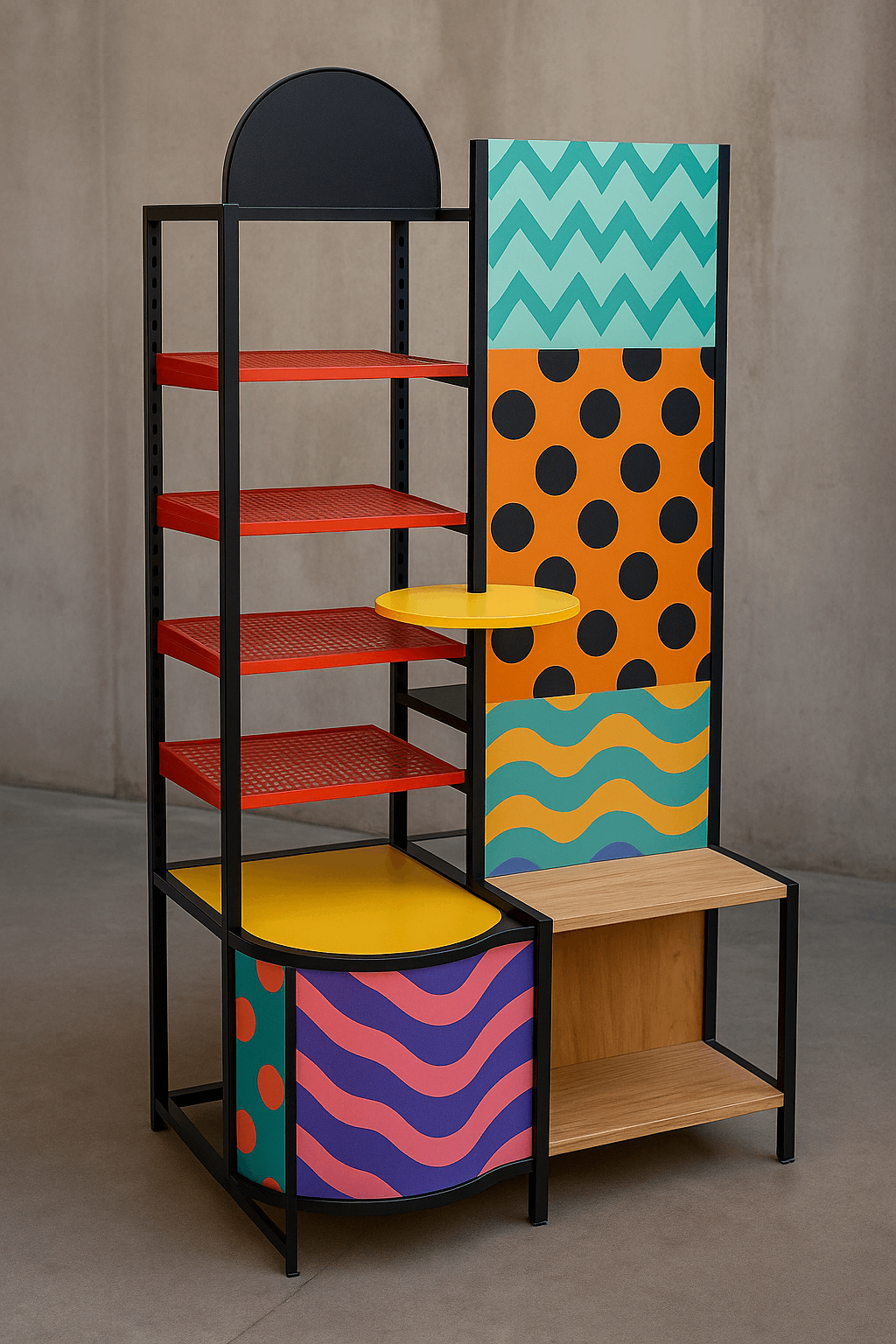
Part 1: The Foundation – Why Your Fixture Strategy is Your Brand’s Battleground
Introduction: The Material is the Message
In the high-stakes world of modern retail, the success of a global rollout hinges on countless variables: supply chain logistics, brand consistency, and cost control. For the procurement director or head of store development, the challenge is immense.
Amidst this complexity, a fundamental truth often determines first impressions: the very material from which a store’s fixtures are built communicates the brand’s reliability, scale, and attention to quality.
With data showing that a well-designed point-of-purchase display can increase sales by 80% to 478%, the fixture selection process must move beyond aesthetics. It becomes a matter of operational strategy—one that demands alignment with a manufacturing partner capable of maintaining consistency at volume while protecting long-term brand value.
This document is a strategic brief for B2B wholesale buyers and retail decision-makers. It highlights the critical role of fixture materials—particularly metal—in shaping durable brand systems and optimizing lifecycle investment. For teams executing store rollouts, this is your actionable roadmap.
Chapter 1.1: The Silent Architect: How Fixtures Engineer the Customer Journey
Before a customer interacts with a product or staff member, they engage with the store layout. This silent interaction is designed through fixture placement, guiding consumer movement and behavior.
The journey begins in the “decompression zone,” the first 5 to 15 feet of the store where shoppers acclimate. A cluttered entrance disrupts flow; a well-framed entry invites. From there, layout psychology—whether grid, racetrack, or free-flow—shapes movement. The first right-hand turn and “power wall” become zones of peak visual attention.
However, these proven tactics only succeed when backed by stable, reliable infrastructure. Poorly manufactured or flimsy displays dilute customer trust. Conversely, precision-engineered metal fixtures help uphold the in-store journey while reducing repair frequency and layout downtime.
Chapter 1.2: Beyond the Balance Sheet: The True ROI of Durability and Design Integrity
Procurement strategy today must shift focus from upfront cost to Total Cost of Ownership (TCO). Fixtures are capital investments—not consumables.
A low-cost display that warps, peels, or fails structurally after one season invites operational risks: emergency replacements, product liability, and visual inconsistency. These invisible costs quickly outweigh initial savings.
Long-term value comes from the synergy of good design and high-execution manufacturing. When either fails, ROI plummets. Durable metal fixtures mitigate that risk, delivering consistent brand presentation across geographies and rollout cycles. It’s not just about longevity—it’s about reducing maintenance interventions and maximizing operational uptime.
Part 2: The Alchemist’s Choice – Material, Technology, and the Future-Proof Store
Chapter 2.1: The Material as the Message: A Strategic Comparison
| Material | Durability | Cost-Efficiency | Aesthetic Control | Recyclability | Ideal Use Cases |
|---|---|---|---|---|---|
| Metal | ★★★★★ | ★★★★☆ | ★★★★★ | ★★★★★ | High-traffic, Digital POS |
| Wood | ★★☆☆☆ | ★★★★☆ | ★★★☆☆ | ★★★☆☆ | Boutique, Low-volume |
| Acrylic | ★★☆☆☆ | ★★★☆☆ | ★★★★☆ | ★☆☆☆☆ | Seasonal Campaigns |
Metal selection drives performance and perception. For high-traffic retail environments and scalable installations, metal provides unmatched ROI.
- Metal (The Strategist’s Choice): With tensile strength, resistance to deformation, and recyclability, metal delivers performance in both function and form. Whether used in sleek chrome, brushed stainless, or industrial powder-coated finishes, it adapts to brand identity while ensuring durability.
It also aligns with many buyers’ ESG mandates—steel and aluminum are highly recyclable and widely accepted in global compliance frameworks.
- Wood (The Traditionalist’s Comfort): While aesthetically warm, wood lacks the abrasion resistance needed in heavy-use contexts. It often requires more frequent replacement or refinishing in commercial applications.
- Synthetics (The Pragmatist’s Compromise): Plastics and acrylics support budget-focused or seasonal campaigns but often fall short on perceived value, structural longevity, and sustainability optics.
Chapter 2.2: The Smart Store’s Backbone: Integrating Digital into a Physical Framework
Retail’s future is “phygital”—where physical infrastructure hosts digital experiences. Digital signage, QR-enabled displays, and interactive kiosks require mounting systems that ensure safety, conceal cabling, and withstand continuous use.
Metal fixtures support this digital convergence. Their strength and modularity allow for secure technology integration, while powder-coated or brushed finishes maintain a modern retail aesthetic.
For international teams rolling out tech-enhanced displays, metal’s engineering flexibility also streamlines mass customization—accommodating variable screen sizes, hardware tolerances, or country-specific compliance without complete redesigns.
Part 3: Forging the Perfect Alliance – A C-Suite Guide to Vetting Your Manufacturing Partner
Chapter 3.1: The Audit Framework: How to Evaluate a Fixture Manufacturer
Use these five dimensions for supplier evaluation:
- Technical Competency: Confirm capabilities in CNC bending, TIG welding, laser cutting, and finishing. Ask for metal thickness tolerance levels and in-house quality control documentation.
- Vertical Integration: Prioritize manufacturers with end-to-end services—from prototyping to packaging—to reduce coordination costs and lead time uncertainty.
- Certifications & Standards: ISO 9001 and RoHS are essential. For industry-specific needs, confirm familiarity with UL, REACH, or food-contact-grade finishes.
- Capacity and Lead Time: Review machine count, shifts per day, and recent order capacity (in units/month). Ensure they support custom SKU variations within timeline.
- Cultural Fit: Assess responsiveness, transparency, and English-language technical communication—especially for cross-border projects.
Chapter 3.2: Red Flags in the Procurement Process
Warning signs of an unreliable vendor:
- Unwillingness to provide technical drawings or in-process photos
- Generic responses to compliance or capacity inquiries
- No traceable QA documentation or rejection-handling workflow
Your ideal partner will offer transparency, documentation, and familiarity with export logistics (e.g., carton specs, pallet configuration, customs paperwork).
Part 4: Retail Icons and Their Fixture Strategies – Lessons from the Field
Chapter 4.1: Apple – The Art of Minimalism in Metal
Apple’s fixture strategy amplifies its brand DNA. Brushed aluminum tables, wall displays, and stands offer a clean, neutral backdrop for product storytelling. The metal used is recyclable, precise, and consistent—hallmarks of Apple’s aesthetic philosophy.
Chapter 4.2: Nike – Retail Theatrics Meet Fixture Innovation
Nike’s metal display systems are modular and agile—supporting seasonal updates and event-based merchandising. Powder-coated steel frames ensure both strength and brand-consistent finishes, while lightweight components ease frequent reconfigurations.
Chapter 4.3: Tiffany & Co. – Heritage Framed in Steel
In luxury, fixture material equals perceived value. Tiffany’s use of mirror-polished stainless and chrome ensures that showcases reflect brilliance without distraction. Metal ensures structural precision and longevity under luxury lighting.
Conclusion: The Right Fixtures, the Right Partner—Your Competitive Edge
For high-volume retail programs, the display system is not decoration—it’s a business asset. Metal fixtures optimize operational uptime, visual consistency, and lifecycle cost. They support digital integration, design replication, and brand trust.
Yishang Display is a trusted metal POS display manufacturer in China, with 26+ years of OEM/ODM experience in custom metal retail fixtures. Our clients across 50+ countries have reduced fixture replacement rates by up to 30% using Yishang’s engineered durability. We support international teams with:
- Over 10,000+ custom displays produced annually
- RoHS & ISO 9001-certified quality systems
- Prototyping, metalworking, finishing, and export logistics
- Materials: stainless steel, low-carbon steel, aluminum, brass, acrylic, and more
- Industry-specific solutions for beverages, tools, fashion, food, automotive, and more
Ready to upgrade your retail fixtures? Contact Yishang Display for a tailored quotation and project consultation.
FAQ: Retail Fixture Sourcing
Q1: What is the typical lead time for custom metal POS displays?
A: For most mid-volume orders, lead times range from 25 to 40 days, including prototyping, fabrication, and export logistics.
Q2: Can Yishang Display handle multi-country rollouts with SKU variations?
A: Yes. Our vertically integrated system supports scalable customization for regional specs and compliance needs.
Q3: Do metal fixtures work for food & beverage retail applications?
A: Absolutely. Stainless steel and powder-coated finishes are suitable for food-grade display environments and meet hygiene standards.