

The First 3 Seconds: Why Fixtures Are a Strategic Buying Decision
For any retailer, the produce department sets the tone—and the first impression. Shoppers judge freshness, quality, and store standards based on what they see in the opening moments.
That judgment isn’t just about the fruit. It’s about the fixture. Durable, clean, and professional displays signal trust. Weak, cluttered setups silently erode brand value.
As a procurement professional, your role isn’t just about cost—it’s about sourcing fixtures that influence shopper behavior, improve store efficiency, and deliver ROI.
This guide breaks down how strategic fixture selection—especially metal systems—can help you provide more than racks: you deliver performance, compliance, and competitive advantage.
Part 1: The Visual Psychology – Engineering the Subconscious “Buy” Switch for Retail Environments
Before a single fixture is specified, it is essential to understand the invisible forces that govern shopper behavior. The decision to purchase is rarely purely logical; it is heavily influenced by deep-seated psychological triggers.
Understanding this produce display psychology is the foundational step in sourcing fixtures that deliver real performance, turning casual browsers into committed buyers.
1.1 The “Freshness Halo” at the Entrance
The strategic placement of the produce department at the front of the store is a masterclass in retail psychology. As shoppers enter, they pass through what retail designers call the “Decompression Zone,” an open area that allows them to transition and become receptive to the store’s atmosphere.
It is here that “Cognitive Priming” begins. The very first products they encounter set the tone. By presenting fresh, vibrant produce first, retailers create a powerful “freshness halo” that extends across every other aisle.
The physical fixtures play a critical role in amplifying this effect. The grocery store entrance design should feel open and inviting. Open, airy, and structurally clean display systems, such as those crafted from powder-coated metal, enhance the feeling of freshness and transparency.
1.2 The Physics of “Abundance”
A core tenet of produce merchandising is the psychology of abundance. A display that appears full and overflowing signals to shoppers that the product is fresh and in high demand, which reduces their perceived risk in making a purchase.
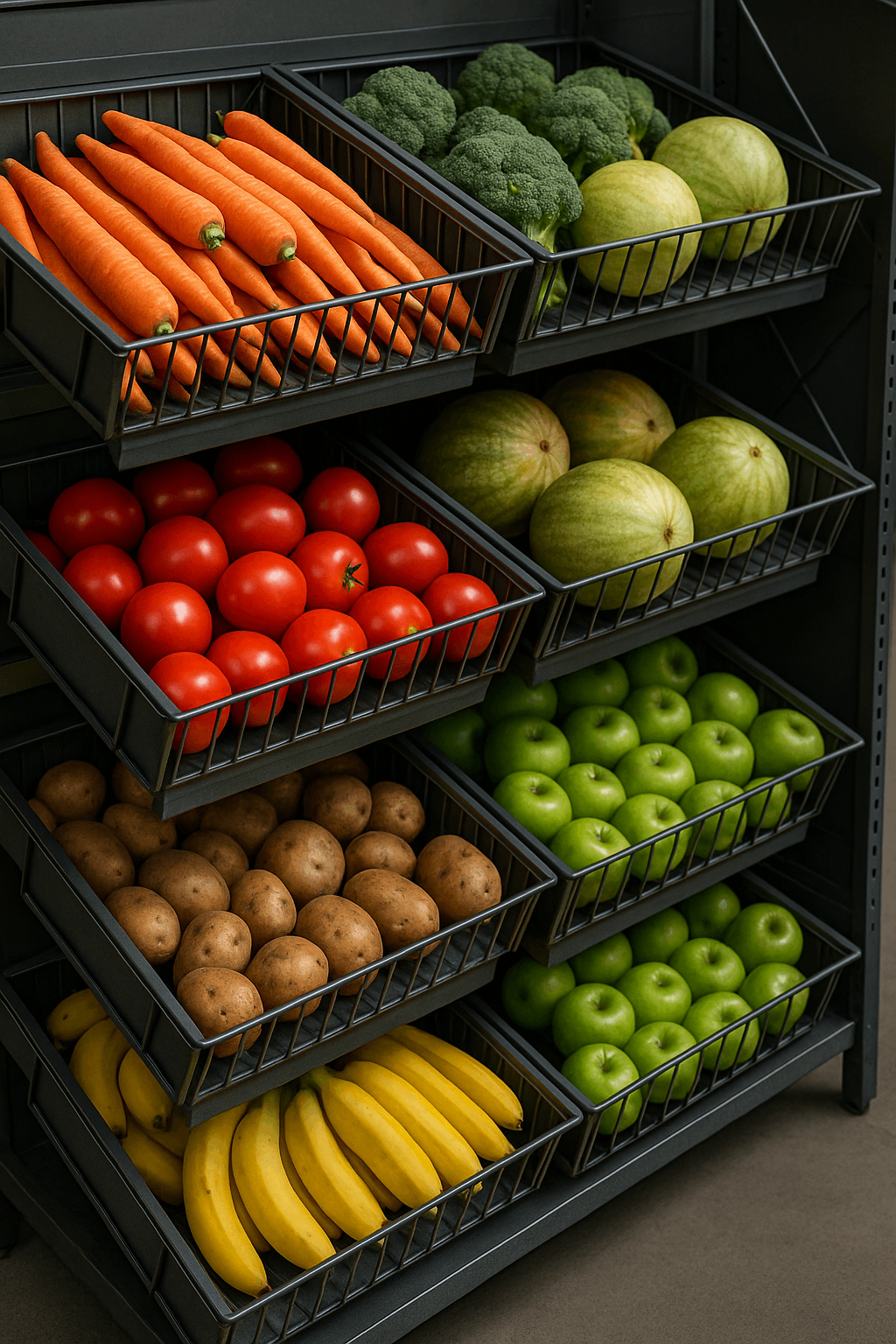
This is where the engineering of the display fixture becomes paramount. Techniques like “waterfall produce displays,” where produce seems to flow forward, are meticulously designed to create this powerful visual effect. Tilted metal shelving is structurally superior for achieving this look.
This is a crucial advantage for procurement managers to understand. It addresses a core operational conflict for retailers: the desire for visual abundance versus the need to control shrink. By leveraging the structural advantages of tilted metal shelving, your retail clients can increase impulse buys while exercising better control over stock levels.
1.3 The Symphony of the Senses
While sight is dominant, a truly effective produce department engages all the senses. The gentle hiss from produce misting systems, for example, does more than just hydrate leafy greens; it creates an auditory and visual spectacle that signals “freshness”.
The success of this sensory marketing, however, depends entirely on the fixture it’s integrated with. This is where rust-proof, food-safe metal grid racks and stainless steel displays prove their long-term value. They are engineered to withstand constant moisture without degrading, ensuring both longevity and hygiene.
Furthermore, the clean, non-porous surface of metal prevents the absorption of odors, allowing the natural aromas of the produce to permeate the air. This olfactory marketing is incredibly powerful, as humans often “taste first with our nose”. The fixture, therefore, is an essential component of a complete sensory strategy that drives sales.
Part 2: The Art of Display – Transforming Fixtures into a High-Performance Canvas
With a firm grasp of the underlying psychology, the focus shifts to the practical execution of visual merchandising. A high-performing produce department is a carefully composed work of art, and the display fixtures are its canvas.
These produce visual merchandising techniques are where strategy meets execution, turning a standard aisle into a destination.
2.1 The Alchemy of Color
Effective color use is a strategic application of color theory to drive sales. The principle of color blocking in produce displays, or arranging items in large, solid blocks of a single color, creates a powerful visual impact and makes the department feel organized.
The fixture itself plays a crucial role. Neutral-colored fixtures, particularly those in black or charcoal powder-coated metal, act as the perfect canvas. Their understated finish makes the natural, vibrant colors of the produce “pop,” creating intense visual contrast.
This neutral backdrop allows merchandisers to effectively deploy advanced color strategies. Using complementary colors (opposites on the color wheel, like red strawberries next to green limes) creates a lively, energetic display because the colors optically intensify one another.
2.2 The Geometry of Composition
A flat table of produce is uninspiring. To create a dynamic and engaging visual landscape, merchandisers must use the principles of artistic composition, and modern fixtures are the tools to achieve this.
Breaking the monotony of a flat plane is essential. Tiered produce displays and modular metal display risers are designed to introduce height and rhythm, elevating products closer to the customer’s eye level and creating natural focal points.
Furthermore, the texture of the fixture itself can create a compelling dialogue with the product. The clean, smooth surface of a metal display stand provides a sophisticated contrast to the natural, organic textures of produce. This thoughtful use of produce display composition adds another layer of depth and perceived quality.
Part 3: Engineering for Operations – Fixtures That Work as Hard as the Staff
A well-designed produce fixture should not only be visually compelling—it must serve the operational needs of a fast-paced retail environment. This section explores how engineering choices affect labor, hygiene, restocking speed, and inventory control.
3.1 Built-In Efficiency: Designing for the Restock Rhythm
In high-traffic environments, restocking needs to be frictionless. Metal shelving units engineered with front-loading angles or modular bin inserts enable quick replenishment without disrupting the overall display.
This also reduces labor time. Rather than reassembling displays daily, store teams can simply rotate produce into fresh bins or roll modular frames back into place. Custom metal fixtures with locking casters and integrated bumpers also help minimize injury risk and product damage during replenishment.
3.2 Inventory Visibility: Seeing Shrink Before It Happens
Transparent merchandising is more than aesthetics—it aids in real-time stock assessment. Open-frame metal structures allow staff to quickly scan for low inventory, damaged goods, or product nearing expiration.
This visibility enhances First-In-First-Out (FIFO) rotation and shrink control. Fixtures with tiered or tilted configurations naturally push older product forward, reducing waste from forgotten back stock.
3.3 Hygiene & Compliance: Meeting the Food Safety Gold Standard
Metal has a natural advantage over wood or plastic in food environments. It resists mold, corrosion, and pest infestation. Non-porous stainless steel or powder-coated finishes are NSF-compliant and easy to sanitize between restocks.
For clients operating under HACCP or similar standards, a cleanable, rust-resistant structure is non-negotiable. Engineering this into your procurement ensures a safer product environment and lowers long-term liability risk.
Part 4: Maximizing ROI – Fixtures That Outlast Trends and Minimize Shrink
Beyond visual or operational benefits, metal produce displays directly influence your clients’ bottom line. This section outlines how durable, modular designs deliver superior ROI across the fixture’s life cycle.
4.1 Durability Is Profit: Outlasting the Alternatives
Retailers today expect displays to endure years of daily wear. Fixtures made of wood or plastic crack, bow, or chip within 1–2 years in high-humidity produce sections.
In contrast, galvanized or powder-coated steel racks resist corrosion and maintain structural integrity even in wet or chilled spaces. Over 5–10 years, this durability results in far fewer replacements, downtime, and visual inconsistency across locations.
4.2 Modularity Is Margin: Reducing SKU-Level Waste
Bulk buyers often face the problem of dead inventory when displays can’t flex to fit new packaging or seasonal stock. Modular metal shelving systems solve this by adjusting shelf height, angle, or bin type without full replacement.
This also aids in multi-brand displays. Adjustable inserts let one unit accommodate a rotating mix of organic produce, private label, and promotional SKUs—all while maintaining merchandising consistency.
4.3 Sustainability Is Strategy: The Circular Economy Advantage
More retail groups are prioritizing sustainable sourcing. Recyclable metal fixtures—especially when powder coated without VOCs—align with CSR goals and green building certifications.
In markets like the EU and North America, clients increasingly prefer vendors who can document lifecycle sustainability. Offering recyclable, low-maintenance fixtures improves your tender competitiveness.
Part 5: Future Trends – Tech-Enabled Fixtures and What’s Next in Merchandising
The evolution of fresh produce displays isn’t slowing down. New technologies and consumer expectations are transforming what’s possible—and expected—of retail fixtures.
5.1 ESL and Smart Fixtures
Electronic Shelf Labels (ESLs) are becoming common, enabling real-time pricing, traceability, and reduced manual labor. Metal racks engineered with built-in ESL mounting points reduce retrofit hassles.
Future-ready designs integrate cable channels, display holders, and even IoT sensors for shelf health. As retailers digitize operations, these built-in smart features turn a simple rack into a data-collecting asset.
5.2 Visual Merchandising Meets Digital Signage
Integrating compact digital screens or QR code signage into produce displays is gaining traction. These support farm-to-store traceability, recipe inspiration, and even dynamic offers tied to loyalty apps.
Metal display frames with universal mounts simplify these integrations, letting retailers upgrade without replacing core infrastructure.
5.3 Compliance and Eco Trends
Expect regulations for material safety and packaging sustainability to grow tighter. Offering fully RoHS/REACH-compliant, recyclable metal options keeps your fixture offerings relevant across geographies.
Yishang Display, with its ISO 9001-certified manufacturing and RoHS-compliant powder finishes, stands ready to help you meet these rising standards.
Final Word: The Competitive Advantage of Strategic Procurement
Fixtures may not be the flashiest part of a retail project, but they are among the most foundational. They influence shopper trust, protect margin, support operational flow, and express brand quality.
By sourcing smart, modular metal produce displays, you position your clients—and yourself—for long-term success.
Ready to future-proof your fixture strategy? Connect with our team at Yishang Display to explore tailored options for high-performance, high-ROI merchandising systems.