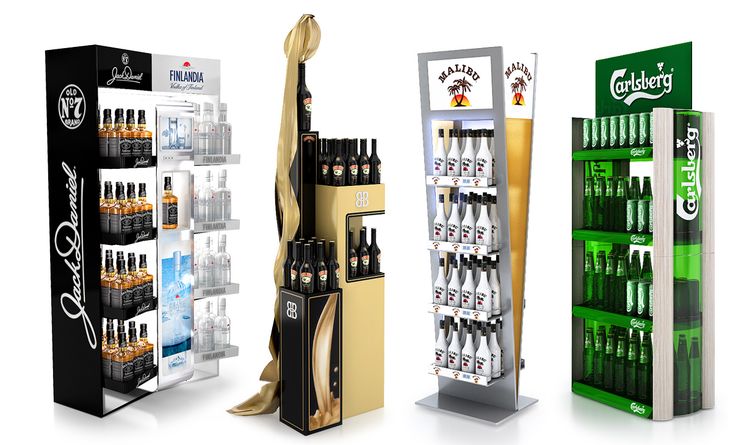
For global wholesale buyers, POP displays are assessed like any retail fixture: by
load performance, logistics efficiency, and compatibility with retailer systems. They must withstand real store conditions, support heavy SKUs, and deploy consistently across markets. In export programs, a display’s engineering quality directly affects rollout success, freight cost, and store compliance.
Professional buyers look for three things when researching POP displays:
- clear engineering logic and measurable structural specifications
- display-to-product fit across categories and retail formats
- procurement criteria that reduce risk in repeated mass production
This guide by
Yishang Display is written specifically for sourcing teams and importers who need
decision-grade information, not marketing descriptions. Each section explains display structures, load considerations, KD packaging strategies, and retail compatibility from a global procurement perspective.
What Wholesale Buyers Prioritize When Sourcing POP Displays
Procurement teams weigh POP displays based on
operational reliability, export practicality, and long-term economics rather than aesthetic appeal.
1. Structural Reliability and Load Performance
POP displays must support real retail loads—canned foods, beverages, power tools, multipacks, automotive SKUs. Buyers scrutinize quantifiable indicators:
- steel gauge (commonly 0.8–1.2 mm for load-bearing shelves)
- welding uniformity, corner reinforcement, and frame rigidity
- anti-tipping geometry and base width
- powder coating or anti-corrosion finishing for humid climates
A deviation beyond ±2 mm in shelf spacing or frame width can cause retailer rejection—buyers therefore prioritize predictable tolerance control.
RFQ tip: Buyers typically request a load test report or a bending-resistance test for heavy categories.
2. Packaging Density and Assembly Efficiency
For export programs, packaging often impacts cost more than production. Buyers favor:
- KD (knock-down) structures to maximize container utilization (improves loading efficiency by 20–40%)
- limited loose parts and standardized fasteners
- simplified assembly that store staff can complete in minutes
Efficient packaging reduces freight cost and improves rollout consistency across multi-store deployments.
3. Retailer System Compatibility and Batch Repeatability
Different retailers have different shelf tolerances, bracket profiles, and safety rules. Buyers need displays that:
- integrate with gondola fixtures and bracket systems
- comply with anti-tipping and aisle-clearance policies
- maintain dimensional accuracy across repeated batches
Certifications such as
ISO 9001 signal stronger quality control and batch stability—critical for multi-container orders.
4. Lifecycle ROI: The Real Value Metric
Instead of unit price, buyers evaluate
cost per deployment. Metal displays deliver stronger ROI because they:
- withstand 4–7× more campaigns than cardboard
- allow interchangeable graphics and components
- maintain structural integrity during repeated transports
- reduce waste and replacement frequency
This aligns with sustainability and long-term procurement strategies.
Why POP Displays Are Engineered the Way They Are
Each POP display type exists because it solves a specific retail challenge—weight distribution, SKU organization, shopper accessibility, or store traffic flow.
POP Displays as Functional Retail Instruments
A professional POP display must:
- stabilize product weight
- maintain SKU presentation consistency
- enhance visibility without compromising safety
- endure high-traffic retail environments
Metal frameworks are preferred for export programs because they:
- maintain shape under significant load
- resist deformation from restocking and handling
- provide precise tolerances for inline or modular systems
Acrylic and cardboard complement visual branding, while metal forms the structural backbone.
Engineering Factors That Define Display Categories
Each display type is shaped by mechanical requirements:
- Floor displays need wide, reinforced bases for stability.
- Gravity-feed units require accurate angles and smooth lanes.
- Sidekicks depend on secure brackets and strong hooks.
- Inline fixtures require millimeter-level precision.
Understanding these requirements helps buyers evaluate suppliers beyond price alone.
Eight POP Display Types: Engineering Logic and Procurement Criteria
This section outlines the key POP display categories and the technical factors procurement teams typically review during sourcing.
Floor Displays: Heavy-Duty Versatility
Metal floor displays provide the highest load capacity. Buyers commonly evaluate:
- load rating per shelf (often 20–50 kg depending on design)
- tubing or sheet-metal thickness
- reinforcement plates and welding quality
- powder-coat durability under long-term use
Buyer audit focus: Ensure the base width supports anti-tipping requirements for SKUs exceeding 15 kg.
Typical applications: hardware, automotive goods, beverages, snacks, household chemicals.
Counter Displays: Compact, High-Conversion Fixtures
At checkout, stability is essential. Buyers check:
- anti-slip base design
- acrylic clarity and thickness (commonly 2–4 mm)
- KD packaging to reduce freight cost
Typical applications: cosmetics, OTC items, small electronics, accessories.
Pallet Displays: Warehouse-Grade Structures
Designed for wholesale clubs and big-box retailers, pallet displays must survive forklift handling. Buyers examine:
- 40×48 or Euro pallet compliance
- reinforcement bars
- edge protection for heavy loads
Buyer audit focus: Verify that the frame resists torsion during warehouse handling.
Endcap Displays: High-Visibility Retail Hubs
Endcaps drive traffic and rely on stable frames. Buyers assess:
- gondola compatibility
- adjustable shelving spacing
- header graphic quick-change features
Typical applications: seasonal promotions, new product launches, high-margin categories.
Sidekick Displays: Efficient Vertical Utilization
Sidekicks attach to gondola sides—requiring bracket precision. Buyers evaluate:
- hook weight limits
- bracket profile compatibility
- modular options for changing SKUs
Ideal for snacks, accessories, small packaged goods.
Display Bins: High-Interaction Dump Bins
Dump bins must withstand constant customer handling. Buyers confirm:
- corner reinforcement strength
- caster options
- interior volume and load limits
Used for clearance goods, seasonal displays, and irregular items.
Inline Displays: Precision-Fit Fixtures
Inline units integrate directly with retailer shelf systems. Buyers check:
- fixture compatibility (tolerance within ±1–2 mm)
- surface scratch resistance
- adjustable dividers or hooks
Common in grocery, pharmacy, and FMCG categories.
Gravity-Feed Displays: Efficient Stock Rotation
Gravity-feed structures require accurate angle alignment. Buyers evaluate:
- lane adjustability
- rolling mechanism reliability
- ease of maintenance
Used for beverages, canned goods, snacks, and high-turnover items.
Material Logic: Why Metal Leads Long-Term Procurement Programs
Material selection affects load capacity, freight efficiency, and lifecycle value.
| Material |
Load Strength |
Longevity |
Reusability |
Best Use Cases |
| Metal |
High |
5–10 years |
Excellent |
Heavy goods, long-term programs |
| Wood |
Moderate |
2–5 years |
Good |
Premium visual merchandising |
| Acrylic |
Low–Moderate |
1–3 years |
Fair |
Branding/visibility elements |
| Cardboard |
Low |
Weeks–Months |
Poor |
Temporary promotions |
Why procurement teams prefer metal for export:
- lowest cost-per-deployment among all materials
- maintains structural tolerance across mass production
- resists impact and deformation during transport
- supports modular upgrades and SKU reconfiguration
This makes metal the dominant choice for durable POP systems.
A Practical Procurement Framework for Choosing POP Displays
1. Match Display Type to Product Requirements
Weight, turnover speed, packaging style, and SKU variety shape the appropriate structure. Heavy items need reinforced frames; fast-moving items may use gravity-feed designs.
2. Evaluate Lifecycle ROI
Many buyers measure value by deployment count. Metal displays reused across 3–6 seasons deliver the strongest ROI.
3. Optimize Logistics and Assembly
Assess:
- KD design efficiency
- part complexity
- carton density
- assembly time at store level
4. Ensure Retail Compliance
Check gondola fit, safety rules, spacing standards, and anti-tipping requirements. Non-compliance is a common reason for retailer rejection.
Common Sourcing Pitfalls to Avoid
- underestimating weight requirements
- choosing over-complex mixed-material structures
- prioritizing unit cost over lifecycle ROI
- overlooking retailer fixture compatibility
Quality systems such as
ISO 9001 and
RoHS reduce production variability and support consistent multi-batch delivery.
Future POP Display Trends Relevant to Procurement
- modular metal systems enabling fast reconfiguration
- emphasis on recyclability and reduced waste
- hybrid metal-acrylic structures for premium categories
- lightweight steel reducing freight weight without sacrificing strength
- optional digital integrations such as QR codes or motion sensors
These trends align with long-term procurement priorities: durability, adaptability, and export feasibility.
Conclusion: Reliable POP Displays Strengthen Retail Partnerships
POP displays are functional assets in retail operations. For wholesale buyers, selecting the right structure requires balancing
engineering logic, logistics practicality, and lifecycle ROI.
Metal POP displays remain the most dependable choice for multi-market retail programs. Yishang Display provides export-ready, engineered display systems designed for consistent performance in high-demand environments.
If you need load assessment, feasibility review, or structural recommendations for your next POP program, our engineering team is
ready to assist.