

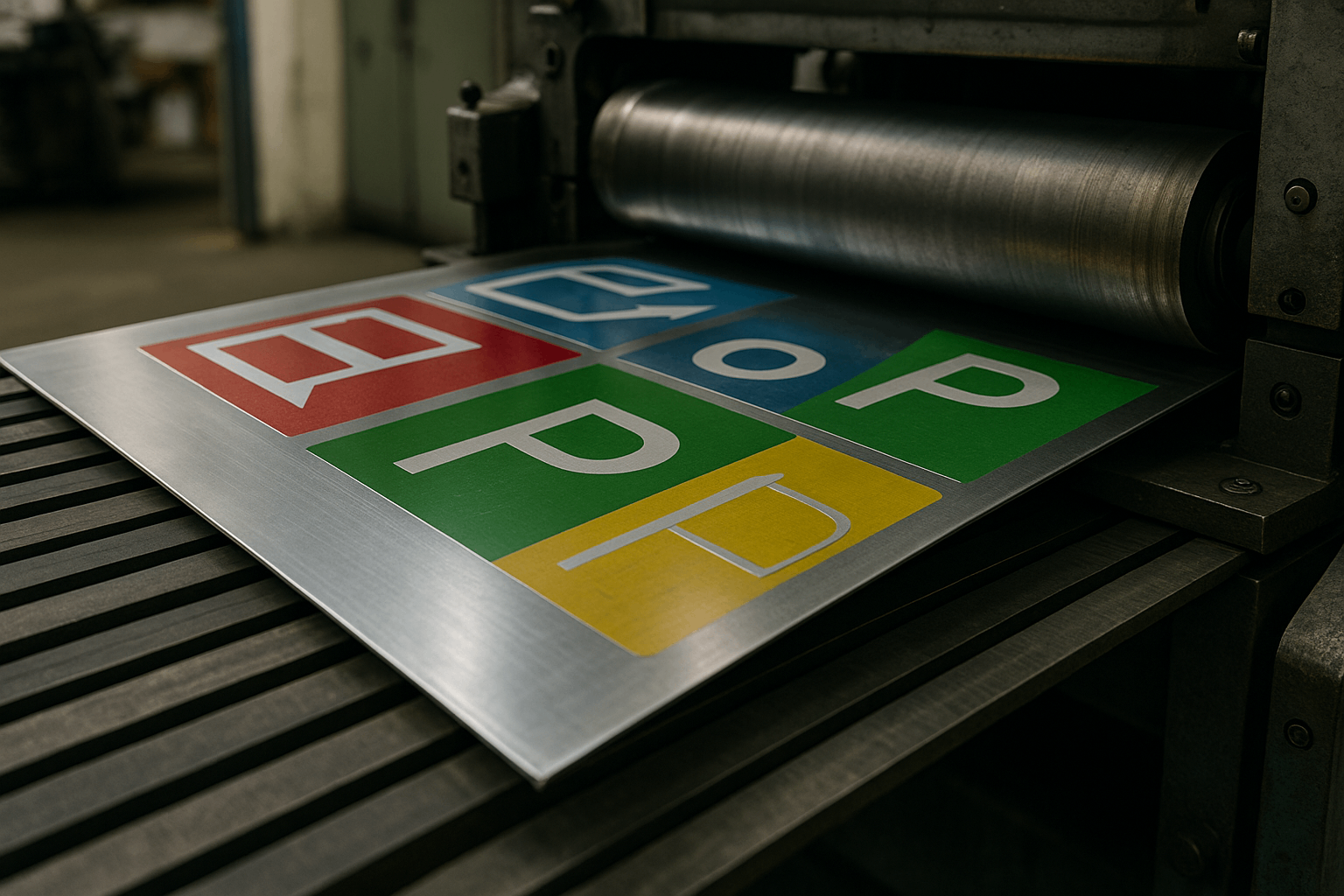
In large‑scale retail programs, printed graphics on metal POP displays directly influence long‑term brand visibility, operational costs, and market consistency. For overseas procurement teams sourcing wholesale metal display racks, custom metal store fixtures, or OEM metal POP displays, print durability and engineering alignment are not cosmetic considerations—they are measurable performance indicators.
Metal displays remain on the retail floor far longer than cardboard fixtures, often supporting multi‑year product cycles. This longevity means that printed surfaces must resist fading, abrasion, and environmental exposure while maintaining color accuracy across batches and global markets. At the same time, buyers must balance cost efficiency, SKU flexibility, and consistent quality when selecting a metal display manufacturer.
This guide is written from the perspective of a supplier serving global wholesale buyers. Rather than simply listing printing methods, it explains how printing interacts with metal engineering, what affects durability, how to evaluate supplier processes, and how to reduce risk when managing high‑volume or multi‑market rollouts.
Understanding POP Display Printing for Metal Fixtures: What Procurement Teams Need to Know
Metal POP displays operate on longer service cycles and stricter performance expectations than temporary cardboard displays. A display used in automotive, beverage, tool, or hardware retail environments may be expected to last three to five years, withstanding constant shopper interaction, periodic cleaning, and heavy product loads. Because metal is non‑porous, ink adhesion depends entirely on surface treatment, coating gloss level, and substrate energy. Printing failures—such as peeling, color drift, or poor adhesion—are costly not only in replacement expenses but also in brand consistency across different geographic markets. Procurement teams evaluating a metal POP display manufacturer must confirm substrate preparation, coating control, and print‑quality calibration. Metal also carries a premium perception. Durable printed graphics paired with engineered metal structures reinforce reliability and product quality—attributes that matter in B2B categories where credibility influences purchase decisions. That is why most buyers searching for a custom metal display stand supplier prioritize both engineering capability and print performance.Printing Methods for Metal and Hybrid POP Displays
Selecting the right printing process affects visual quality, production efficiency, and lifecycle cost. Each printing method carries unique advantages depending on the display’s lifespan, environment, and structural requirements.UV Printing for Metal and Rigid Surfaces
UV printing is the preferred method for metal because it offers:- Strong adhesion on powder‑coated and smooth metal surfaces
- Fast curing, ideal for tight production timelines
- High‑resolution graphics suitable for permanent branding
- Minimal color shift across large production batches
Powder‑Coating + Printing: Understanding Surface Behavior
Powder coating protects metal from corrosion and defines the surface texture. Gloss, matte, and textured coatings each interact differently with ink:- Gloss coatings enhance color vibrancy but show scratches more easily
- Matte coatings diffuse light and produce softer tones
- Textured coatings may reduce perceived saturation due to micro‑surface variation
Acrylic & PVC Inserts for Hybrid Metal Fixtures
Many buyers require displays that support seasonal graphics or multi‑SKU rotations. Acrylic and PVC inserts provide:- Premium finishes (acrylic)
- Cost‑effective mass customization (PVC)
- Easy message replacement without changing the metal frame
Modular Vinyl, Decal, and Magnetic Systems
Modular printed components allow brands to update promotions without manufacturing new hardware. This is ideal for distributors who operate franchise networks or regional programs and need consistent yet flexible printed solutions.Structural–Printing Integration: Where Engineering Meets Graphic Precision
In metal POP displays, engineering and printing cannot be treated as separate disciplines. The geometry of the structure directly affects how printed graphics align and perform.CAD‑Aligned Artwork for Dimensional Accuracy
Metal fixtures include welded joints, perforated panels, laser‑cut openings, and mounting brackets. Artwork must be aligned against CAD drawings—not just flat templates—to prevent distortion. A supplier experienced in metal fixture engineering & printing ensures precise fit across batches.Load‑Bearing Panels and Substrate Selection
Printed panels may also serve structural functions. For heavy loads, thicker acrylic or metal plates prevent deformation. For lighter displays, PVC may be sufficient. Buyers should evaluate:- Weight distribution
- Shelf load requirements
- Flex resistance
- Long‑term deflection behavior
Multi‑Surface Printing for Complex Shapes
Metal displays often incorporate curves, angles, or tube structures. These require different treatments:- Flat areas → UV printing
- Curved tubes → vinyl wraps
- Perforated panels → floating signage or mounted plates
Tight Tolerance Control
Deviation of even 1–2 mm can misalign printed panels. Buyers should confirm their supplier’s tolerance control, machining precision, and inspection procedures—especially for programs requiring multi‑store uniformity.Material Choices for Printed Elements in Metal Displays
Different substrates influence cost, durability, and visual quality. Procurement teams should understand how each material fits strategic goals.Metal Panels for Permanent Branding
Metal panels provide:- Excellent strength
- Long‑term dimensional stability
- High resistance to impact and cleaning agents
Acrylic & PVC Panels
Acrylic: superior clarity, premium appearance, strong color depth. PVC: economical, lightweight, ideal for seasonal or regional messaging. Both integrate seamlessly with welded metal frames.Wood Accents for Aesthetic Versatility
Printed wood components add warmth and tactile contrast, creating a more lifestyle‑oriented look for outdoor, apparel, or natural brands.Corrugated Components as Cost‑Effective Add‑Ons
Corrugated printed pieces serve temporary campaigns while metal frames provide stability. This combination helps control cost in large promotions.Design Considerations for Metal POP Displays
Great design balances visibility, engineering constraints, and printing limitations.Long‑Distance Visibility & Retail Lighting Behavior
Metal displays often sit in open retail areas. Graphics must remain legible from multiple angles. Procurements teams should consider:- Typography scale
- Contrast ratios
- Lighting reflections on gloss coatings
Color Calibration for Metal Surfaces
Because coatings affect color behavior, suppliers must conduct color sampling under consistent lighting conditions. This ensures global color uniformity—a major concern for brands operating multi‑market campaigns.Modular Graphic Systems for SKU Variability
Buyers managing frequent product rotations benefit from modular systems:- Slide‑in frames
- Magnetic plates
- Interchangeable acrylic inserts
Global Brand Consistency
Metal fixtures provide uniform structural quality, but printing workflows must be equally controlled to deliver identical visuals across markets.Manufacturing Workflow: How Yishang Display Integrates Printing with Metal Production
A professional workflow reduces risk and improves repeatability—two priorities for global buyers.Engineering & Technical Drafting
CAD drawings define:- Material thickness
- Bending radii
- Load requirements
- Print zones
- Tolerances
Prototyping & Sample Validation
Samples verify:- Adhesion strength
- Color accuracy
- Structural fit
- Dimensional consistency
- Surface behavior of printed areas
Surface Treatment & Printing
Powder coating is applied first, followed by printing or decal application. Surface energy and coating texture significantly affect ink behavior, making pre‑testing essential.Assembly & ISO‑Based QC
Yishang Display conducts:- Color matching
- Adhesion/scratch tests
- Corrosion evaluation
- Tolerance checks
KD Packaging & Export Logistics
For export orders, knock‑down packaging improves freight efficiency and protects printed components. Buyers focused on bulk shipments benefit from reduced logistics costs.How Buyers Can Choose the Right Printing Approach
Selecting the right printing strategy impacts lifecycle cost and campaign flexibility.Consider the Display’s Service Life
- Permanent → UV‑printed metal or acrylic
- Semi‑permanent → PVC or vinyl
- Temporary → corrugated overlays
Account for Environmental Exposure
Displays near windows, refrigeration, or industrial environments need:- High UV resistance
- Anti‑corrosion finishes
- Scratch‑resistant coatings