

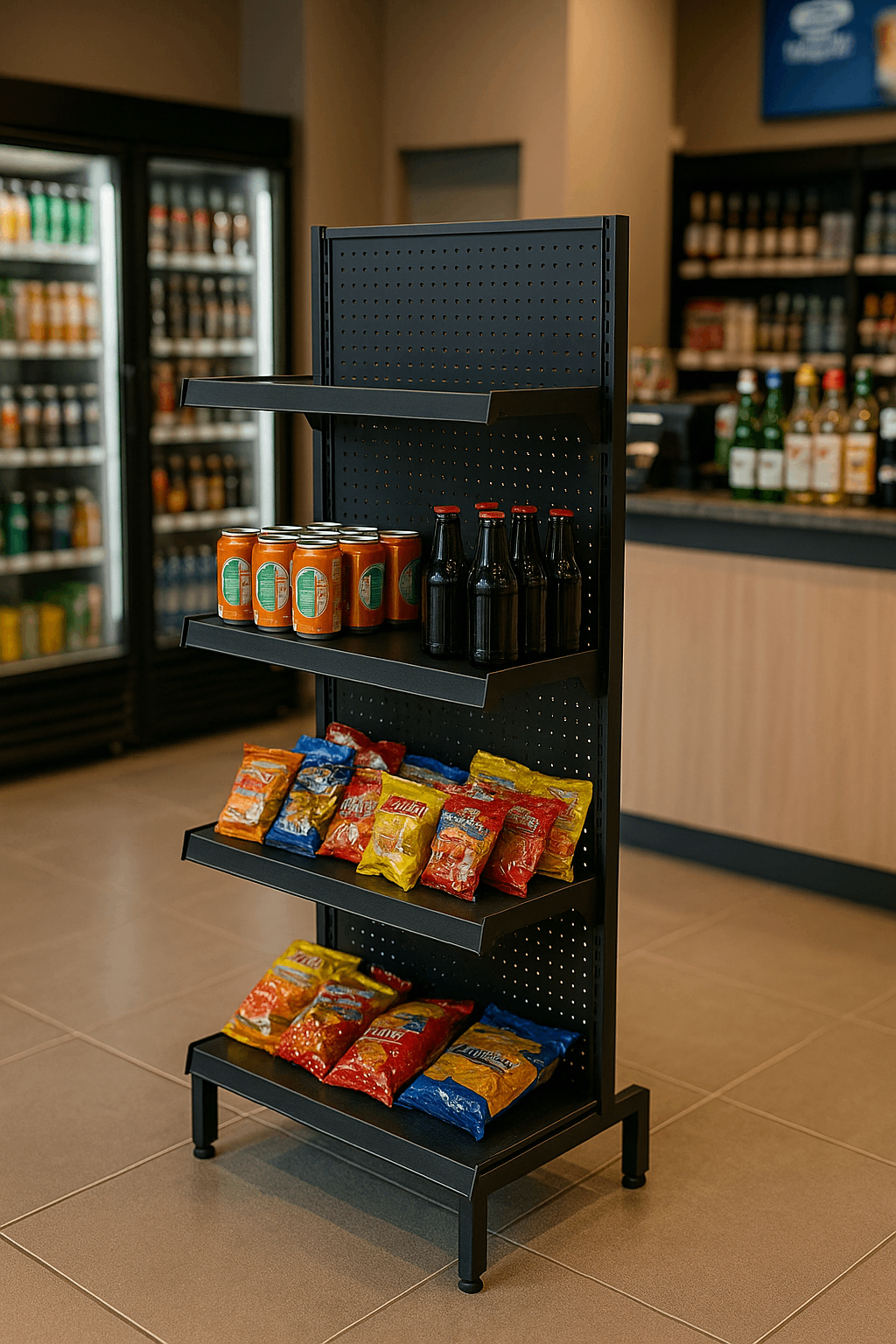
Consumers see products. Professional buyers see structure, materials, cost curves, and long‑term reliability. When sourcing wholesale metal display racks, custom metal retail displays, or export‑ready impulse fixtures, your focus is not simply aesthetics — it is supply stability, steel gauge consistency, weld quality, and whether the design will survive real retail conditions for years.
These priorities become even more important when supplying large retail chains across multiple regions. A display must support repeatable planograms, endure high traffic, and ship efficiently in export cartons. Based on years of engineering and manufacturing OEM/ODM metal retail fixtures for international clients, Yishang Display has seen firsthand what determines long‑term performance. This guide helps wholesale buyers evaluate impulse displays with criteria grounded in manufacturing experience, engineering logic, and practical sourcing decisions.
Why Impulse Behavior Still Matters in B2B Procurement
Even though you sell to retailers rather than shoppers, understanding how impulse purchases happen ensures that the fixtures you source actually support sales performance.
Fast Decisions Require Predictable, Stable Structure
Most impulse decisions occur in seconds. The display must provide a steady visual layout: clean facings, no wobble, no misaligned hooks. A steel impulse display rack maintains this structural clarity far better than temporary fixtures.
Ergonomic Placement Drives Sell‑Through
Impulse products sell best when positioned in natural reach zones. Metal displays with repeatable hole spacing and adjustable shelves allow your customers to execute identical planograms across multiple countries — a critical expectation for global retailers.
Durability Across Climates and Store Conditions
Humidity, temperature shifts, chemical cleaning routines, and daily bumps all affect fixture lifespan. Powder‑coated steel, reinforced welds, and anti‑corrosion treatments protect displays from deformation and finish deterioration. For wholesalers, fewer early failures mean fewer service issues and stronger customer relationships.
What Makes a Display Truly “Wholesale‑Grade”
Wholesale buyers evaluate displays like industrial products. A wholesale‑grade metal impulse display must:
- Support varying SKU dimensions and weights without redesign.
- Meet real load requirements for beverages, hardware, canned foods, and automotive items.
- Use modular, standardized components suitable for regional merchandising differences.
- Arrive safely after long‑distance export shipping (vibration, compression, humidity).
- Maintain manufacturing tolerances that match approved samples batch after batch.
- Load efficiently into pallets and containers to optimize landed cost.
Metal is the most stable choice across all these factors, delivering consistency that cardboard, MDF, or acrylic cannot match at scale.
Shopper Flow & Store Layout — Designing for Multi‑Market Retail Environments
Retail formats differ across countries, but certain behavioral and traffic patterns remain globally predictable. A fixture that works in a European hypermarket should also perform in Middle‑Eastern convenience stores or Southeast Asian grocery chains.
High‑Value Zones Where Metal Displays Excel
- Power aisles with constant cart movement.
- Checkout and queue lanes requiring narrow yet stable fixtures.
- Transitional spaces near coolers, tobacco counters, or service zones.
Metal displays maintain alignment and structural integrity in these demanding spaces.
Ensuring Compatibility with Regional Standards
Aisle widths, ADA‑style accessibility, and cleaning protocols vary internationally. Modular metal fixtures allow height adjustments, hook repositioning, and format changes without producing new models — reducing SKU fragmentation for wholesalers.
Engineering Priorities That Shape Procurement Outcomes
When comparing suppliers or evaluating samples, buyers are comparing engineering decisions. These determine product lifespan, safety, and cost‑efficiency.
Structural Stability & Weight Distribution
The stability of a floor‑standing impulse display depends on:
- Base width and anti‑tip geometry
- Steel gauge (commonly 0.6–1.2 mm for structural parts)
- Weld depth and continuity
- Center‑of‑gravity design
Well‑engineered steel structures reduce liability and maintenance calls.
Load‑Bearing Capacity & Real‑World Performance
Fixtures must support actual retail products — not just showroom samples. Below is a realistic material comparison:
| Material | Load Capacity (Avg.) | Structural Reliability | Lifespan |
|---|---|---|---|
| Metal | 40–120 kg/shelf | Very high | 5–10 years |
| Acrylic | 5–15 kg/panel | Medium | 6–18 months |
| Wood/MDF | 20–40 kg/shelf | Medium | 1–3 years |
| Cardboard | 1–3 kg/shelf | Low | 2–10 weeks |
This is why most export‑grade FSDU (Free‑Standing Display Units) for heavy or dense SKUs use steel construction.
Component Standardization for Global Rollouts
Unified hole spacing, adjustable shelves, and compatible hooks simplify long‑term supply. For wholesalers, this reduces spare‑parts inventory, streamlines maintenance, and ensures consistent visual execution across borders.
Export‑Ready Packaging & ISTA‑Inspired Protection
Overseas shipments require strong packaging to protect welds and coatings. Many buyers now request packaging aligned with ISTA 3A‑style vibration and drop protection, minimizing shipping damage complaints.
Visual Merchandising — Precision, Repeatability, and Brand Alignment
Visual merchandising is not only a creative discipline; for B2B buyers, it is a question of whether a display can deliver consistent presentation across hundreds of stores.
Structural Geometry That Guides Shopper Attention
Rigid steel frames keep shelves level and signage aligned, creating a consistent shopper experience and minimizing re‑merchandising time.
Coatings and Finishes for Retail Durability
Powder‑coated steel resists rust, chipping, and fading. High‑gloss finishes, chrome plating, or matte textures support different brand directions while ensuring long‑term appearance.
Scalable Signage Integration
Metal frames support multiple signage formats:
- Magnetic headers
- Clip‑in frames
- LED lightboxes
- Multi‑language brand panels
This flexibility is vital for international chains executing rolling promotions.
Category‑Specific Display Strategy for Wholesale Buyers
Matching fixture engineering to real product characteristics strengthens both safety and sell‑through.
High‑Density Pegboard Categories
Electronics accessories, office supplies, pet goods, and travel essentials require durable pegboard systems. Steel grids prevent sagging and maintain tidy presentation.
Heavy or High‑Value Packaged Goods
Beverages, hardware, automotive fluids, and canned foods demand steel shelves with braced support to prevent bowing under constant load.
Premium Beauty & Lifestyle Segments
Metal paired with acrylic panels or lighting elements creates a modern premium look suitable for airports, malls, and gift shops.
Seasonal Flexibility Without New Fixtures
One metal base with optional accessory kits allows retailers to modify displays for holidays, summer campaigns, or regional promotions.
Operational Efficiency — The Hidden ROI Driver
Buyers supplying to multi‑store retail networks know that operational efficiency matters as much as product cost.
Low‑Maintenance Materials
Smooth, coated metal surfaces reduce cleaning time and resist visual wear, allowing stores to maintain a fresh appearance.
Fast Restocking & Easy Planogram Adjustments
Standardized interfaces help staff restock quickly and maintain display order. This supports efficient labor usage across large retail fleets.
Multi‑Format Compatibility
A well‑designed custom metal display stand can be deployed in:
- Hypermarkets
- Convenience stores
- Specialty retail
- DIY/hardware formats
- Travel retail
Reducing display variation simplifies procurement and strengthens brand consistency.
Total Cost of Ownership Advantage
Metal displays deliver a lower cost per year compared with cardboard or MDF, especially in high‑traffic or humid environments. This makes them a better long‑term investment for retailers and wholesalers alike.
Deployment Scenarios — How Metal Displays Solve Real Retail Challenges
High‑Traffic Convenience & Grocery Chains
Constant bumps and high SKU turnover demand durable fixtures. Metal structures maintain alignment, reducing replacement cycles.
Automotive, DIY & Hardware Channels
Dense and heavy products require steel frames with verified load capacity, minimizing field failures and safety risks.
Premium Beauty, Lifestyle & Gift Retail
Metal displays support lighting, acrylic décor, and premium finishes, balancing structural reliability with brand appeal.
Procurement Risks — Common Mistakes to Avoid
Mistakes often occur when buyers:
- Prioritize initial price over lifecycle cost
- Choose insufficient steel gauge
- Overlook corrosion resistance for humid markets
- Select non‑modular structures unsuited for global rollout
- Ignore export packaging requirements
Specifying internationally compatible, well‑engineered metal displays helps avoid early failures and cross‑regional inconsistency.
Frequently Asked Questions (FAQ)
1. What type of impulse display works best near checkout?
Narrow, stable metal FSDUs with high SKU density perform best in checkout lanes due to limited space and constant traffic.
2. How much weight can a metal impulse display hold?
Depending on steel gauge and construction, shelves typically support 40–120 kg each, far exceeding cardboard alternatives.
3. Is metal better than cardboard for heavy SKUs?
Yes. For beverages, tools, canned foods, and automotive products, steel is the only safe option for long‑term retail use.
4. Can metal displays be customized for different countries?
Absolutely. Modular components allow adaptation to different pack sizes, regulations, and planogram requirements.
5. What affects the cost of a wholesale metal display rack?
Key factors include steel thickness, welding complexity, finish type, accessory count, packaging style, and container loading efficiency.
Conclusion — Metal Displays as Long‑Term Retail Assets
Impulse displays are not simple décor. For international wholesale buyers, they are capital investments that influence sales, brand presentation, and operational efficiency.
By sourcing custom metal retail displays with engineered stability, modular design, export‑ready packaging, and multi‑market adaptability, you protect your supply chain and deliver measurable value to retail clients.
If you would like technical drawings, prototypes, load‑testing data, or export packaging options for your next project, Yishang Display can support your evaluation and sourcing requirements.