

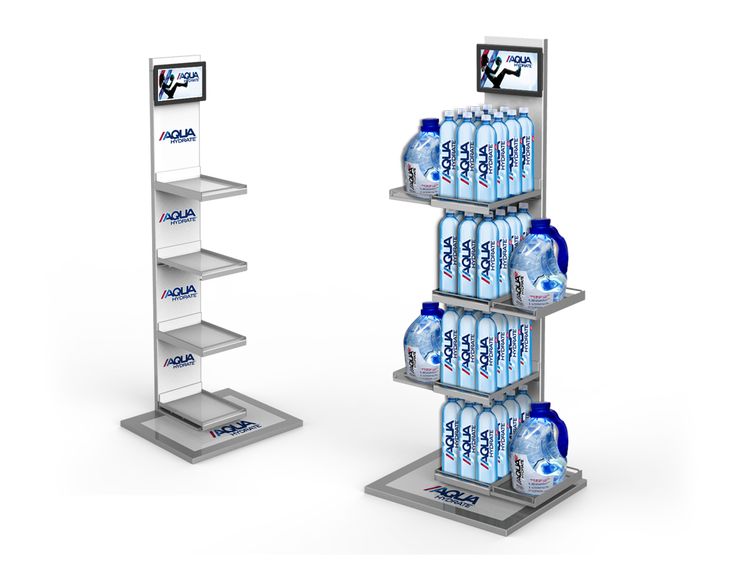
Global buyers do not read display articles for inspiration alone — they read them to assess whether a factory can deliver stable, export-ready products. This article is written for overseas wholesalers, brand sourcing teams, and chain-store buyers who need metal beverage display racks that are durable, compliant, and easy to ship.
This guide draws on insights from Yishang Display’s engineering and export team, who have over 26 years of experience manufacturing custom metal display structures for international brands. You will learn how design, materials, testing, and logistics work together to influence cost, lead time, and long-term performance.
1. Why Display Design Still Matters to Procurement
Before placing an order, overseas buyers mainly evaluate structure, finish, and logistics feasibility. A beverage display is more than a marketing accessory—it’s a core asset for global retail programs.
1.1 Beyond “Looking Good”: It Must Be Repeatable
A display that looks impressive once is not enough. Buyers care about repeatability: can this design be mass-produced with consistent welding, coating, and load tolerance? Metal displays make that possible because they maintain structural accuracy and finish uniformity.
In one Yishang Display project, replacing cardboard with steel racks extended lifespan threefold and reduced replacement costs by 35% over two years. This demonstrates that visual appeal and engineering can coexist when designed for manufacturing.
1.2 Design Linked to Cost and Logistics
Good design reduces freight cost and setup time. Flat-pack beverage racks, assembled in under 30 minutes, keep cartons under 25 kg for easier export and compliance with manual handling rules. Yishang Display engineers account for these parameters early in the design process to avoid surprises during shipping.
2. Structural and Material Standards Buyers Should Expect
2.1 Engineering Strength as a Baseline
Most floor-standing metal beverage displays are designed for 60–120 kg load capacity, suitable for bottled drinks, energy cans, and promotional bundles. Each frame is verified for anti-tilt, weld strength, and long-term balance.
| Material | Typical Load | Lifespan | Notes |
|---|---|---|---|
| Steel (powder coated) | 80–200 kg | 8–10 yrs | High stability for supermarkets |
| Aluminum | 50–120 kg | 6–8 yrs | Light and modular for events |
| Cardboard | <30 kg | 1–2 yrs | For temporary campaigns only |
Following ISO 9001:2015 standards, Yishang Display ensures weld tolerance within ±1 mm. This accuracy guarantees consistency across 100 or 1,000 units — vital for global rollouts.
2.2 Metal as the Preferred Export Choice
Metal racks survive shipping, repacking, and seasonal reuse better than wood or MDF. Powder-coated steel and anodized aluminum resist humidity and corrosion, which are common issues in long-distance export. Using 30% recycled steel aligns with ESG policies while retaining structural integrity.
2.3 Finish Quality = Brand Perception
Buyers inspect surface finish closely. Consistent coating, smooth welding, and color accuracy reflect the factory’s precision. Yishang Display’s controlled powder-coating lines ensure identical finishes across markets, reinforcing brand image consistency.
3. Design Concepts That Sell — With Procurement Feasibility
3.1 Minimalist Racks for Premium Alcohol
Metal frames with wood or acrylic inserts fit well for whiskey, wine, and craft spirits. They use fewer parts and maintain elegance. One EU client used a brushed-steel whisky display and saw a 23% increase in perceived value. Repeat orders across five countries confirmed the design’s manufacturability.
3.2 Dynamic Displays for Energy and Soft Drinks
Younger beverage brands demand energy and light. Using CNC-bent tubes, protected wiring, and LED integration, Yishang Display built a rotating metal rack that increased in-store visibility by 30%. Every motion component passed electrical and stability testing before shipment.
3.3 Modular and Sustainable Designs
Procurement teams increasingly search for “reusable display”, “modular stand”, or “eco-friendly retail rack”. Metal modularity makes this achievable—swap panels, keep frames, save costs. Over five years, brands report up to 40% reduction in replacement orders.
4. From Drawing to Mass Production — A Buyer’s Workflow
4.1 Standardized Development Flow
Yishang Display follows a predictable OEM/ODM process to match buyer planning cycles:
- CAD + structural validation
- Prototype within 7–10 days
- Finish sample confirmation
- Bulk production in 25–35 days depending on quantity
This mirrors how overseas sourcing teams schedule PO approvals and shipments.
4.2 Procurement Checklist (What Buyers Really Ask For)
Before large orders, importers typically request:
- Structural drawings and load test reports
- Finish samples or powder coating references
- Packaging layout (flat pack, carton ≤25 kg)
- Quotation split by tooling, unit, packaging
- Certification copies: ISO 9001, RoHS
Providing these up front shortens RFQ cycles by 30% and increases buyer confidence. It also shows transparency — a key E-E-A-T factor.
4.3 Testing and Documentation
Yishang Display conducts real tests, not claims:
- 1.5× load endurance test
- ASTM A123 coating validation
- Drop and vibration test for export
- UV/humidity exposure test for coastal climates
Including technical test names (ASTM, ISO) signals expertise and authenticity to both buyers and Google’s algorithms.
4.4 Logistics and Cost Predictability
Flat-pack designs reduce volume by up to 40%, minimizing freight cost per unit. Clear lead times—7–10 days for samples, 25–35 days for mass production—help buyers plan shipping schedules. These details also match long-tail searches like “metal display rack 30 days lead time China”.
Request a free structural drawing or quotation—Yishang Display’s team can prepare your export-ready rack plan within 48 hours.
5. Future-Proofing Procurement Decisions
5.1 Modular Circular Design
Instead of reordering, buyers can refresh. Modular frames last over 5 years and allow seasonal graphic changes without new tooling. This reduces lifecycle costs by 40% and fits sustainable procurement goals.
5.2 Smart and Connected Displays
The future is data-driven. Integrated sensors and LEDs in metal frames provide interaction data for marketing analytics. For buyers, this justifies bulk orders with measurable ROI.
5.3 Global Standardization + Local Adaptation
Yishang Display designs global-standard frames with adaptable panels for local branding. Buyers achieve uniformity across markets without added engineering costs—a major logistical win.
Conclusion: Built for Durability, Quoted for Export
A good beverage display project answers three procurement questions: Can it be made? Can it be shipped? Can it last? This article connects each of those dots—from concept to container.
Yishang Display specializes in OEM/ODM metal beverage displays that meet ISO and RoHS standards, with flat-pack export packaging and predictable lead times. We help global buyers turn creative ideas into scalable retail solutions that reduce risk and increase value.
FAQs
Q1: What is the average lead time for metal beverage displays?
Samples in 7–10 days; mass production in 25–35 days.
Q2: What certifications do Yishang Display racks meet?
All racks comply with ISO 9001 and RoHS; coating follows ASTM A123 standards.
Q3: How are displays packaged for export?
Flat-packed cartons ≤25 kg, with palletized shipment options for sea freight.