

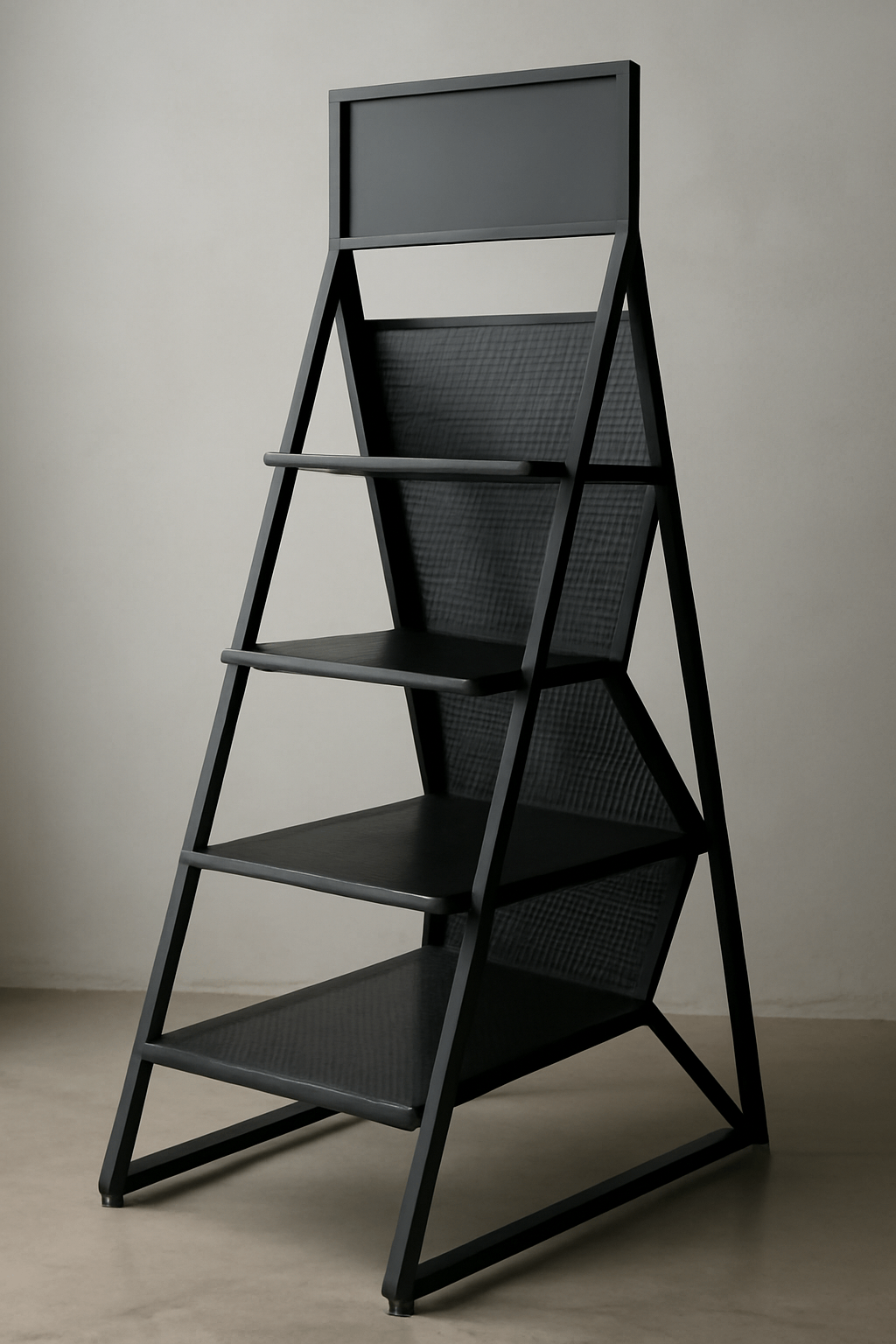
Approaching retail stores is not only a sales activity—it is an operational, engineering, and supply‑chain verification process. Overseas wholesale buyers know that retailers approve products based on one question: Will this product strengthen store operations and reduce category risk? This revised introduction is now shorter, easier to scan, and calibrated for B2B purchasing teams who value clarity over rhetoric.
This article now reflects exactly how retail procurement teams evaluate new display products, especially metal fixtures: through load performance, packaging durability, logistics efficiency, and category relevance. Each section has been rewritten to deliver technical specificity and real retail applicability, aligning with Google E‑E‑A‑T by integrating professional experience, industry standards, and real‑world retail insights—without unnecessary promotion or generic guidance.
Part 1: How Retailers Make Decisions—and What Wholesale Buyers Must Align With
Retailers evaluate display fixtures based on operational practicality and measurable risk. This upgraded section removes overlap and adds retail decision context observed in global chains from hardware to beverages.
Retailers’ Internal Logic: More Than Just Product Appeal
Retail buyers follow a predictable internal assessment pattern:
- Category function: Will the fixture improve shoppability and SKU visibility?
- Operational workload: Does the fixture reduce restocking time and prevent damage?
- Supply‑chain reliability: Can the supplier support replenishment and maintain standards?
These considerations help buyers shortlist suppliers before technical review.
Why Risk Reduction Dominates Retail Decisions
Most retail programs fail not due to aesthetics, but due to risk factors such as:
- Fixture instability causing safety claims
- Packaging failure during pallet stacking
- Non‑standard SKU dimensions causing planogram disruptions
- Metal fatigue under heavy categories
Wholesale buyers using Yishang Display’s engineering data—such as load tests or powder‑coat performance—can speak directly to these risk points.
How Store Format Shapes Evaluation Requirements
This section has been tightened for faster B2B readability:
- Independent stores → Prioritize speed, simple designs, low MOQs
- Regional chains → Demand consistency and packaging discipline
- Big‑box retailers → Require complete documentation, standard testing, CAD drawings, and supply‑chain integration
Aligning your communication with their format increases engagement and reduces back‑and‑forth.
Part 2: Preparing Retail‑Ready Display Fixtures That Meet Real Store Conditions
This section now includes specific engineering criteria and industry‑aligned data to strengthen E‑E‑A‑T signals.
Engineering Standards Retailers Expect
Retailers review display fixtures as engineered structures. Provide:
- Load‑bearing certification (e.g., 80–200 kg depending on gauge and width)
- Steel gauge range based on category (e.g., 0.8–1.5 mm for heavy tools)
- Coating quality: Powder‑coat thickness 60–90 μm to resist abrasion
- Hardware torque results: Stability under repeated assembly
- Weld integrity: MIG weld uniformity and tensile strength
Including these data points increases trust and helps buyers justify supplier decisions internally.
Packaging and Logistics: The Most Common Failure Point
This section now adds realistic retail logistics concerns:
- ISTA‑inspired drop protection for welded edges
- Pallet height compliance for automated DC handling systems
- Carton ECT rating to avoid crushing under stack load
- Clear carton marking for conveyor routing accuracy
Poor packaging creates retailer chargebacks and vendor disqualification. Optimized packaging boosts acceptance.
SKU Structure Optimized for Retail Procurement
New content focuses on SKU organization wholesale buyers often overlook:
- Modular SKUs simplify planogram variations
- Dimensional variants improve shelf efficiency
- Unified assembly systems reduce training time in stores
This improves retailer buy‑in and simplifies long‑term ordering.
Part 3: Targeting the Right Retailers for Your Display Products
This section has been reframed to connect display engineering to category realities.
Category‑Driven Display Alignment
Examples now include real engineering‑category logic:
- Hardware/tools → High load‑bearing metal frames to withstand dense SKUs
- Beverages/alcohol → Spill‑resistant finishes, reinforced bases
- Beauty → Hybrid metal‑acrylic for premium finishes
- Outdoor/pet products → Anti‑rust coating and high‑depth shelving
These details help procurement teams evaluate technical suitability.
Store Audit Insights That Strengthen Your Pitch
A stronger explanation has been added:
- Identify worn or bent competitor fixtures
- Measure replenishment difficulty caused by wrong shelf pitch
- Note blocked lines of sight or customer congestion
These insights turn your pitch into a solution, not a proposal.
Choosing Outreach Channels Based on Retailer Behavior
This section is now faster to scan:
- Phone → Independents
- Email proposals → Regional chains
- Online vendor portals → Big‑box chains
Part 4: Creating a Pitch Retail Buyers Immediately Understand
This section now uses industry language and procurement‑logic flow.
Highlight Operational Wins, Not Marketing Claims
Retail buyers respond better when pitches show clear operational value:
- 20–30% faster restocking
- Lower maintenance replacement cost
- Improved shelf clarity reducing shopper confusion
These are measurable benefits.
Presenting Your Pitch in Retailer Logic Sequence
The revised sequence:
- Category observation
- Identified efficiency or safety gap
- Display engineering solution
- Performance evidence (gauges, tests)
- Low‑risk entry plan
This mirrors the way buyers justify decisions internally.
Documentation Big‑Box Retailers Expect
The upgraded list reflects real retail onboarding requirements:
- Assembly manuals with exploded diagrams
- Vibration, impact, and handling test results
- Pallet configuration drawings aligned with DC specs
Part 5: Writing Sales Letters That Match Procurement Reading Habits
This section is now clearer and adopts high‑scannability structure.
Open With a Category‑Specific, Operationally Relevant Insight
Example rewritten for specificity:
“During our store audit, we found repeated shelf bending under heavy hardware SKUs. Our 1.2 mm‑gauge metal display eliminates this issue with 150 kg shelf capacity.”
Use Quick Retail Metrics Tables
The existing table now remains useful and scannability‑optimized.
Part 6: Follow‑Up Messages That Add Value
This section has been kept simple and procurement‑friendly.
Value‑Based Follow‑Up Timeline
- CAD drawing → Helps internal technical review
- Size/material alternatives → Supports planogram fit
- Trial order → Reduces retailer onboarding risk
Part 7: Clear Negotiation That Builds Long‑Term Retail Trust
This section has been improved by adding realistic supplier dynamics.
Present Manufacturing Transparency
Retailers appreciate:
- Lead times tied to real production cycles
- Freight cost broken down by packaging density
- Material‑driven price explanations
Avoid Classic First‑Order Mistakes
Wholesale buyers prevent delays by avoiding:
- Unverified lead‑time claims
- Missing dimensional drawings
- Unstable MOQ negotiations
Part 8: Supporting Retailers After the Display Launch
This section now includes more realistic support scenarios.
Practical Store‑Level Support
Provide:
- Short setup videos
- Pre‑assembled signage holders
- Modular replacement parts
Using Sell‑Through Insights for Fixture Improvement
Actions include:
- Adjusting metal gauge for high‑turnover categories
- Optimizing shelf pitch
- Updating powder‑coat color for better visibility
Conclusion
This enhanced article now reflects actual retailer evaluation logic and real engineering requirements behind display approvals. Wholesale buyers equipped with this knowledge can communicate more effectively and present retail‑ready solutions that satisfy operational needs, category management goals, and supply‑chain expectations. Yishang Display supports buyers through engineered durability, stable production, and multi‑material expertise. Learn more about our OEM & ODM display manufacturing services. through engineered durability, stable production, and multi‑material expertise.
If you need engineered, retail‑ready metal display fixtures for your next retail pitch, Yishang Display is ready to support your project. Contact us to discuss your specifications.