

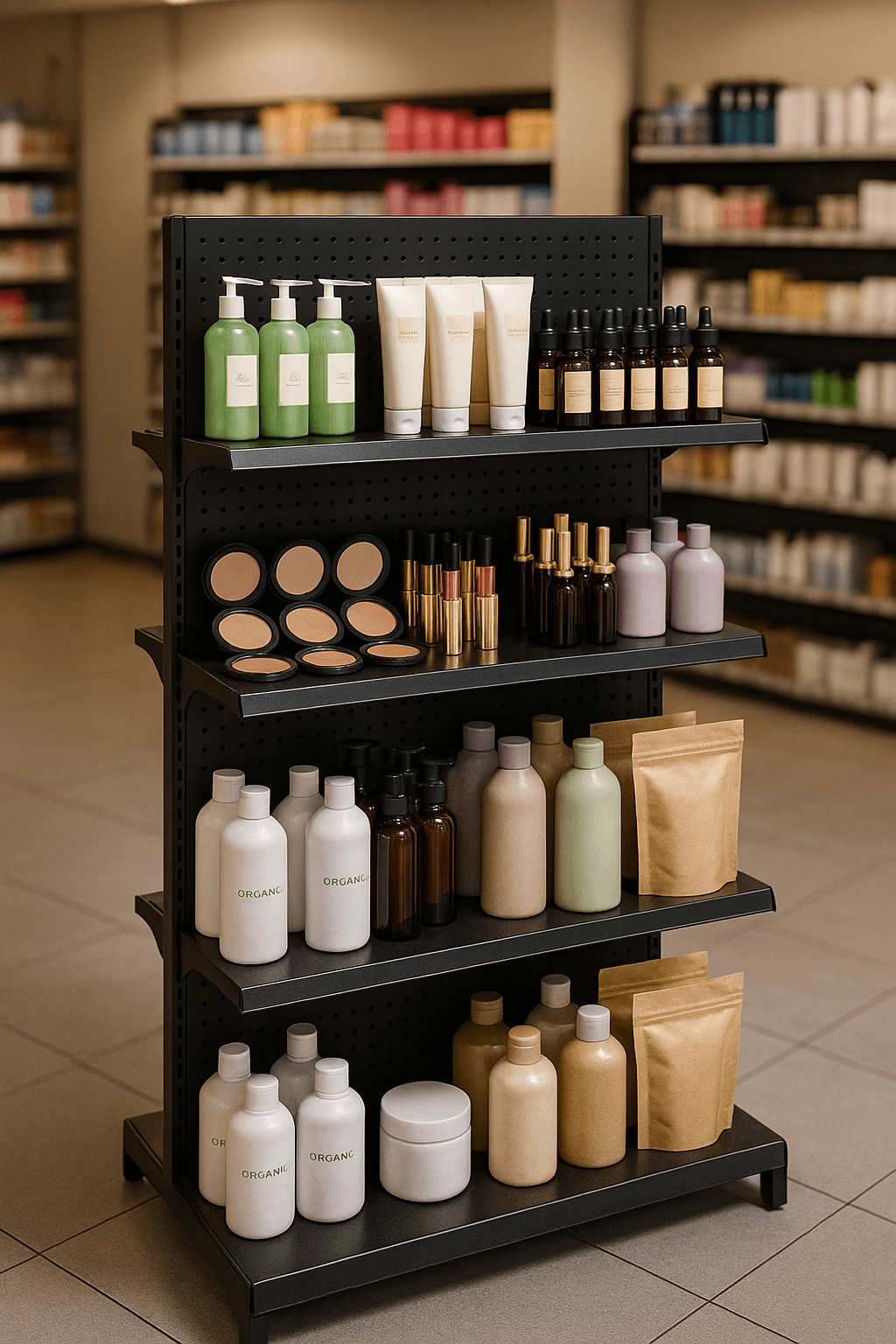
For overseas wholesale buyers, the ROI of a health and beauty (H&B) display goes far beyond visual presentation. It is defined by engineering consistency, manufacturing standards, lifespan, compliance readiness, and predictable performance across multiple retail environments. Your downstream customers—importers, distributors, and retail chains—expect fixtures that remain stable under high traffic, protect inventory value, and support merchandising updates without structural failure.
To align with real buyer intent, this guide by Yishang Display outlines the engineering and sourcing practices that most directly influence lifecycle ROI. Before exploring structural details, it is important to clarify how ROI in the H&B category is measured in wholesale procurement:
- Durability over time, reducing replacement and warranty cost
- Shipping resilience, ensuring units arrive undamaged across long-distance freight
- Modular adaptability, lowering retailer refresh expenses
- Material and compliance quality, ensuring acceptance across global markets
- Consistency in mass production, preventing store-to-store variation
This perspective helps buyers evaluate display fixtures not as single-store merchandising tools but as long-term, export-ready assets engineered for scalability.
Shopper Behavior Insights That Inform Better Sourcing Decisions
To help wholesale buyers make sourcing decisions that lead to stable reorders, this section establishes how shopper behavior shapes fixture expectations—and why retailers continue or discontinue a display model.
Fast‑Scan Shopping Demands Clear Structural Lines
Beauty shoppers make decisions quickly. They scan for product groupings and brand blocks rather than lingering on every item. Fixtures with straight, stable metal frames and consistent shelf spacing help retailers maintain these visual cues. For wholesalers, this translates into predictable performance and fewer downstream issues.
High‑Touch Categories Require Durable, Easy‑Clean Surfaces
Makeup, skincare, and fragrance products invite testing. Spills and fingerprints are unavoidable. Metal frames with powder‑coated finishes and acrylic testers stand up to repeated cleaning without degrading in appearance. Sourcing durable, hygienic units reduces retailer complaints and boosts satisfaction.
Premium Materials Reinforce Retailer Confidence
Metal conveys a sense of quality that cardboard and thin plastics cannot match. Retailers prefer fixtures that maintain their premium appearance over time because it supports brand image and encourages repeat purchases. For wholesalers, this increases the likelihood of long‑term supply contracts.
Engineering Considerations That Drive Wholesale ROI
Wholesale buyers evaluate fixtures not just as display tools, but as engineered products that must perform reliably at scale.
Why Metal Fixtures Dominate International Procurement
Metal structures—most commonly powder‑coated steel or anodized aluminum—remain the global standard among wholesale buyers searching for durable retail display systems or beauty product display racks. Their reliability supports both small‑batch branding programs and large rollouts for chain retailers.
Steel and aluminum displays are widely preferred for their strength, lifespan, and compatibility with global retail standards. They resist deformation during long‑distance shipping, support heavier SKU loads, and maintain appearance over years of use. Hybrid designs—metal frames with acrylic accents or wood panels—allow flexible price positioning.
Structural Integrity Reduces After‑Sales Costs
Well‑engineered fixtures prevent issues such as wobbling, bending, and joint separation. Reinforced welds, anti‑tip bases, and evenly distributed load paths help protect against retailer misuse and high‑traffic conditions. This reduces replacement frequency and improves retailer confidence.
Modular Construction Supports Multi‑Season Use
Retailers frequently update campaigns. Modular fixtures let them replace signage, shelves, or panels without discarding the core structure. Wholesalers benefit because modular ecosystems lead to repeat orders for compatible components, improving customer retention.
How Engineering Affects Retail Placement and Flow
Retail placement impacts conversion and shopper engagement. Fixtures must perform reliably in high‑priority areas to support retailer requirements.
Retail performance influences your clients’ reorder decisions. Displays must be designed to support various store layouts without requiring structural adjustments.
Stability for High‑Traffic, High‑Visibility Zones
Endcaps and promotional areas drive significant volume. Fixtures placed here must tolerate bumps, frequent relocation, and full-shelf stocking. Metal structures maintain shape under pressure, reducing the likelihood of customer complaints.
Flow‑Oriented Shapes Improve Shopper Interaction
Angled or curved metal fixtures help guide shopper movement and create natural pause points. These engineered features help retailers highlight products more effectively. For wholesalers, offering flow‑friendly designs adds strategic value beyond basic functionality.
Cross‑Merchandising Capabilities Support Larger Orders
Retailers increasingly request multi‑category displays for complete routines or bundled solutions. Metal fixtures with hooks, trays, and side‑mounted modules provide versatility for these layouts. Wholesalers offering such systems position themselves as solution providers, not simply product suppliers.
Visual and Sensory Engineering: Maintaining Brand Presentation Over Time
Visual consistency is one of the top reasons retailers renew contracts with wholesalers.
Retailers evaluate the longevity of a fixture’s appearance as closely as its structural performance.
High‑Quality Finishing Enhances Wholesale Competitiveness
Uniform powder coating, clean welding lines, and consistent surface treatment indicate engineering quality. These details help wholesalers win bids with large chains, as consistency across units is critical in multi‑store rollouts.
LED‑Ready Frames Provide Added Value
Illumination is increasingly important in beauty categories. Metal structures with integrated cable routing and heat‑resistant frames support LED add‑ons, helping retailers create premium product zones. Wholesalers offering LED‑ready options can expand into higher‑value segments.
Built‑In Signage Zones Improve Retail Usability
Signage matters for product education and compliance. Fixtures with integrated holders, magnetic panels, or modular sign slots help retailers adapt quickly without compromising the structure. This saves time, reduces errors, and improves reusability—a key selling point for wholesalers.
Interactivity and Tester‑Zone Engineering
Tester zones represent the highest wear area in any beauty display and must be engineered for durability.
Tester areas experience intensive use. Engineering for durability in these zones is essential for wholesale success.
Materials Designed for Repeated Cleaning
Powder‑coated metal and alcohol‑resistant acrylic withstand daily wiping and sanitizing without yellowing or distortion. This ensures the fixture remains presentable throughout its service life.
Ergonomic Components Support Faster Deployment
Tool‑light assembly, labeled components, and pre‑configured modules help retailers scale installations efficiently. For wholesalers, simplified installation reduces error rates and improves customer satisfaction.
Digital‑Integration Options Meet Modern Retail Trends
Many retailers require spaces for QR codes, digital screens, or small smart displays. Providing digital‑ready structures positions wholesalers for future‑focused procurement cycles.
Longevity, Sustainability, and Lifecycle Cost Advantages
Lifecycle cost is one of the strongest decision drivers for wholesale procurement teams. Long‑term performance is central to wholesale ROI. A strong fixture reduces replacement cycles and operational cost for retail partners.
Durable Metal Structures Minimize Warranty Claims
Metal’s resistance to impact, loading stress, and environmental changes directly affects lifecycle cost. Fewer defects mean stronger reputation and better profitability for wholesalers.
Sustainability Supports Global Market Demand
Recyclable metals and eco‑coatings meet rising environmental standards in many markets. Long-lasting displays reduce waste and help wholesalers appeal to buyers with ESG goals.
Modular Refresh Cycles Naturally Encourage Reorders
Retailers value displays that can evolve without full replacement. When they only need to purchase new shelves or graphic panels, they remain loyal to the same wholesale supplier.
Case Studies: ROI Outcomes Relevant to Wholesale Buyers
Practical examples help demonstrate how engineering decisions impact the bottom line.
Practical examples help demonstrate how engineering decisions impact the bottom line.
Case 1: 40% Reduction in Stability‑Related Complaints
A European importer replaced wooden units with metal fixtures engineered by Yishang Display. Complaint rates fell significantly, improving the distributor’s contract renewal prospects.
Case 2: 38% Savings in Seasonal Update Costs
A U.S. distributor adopted modular metal fixtures for pharmacy chains. Rather than replacing entire racks, they updated only panels—cutting costs and securing multi‑year agreements.
Case 3: 12% Increase in Sell‑Through Using LED‑Enabled Designs
A Latin American fragrance distributor upgraded to LED‑compatible metal displays. The improved visual impact increased customer interaction and reorder frequency.
A Sourcing Framework Tailored for Wholesale Procurement
A structured evaluation framework helps buyers assess manufacturers objectively.
A focused evaluation process helps wholesalers avoid sourcing risk and build long‑term supplier partnerships.
- Inspect welding, structural alignment, and coating quality.
- Confirm production capacity, material stability, and realistic lead times.
- Review protective packaging standards for long‑distance freight.
- Verify customization and modularity options.
- Check compliance documentation for target markets.
- Compare lifecycle cost, not just unit price.
Yishang Display provides full engineering documentation and transparent manufacturing processes to support global buyers in making structured, low‑risk sourcing decisions.
Conclusion: Engineered Metal Fixtures Deliver Long‑Term Value
A high‑performing H&B display is defined by its consistency, strength, adaptability, and durability—not temporary styling. For wholesalers, sourcing engineered metal fixtures ensures long service life, fewer issues in the field, and steady reorder potential.
If you are planning your next fixture program or expanding your retail display lineup, Yishang Display can support you with engineering‑driven OEM/ODM solutions and stable, scalable production for international markets. Our team is ready to assist with your project requirements.: Engineered Metal Fixtures Deliver Long‑Term Value
A high‑performing H&B display is measured by its consistency, strength, adaptability, and durability—not by temporary styling. For wholesalers, sourcing engineered metal fixtures ensures long service life, fewer issues in the field, and repeat orders across seasons.
If you are planning your next fixture program or expanding your retail display lineup, Yishang Display can support you with engineering‑driven OEM/ODM solutions and stable, scalable production for international markets. We are ready to assist with your project requirements.