

Consumer Packaged Goods (CPG) brands invest heavily in precise demographic targeting and sophisticated digital brand identity campaigns. However, a significant commercial reality exists within the physical retail landscape that procurement teams and supply chain executives must navigate daily. The majority of consumer purchasing decisions are still finalized in the few crucial seconds a shopper stands before a physical store shelf.
This tangible retail touchpoint represents the ultimate battleground for brand visibility and long-term market share. Yet, many carefully planned marketing strategies face severe difficulties at this exact juncture due to the “retail execution gap.” This gap occurs when premium products are presented on poorly manufactured point of purchase fixtures that fail to withstand the rigors of a high-traffic store environment.
Bridging this execution gap requires a strategic shift in perspective for global procurement directors. For creating effective displays, the focus often needs to shift from a superficial graphic design exercise to robust, scalable industrial execution. Engineering a display that actually converts shoppers while protecting corporate profit margins is an endeavor deeply rooted in structural metal engineering, material science, retailer compliance, and global freight optimization.
Executive Summary: Strategic Insights for Supply Chain Leaders
To help wholesale buyers and procurement directors optimize their physical retail footprint, this guide provides a deep dive into the technical and financial aspects of display manufacturing. We will move beyond visual aesthetics to explore the operational factors that impact landed costs, shelf velocity, and brand longevity.
Key focus areas include:
- Engineering for Acceptance: Navigating strict retailer planogram and safety compliance.
- Financial Logic: Comparing the Total Cost of Ownership (TCO) of metal vs. temporary fixtures.
- Operational Efficiency: Mechanical solutions to combat Out-of-Stock (OOS) crises.
- Logistical Optimization: Utilizing flat-pack engineering to hedge against rising freight costs.
- Sustainability ROI: Leveraging the circular economy through recyclable metal structures.
Navigating Planogram Compliance and Retail Floor Acceptance
Before a newly manufactured display can influence a consumer, it must first survive the strict vetting process of corporate retail buyers. For overseas procurement teams, designing a visually stunning display concept is irrelevant if a major big-box retailer refuses to place it on their floor. Large international retailers operate under uncompromising planogram guidelines to maximize their own profitability per square foot.
Maximizing SKU Density Within Footprint Limits
A custom design must be structurally engineered to maximize product density within a severely restricted physical footprint. Retail buyers calculate store profitability strictly based on sales per square foot. If a brand proposes a sprawling, inefficient display that holds minimal product inventory, it faces a high risk of rejection.
The most effective manufacturing solution often involves strategic verticality. By utilizing heavy-duty metal chassis and precision-engineered shelving brackets, brands can confidently design towering, highly stable freestanding display units (FSDUs). These robust metal fixtures can hold significant volumes of CPG products without violating the retailer’s strict height or depth limitations.
Structural engineers at specialized factories often utilize finite element analysis to ensure these taller units remain stable under maximum SKU load. This level of technical planning is what distinguishes a professional manufacturing partner from a general fabrication shop. When a display can hold 20% more product in the same footprint, the retailer’s ROI increases immediately.
Addressing Store-Level Safety and Maintenance
Physical store safety and ease of daily maintenance are paramount concerns for retail operations managers. Displays designed with sharp metal corners or an unstable base will be swiftly removed. Expertly engineered retail display structures proactively address these liability concerns during the initial factory drafting phase.
At Yishang Display, we prioritize a safety-first engineering protocol. This includes utilizing mathematically balanced, weighted bottom metal plates to ensure stability regardless of product load. Ensuring all exposed metal parts feature safety-hemmed edges is another critical step to prevent shopper injury and potential legal liabilities for the brand.
Furthermore, the choice of finish impacts the display’s lifespan on the floor. Applying industrial powder coatings that resist harsh commercial floor buffers and cleaning chemicals is essential. A display that scratches or rusts easily will be discarded by store managers long before the campaign’s scheduled end date, destroying the brand’s initial procurement investment.
POP vs POS Displays: Strategic Procurement Budget Allocation
When structuring a nationwide physical rollout, procurement teams often grapple with budget allocation across different physical touchpoints. A common question during the financial planning phase revolves around the specific differences between pop and pos displays in terms of raw manufacturing cost and structural requirements. Understanding this distinction is vital for maximizing procurement ROI.
Point of Purchase (POP) Requirements
Point of Purchase displays encompass promotional fixtures located throughout the general store aisles where consumers make primary selection decisions. These are typically much larger structures like endcaps, pallet displays, or freestanding aisle units holding bulk inventory.
Because they are scattered throughout high-traffic areas, POP displays require robust metal engineering to withstand shopping cart impacts. They are designed for high weight-bearing requirements over several years. Procurement directors often view these as capital assets rather than disposable marketing expenses.
Point of Sale (POS) Requirements
Conversely, Point of Sale displays are situated exclusively at the checkout counter where the final financial transaction occurs. These units are generally smaller, highly compact countertop racks designed explicitly to trigger last-minute impulse buys.
While smaller in scale, POS displays must feature highly refined aesthetic finishes and extremely precise physical dimensions to fit perfectly into crowded cashier zones. The tolerance for error in POS manufacturing is much lower, as a few millimeters of deviation can prevent the unit from being accepted at the register counter.
When evaluating procurement strategies, supply chain managers must carefully consider these different lifecycles. A massive POP beverage display might require thick gauge steel, while a countertop POS unit might leverage a combination of lightweight wire metal and premium acrylic. Balancing the capital budget appropriately ensures maximum store visibility without overspending on unnecessary reinforcements for smaller units.
Material Engineering: Evaluating the TCO of Custom Metal Fixtures
When experienced supply chain executives discuss wholesale display sourcing, the conversation naturally centers on long-term landed costs and Return on Investment. The global CPG retail industry has frequently relied on corrugated cardboard for temporary promotional deployments. While cardboard offers a low initial barrier to entry, it is often financially detrimental for sustained retail execution.
The Hidden Costs of Temporary Displays
Industry data suggests that a significant percentage of temporary cardboard displays suffer structural damage before retail campaigns end. They are highly susceptible to moisture degradation from floor cleaning and structural sagging under product weight. This rapid degradation damages brand perception and incurs hidden operational costs.
These costs include frequent emergency replacement shipments and increased field labor requirements to constantly swap out failing units. Furthermore, a ragged display often leads to lost sales, as retailers will move a damaged fixture to the back of the store. When these factors are calculated, the temporary option often becomes the most expensive over an eighteen-month period.
The Mathematical Advantage of Metal Fabrication
For ambitious brands looking to establish a permanent retail presence, highly durable retail displays are a necessity. For heavy-duty CPG products—such as automotive lubricants, heavy beverages, or large pet food bags—custom metal display manufacturing provides a clear advantage.
Utilizing industrial-grade materials like precision-cut cold-rolled steel and robust aluminum extrusion provides unparalleled weight-bearing capacity. A properly engineered steel chassis can support hundreds of pounds, virtually eliminating the risk of structural collapse. Metal also allows for much finer precision in design, enabling features like adjustable shelving heights and integrated mechanical accessories.
From a strict material ROI perspective, a well-manufactured metal display that remains fully functional for three to five years is highly advantageous. Procurement teams can amortize the capital expense of a premium metal fixture over multiple fiscal quarters. This approach significantly improves overall campaign profitability compared to continuous cardboard replacement cycles that drain operational budgets.
Comparison Table: Total Cost of Ownership (TCO) over 3 Years
| Cost Factor | Corrugated Cardboard (Replacement every 3 months) | Custom Metal Display (Yishang Display) |
|---|---|---|
| Initial Unit Cost | Low ($40 – $80) | Medium to High ($150 – $450) |
| Annual Freight Frequency | 4 Shipments | 1 Shipment |
| Maintenance & Replacement Labor | High (Frequent Re-assembly) | Minimal (Wipe-down only) |
| Brand Perception | Variable (Degrades quickly) | High (Maintains premium finish) |
| Landed Cost Efficiency | Poor (High volume of air) | Excellent (Flat-pack optimization) |
| 3-Year Total Cost | $1,200 – $2,000 (Cumulative) | $300 – $600 (One-time investment) |
Strategic Hybrid Material Integration for Premium Aesthetics
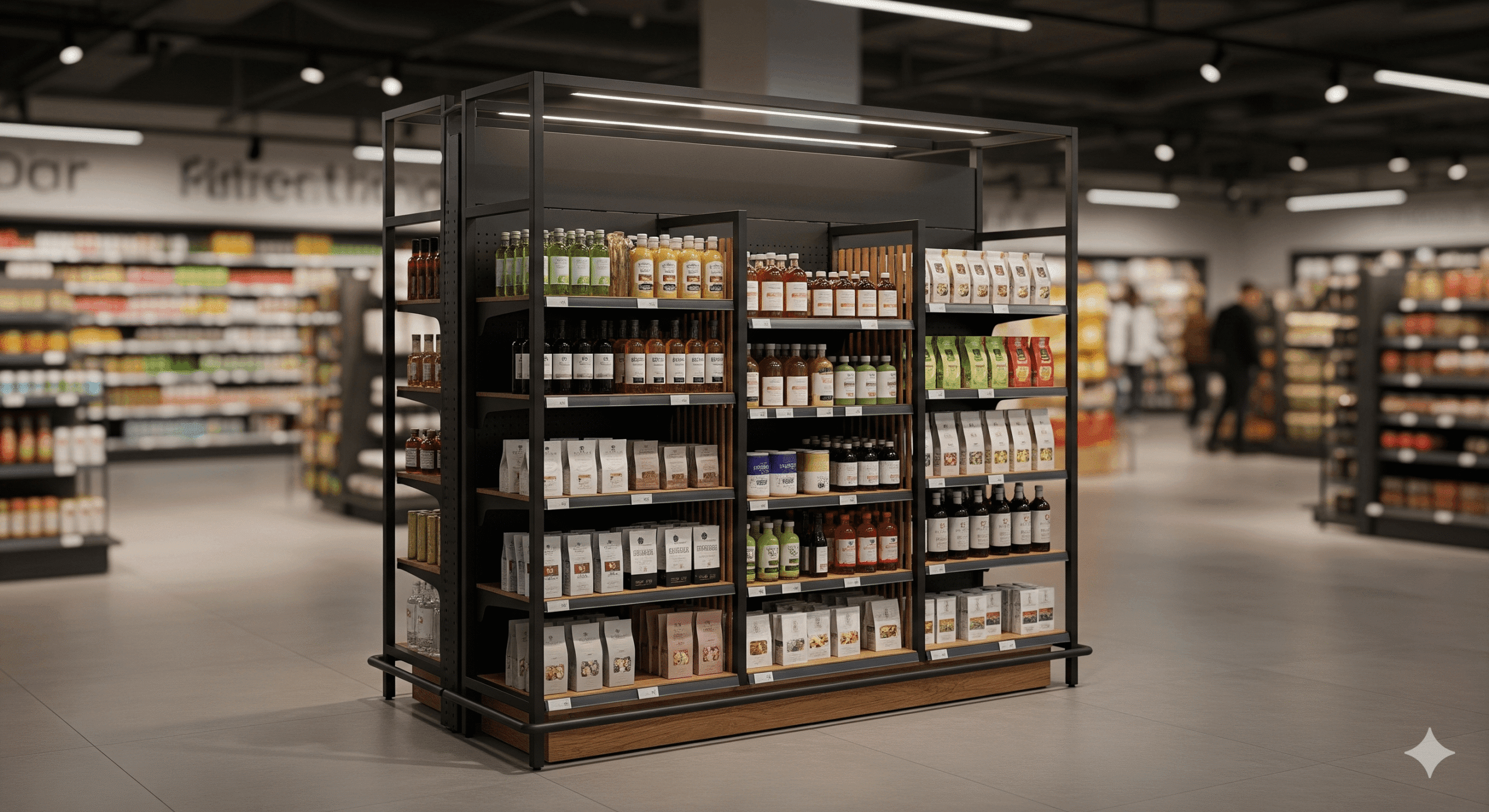
Prioritizing superior, heavy-duty material engineering does not mean a brand must sacrifice a premium visual aesthetic. The most sophisticated custom retail displays manufactured today actively leverage a strategic hybrid material approach on the factory floor. By utilizing a high-strength, precision-welded metal chassis as the skeleton, elite manufacturers can seamlessly integrate premium accent materials.
This advanced approach allows procurement teams to deliver durable displays that also elevate the brand’s perceived value. Successful hybrid material integrations often include:
- Metal and Wood: A structurally reinforced, matte-black powder-coated steel frame elegantly accented with authentic stained wood shelving panels to convey brand heritage and organic quality.
- Aluminum and Acrylic: Sleek, silver aluminum extrusion frames paired with backlit, frosted acrylic headers and mirrored bases to create a clean, futuristic retail aesthetic for cosmetics or electronics.
This manufacturing approach allows brands to fully enjoy the physical durability and safety of industrial metal frameworks while tailoring the tactile consumer experience to their specific market positioning. Ensuring that the physical transition between metal, wood, and acrylic is utterly flawless is a hallmark of a mature manufacturing partner like Yishang Display. We provide a retail-ready finish that consistently impresses wholesale buyers and retail category managers.
Sustainability and the Circular Economy in Retail
Modern procurement is increasingly driven by ESG (Environmental, Social, and Governance) mandates. Corporate retail buyers now prioritize suppliers that can help them meet their carbon reduction goals. This is where metal-based engineering offers a significant green advantage that is often overlooked in traditional marketing discussions.
Unlike plastics, which often end up in landfills, or cardboard, which has a high carbon footprint due to constant re-manufacturing and re-shipping, metal is 100% recyclable. A metal display can be refurbished with new magnetic graphics or powder coating for a new campaign, or eventually recycled into new raw steel at the end of its life.
This longevity directly contributes to a brand’s sustainability story, reducing the volume of retail waste generated each year. Procurement directors who invest in multi-year metal fixtures are effectively implementing a carbon-reduction strategy by minimizing the energy and resources spent on disposable alternatives.
Operational Functionality: Engineering to Defeat Out-of-Stocks
A visually stunning display that constantly complicates daily store operations will inevitably frustrate retail staff and face potential removal. To safely secure and maintain premium placement, CPG brands must provide retail shelving solutions that mechanically solve store-level operational pain points. For retail executives, the most critical crisis in physical retail is the persistent occurrence of Out-of-Stocks (OOS).
An empty physical shelf results in immediate lost sales and drives consumers directly toward competing brands. Relying entirely on store staff to continuously front-face and manually restock products is increasingly difficult due to global retail labor shortages. This is where intelligent display engineering becomes a sales-driving tool.
Mechanical Solutions for Shelf Automation
To systematically combat this issue from an engineering standpoint, seasoned structural manufacturers employ advanced mechanical hardware solutions. These interventions ensure products are always accessible in the optimal visual strike zone:
- Gravity-Feed Display Systems: Utilizing mathematically calculated shelving angles combined with low-friction polymer slip-mats or specialized roller tracks. As a consumer removes the front item, the remaining inventory glides forward automatically.
- Spring-Loaded Pusher Trays: For awkwardly shaped products that cannot slide easily, mechanical pusher trays bolted directly into the metal display racks keep products perfectly front-faced at all times.
By physically solving the retailer’s labor and presentation problems through intelligent engineering, procurement teams can negotiate better, longer-term floor placements. A display that stocks itself is a high-value asset that retail managers will fight to keep on the floor.
Modularity and Tooling Amortization for Diverse Store Formats
Modern CPG brands rarely launch in a single, uniform type of retail store environment. A growing brand might distribute its product line across massive suburban hypermarkets and compact urban convenience stores simultaneously. Prototyping and tooling a completely unique display architecture for each distinct retail channel is an unjustifiable drain on procurement capital.
The highly efficient, cost-saving manufacturing solution lies in engineering deeply modular display units from the very beginning of the project. A truly modular system relies entirely on a standardized, universally adaptable metal core structure equipped with interchangeable components.
Financial Benefits of Modular Engineering
By utilizing a heavy-duty metal pegboard backer or a slotted upright metal post system, incredible field flexibility is achieved. Brands can quickly swap out metal shelving depths, add heavy-duty hanging hooks, and adjust the overall vertical height of the unit on-site. This modularity offers significant financial advantages:
- Tooling Amortization: Procurement directors can confidently order a single, massive batch of core metal components, aggressively spreading initial tooling costs over a larger production run.
- Volume Pricing: High-volume manufacturing of standardized core parts heavily drives down per-unit costs through economies of scale.
- Inventory Flexibility: Maintaining strict planogram dimensional compliance across wildly different retail footprints using the exact same core inventory of mass-produced metal parts.
Global Supply Chain Optimization: Hedging Ocean Freight Costs
A critical functional requirement of an effective B2B display procurement strategy involves global shipping optimization. When a supply chain team orders thousands of custom displays from an overseas manufacturer, shipping fully assembled, welded metal structures is financially inefficient. Paying premium ocean freight rates simply to ship empty air across the ocean erodes product margins rapidly.
In a volatile global shipping market, expert manufacturers solve this financial drain through rigorous flat-pack display engineering. Transforming structural design into a highly effective freight hedging strategy is essential for protecting campaign profitability.
The Mechanics of Flat-Pack Optimization
By utilizing precision CNC laser-cut interlocking metal tabs and heavy-duty hidden cam-lock fasteners, logistical efficiencies are consistently gained. Highly complex, multi-tiered metal structures can be brilliantly engineered to ship entirely flat within reinforced cartons. The impact on the supply chain is profound:
- TEU Yield Optimization: A precision-engineered flat-pack design can easily increase a standard 40ft container (TEU) yield from 150 assembled units to over 800 flat units. This frequently slashes global freight costs by up to 75% per unit.
- Transit Damage Mitigation: When metal components are densely packed and foam-isolated within a tight carton, they easily pass rigorous international ISTA drop tests. Fully assembled displays bear immense torque vibration stress during ocean transit, frequently resulting in bent frames.
- On-Site Assembly Logic: The ultimate key to successful flat-pack engineering is ensuring that the final, on-site store assembly remains utterly intuitive and completely tool-less for store clerks.
Quality Control and Scaling Safely to Mass Production
Transitioning a brilliant 3D rendering into a highly polished physical prototype is only the first milestone in the procurement journey. Scaling that singular prototype into a flawless mass production run of 10,000 units is a formidable industrial manufacturing challenge. Selecting the right custom display manufacturer is the most critical decision in the retail execution pipeline.
The operational difference between a design agency that outsources production and a true, integrated manufacturing facility becomes glaringly apparent during this scaling phase. A seasoned factory proactively anticipates manufacturing bottlenecks. They possess the internal engineering talent to design custom tooling and meticulously program CNC machinery for absolute dimensional precision.
Implementing Rigorous Inspection Standards
Internal factory control guarantees that the final display unit rolling off the line is dimensionally identical to the approved First Article Inspection (FAI) prototype. When executing a massive bulk display procurement strategy, strict adherence to quality standards is a necessity for supply chain security.
- ISO 9001 Certification: Partnering with an ISO 9001 certified factory guarantees the manufacturer operates under an audited, disciplined quality management system.
- AQL Protocols: Ensuring that robotic welding tolerances and powder coating thickness are exactingly maintained and monitored according to Acceptable Quality Limit (AQL) standards across all production batches.
Without the systemic oversight of ISO 9001 protocols, large overseas production runs are highly susceptible to severe batch-to-batch variations. This often leads to costly scenarios where expensive displays cannot be assembled in-store due to minor misalignment.
Ensuring Global Compliance and Export Risk Mitigation
Equally critical for seamless global distribution, rapid customs clearance, and long-term brand liability protection is securing internationally compliant displays. Environmental and safety regulations are rapidly becoming baseline requirements for premium retail environments and stringent international customs agencies.
The Importance of RoHS Compliance
RoHS (Restriction of Hazardous Substances) compliance, originally focused on the global electronics industry, is increasingly demanded for all imported store fixtures. RoHS certification formally ensures that the industrial paints, powder coatings, and metal chemical treatments used completely exclude restricted heavy metals like lead and cadmium.
Attempting to unknowingly import non-compliant, cheaply painted displays into strict regulatory environments like the European Union or North America can result in severe consequences. Entire shipping containers can be permanently seized at customs, causing catastrophic product launch delays and immense corporate financial penalties.
A highly reputable, globally focused manufacturing partner inherently understands these complex international regulations. They proactively engineer this vital compliance into the precise Bill of Materials (BOM) of the metal display from day one of the design phase, heavily protecting the brand’s global operational reputation.
FAQ: Common Questions from B2B Procurement Directors
Q: What is the main difference between POP and POS displays regarding budget? A: Point of Purchase (POP) displays are larger, aisle-based units for bulk inventory requiring heavy-duty steel and high load capacity. Point of Sale (POS) are smaller countertop units at the register focusing on impulse buys and high-end aesthetic finishes with tighter dimensional tolerances.
Q: Where is the best place to start if I have a complex retail rollout? A: We recommend beginning with a detailed audit of your product weight, the expected retail lifespan, and the specific retailer planogram requirements. You can reach out to our team at Yishang Display to provide a structural feasibility study and a preliminary TCO analysis for your campaign.
Q: Can a CPG brand stand out in a crowded market using standardized metal racks? A: Absolutely. The strategy involves using a hybrid material approach. By combining a durable, mass-produced steel skeleton with custom wood, acrylic, or magnetic graphics, you achieve a bespoke look that helps your brand to command attention without the high cost of a fully custom-tooled frame.
Conclusion: Partnering for Flawless Retail Execution
Securing the modern consumer’s attention at the physical point of purchase remains a complex and rewarding commercial endeavor. The most effective displays for creating a lasting impact demand an intricate discipline that balances shopper engagement with strict retailer planogram compliance. It requires uncompromising structural metal engineering, combined seamlessly with data-driven global supply chain logistics and precise freight optimization.
It is simply not enough for procurement to approve a visually appealing concept on a screen. That concept must be physically forged from high-durability materials to survive the realities of the modern retail floor safely. It must be mechanically engineered to actively prevent out-of-stock scenarios, and mathematically designed for flat-pack global shipping efficiency. By prioritizing durable retail displays and demanding strict manufacturing compliances, supply chain teams transform fixtures into reliable corporate assets.
If your procurement team is navigating the complexities of a new global retail rollout, the experts at Yishang Display are ready to assist. We are fully equipped to help your brand optimize its supply chain, reduce final landed costs, and manufacture metal displays that genuinely convert shoppers. To discuss how our 26 years of manufacturing experience can support your next global campaign, please contact our engineering team today.