

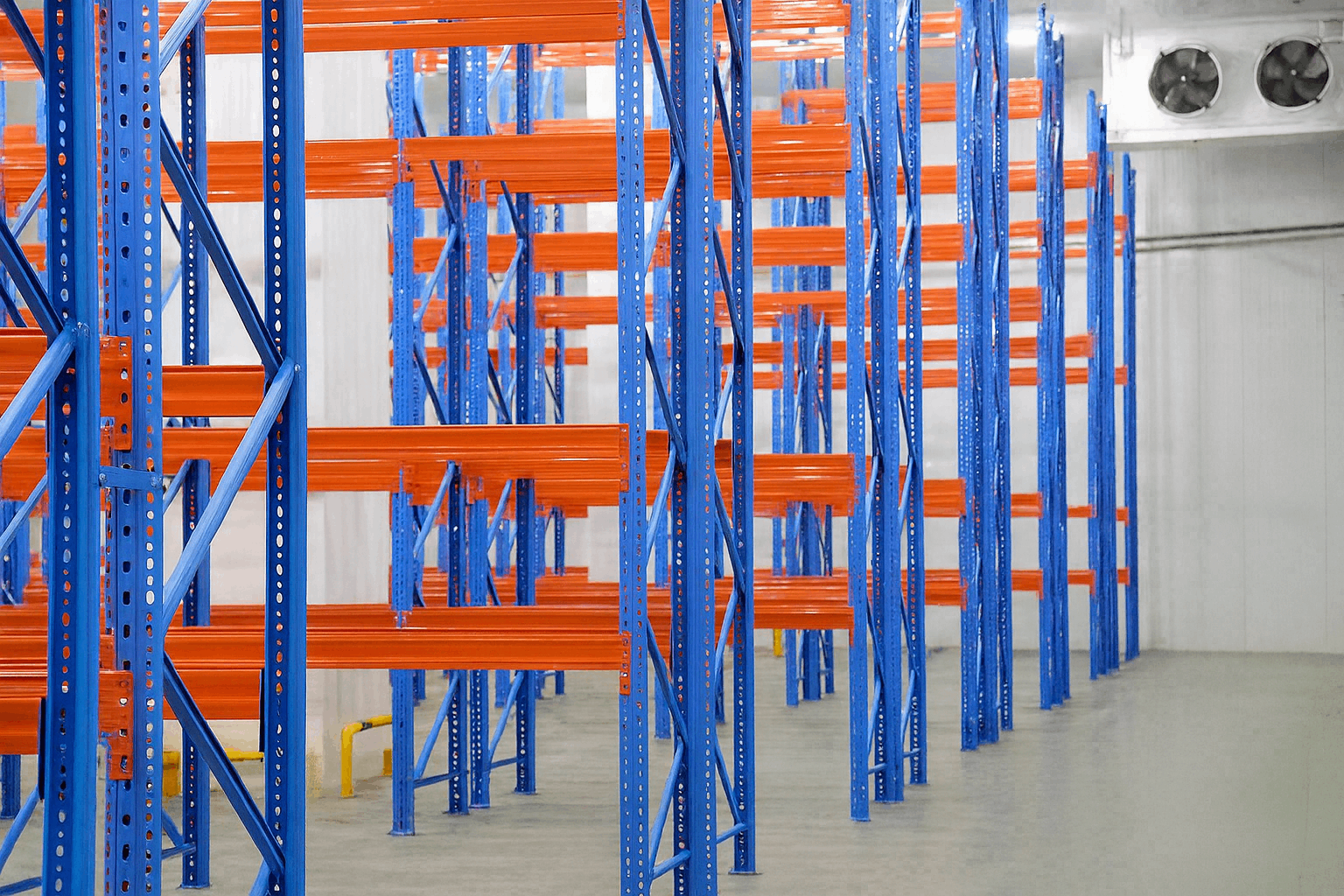
How to Conquer Brittle Fracture, Corrosion, and Frost Heave to Transform Your Cold Storage from a Cost Center into a Profit Engine
Introduction: A Strategic View on a Critical Asset
For procurement managers and operations leaders in the global cold chain sector, specifying a pallet racking system for a -20°C facility is a decision with profound financial and operational consequences. This is not a standard equipment purchase; it is an investment in a critical business asset that must perform flawlessly in an environment actively working to destroy it.
The primary risks lie not in competition, but in the laws of physics themselves. Your cold storage operation is under sustained assault from three invisible enemies: the material failure of metal embrittlement, the chemical damage caused by condensation and corrosion, and the geological threat of frost heave.
Drawing from more than 25 years of experience in manufacturing customized racking solutions for extreme environments, Yishang Display and other leading fabricators recognize that choosing a racking system based solely on standard specifications creates financial and operational liabilities. A minor design oversight or inappropriate material selection can initiate a failure chain that may result in structural collapse, risking valuable inventory and paralyzing business operations.
This guide goes beyond surface-level suggestions. It presents a strategic blueprint grounded in the principles of metallurgy and structural engineering, delivering technical knowledge and actionable insight to help you specify a resilient, standards-compliant, and cost-effective cold storage racking solution.
Chapter 1: The Invisible Enemies—Anatomy of the Three “Fatal Flaws” in -20°C Racking Systems
Cold Storage Racking Problems and Pallet Rack Failure Modes
Understanding the core environmental threats is essential before an engineered solution can be developed. Most standard racking systems are vulnerable in freezer environments because they are not designed to counteract the specific stresses at play. Overlooking these factors doesn’t pose a theoretical risk—it guarantees eventual failure. The key pallet rack failure modes described below are challenges every cold storage warehouse must overcome.
The Physics of Betrayal: Steel’s Ductile-to-Brittle Transition Temperature (DBTT)
💡 Buyer Insight: Always confirm your supplier can verify DBTT compliance for heavy-duty freezer racking, especially in sub-zero applications.
At ambient temperatures, structural steel is ductile and impact-tolerant. A collision with a forklift might bend a beam but won’t compromise system integrity. However, when temperatures plunge, steel undergoes a critical transformation governed by the Ductile-to-Brittle Transition Temperature (DBTT). This transition defines the point at which steel no longer deforms under stress—it fractures.
From a metallurgical perspective, as steel cools, its yield strength increases while its fracture strength remains relatively constant. The DBTT is the temperature at which yield strength surpasses fracture strength, making brittle failure more likely than deformation.
At -20 degrees, if a steel’s DBTT is higher than the operating temperature, even minor impacts can trigger brittle fractures. These failures happen instantaneously and without warning, creating a high-risk scenario that could cascade into total rack collapse.
The Slow Cancer: Condensation, Icing, and Electrochemical Corrosion
💡 Buyer Insight: Request galvanization specs and coating thickness from your racking supplier—especially for bolt holes and welded joints where corrosion starts.
While the internal atmosphere of a sealed freezer is usually stable, its interaction with outside environments introduces moisture. Each time a freezer door opens, warm, humid air enters and condenses on the sub-zero surfaces of pallet racking. The moisture immediately freezes, forming a persistent layer of ice.
This ice traps moisture against metal surfaces and initiates a slow but aggressive electrochemical corrosion process. Welds, fasteners, and exposed areas on protective coatings act as corrosion sites. Over time, this hidden degradation compromises the strength of joints and reduces the structural integrity of the rack system.
Therefore, robust corrosion control in cold storage is not optional. It ensures the long-term durability of the racking system, reduces maintenance costs, and lowers the Total Cost of Ownership (TCO) by preventing premature structural failure.
The Upheaval from Below: The Neglected Disaster of Frost Heave
💡 Buyer Insight: Ask your flooring contractor about sub-slab insulation and whether glycol-based under-slab heating is appropriate for your climate zone.
A racking system is only as reliable as the surface it stands on. In frozen environments, the ground can become a dynamic threat. Persistent sub-zero temperatures gradually infiltrate insulation layers and freeze the moisture in underlying soil. Water migrates toward the freezing zone, where it accumulates and crystallizes into ice lenses.
As these lenses grow, they exert upward pressure on the slab—known as frost heave—distorting and cracking even reinforced concrete. This phenomenon can shift load-bearing columns, tilt vertical uprights, and severely compromise the geometry and safety of the racking structure.
Mitigating frost heave requires specialized insulation and heating systems beneath the floor slab. Without such defenses, even the most robust racking system is sitting on a foundation that is silently undermining its structural integrity.
Chapter 2: The Ultimate Showdown—Selecting the Right Racking “Weapon System” for Your Operational Model
Types of Cold Storage Racking Systems and High-Density Freezer Racking
Choosing a racking system for freezer environments is a strategic decision with long-term cost implications. It impacts throughput, inventory visibility, and utility expenses. The system must match your specific storage logic and business model to maximize ROI.
The Core Strategic Choice: Density and Efficiency
Refrigeration costs account for a significant percentage of warehouse operating expenses. Every cubic meter of air that must be cooled translates directly into energy consumption. Thus, the design principle for cold storage racking is simple: higher storage density equals lower energy cost per pallet.
By optimizing vertical and horizontal space, high-density systems minimize the amount of cooled air volume, achieving energy savings of up to 15% in many facilities. For high-throughput operations, this efficiency translates into long-term profitability.
The Cold Storage Racking System Performance Matrix
Choosing the right system requires analyzing inventory turnover rate, FIFO vs. LIFO workflows, and storage flexibility. Below is a performance matrix outlining major cold room racking options, evaluated for cost, space utilization, access method, and maintenance demand.
| Racking Type | Cost Efficiency | Storage Density | Forklift Access | Maintenance Needs |
|---|---|---|---|---|
| Selective Racking | ★★★☆☆ | ★★☆☆☆ | Direct | Low |
| Drive-In Racking | ★★★★☆ | ★★★★☆ | LIFO | Moderate |
| Push-Back Racking | ★★★★☆ | ★★★☆☆ | LIFO | Moderate |
| Pallet Shuttle | ★★★★★ | ★★★★★ | FIFO/LIFO | Low |
| Mobile Racking | ★★★☆☆ | ★★★★☆ | Direct | High |
Among these, the Pallet Shuttle System has become a preferred solution for modern cold storage warehouses. It eliminates the need for forklifts inside storage lanes, reducing collision risks and improving storage density. The semi-automated configuration also enhances throughput, making it ideal for food logistics, beverages, and seasonal goods storage in low-temperature environments.
Chapter 3: Engineered for Extremes—The “Material and Structural DNA” of a Superior Cold Storage Rack
Cold Storage Racking Specifications and Structural Steel for Freezers
A truly dependable cold storage racking system depends on meticulous engineering. The following specifications and design principles are the foundational criteria that enable performance and longevity in sub-zero settings:
- Use of ASTM A333-grade low temperature carbon steel.
- Hot-dip galvanization with minimum coating thickness for corrosion resistance.
- Structural reinforcements and seismic anchoring.
- Cold-room-compatible epoxy or hybrid protective finishes.
These engineering choices reduce failure risks, extend usable life, and support higher weight loads without compromising safety.
Chapter 4: The Human-Machine Ecosystem—Building a Safe and Efficient -20°C Operational Environment
Cold Storage Warehouse Safety and Operations
💡 Buyer Insight: Ensure that your racking layout accommodates the full turning radius of freezer-rated forklifts, which may differ from standard MHE due to tires and battery systems.
In addition, prioritize warehouse floor coatings that provide high traction under icy conditions to reduce operator slip hazards. Anti-slip floor zones around entry/exit points and intersections are particularly critical in -20°C environments where condensation can freeze quickly.
Clear, cold-resistant rack labeling—often using laminated or plastic-embedded QR codes—helps reduce pick errors and improves workflow visibility in low-visibility freezer settings.
Lastly, review safety protocols such as end-of-aisle protectors, upright guards, and physical barriers where foot and machine traffic overlap. These precautions, when combined with proper training and cold-specific PPE, greatly reduce the risk of operational injury in sub-zero conditions.
About Yishang Display
With over 26 years in metal product manufacturing and exports to 50+ countries, Yishang Display delivers OEM & ODM cold storage racking solutions tailored for extreme freezer environments. Certified by ISO 9001 and RoHS, we specialize in custom-built steel racking for clients across industries including food logistics, beverages, automotive parts, and industrial hardware.
Conclusion: Is Your Racking a Strategic Asset or a Ticking Liability?
The decision to invest in a high-performance cold storage racking solution should be viewed through the long-term lens of Total Cost of Ownership (TCO). Low-cost standard systems may reduce initial spending but often result in higher maintenance, downtime, and operational risks.
A racking system engineered with ASTM A333 steel, protected by hot-dip galvanizing, and optimized for storage density does more than store pallets—it reduces thermal load, supports uptime, and enhances overall warehouse efficiency.
To determine whether your current system supports or hinders your business, ask: Is my racking configuration aligned with my throughput? Are maintenance costs rising? Could better engineering improve long-term margins?
Want to see real-world solutions in action? Ask us for a case study or engineering drawing from a recent cold room racking deployment.
FAQ (for search engines & buyers)
Q1: What is the best racking system for a -20°C freezer warehouse?
A: Systems like the Pallet Shuttle or Drive-In racking are optimal due to high-density capabilities and minimal aisle requirements. Ensure materials are rated for sub-zero operation.
Q2: How do you prevent corrosion in cold storage racks?
A: Use hot-dip galvanized or epoxy-coated steel. Ensure welds and fasteners are fully sealed or treated, and regularly inspect for condensation buildup.
Q3: What standards apply to freezer racking systems?
A: ANSI MH16.1, RMI guidelines, and ASTM A333 for low-temp steel are key standards. Always verify certification from your cold room racking manufacturer.