

Introduction
In wholesale procurement, the true value of a product isn’t just about design—it’s about compatibility with market behavior, supply chain scalability, and how well it supports downstream sales. Clutches and wallets, although often shelved together in retail environments, address very different consumer use cases. For B2B buyers sourcing retail bag displays or handbag stand systems, understanding that difference is the starting point of a smarter investment.
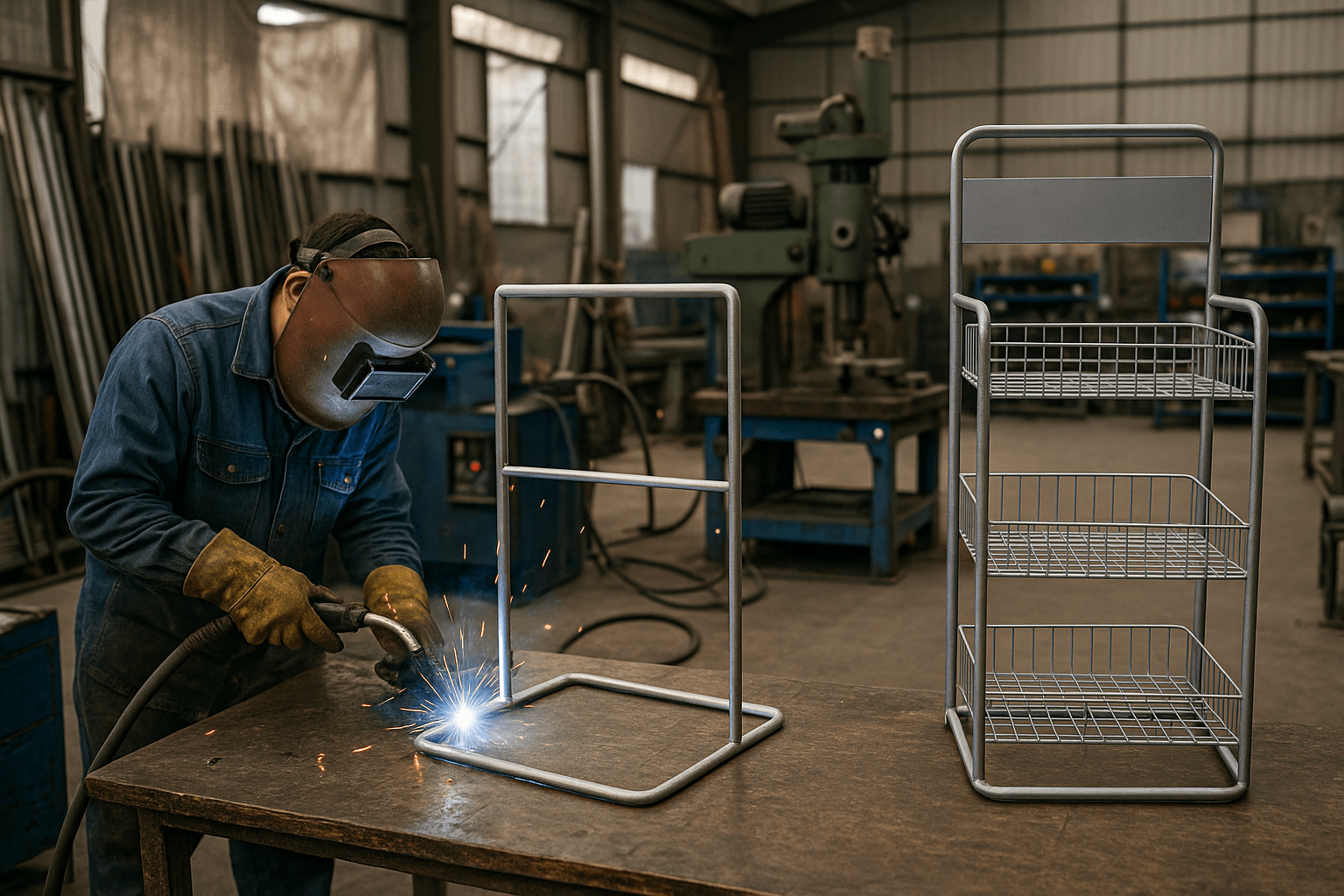
This article is written for professional buyers, display planners, and sourcing managers. With insights from Yishang Display, a trusted OEM/ODM bag display manufacturer with 26+ years of international experience, we’ll explore how to plan for differentiated merchandising, avoid layout inefficiencies, and select scalable display solutions for clutch bags and wallets—whether you’re equipping 10 stores or 1,000.
Understanding What You're Displaying: Function Drives Format
Procurement Perspective: Aligning Display Intent with Consumer Use
Procurement decisions should begin with product intent. Clutches, with their elegant appearance and minimal storage capacity, are occasion-specific fashion pieces. They appeal to buyers shopping for weddings, formal events, and evening functions. Customers expect to see them showcased in an aspirational manner—often tied to premium pricing and limited seasonal drops.
Wallets, on the other hand, are functional necessities. They’re daily-use items, gender-neutral in many markets, and come in large SKU variations: minimalist card holders, travel wallets, RFID-blocking bifolds. These require comparison and physical interaction before purchase.
This distinction impacts fixture planning. Using a one-size-fits-all display rack for bags across both categories reduces conversion. Whether you’re specifying a handbag display stand for formal clutches or a wallet shelf for checkout zones, each product type requires a dedicated approach to visibility, access, and display density.
Display Psychology and Shelf Strategy: Emotional vs. Functional Zones
Procurement Perspective: Maximizing Shelf Impact Through Behavioral Zoning
Shoppers make decisions based on how products are positioned in space. Visual hierarchy, lighting, height, and spacing all influence perception—especially in categories like handbags and wallets.
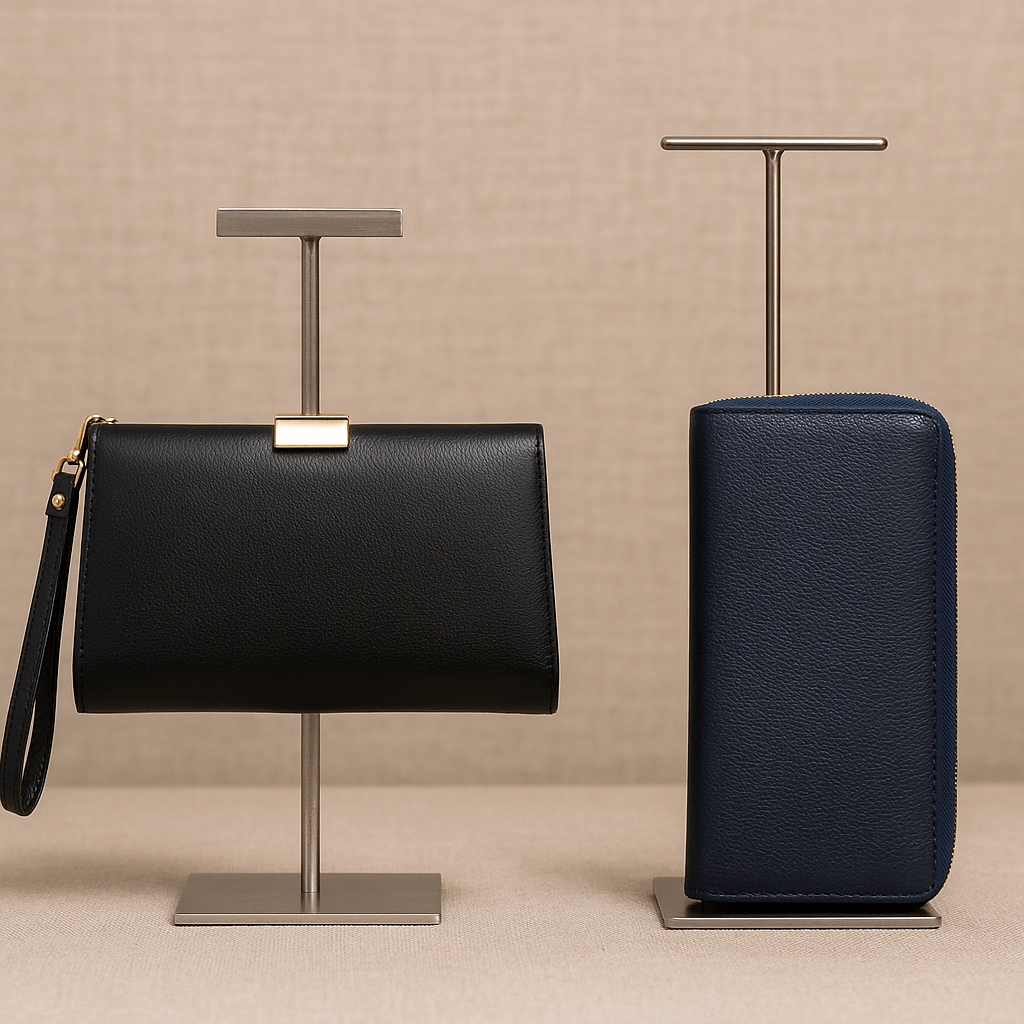
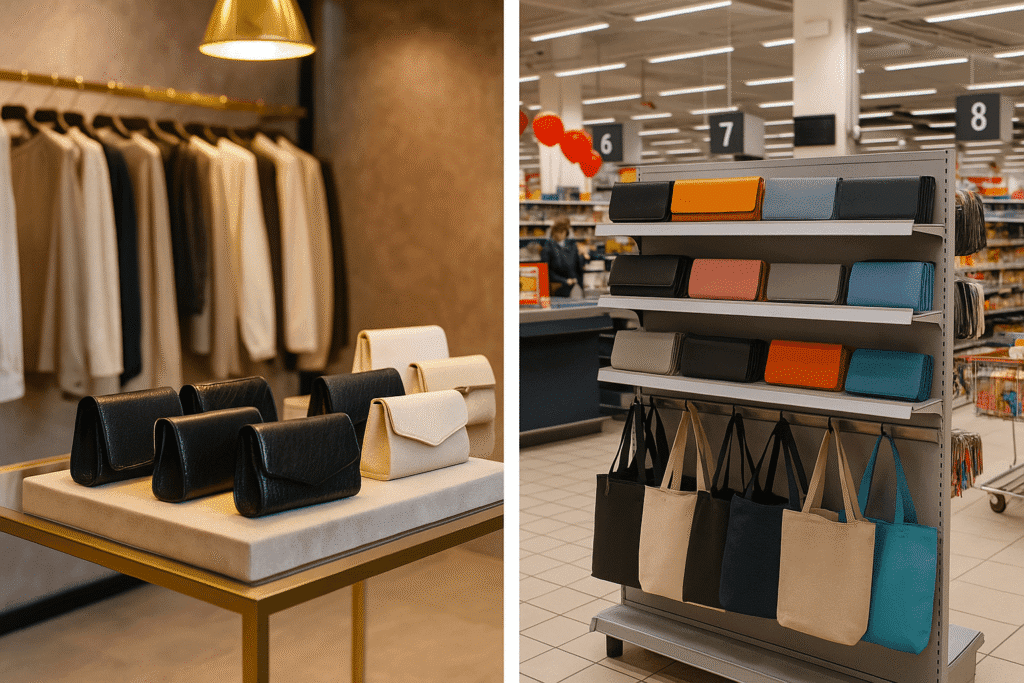
For clutch bags, buyers want to feel special. Elevated displays such as velvet-lined platforms, backlit risers, or stand-alone display rack for handbags help communicate exclusivity. A pouch clutch bag holder with gold finishing, paired with soft ambient light, reinforces value perception.
For wallets, speed and clarity matter. Grid-style wallet trays or compact display rack for bags with easy-grab orientation improve SKU turnover. Integrated feature signage (“RFID Safe,” “Slim Design”) guides customer decision-making.
In a recent study by Retail Analysis Group, differentiated display strategies tailored to shopper intent improved sell-through rates by up to 22% within eight weeks. For procurement leaders, this translates directly to fixture ROI.
Technical Fixture Requirements: What Procurement Should Look For
Procurement Perspective: Balancing Spec Compliance with Display Longevity
Professional buyers aren’t just sourcing pretty stands—they need technical reliability. Every handbag purse display stand or wallet rack must meet durability expectations and support efficient retail operations.
Here are baseline technical specs we recommend:
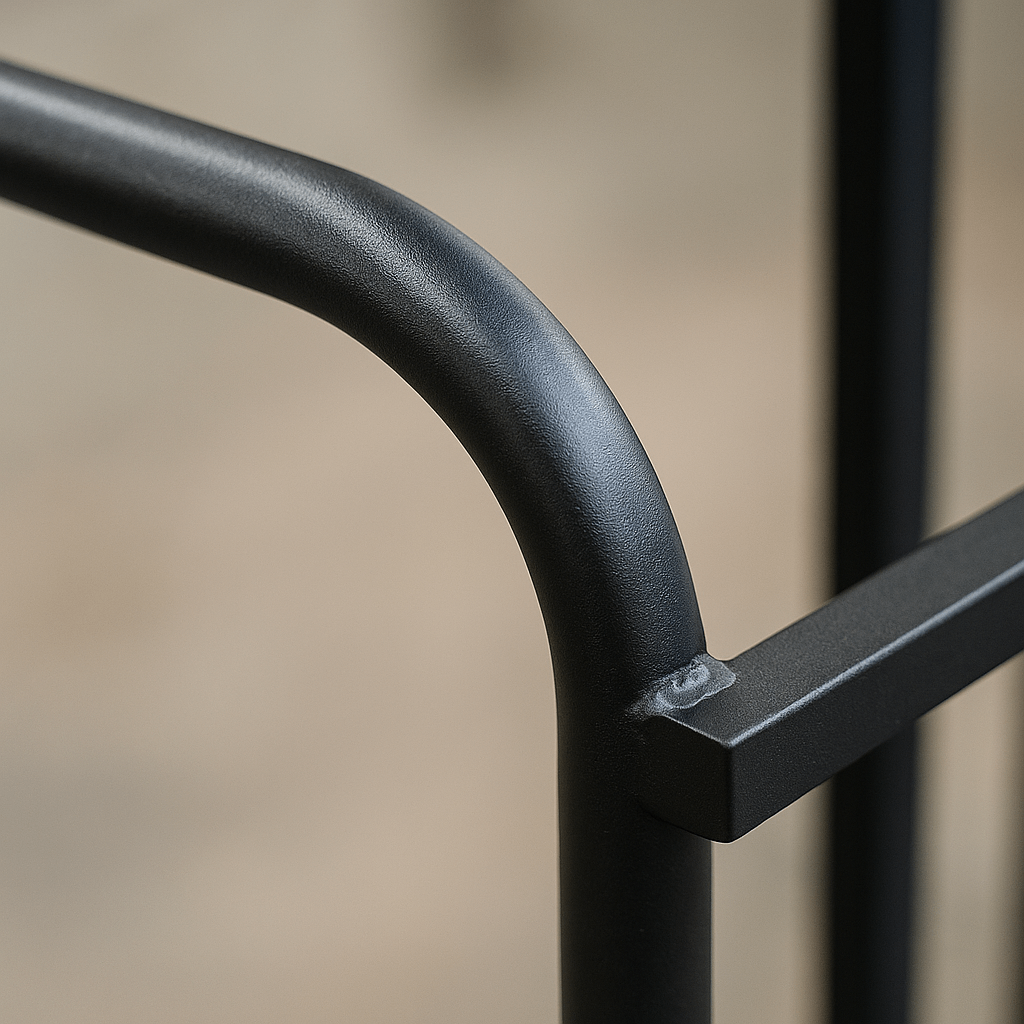
Clutch stands should support at least 5kg weight, with stable footing and scratch-resistant surface finishes. Powder-coated steel or hardwood composites perform well.
Wallet displays should handle repeated use and browsing. Grid racks must support 10kg per tray and offer modular dividers for multi-style use.
All bag displays should be RoHS compliant and meet ISO 9001 standards if shipping internationally.
Fixtures should be compatible with standard shelving systems or built to stand alone (e.g., tote bag display stand, retail handbag display shelf). For large-scale rollouts, tool-free assembly and flat-pack logistics significantly reduce installation time and shipping costs.
Display Materials: How Material Selection Impacts TCO
Procurement Perspective: Reducing Lifecycle Costs Without Sacrificing Aesthetics
Materials directly affect lifecycle cost, especially for brands deploying hundreds of fixtures globally. Procurement teams should ask display manufacturers:
How does the finish hold up under repeated cleaning?
Is the shelf angle customizable?
Can the same unit be re-skinned seasonally or reused in pop-ups?
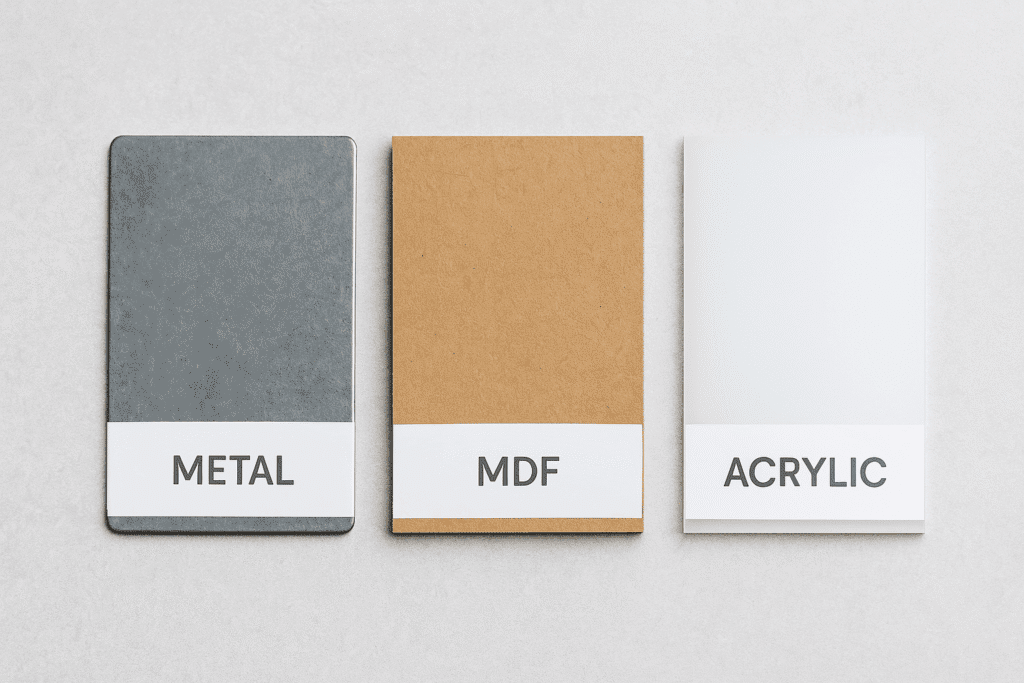
At Yishang Display, we’ve developed tote bag rack units using laminated MDF and matte acrylic panels for urban apparel clients, reducing total cost of ownership by 23% compared to all-metal units.
Luxury retailers may still favor solid wood and brushed aluminum for ladies bag stands in boutique environments, but most multi-brand or mass retail setups will benefit from hybrid materials that balance aesthetics and strength.
Scalability and Modularity: Future-Proofing Your Investment
Procurement Perspective: Designing for Flexibility Across Store Formats
If you’re sourcing for more than one store, scalability is key. Our experience shows that the biggest mistake procurement teams make is assuming retail layouts stay fixed. In reality, promotional campaigns, SKU rotation, and localized buying behaviors all demand flexible fixture systems.
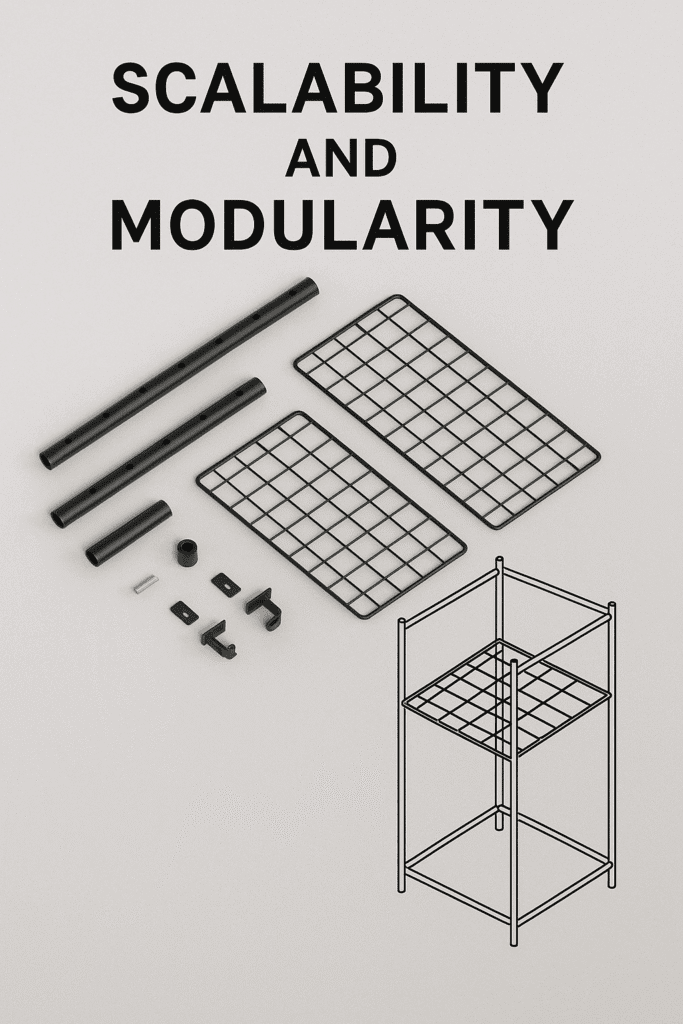
Modular shelving, swappable signage headers, and height-adjustable arms ensure your bag display stand for shop remains useful across seasons. We’ve worked with beauty and accessories retailers to supply 2,000+ modular handbag display systems, supporting rollouts across five countries while maintaining brand consistency.
Retail case data shows that stores using modular bag displays experienced 30% fewer fixture change orders and a 15% reduction in restocking time compared to fixed-format displays.
Case Studies: How Procurement Teams Use Differentiated Displays to Drive ROI
European Franchise Retailer – Wallet Wall Units
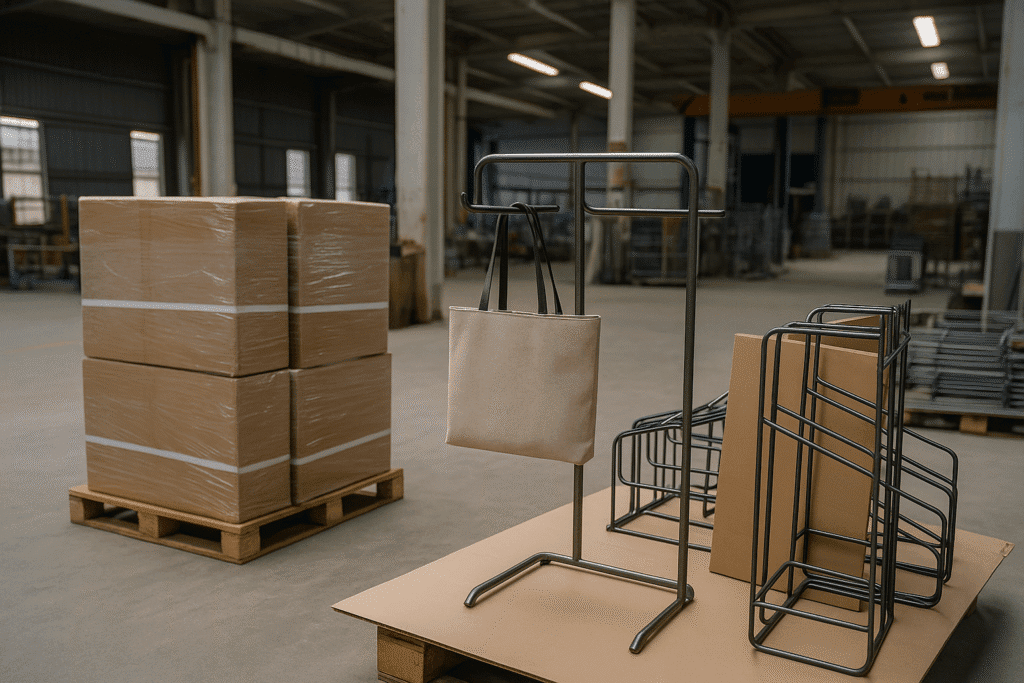
Client needed high-density wallet displays with quick assembly. We engineered snap-lock panels and interlocking vertical racks that assembled tool-free in under 12 minutes. These handbag retail display units were flat-packed 20 per pallet and shipped globally with barcode-labeled modules.
Result: Wallet unit turnover increased by 21% in the first quarter post-launch, delivering full fixture ROI in under 4 months.
Southeast Asia – Pop-Up Fashion Brand
Needed foldable tote bag display stands with strong brand presence. Yishang developed multi-tier bag displays using powder-coated metal and printed acrylic inserts. Modular signs allowed bilingual localization without fixture redesign.
Result: Total production cost lowered by 34% vs. fixed-frame displays. Fixture reuse rate across events increased by 47%.
Should You Combine Wallets and Clutches in One Display?
Procurement Perspective: Choosing Clarity Over Convenience
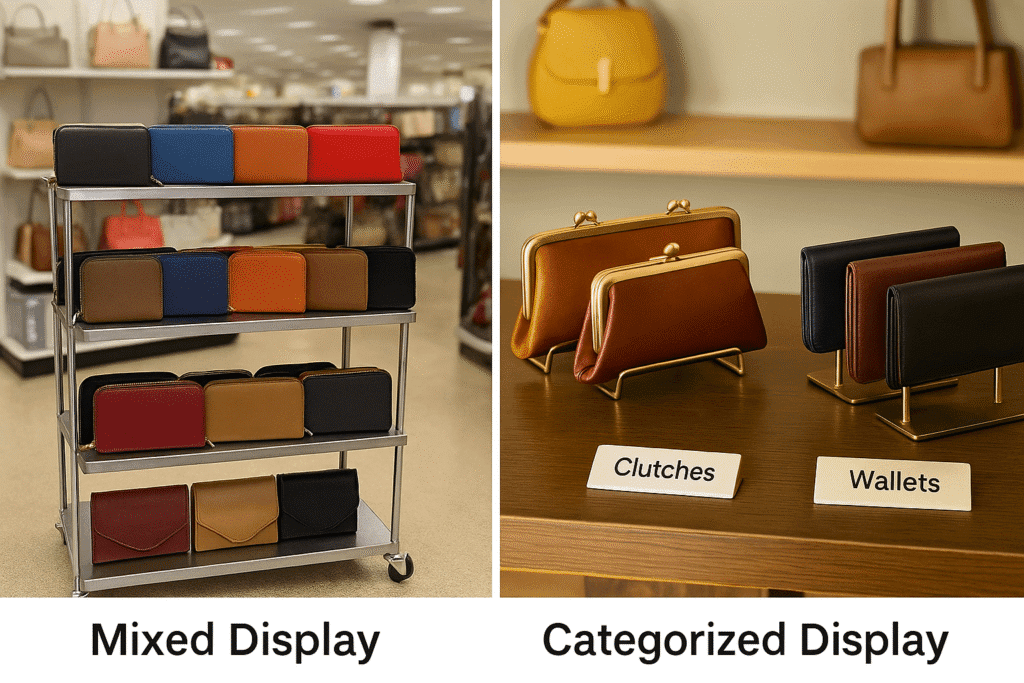
In most cases, it’s smarter to separate them. While thematic promotions (e.g., “Spring Neutrals”) can justify mixing, everyday layout should distinguish function-driven wallet zones from emotion-driven clutch displays.
Consider shopper expectations. When looking for a golf bag display or pouch clutch bag holder, the buying criteria—and attention span—are different. Clean visual zoning avoids friction. A cluttered display for bags may feel comprehensive, but often deters engagement.
Yishang Display’s dual-format racks feature adjustable crossbars and shelving planes, allowing store operators to toggle between mixed and segmented layouts based on campaign need.
Sourcing Smarter: Practical Procurement Questions to Ask
Procurement Perspective: Asking the Right Questions Before You Commit
When evaluating a display manufacturer for handbags or wallets, ask:
Can this bag display shelf support varied sizes and weights?
Is the MOQ flexible across product lines?
Do you provide engineering drawings before production?
How do fixtures perform under repeat handling or seasonal re-use?
We recommend requesting a sample handbag stand hanger or display rack for handbags before mass ordering. Also confirm that units pass packaging drop tests, especially if shipping intercontinentally.
Conclusion: Clarity Leads to Better Merchandising—and Better Buying
Clutches and wallets serve distinct roles in fashion retail, and require distinct merchandising solutions. For procurement professionals, recognizing these differences means better fixture design, smoother logistics, and ultimately, higher store performance.
At Yishang Display, we build bag display stand systems that serve your commercial objectives—not just your catalog needs. Whether you’re furnishing boutiques or supermarkets, we engineer to scale, ship globally, and support every product with consultation and documentation.
📩 Let’s talk about your next rollout. Get in touch to request a quote or custom prototype.