A custom wall-mounted metal jewelry window display has two jobs. It should help a jewelry store present valuable pieces clearly. It should also give wholesale buyers a product they can quote, sample, ship, and reorder with less risk.
For importers, store fixture distributors, and shopfitting contractors, this is not just a visual showcase. It is a sourcing item. Stable specifications, repeatable production, and practical customization matter as much as the front view.
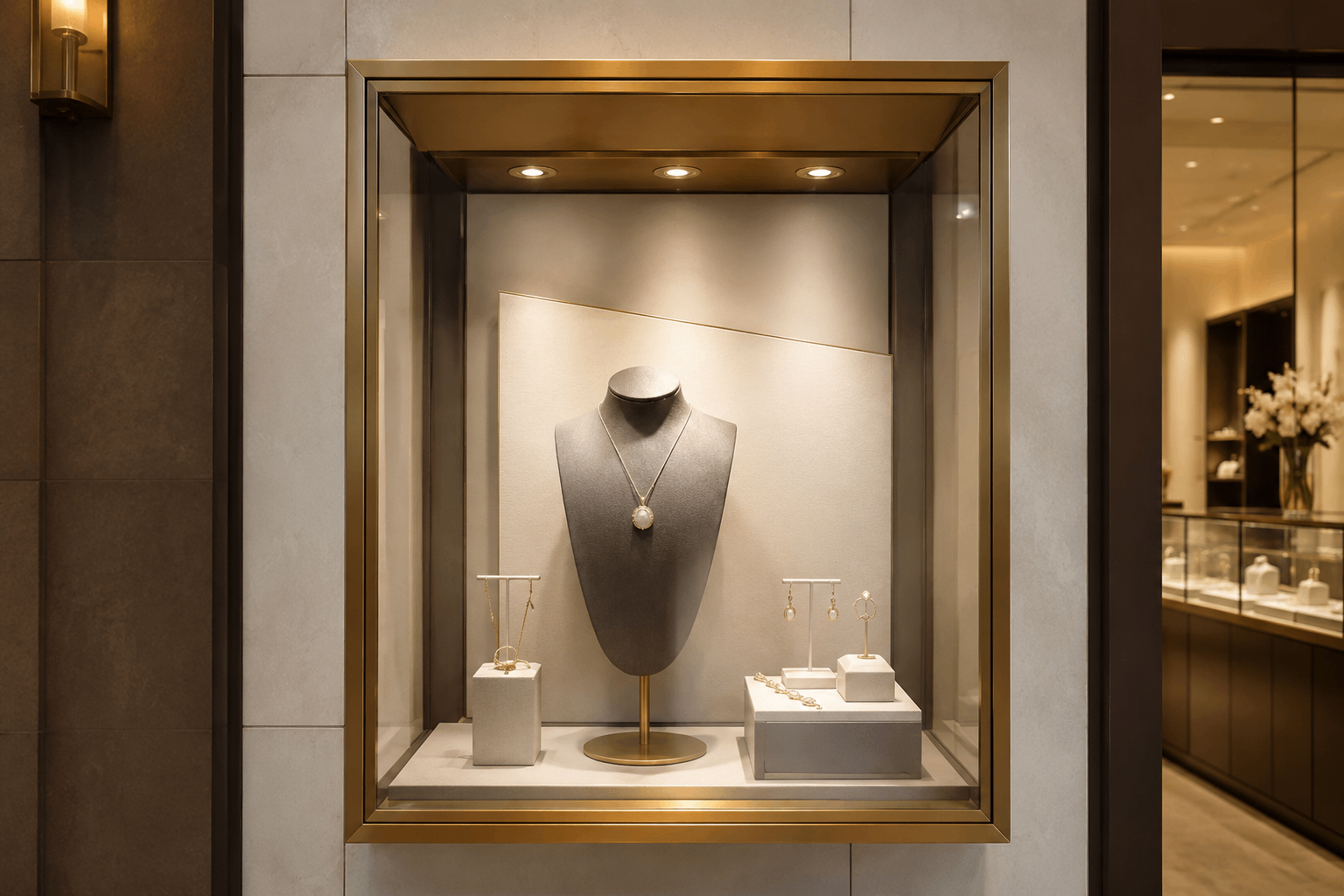
The display shown here uses a brass-look metal frame, clear front protection, recessed top spotlights, and a central necklace display area. Smaller holders support accessories around the main feature piece. The result feels refined, but not overbuilt.
This style suits jewelry store windows, boutique walls, mall counter back walls, and branded retail projects where floor space is limited. It gives the store a premium focal point without adding heavy floor-standing furniture.
Yishang Display builds this type of jewelry display fixture with metal as the main structure. Depending on the project, buyers can combine it with tempered glass, ultra-clear glass, acrylic, wood, cardboard decorative panels, PU leather, and LED lighting.
The final configuration usually depends on the product category, target market, installation method, and order quantity. For wholesale buyers, these details help turn a good-looking concept into a product that can move through sampling, production, and export more smoothly.
| Wholesale Sourcing Focus | What Buyers Usually Need to Confirm |
|---|---|
| Structure | Metal frame strength, glass fitting, access method |
| Appearance | Brass-look finish, matte black, chrome, rose gold, or custom color |
| Lighting | Warm, neutral, or cool LED; voltage and switch position |
| Customization | Logo, internal holders, display pads, size, layout |
| Export Use | Packing method, assembly status, sample approval, repeat order consistency |
A jewelry window display sits in a storefront window or another visible retail area. Its job is to present high-value accessories in a controlled setting. It needs to manage viewing distance, product height, light reflection, customer sightline, access method, and brand atmosphere.
Compared with a standard jewelry showcase, this fixture is usually more visual and more brand-focused. The pictured style is closer to a wall-facing or window-mounted showcase than a traditional floor-standing cabinet.
It keeps the product in focus. The frame, glass, lighting, and background work quietly around it, rather than competing with the jewelry.
In most projects, the structure combines metal, glass or acrylic, LED lighting, product holders, decorative surfaces, and optional locking access. These parts may look simple from the front. In daily retail use, however, each one affects performance.
For wholesale and project buyers, the commercial difference matters. A standard display may work for one store. A custom retail display fixture should reproduce more easily across repeat orders.
If the finish, dimensions, lighting, or packing method changes too much between batches, downstream retail clients may notice it quickly. That is why the product needs to balance presentation with procurement control.
The display should make necklaces, rings, watches, bracelets, and earrings look refined. At the same time, it should give the buyer a clear basis for quotation, sample approval, and future reorders.
Wholesale buyers rarely judge a display only by the product photo. They usually check whether the structure is stable, whether the material combination makes sense, and whether customization will keep the project manageable.
For a jewelry display showcase, key evaluation points often include frame strength, surface finish consistency, glass fitting, LED stability, glare control, access direction, optional lock design, assembly method, packaging protection, and repeat order consistency.
These are not just technical details. In practice, they affect resale confidence and after-sales risk.
A distributor supplying boutique jewelry stores may focus on a brass-look finish, warm LED lighting, lockable glass, and a softer luxury display surface. A shopfitting contractor working on a mall counter or boutique wall project may care more about installation depth, wall or cabinet fixing method, local voltage, carton size, packing strength, and delivery schedule.
For B2B sourcing, this information often helps more than broad claims such as premium quality or modern design. Clear product details help buyers compare suppliers faster and prepare a more accurate RFQ.
Metal works well as the main structure for commercial jewelry display fixtures. It offers stability, load support, and long service life. A well-built metal frame can carry glass panels, acrylic parts, LED modules, hidden wiring, locks, logo panels, and decorative surfaces.
In jewelry retail environments, staff may clean the fixture often and open it for product changes. The display may also face high customer traffic every day. Stainless steel, iron, aluminum, powder-coated metal, electroplated metal, or brushed metal finishes can match different price levels, store styles, and durability needs.
The brass-look frame shown in this product direction creates a warm and premium impression. It works especially well for gold jewelry, pendants, and boutique collections.
Because the image includes a clean glass front and reflective surfaces, buyers may also consider anti-fingerprint metal finishing, anti-glare glass options, or carefully positioned spotlights. These choices can reduce unwanted reflection and make maintenance easier.
Matte black, chrome, rose gold, white, or custom brand colors can also match different retail identities. In some markets, a subtle metal finish may work better than a very bright one. It depends on the jewelry category and the store atmosphere.
For wholesalers and importers, metal structure also supports repeatable production. After the buyer confirms the frame design, finish reference, and approved sample, the same base structure can serve different retail clients. The logo, lighting tone, display pads, or internal holders can change without redesigning the full fixture.
Although metal forms the main structure, the final display effect depends on how it works with other materials. Tempered glass provides protection and a premium front view. Ultra-clear glass helps reduce green tint and improves color visibility for fine jewelry.
Acrylic panels work well when a project needs lighter weight, flexible shaping, or cost-controlled decorative parts. Wood bases can add warmth. PU leather pads create a softer surface for necklaces, rings, watches, and bracelets.
Cardboard decorative panels may support seasonal themes, campaign visuals, or replaceable brand backgrounds. This option can help importers offer flexible display solutions to local jewelry retailers without changing the full metal structure.
Lighting should function as part of the display system, not just as a small accessory. LED lighting affects brilliance, reflection, color temperature, and product focus.
For export orders, buyers should confirm voltage, wiring method, switch position, cable exit direction, and spare lighting needs. These details may seem minor, but they often affect installation and after-sales support.
| Specification Item | Custom Option |
|---|---|
| Product Type | Custom metal jewelry window display |
| Main Structure | Metal frame, stainless steel, iron, aluminum, or custom metal construction |
| Optional Materials | Tempered glass, ultra-clear glass, acrylic, wood, cardboard, PU leather, LED lighting |
| Display Style | Window display, wall-facing showcase, counter back-wall display, enclosed showcase; freestanding versions available by project |
| Surface Finish | Brushed brass, matte black, chrome, rose gold, powder coating, electroplating, custom color |
| Lighting | Warm, neutral, or cool LED lighting; top, side, back, or base installation |
| Access Method | Manual access, optional lockable structure, rear or side access by project design |
| Buyer Type | Wholesalers, importers, contractors, retail brands, store fixture distributors |
| Order Support | Sample confirmation, OEM and ODM customization, bulk production, export packaging |
| Certification | ISO 9001, RoHS |
The internal layout should follow the jewelry category, not only the outside shape of the fixture. A necklace display often needs vertical space, a clean background, and a central focal point. Bust stands, raised supports, or back panels help show the pendant shape and chain line clearly.
Ring displays need a more detailed presentation. Rings are small, and buyers often judge them by stone brilliance, setting style, and metal finish. Low-angle holders, focused lighting, and clean spacing can keep each piece visible without making the window feel crowded.
Watches and bracelets usually need stronger holders and a more structured rhythm. When the product value is higher, or when the retail location has heavy traffic, a metal-framed display with glass protection and a stable base can improve presentation and security.
Earrings and mixed jewelry collections need careful zoning. If all products sit at the same height or too close together, the display can look busy. A better layout separates product groups while keeping the same finish, lighting tone, and brand language.
For wholesale buyers, this flexibility has clear commercial value. The same external display structure can use different internal layouts for necklaces, rings, watches, earrings, or mixed collections. That makes the product easier to resell to different jewelry retailers.
Jewelry lighting should highlight shape, sparkle, texture, and material color. Gold jewelry often looks richer under warm LED lighting. Diamonds, silver, and white metal jewelry usually benefit from neutral or cooler lighting.
The lighting position should work with the glass or acrylic structure. Top lighting can create general brightness. Side lighting can add depth. Focused lighting can guide attention to hero products.
If the angle is not right, however, glare or reflection may appear on the front panel. This is why spotlight alignment matters, especially for wall-facing glass showcases.
A metal frame helps keep LED installation cleaner. The structure can hide wiring, hold lighting modules more securely, and create a neater retail finish.
For importers and distributors, lighting stability also affects after-sales service. Buyers should confirm color temperature, brightness, switch type, local voltage, cable exit position, and shipping status before order confirmation.
Customization should begin with the actual retail environment. Store window width, height, depth, viewing distance, product category, and installation method all affect the display design.
A narrow storefront may need a compact vertical showcase. A wide retail window may support multiple product zones. A mall counter back wall may need a shallow structure that keeps the walkway clear.
The surface finish should match the target market and store level. Brushed brass can support a luxury look. Matte black can feel modern and premium. Stainless steel looks clean and professional. Rose gold or chrome can work for fashion jewelry brands.
Branding details can include logo plates, printed panels, custom color matching, display pads, and replaceable background elements. For wholesalers, these options make the product adaptable for different clients while keeping the same core metal structure.
Access and installation details are worth confirming early. Lockable access, magnetic panels, hinged doors, removable trays, electric rotation, lighting control, and wall-facing installation can all affect cost, packing, lead time, and usability.
This product suits street-facing jewelry store windows where visibility and first impression matter. A framed window showcase with clear glass and recessed LED spotlights can highlight key products without taking up excessive floor space.
It also works for mall jewelry counter back walls and boutique retail areas. These environments often need compact dimensions, secure presentation, durable surface finishes, and a structure that handles daily cleaning and frequent product changes.
For retail chain rollout projects, consistency becomes a major purchasing factor. Buyers may need the same display size, metal finish, lighting standard, and packing method across several stores or even several countries.
For wholesale distribution, the product can serve as a customizable base model. Importers can adjust internal holders, logo details, finish color, or lighting tone for different local jewelry retailers while keeping production more efficient.
A jewelry display fixture should look premium on the first day and stay reliable after months or years of retail use. For wholesalers, that reliability links closely to repeat orders, replacement requests, and long-term customer relationships.
Recommended quality checks include frame squareness, edge finishing, surface consistency, glass fitting, access smoothness, spotlight alignment, LED stability, cable safety, and packaging protection.
If a buyer needs a lockable version, the factory should also check lock movement and door smoothness before shipment. For glass-heavy wall showcases, corner protection and secure packing can reduce transport risk.
Yishang Display supports custom metal retail display fixtures with glass, acrylic, wood, cardboard, PU leather, and LED lighting combinations. The product can support OEM and ODM projects, sample confirmation, and bulk production without turning the page into a company profile.
The production process can follow ISO 9001 quality management and RoHS material compliance. Buyers should confirm any extra compliance request according to the project and destination market.
A clear quotation starts with clear project information. Before requesting pricing, buyers should prepare the overall size, display style, product category, preferred metal finish, glass or acrylic requirement, LED lighting preference, logo requirement, and order quantity.
For overseas purchasing, a few extra details can make the process smoother. These include destination country, local power standard, wall or cabinet installation method, access direction, optional lock requirement, packing preference, sample expectation, and shipping format.
A reference image is useful even when there is no technical drawing. The product image, store concept, or a rough sketch can help define the visual direction. After that, dimensions, materials, and finish requirements can become more accurate.
For repeat orders, approved samples, finish references, drawings, and packing records help maintain consistency. This is important for wholesalers who plan to resell the display or use it as part of a wider retail fixture program.
Can the display use metal as the main structure?
Yes. Yishang Display can make the main structure from metal and combine it with glass, acrylic, wood, PU leather, cardboard panels, and LED lighting. This makes the fixture suitable for long-term retail use and bulk purchasing.
Can the size fit different store windows?
Yes. Buyers can customize width, height, depth, internal layout, lighting position, and access method according to the store window or retail counter space.
Can wholesalers request a sample before bulk production?
Yes. A sample helps buyers check structure, finish, glass fitting, logo position, lighting effect, packing method, and overall workmanship before mass production.
Can the display ship fully assembled?
Some designs can ship fully assembled or partially assembled. Larger or glass-heavy wall showcases may need protected packaging, corner protection, and installation-ready components.
What certifications are available?
Yishang Display currently provides ISO 9001 and RoHS-related production support. Buyers should confirm any other compliance request according to the specific project and destination market.
Share your display size, reference image, jewelry category, finish preference, lighting requirement, and order quantity to request a custom quote.
Yishang Display can help develop a custom metal jewelry window display for wholesale, retail chain, contractor, and importer projects with export-ready production support.


Yishang Display specializes in crafting bespoke display solutions. From initial concept and prototyping through to full-scale production, our in-house team manages every phase—delivering a seamless, one-stop experience for your brand.
If you have any questions or need a quote, please send us a message. One of our specialists will get back to you within 24 hours and help you select the correct valve for your needs.
All of our products are available for sampling