
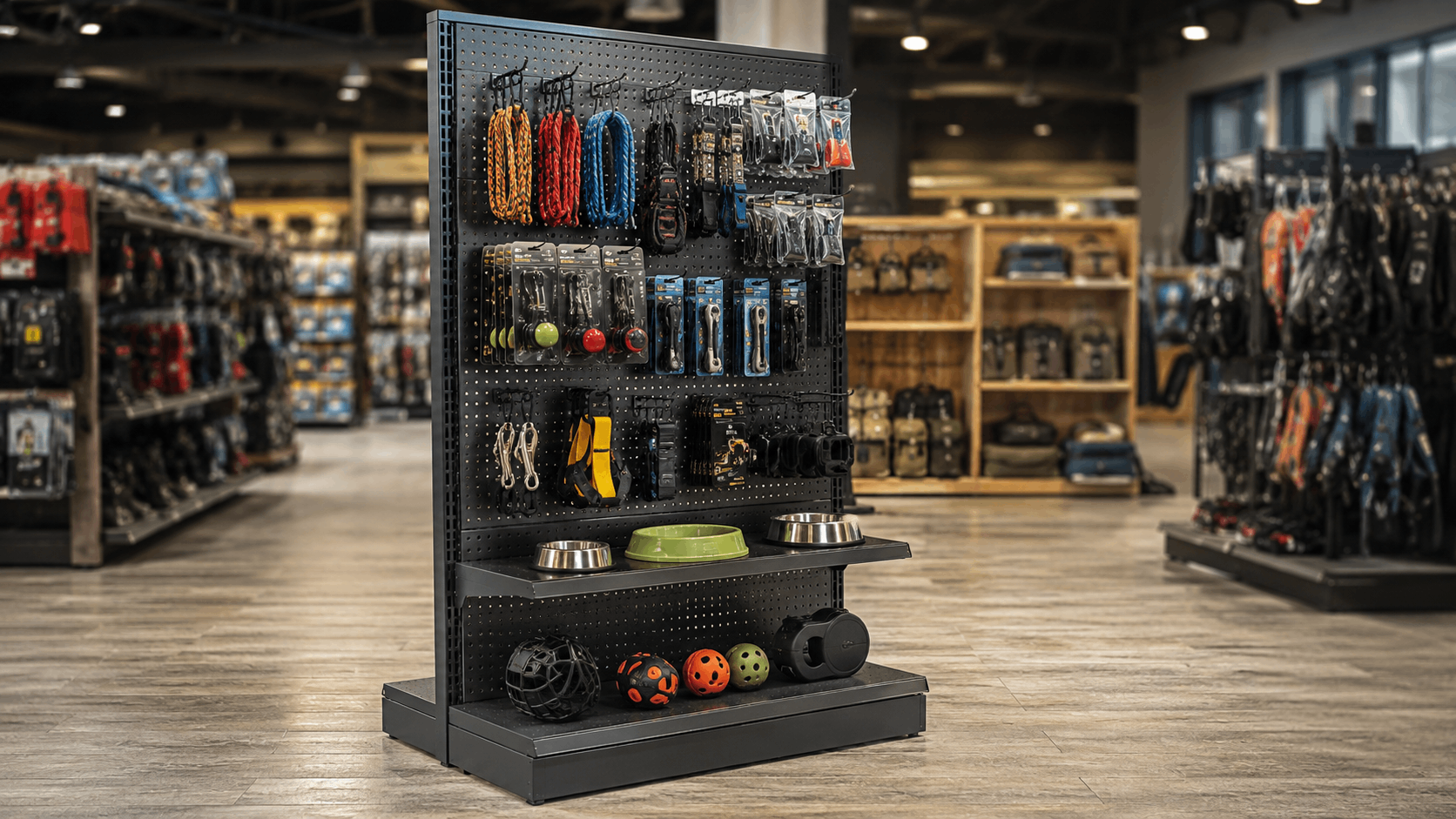
For overseas wholesalers, importers, distributors, and brand procurement teams, a metal pegboard display is rarely just a store fixture. In most wholesale projects, it also works as a product presentation tool, a stocking solution, a logistics item, and sometimes, if the design is good enough, a repeat-purchase asset.
A good display should make products easier to notice in store. That is the obvious part. But for B2B buyers, the less visible details often matter just as much. If a rack bends, shakes, scratches easily, ships inefficiently, or takes too long to assemble, the real cost becomes higher than the quoted unit price.
This guide looks at how to design a metal pegboard display for real retail use. The focus is not only on appearance, but also on product fit, load-bearing structure, store operation, branding, packaging, and bulk production readiness—the areas wholesale buyers tend to check before they feel confident enough to send an inquiry.
What Wholesale Buyers Usually Care About First
Most B2B buyers do not judge a display by appearance alone. They often scan a supplier’s website quickly, looking for signs that the manufacturer understands practical purchasing concerns. Can the display carry the product? Can it be customized? Will the packaging survive export shipping? Is the quality repeatable in bulk production?
That behavior also shows up in search habits. Buyers may search for terms such as custom metal display rack, retail fixture manufacturer, pegboard display stand, floor display rack, point of purchase display, store merchandising fixture, or OEM ODM display rack. These are not casual inspiration searches. They usually come from someone comparing suppliers for a real project.
This is why display design content should connect visual decisions with purchasing value. Good presentation still matters, of course, but it should support product visibility, retailer acceptance, restocking convenience, shipping efficiency, and long-term use. When those points are addressed clearly, the content becomes more useful to procurement teams and brand buyers.
Start with Product Data Before Choosing a Layout
A reliable display design usually starts with product information, not with a ready-made layout. Before confirming the rack size, hole pattern, hook layout, shelf depth, or header position, the supplier needs to understand product dimensions, unit weight, packaging type, hanging hole position, SKU quantity, and target display capacity.
This step is especially important for metal pegboard fixtures because product weight drives many structural choices. Panel thickness, hook diameter, frame reinforcement, welding strength, base depth, and overall balance should be selected according to actual loading conditions, not copied from a standard template.
Different product categories also behave differently on a display. A blister-packed hardware accessory may need straight product alignment and dense SKU organization. A boxed automotive item may need shelf support and a lower, stronger placement. A pet product or sporting goods accessory may benefit from more spacing, easier browsing, and a softer visual rhythm.
Packaging should be reviewed early as well. Products should face forward, show key label information, and be easy to remove without disturbing nearby items. If the package swings too much, hides the selling point, or blocks the next SKU, the display may look fine in a drawing but feel awkward in store.
Choose the Right Display Format for the Retail Channel
Once the product data is clear, the next question is format. A wall-mounted panel, countertop display, single-sided floor rack, double-sided stand, and mobile display each serve a different retail situation. The best choice depends on store space, product weight, shopper access, and stocking requirements.
A countertop display may work well for small accessories or checkout areas. A single-sided floor rack can create a focused branded zone in limited retail space. A double-sided display can improve capacity, though it also needs stronger balance control. A wall-mounted system may be a better option when the retailer already has fixed store fixtures.
For wholesale buyers, this decision is also tied to cost. A larger display may hold more products, but it can increase freight volume and carton size. A compact design may reduce shipping cost, but it may not provide enough visibility or refill capacity. In practice, the most suitable design is often the one that balances presentation, capacity, shipping efficiency, and store acceptance.
Common Metal Pegboard Display Formats for Wholesale Projects
After the product data is clear, buyers often compare several display formats before confirming a quotation. Each format affects floor space, stock capacity, shipping volume, assembly time, and retailer acceptance. For wholesale programs, this choice should be made together with the target retail channel, not only the visual design.
| Display Format | Best Used For | Buyer Should Check |
|---|---|---|
| Wall-mounted panel | Stores with existing wall fixture systems | Wall strength, installation method, hook load |
| Countertop display | Small accessories and checkout areas | Footprint, stability, SKU count |
| Single-sided floor rack | Branded product zones and aisle displays | Base depth, header visibility, refill access |
| Double-sided rack | Higher product capacity in open aisles | Balance, uneven loading, aisle width |
| Mobile display | Flexible store layouts and promotions | Caster quality, fully loaded weight |
| Rotating display | Small packaged goods and compact categories | Rotation smoothness, center stability |
A table like this helps buyers avoid choosing a fixture simply because it looks attractive. A double-sided pegboard display, for example, can increase capacity, but it may not be suitable for a narrow aisle or for products that load heavily on one side. A countertop unit may reduce shipping volume, but it cannot replace a floor rack when brand visibility is the main goal.
Build the Layout Around Shopper Decisions
A display layout should help shoppers understand the product range quickly. The top area usually works best for a logo, category name, or short campaign message. It gives the fixture a clear identity before customers begin comparing individual products.
The main viewing area should highlight bestsellers, new products, higher-margin items, or SKUs that require comparison. Heavier products are often better placed lower, both for easier access and for better stability. This is a small detail, but in real retail environments it can make the display feel safer and easier to shop.
Product grouping should follow how customers make decisions. Hardware products might be arranged by fastening, hanging, repairing, or organizing. Pet products may be grouped by feeding, grooming, and play. Sporting goods can be grouped by activity or skill level. A decision-based layout feels more natural to shoppers and is usually easier for store staff to maintain.
Capacity still needs careful handling. Pegboard systems allow flexible placement, but filling every hole can make the rack feel crowded. Wholesale buyers often want strong product capacity, while retailers still need a clean presentation. A professional layout holds enough stock without making the display look overfilled.
Select Hooks, Shelves, and Accessories by Function
Hooks, shelves, baskets, sign holders, and price channels should be selected according to product behavior. These parts are not just accessories; they influence product visibility, load safety, refill frequency, and the shopping experience.
Long hooks can increase stock capacity, but products may sit too deep if the hook is not matched to packaging depth. Short hooks create a cleaner appearance, although they may require more frequent replenishment. Shelves are often better for boxed products, heavier items, or premium SKUs that need stable support.
Wire baskets can be useful for loose, soft, or irregular products. Price label holders and small information cards help customers compare models, sizes, or compatible accessories. For B2B buyers, these details matter because they affect how well the display works after installation, not just how it looks in a sample photo.
Engineer the Metal Structure for Store Conditions
The real strength of a metal display is often found behind the visible surface. Panel thickness, hole accuracy, welding consistency, frame reinforcement, base footprint, and anti-shake design all influence how the rack performs after repeated use.
Metal is not the only possible material, and it does not need to be positioned as the answer to every project. Cardboard can work for short promotions. Acrylic can suit lightweight products with a clean look. Wood can create a warmer retail style. Metal, however, is often more suitable when the project requires durability, load-bearing capacity, frequent handling, and multi-store deployment.
A double-sided rack should be designed with uneven loading in mind, because one side may sell down faster than the other. A mobile unit needs casters selected according to fully loaded weight, not only the empty frame. A tall floor display needs a base that can support both product load and customer interaction.
Surface finish also affects long-term value. Powder coating can provide consistent color and better surface durability. Smooth edges improve safety. Anti-rust treatment and scratch-resistant finishing help protect the rack during shipping, assembly, and daily handling. For repeat orders, finish consistency also supports brand presentation.
| Buyer Checkpoint | Why It Matters | Design Focus |
|---|---|---|
| Product fit | Prevents poor display effect and retailer complaints | Product size, packaging angle, SKU spacing, label visibility |
| Load capacity | Reduces bending, shaking, and safety risk | Panel thickness, hook strength, frame support, base size |
| Store operation | Helps retailers refill and maintain the rack | Adjustable accessories, clear zones, easy replenishment |
| Brand consistency | Supports use across different stores or markets | Header design, color control, replaceable graphics |
| Shipping efficiency | Affects landed cost and damage risk | Knock-down structure, carton size, protective packing |
| Bulk production | Reduces order risk | Sample approval, finish consistency, repeatable welding and assembly |
Typical Specifications Buyers Should Confirm
Before approving a metal pegboard display project, buyers should confirm the specifications that affect performance and cost. These details do not need to turn the project into a technical datasheet, but they do help procurement teams compare suppliers more clearly.
Typical confirmation points include metal material, panel thickness, hole pattern, hook diameter, shelf depth, total loading requirement, surface finish, display size, carton size, assembly method, and whether the structure is knock-down or pre-assembled. Buyers may also need to confirm whether the fixture will be used as a floor standing pegboard display, wall-mounted unit, countertop rack, mobile display, or double sided pegboard display rack.
For projects such as a custom metal pegboard display stand with hooks, a heavy duty pegboard display rack, or a powder coated metal display rack, these details directly affect durability and landed cost. A lower price may look attractive at first, but it is not always the better option if the hook strength, base design, or packaging method cannot support the actual retail program.
Make Branding Useful for Retail Execution
Branding should make the display easier to understand, not busier. A logo, category name, simple product benefit, QR code, or selection guide can help shoppers recognize the product family and compare options. The goal is to support the buying decision without covering the rack with too many graphics.
For metal displays, branding can be built into the structure through headers, side panels, back panels, base graphics, and removable sign holders. This is useful for wholesale buyers because the same fixture may be used across different stores, regions, or promotional cycles.
Replaceable graphics are especially practical for buyers who want to reuse the same rack for different SKUs or seasonal programs. Instead of replacing the full fixture, they can update printed panels or headers. In many cases, that small design choice can extend the useful life of the display and reduce future purchasing pressure.
Consider Replenishment, Assembly, and Shipping Early
A display may look good on the first day, but it still needs to work for store staff. Products should be easy to refill, hooks should be simple to adjust, signs should be replaceable, and the rack should remain tidy during daily retail use. If maintenance is difficult, the intended presentation may quickly disappear.
Modular design helps buyers extend the service life of the rack. Adjustable hooks, removable shelves, replaceable headers, and flexible product zones allow the same structure to support new SKUs or promotional changes. This is particularly valuable for distributors who manage several product lines or supply different retailers.
Shipping should be considered before the sample is finalized. A rack that is too large, too heavy, or difficult to pack can raise freight cost and damage risk. Knock-down construction, efficient carton dimensions, organized hardware packs, and surface protection all help buyers control landed cost and reduce installation problems later.
Test the Display Before Bulk Production
A sample should be reviewed with real products whenever possible. This confirms whether packages hang correctly, labels remain visible, and customers can remove items without disrupting nearby products. A fully stocked sample also shows whether the layout still looks clear at real retail capacity.
Load testing is important for metal fixtures. Hooks, shelves, frames, panels, and bases should be checked under realistic loading conditions. For double-sided units, uneven loading should also be considered because one side may carry more products than the other during store operation.
Assembly and packaging should be checked before final approval. Buyers should know whether one person can assemble the unit, whether instructions are clear, whether hardware is packed logically, and whether the finished surface is protected during shipping. These checks help reduce avoidable problems before mass production.
A practical sample review should also look at the details that often create issues after delivery. Buyers can check whether hooks bend or loosen after repeated product removal, whether the powder coating is even, whether the header aligns with the brand planogram, whether cartons are suitable for export shipping, and whether the rack remains stable when fully loaded. This kind of review makes sample approval more useful than a simple visual confirmation.
What Buyers Should Prepare Before Requesting a Quote
A clearer inquiry usually leads to a more accurate quotation. Buyers can prepare product dimensions, product weight, packaging type, SKU count, expected capacity, target retail channel, preferred display format, branding requirements, finish preference, order quantity, and shipping expectations.
Photos, samples, packaging drawings, or planograms can make the design process more accurate. If the fixture needs to support future product changes, buyers should mention this early so the structure can include adjustable accessories or replaceable graphics.
For international projects, buyers may also ask about sample approval, packaging review, quality control, and material requirements. When relevant, ISO 9001 quality management and RoHS-related material requirements can support confidence in production control and material compliance. These points should be stated accurately and only when they apply to the project.
Common Mistakes in Wholesale Display Projects
One common mistake is approving a display only because the sample looks attractive. Appearance matters, but wholesale buyers also need to confirm product fit, loading stability, assembly method, packaging, and repeatable production quality. A beautiful prototype can still become expensive if it is hard to ship or difficult for retailers to install.
Another mistake is choosing hooks or shelves before confirming product weight and packaging depth. Accessories influence capacity, product visibility, refill frequency, and safety. Selecting them too early can lead to redesign after the sample stage.
A third mistake is focusing only on the lowest unit price. A cheaper rack may create higher costs if it bends, scratches easily, needs replacement, or causes retailer complaints. For many wholesale programs, better value comes from the right balance of cost, durability, presentation, and supply stability.
How Yishang Display Supports Custom Metal Display Projects
In a wholesale display project, buyers usually need support beyond drawing confirmation. Product weight review, structure adjustment, accessory selection, surface finish planning, packaging design, and sample testing all affect whether the fixture can move smoothly into bulk production.
Yishang Display works with buyers on these practical details so the final rack is not only visually suitable, but also ready for retail use and international delivery. The goal is not to make the most complicated display. It is to develop a retail-ready fixture that fits the product, supports the store environment, and helps buyers reduce unnecessary project risk.
FAQ About Metal Pegboard Displays for Wholesale Buyers
What products are suitable for a metal pegboard display?
This fixture type works well for packaged tools, automotive accessories, pet products, sporting goods, fashion accessories, small hardware, beverage accessories, food-related items, and promotional retail goods. The structure and accessories should be matched to product weight, packaging, and browsing behavior.
Why do wholesale buyers often choose metal?
Wholesale buyers often choose metal when they need stronger load capacity, longer service life, frequent restocking support, and consistent presentation across stores. Metal is especially useful for heavier products or retail programs that require repeated deployment.
How can the display be customized?
Customization can include size, panel thickness, hole pattern, hook type, shelf depth, basket design, base structure, header shape, logo placement, color finish, and packaging method. The display can also be designed as wall-mounted, countertop, floor-standing, single-sided, double-sided, or mobile.
What should be tested before mass production?
Buyers should test product fit, hook loading, shelf strength, frame stability, surface finish, assembly process, packaging protection, and fully stocked appearance. These checks help reduce problems during shipping, installation, and store operation.
Conclusion
A successful metal pegboard display connects product data, customer browsing behavior, structural strength, brand presentation, replenishment convenience, and bulk delivery requirements. It should look professional in store, yes—but just as importantly, it should remain reliable throughout the purchasing cycle.
For overseas importers, distributors, and procurement teams planning a custom metal display project, Yishang Display can help evaluate product requirements and develop a practical fixture solution for wholesale retail programs.