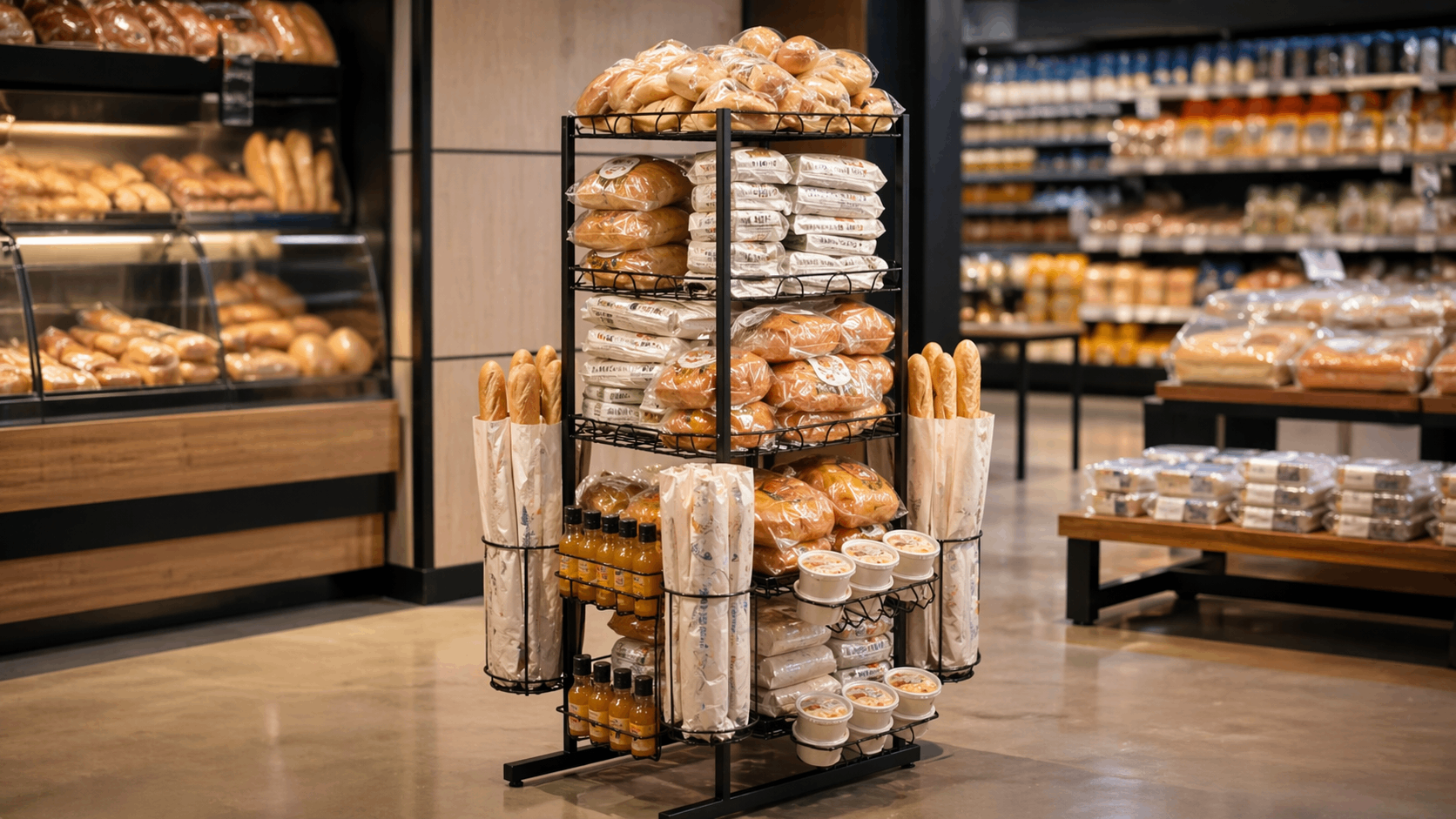
A bakery display works best when it helps products look organized, stay easy to restock, and make selection simple for shoppers. This metal portable basket baguettes shop bread and bakery display units concept is built with that everyday retail purpose in mind. The vertical layout, fixed freestanding base, and open wire baskets create a compact display that shows more product without wasting floor space.
For overseas wholesale buyers, practicality usually decides the order. The fixture should quote easily, present clearly to retail customers, and support repeat orders with stable specifications. Those are the points that matter most here: how the structure performs, why metal remains the most reliable core material, and what buyers tend to check before moving ahead with a sample or trial order.
Bread is one of the most presentation-sensitive categories in food retail. When the display looks crowded or flat, even a good product range can lose appeal. A compact bread and bakery fixture should keep the assortment full, orderly, and easy to shop, especially in bakery corners, convenience food sections, and promotional aisles.
This design handles that well through open basket tiers, clear product zoning, and extra lower storage areas. Baguettes and soft rolls can sit higher where they are easy to notice, while packaged loaves and bakery packs stay tidy in the middle baskets. The side holders and lower front trays can also support paper bags, drinks, snack cups, or related add-on items that help lift basket value.
For importers and distributors, the appeal is not just visual. A display with obvious zoning is easier to explain in quotations, catalogs, and line sheets because the intended use is clear at a glance. That makes it a more saleable bakery display unit, especially for buyers looking for a practical bread display rack for supermarket bakery sections, convenience stores, or independent bakery accounts.
In actual store use, this bread display unit works as a multi-zone selling fixture. The upper basket section suits lighter, more visible products such as baguettes, rolls, and daily bread packs. The center baskets keep regular stock neat and within easy reach, while the vertical side holders and lower front trays create extra room for complementary items, packaging materials, or promotional packs.
The top-to-bottom sequence is one of the strongest parts of the design. It guides the eye naturally through the display and helps retailers give priority items a better position. New products can sit higher, core sellers can stay central, and lower zones can support impulse items without making the main bread area feel crowded.
That layout is also useful from a wholesale point of view. It is specific enough to show real merchandising value, yet flexible enough to suit bakery shops, supermarket bakery sections, and compact food retail corners with only small adjustments.
Good bakery merchandising usually comes down to three things: products should stay visible, remain easy to reach, and stay easy to keep in order. The open wire basket format supports all three. Shoppers can see the assortment quickly, compare pack sizes, and make a choice without searching through an overcrowded shelf.
The structure also helps keep categories cleaner. Flat shelving often mixes product types too easily, especially when stores place different bag sizes together. Basket zoning creates clearer boundaries, which helps staff maintain a more consistent presentation during replenishment and keeps the display looking disciplined during busy trading hours.
There is another advantage here as well. Bread is often sold alongside bags, drinks, ready-to-go snacks, or seasonal bakery add-ons. By bringing these zones together in one compact unit, the display improves floor efficiency and gives buyers a more complete retail solution rather than a single-purpose rack.
For procurement teams, that merchandising logic has commercial value. A display that helps retailers present more SKUs clearly in one footprint is often easier to specify, easier to justify in buying plans, and easier to position as a practical step up from standard shelving.
For this type of fixture, metal is more than a styling choice. It is the part of the design that carries the everyday workload. A metal frame handles repeated restocking, handling, and customer contact better than many lighter materials used on their own. That matters in wholesale projects, where busy stores use the fixture heavily and buyers still expect it to keep a clean, consistent appearance over time.
A well-finished metal portable basket display also tends to stay easier to maintain and better at holding its shape. Powder-coated surfaces are common in retail fixtures for a reason: they offer solid wear resistance and make routine cleaning simpler. For packed bakery goods and related retail products, that balance of durability and presentation usually matters more than using a purely decorative material.
Material stability also affects claims risk and replenishment consistency. When the core frame holds its shape during handling, shipping, and store use, buyers are less likely to face specification disputes later. That makes repeat orders easier to manage and reduces unnecessary friction across ongoing programs.
Metal still leaves room for design flexibility. Acrylic, wood, or printed panels can be added when a project needs a warmer or more brand-driven look, while the metal frame continues to do the structural work. For B2B buyers, that is a practical advantage because one basic structure can support different customer styles without changing the core engineering.
This product fits naturally into bakery shop entrances, supermarket bakery zones, convenience food sections, and promotional islands. In a bakery storefront, it can create a fuller bread presentation within a relatively compact footprint. In supermarkets, it helps separate fast-moving bread packs while keeping the display open and easy to shop.
It also suits stores that need some flexibility in layout. Seasonal bakery promotions, weekend bread campaigns, and mixed food displays often call for fixtures that can be moved within the sales area without much disruption. A compact, freestanding basket rack with a stable fixed base gives buyers more layout freedom than many larger bakery shelves and keeps export packing and store setup straightforward.
For procurement teams, that flexibility has practical value. One fixture may need to serve more than one customer scenario. A display that works for both permanent placement and promotional use is often easier to standardize, easier to resell, and easier to include in a broader bread and bakery fixture program.
The final specification should always match the product mix, store layout, and merchandising goals. For that reason, this model works best as a customizable reference design rather than a rigid one-size fixture.
| Item | Specification |
|---|---|
| Product Type | Freestanding bakery basket display rack |
| Main Material | Metal core structure |
| Optional Materials | Acrylic, wood, cardboard for visual details |
| Display Style | Freestanding, multi-basket, floor display with side holders and front trays |
| Typical Use | Baguettes, packaged bread, bakery snacks, add-on items |
| Size | Custom |
| Color | Custom |
| Surface Finish | Powder coating or customized finish |
| Branding Option | Header sign, logo panel, graphic area |
| OEM / ODM | Supported |
| MOQ | Based on project scope |
| Qty or Trial | Accept small qty or trial order depending on design and schedule |
| Lead Time | Based on sample approval and order volume |
| Packaging | Export packing available |
| Base Structure | Fixed metal base |
From a sourcing point of view, the key questions go beyond dimensions. Buyers usually look at basket spacing, base stability, finish consistency, and how clearly the branding area is defined. These details affect repeatability during the production process and reduce the risk of mismatch between the approved sample and later batches.
This is where clear specification language matters most. It helps buyers compare suppliers, judge whether the design suits their target accounts, and decide whether the display can be standardized for repeat purchase.
For wholesale orders, that kind of clarity protects margin. When finish, material direction, and basket layout are defined early, replenishment orders and container planning become easier to manage. In practice, that matters far more to buyers than broad marketing claims.
This fixture does not need to stay locked into a single version. The same base concept can be adjusted for different retail programs, product mixes, and space plans. Teams can increase or decrease basket quantity, widen lower storage, and keep the base fixed or adapt it for easier movement depending on the project requirement.
The visual style can shift as well without losing the main merchandising logic. Some buyers prefer a straightforward industrial retail look with open wire baskets and a black frame. Others want a more branded version with acrylic signage, wood-effect details, or stronger graphic presentation for premium bakery environments.
For distributors and store fixture buyers, that flexibility is commercially useful. A configurable product is easier to offer across multiple accounts than a highly fixed one, especially when different customers have different pack sizes, brand colors, or display priorities.
A practical custom project usually starts with the product range rather than decorative preferences. Bread size, pack dimensions, expected loading, and store position all shape the right basket depth and tier spacing. When those details are confirmed early, the display is easier to engineer correctly and easier to approve with fewer revisions.
The next step usually includes drawing review, finish confirmation, and sample evaluation before volume production. For overseas buyers, that process matters because it helps control specification accuracy across time zones, shipment schedules, and repeat purchase cycles. Clear approvals also reduce avoidable discussion later in the order.
For this type of project, customization works best when it stays tied to end use. Changing color or adding a logo may be part of the job, but the more important question is whether the display will work in the target store environment and support the way the buyer plans to merchandise bread, bakery packs, and related items.
Wholesale buyers usually read a product page in a filtering mode. They want to know whether the structure is really metal, whether the baskets fit both baguettes and packaged loaves, and whether the layout can change without making the design unstable. Those questions are practical, and they often carry more weight than promotional wording.
They also look for signs that the supplier understands commercial execution.
When a page answers those points clearly, buyers can decide faster whether it is worth moving to quotation or sample review.
Rollout consistency is another common concern in chain and wholesale programs. Small differences in basket spacing, header position, or finish tone can trigger unnecessary claims after delivery. A product page becomes more convincing when it shows awareness of those details and presents the fixture as a dependable sourcing option rather than simply a good-looking rack.
Buyers also tend to search with narrower intent than end users. Phrases such as custom bread display rack for wholesale programs, portable bread display rack supplier, or bakery basket display rack manufacturer usually signal that they are already comparing sourcing options. A page that answers those needs directly feels more useful and more relevant to serious buyers.
If this display concept fits your project, you can share the product sizes, target quantity, branding needs, and preferred dimensions for review. That is usually the fastest way to turn a reference idea into a workable quotation.
A well-designed bread display unit should make the product easier to sell, easier to source, and easier to repeat with confidence. That is the standard this design is meant to support.


Yishang Display specializes in crafting bespoke display solutions. From initial concept and prototyping through to full-scale production, our in-house team manages every phase—delivering a seamless, one-stop experience for your brand.
If you have any questions or need a quote, please send us a message. One of our specialists will get back to you within 24 hours and help you select the correct valve for your needs.
All of our products are available for sampling