A strong cosmetic marketing display fixture should do more than simply hold products. For shampoo and hair care programs, it needs to make the range easier to see, easier to understand, and easier to shop—while still being practical for wholesale sourcing and store execution. In real retail settings, that usually means balancing shelf visibility, bottle weight, graphic impact, and floor-space efficiency all at once.
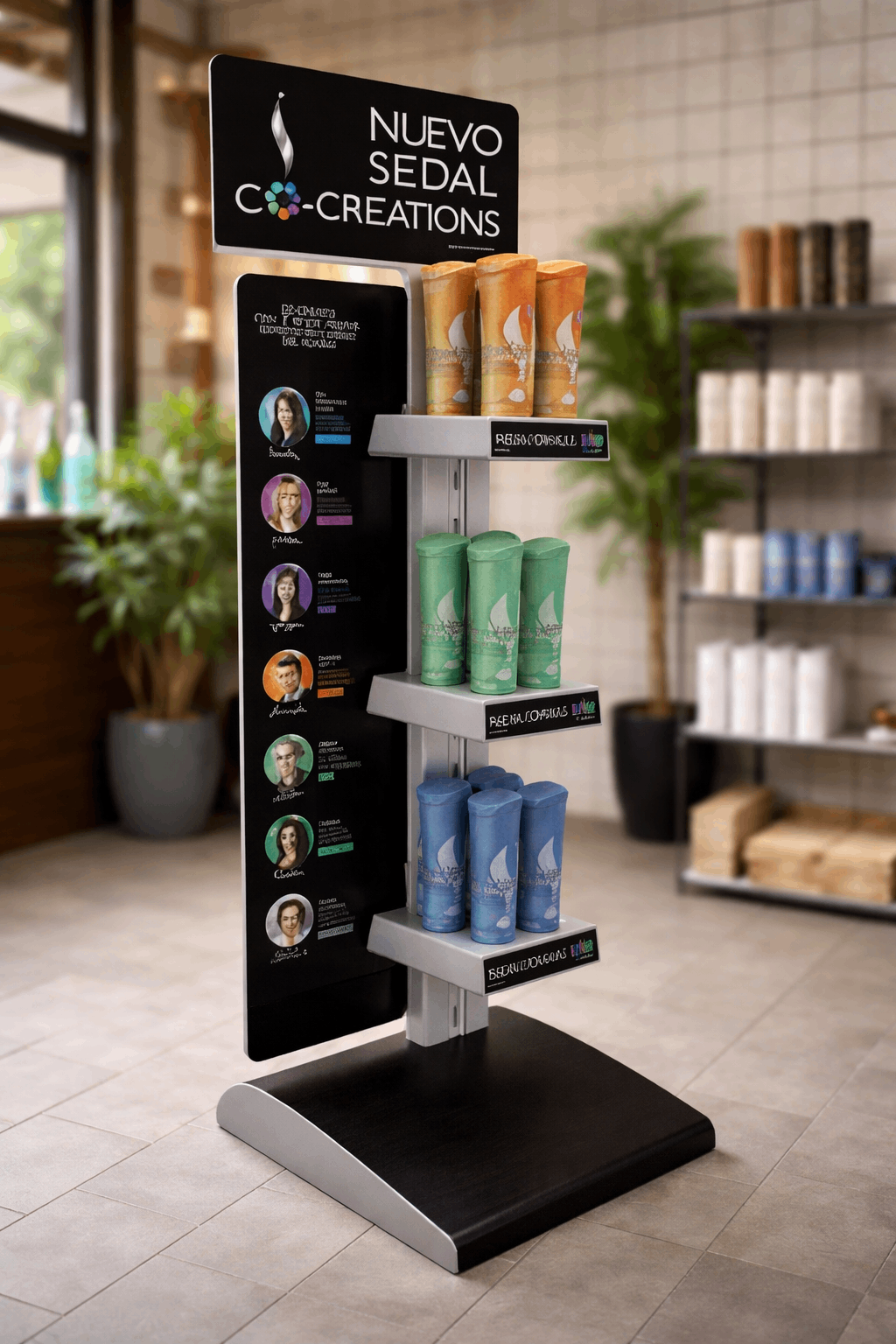
This free standing shampoo display stand is built with that balance in mind. The version shown here uses a tall branded back panel, a single-sided structure, and three projecting shelves to create a clean, front-facing presentation. Visually, it gives the brand a stronger block on the sales floor. Practically, it stays compact enough for controlled placement in aisles, promotional lanes, or beauty retail corners.
Overseas buyers often search terms such as shampoo display stands, shampoo display rack, cosmetic display stand, retail display stand for shampoo, or custom metal display stand. The key question is rarely just whether the fixture looks good in a product photo. More often, they want to know whether it will work smoothly in sourcing, shipping, setup, refilling, and daily retail use. That is why this page stays close to the product itself and to the practical details behind it.
A wholesale buyer will often assess a fixture from three angles: retail impact, structural dependability, and project practicality. So the display has to carry product weight confidently, keep graphics visible, remain easy to refill, and still make sense for export packing and repeat production. You can add acrylic panels or printed graphics when needed, of course, but the core logic stays the same: stable merchandising, clearer SKU separation, visible branding, and a structure that works for custom wholesale projects.
Hair care merchandising tends to behave a little differently from many other cosmetic categories. Shampoo bottles are often taller, heavier, and more dependent on formula or color distinction at shelf level. In a crowded store, shoppers usually make quick decisions. If the range is hard to read, the display loses part of its value before the customer even reaches for the product.
A standard shelf can hold shampoo just fine, but it does not always create enough separation between smoothing, repair, anti-dandruff, moisturizing, or volumizing lines. That is where a purpose-built shampoo display format makes more sense. It gives each group more breathing room and helps the presentation read as a system rather than a collection of bottles.
This stand organizes multiple SKUs vertically so shoppers can understand the range at a glance. Each shelf can carry a separate product family, while the back panel supports the campaign message and brand identity. In the version shown in the image, the three shelf levels create a clear top-to-bottom display rhythm. Shoppers can read it from the front without much effort. That tends to work well for seasonal promotions, line extensions, or new product launches.
For wholesale programs, this matters because display performance often affects sell-through as much as visual style does. If shoppers can compare variants quickly, purchase decisions are usually easier. That is why many buyers evaluating a retail shampoo display look beyond the rendering and focus on how the fixture will work with real bottle sizes, real store layouts, replenishment routines, and rollout requirements.
In practical terms, buyers may check shelf spacing, full-load stability, and whether the structure is simple enough for repeated use across multiple stores. None of that is flashy, admittedly—but it is often what makes the difference once the display is actually in use.
One of the main strengths of this free standing shampoo display stand is its vertical, single-sided selling format. It uses height rather than width to build presence. That makes it easier to place near aisle ends, store entrances, feature zones, or temporary campaign locations. In many retail programs, floor space is tightly managed, so a vertical floor display stand can give the brand stronger visibility without taking over too much of the sales area.
Because the products face forward, shoppers can compare the range more directly. That may sound like a small detail, but in hair care it often matters. Customers often compare variants, claims, or bottle colors quite quickly. Front-facing presentation helps them do that with less hesitation.
The shelf arrangement is another practical advantage. This shampoo display rack uses three projecting shelves to separate SKUs while keeping the assortment inside one clean fixture. It becomes easier to group products by formula, scent, package size, or promotional bundle. The display also looks more intentional. For brands that want clear product grouping, the three-level format works especially well.
For buyers planning a multi-store rollout, that kind of organization can reduce visual confusion and improve consistency at store level. The display does not rely on a complicated layout to make sense. It is, in a way, quite disciplined: one side, three shelves, clear reading order, strong back panel.
Then there is structural stability. Filled shampoo bottles create real shelf load, particularly when stores want every level fully faced. A wide metal base, proper shelf depth, and dependable bracket support all matter here. A well-made metal display stand will generally handle that load better than many lightweight alternatives and keep the fixture balanced during daily use.
For procurement teams, that usually means fewer problems with leaning shelves, unstable presentation, or early replacement after installation. It also means fewer avoidable issues during rollout—something buyers tend to value more than any bold sales language.
For long-term retail programs, metal is usually the most reliable choice for the structure. A metal shampoo display stand offers better load-bearing capacity, better shape retention, and better long-run stability than many temporary display materials. That matters when the fixture has to carry several rows of filled bottles, hold its finish under regular handling, and still look clean after repeated store use.
Metal also gives more control on the engineering side. Shelf brackets, center supports, back structures, and base reinforcement can be developed more precisely when metal is the main frame material. Powder coating improves surface durability and helps maintain more consistent color presentation across production lots, which is useful when the display needs to look uniform across multiple stores.
For buyers comparing total project value rather than only first-piece cost, a durable display rack built around metal often delivers better long-term efficiency. It may not always be the cheapest route at the beginning, but it is often the more dependable one over time.
That does not mean other materials have no place here. Acrylic can add a cleaner premium look, printed panels can strengthen campaign messaging, and mixed-material details can help the fixture align more closely with a brand concept. The point is simply that these elements tend to work best when they are added to a dependable metal structure, not used as a substitute for one.
So, for many custom retail programs, the most effective solution is not really a material compromise. It is a metal-led design with selective decorative upgrades—practical at the core, branded where it counts.
A successful custom cosmetic display fixture should match not only the product, but also the store environment and the logistics plan behind the project. Size is usually the first thing buyers want to confirm. Overall height, shelf spacing, display depth, and target footprint all affect store placement and shipping efficiency, so these details tend to shape the design very early.
A compact structure may suit convenience formats or tighter aisle conditions. A larger unit, by contrast, may work better for supermarkets or beauty chain promotions where the goal is to create a more visible brand block. In either case, the display needs to earn its floor space.
Shelf layout is another major area of customization. The number of shelves, their load requirements, and the spacing between levels should reflect bottle height, facing quantity, and SKU mix. A buyer planning three hero formulas will need one type of arrangement; someone rolling out a full family display with shampoo, conditioner, and treatment items will need another.
The goal of a custom shampoo display stand is not only to fit products physically. More importantly, it should support a cleaner buying path in store. If the display makes the range easier to read and easier to refill, it is already doing more useful work.
Branding should also be planned with some practicality. Header panels, shelf strips, side graphics, and backboard visuals all help build a stronger cosmetic display stand, but procurement teams often need more than visual appeal. In a format like the one shown here, the rear graphic panel and front-facing shelves should work together so the branding stays visible while shoppers and staff can still reach and refill the products easily.
Buyers may also want to reduce carton volume, optimize packing, or simplify assembly for overseas distribution. In those cases, the display should be customized not only for brand effect, but also for real wholesale execution. That is often where a good design proves itself—quietly, in the details.
This retail shampoo display stand performs well in supermarkets, hypermarkets, beauty chains, department stores, and salon retail corners where hair care products need a dedicated branded presentation. It is especially useful when a brand wants to move beyond standard shelving and create a more controlled promotional zone.
Because the unit is free standing, it can be placed independently without depending on wall fixtures or permanent gondola changes. That gives retailers and buyers a bit more flexibility, especially during campaign periods when display placement may need to adapt quickly.
Its single-sided layout is particularly useful when the fixture is positioned against an aisle side, a wall-adjacent zone, or a promotional lane where shoppers approach mainly from the front. In those situations, the structure works with shopper traffic rather than against it. That makes it a good fit for launches, limited-time promotions, store openings, or category reset periods.
From a sourcing perspective, these are also the environments where buyers pay closer attention to load performance, replenishment convenience, shipping efficiency, and repeat-order consistency. A display may look visually strong, certainly, but if it is difficult to ship, slow to assemble, or unstable in store, it quickly becomes less attractive for wholesale rollout.
At retail, good presentation is not only about appearance. It is also about helping products sell with less friction. This stand improves visibility, yes, but it also improves reading order. Shoppers can identify product groups more quickly, compare variants more easily, and move from recognition to selection with fewer barriers.
That is one reason a dedicated shampoo promotion display often performs better than ordinary shelf placement during campaign periods. It gives the product range a more deliberate presence and, in many cases, helps the category feel easier to navigate.
For buyers, the value is equally practical. Better SKU separation can help store teams replenish faster and maintain cleaner facing standards. Stronger back graphics can support brand messaging without the need for additional signage. A more stable base can reduce maintenance issues after placement. None of these points is dramatic on its own, perhaps, but together they improve day-to-day execution and make the display a more dependable tool for wholesale programs.
For hair care categories in particular, bottle stability, shelf spacing, front-facing visibility, and brand readability matter more than generic fixture design. The right structure should be developed around the product itself, the target retail environment, and the replenishment rhythm expected in store.
The exact configuration can change according to bottle size, filled weight, SKU count, and retail footprint. The table below shows the normal scope for this type of cosmetic marketing display project.
| Item | Typical Specification |
|---|---|
| Product Type | Free standing shampoo display stand |
| Main Application | Shampoo, conditioner, and hair care retail promotion |
| Main Material | Metal |
| Optional Materials | Acrylic, printed panels, selected decorative surfaces |
| Structure | Single-sided vertical floor unit with three shelves and branded back panel |
| Surface Finish | Powder coating, painting, graphic application |
| Shelf Layout | Customized by bottle size, facing quantity, and SKU plan |
| Branding Options | Header, backboard, side graphics, shelf strips |
| Packing Style | Assembled or knock-down export packing |
| Assembly Type | Pre-assembled or knock-down according to project needs |
| MOQ | To be confirmed by design and order scope |
| Sample Lead Time | Based on structure and graphic requirements |
| Order Type | Custom wholesale and project-based orders |
| Production Focus | Bulk production with export-oriented packing |
| Certifications | RoHS, ISO 9001 |
In most wholesale projects, the most important technical inputs are bottle dimensions, single-unit weight, total shelf load, and required retail footprint. These factors influence bracket design, shelf depth, base proportion, and overall stability. For many buyers, this technical fit matters more than broad claims because it directly affects whether the display will perform well after shipment and store installation.
Before sampling or quotation, buyers usually confirm several details that affect both engineering and commercial planning. The first set concerns the product itself: bottle height, bottle width, filled weight, SKU quantity, and target facing count. These details determine the load on each shelf and how the overall fixture should balance.
The second set concerns project execution. Buyers often want to know whether the display should ship assembled or knock-down, whether it should suit pallet planning, how easily store staff can set it up, and whether the design should prioritize premium appearance or shipping efficiency.
For larger programs, this discussion often includes lead times, carton targets, container loading efficiency, and consistency across repeat orders. When these points are defined early, the quotation process becomes faster and the proposal becomes more accurate. It also helps the buyer evaluate not only the appearance of the fixture, but whether the supplier understands the practical steps behind custom production and volume rollout.
Once the display requirements are clear, the team can turn them into a practical proposal with the right dimensions, shelf layout, branding zones, and packing direction. The most useful proposals are usually the ones that balance visual effect with manufacturing realism. A fixture may look impressive in concept, but if it is hard to pack, hard to assemble, or too fragile for repeated use, it becomes less attractive from a wholesale standpoint.
After approval, the project can move into sampling, review, bulk production, inspection, and shipment. At this stage, consistency matters as much as design. Surface finish, print accuracy, assembly tolerance, and carton protection all influence how the display arrives and performs. For overseas buyers, these details are often the difference between a display that works smoothly and one that creates follow-up problems after delivery.
This page is product-led, but wholesale buyers still need a basic level of supplier confidence. In practice, that usually means clear communication on customization, export packing, repeat production, and project follow-through. Yishang Display keeps the focus here on practical metal fixtures, stable execution, and sourcing clarity rather than broad company promotion.
For this shampoo display project, the key point is straightforward: the fixture should solve a retail presentation problem without making procurement more difficult. It should be stable, customizable, practical to pack, and realistic to produce at volume. That is, really, the standard this product is built around.
Can this display hold fully loaded shampoo bottles securely?
Yes. When the shelf depth, support brackets, and base proportion are engineered correctly, the fixture can support normal shampoo and conditioner loads used in retail presentation.
Can the display be customized for different bottle sizes or SKU counts?
Yes. The shelf spacing, display height, facing capacity, and branding layout can all be adjusted according to the product range and store plan.
Is metal always the best main material for this type of project?
For long-term shampoo display programs, metal is usually the most dependable main material because it gives better load-bearing stability and long-run durability.
Can acrylic or other decorative materials be added?
Yes. Acrylic panels, printed surfaces, and selected decorative materials can be integrated naturally while keeping metal as the structural core.
Is this suitable for overseas wholesale orders?
Yes. The team can develop the design around export packing, bulk production, and practical retail rollout needs.
What helps speed up quotation and sampling?
Bottle dimensions, filled weight, SKU quantity, target display size, branding files, and estimated order volume usually speed up the process and improve accuracy.
Can the stand be shipped knock-down to reduce carton volume?
Yes. For many export projects, the display can be developed in a knock-down format to improve packing efficiency and reduce shipping space.
Can the design be adjusted to suit different store layouts?
Yes. The team can refine the height, shelf spacing, base proportion, branding areas, and packing method according to the target retail environment and rollout plan.
If you are planning a custom shampoo display project, share the bottle size, filled weight, SKU quantity, target dimensions, and branding files. That is usually enough to start a more accurate proposal.
This free standing shampoo display stand is designed to support stronger retail presentation, cleaner SKU organization, and more reliable wholesale execution.
Yishang Display specializes in crafting bespoke display solutions. From initial concept and prototyping through to full-scale production, our in-house team manages every phase—delivering a seamless, one-stop experience for your brand.
If you have any questions or need a quote, please send us a message. One of our specialists will get back to you within 24 hours and help you select the correct valve for your needs.
All of our products are available for sampling