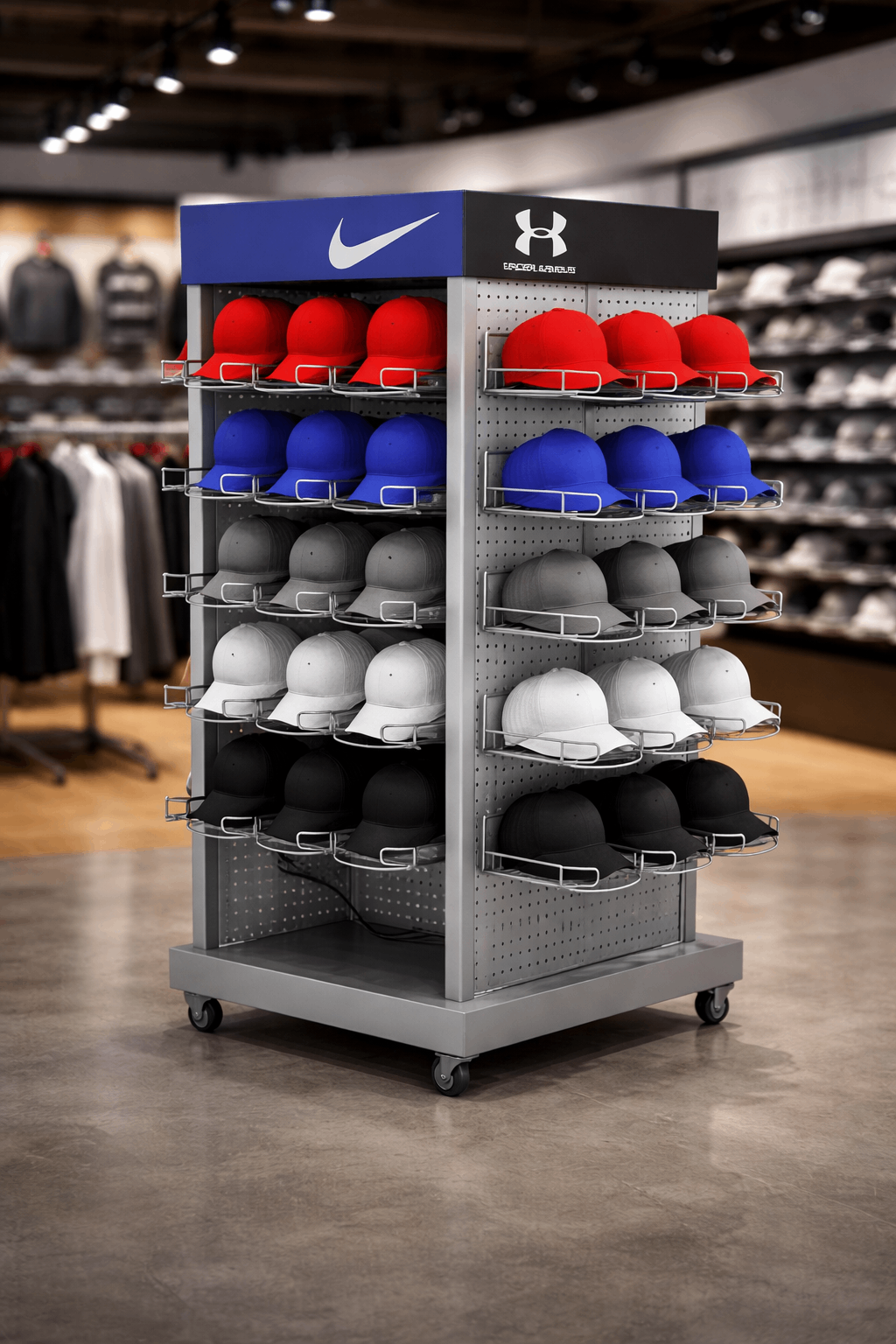
A strong hat display rack is more than a place to hold caps. For wholesale buyers, it is part of a retail fixture program that needs to balance product visibility, brand presentation, floor efficiency, and repeatable execution. This athletic metal multiple hat display rack wholesale for retail store use is developed with that commercial purpose in mind. It presents baseball caps, athletic caps, and branded headwear in a way that looks organized on the sales floor while remaining practical for sourcing teams planning batch orders.
For overseas importers, distributors, and fixture buyers, the decision is rarely based on appearance alone. They usually focus on structure stability, usable capacity, branding flexibility, packaging practicality, and whether one concept can work across several stores with limited adjustments. Those are the details that affect quotation accuracy, repeat orders, and rollout efficiency. That is why this floor hat display is designed around daily retail use rather than short-term presentation. The unit is primarily made of metal for strength and consistency, while selected acrylic or other material details can be added when a project calls for a different visual effect.
When caps are grouped clearly and shown at a comfortable viewing height, shoppers can compare logos, colorways, and styles faster. In sports retail and licensed headwear programs, that kind of readable presentation supports both sell-through and cleaner visual standards. This is especially true for color-block merchandising, where red, blue, grey, white, and black caps need to read as a coordinated assortment rather than as a crowded mixed display.
The first strength of this hat display stand is the 4-sided layout. Unlike wall-mounted fixtures that depend on perimeter placement, this freestanding hat display solution is intended for open selling areas, feature zones, and center-floor merchandising. It allows access from multiple directions, which increases product exposure and gives store teams more flexibility in layout planning.
Each side uses individual wire cap holders arranged in vertical tiers. This structure supports organized presentation by color, logo family, team story, or campaign theme. Compared with flat shelving, separate holders help each cap stay visible and keep the front profile cleaner at store level. For buyers managing chain programs, that kind of display logic matters because it is easier to standardize across locations. When stores in different regions use the same display stand with similar holder spacing and header proportions, the category looks more consistent and easier to maintain.
The top header creates a clear area for branding, which is especially valuable in athletic retail. The display often needs to do more than carry stock; it may need to introduce a new collection, support a licensed program, or frame a seasonal promotion. On a unit like this, the header also strengthens the athletic identity of the fixture, making it easier to connect the cap presentation with a sports brand story. With the right graphic treatment, the unit works as both a product carrier and a branded merchandising fixture.
Mobility adds another practical advantage. The wheeled base helps store teams reposition the display during resets, promotional changes, or traffic-flow adjustments. The rectangular floor footprint stays compact enough for central store placement while still carrying a broad cap assortment. For wholesale procurement, this means the same core unit can serve stores with slightly different layouts without forcing the buyer to manage several separate fixture designs.
A cap display rack works best when it supports the way people actually browse. Hats are usually chosen through quick visual comparison. Shoppers often judge the front logo, visor shape, crown profile, and color combination within seconds. A vertical 4-sided presentation helps each style stay visible instead of disappearing into a crowded shelf line. That is particularly useful when the assortment relies on repeated single-cap presentation, because the shopper can read the silhouette and front logo more quickly.
This structure also makes better use of retail floor space than many low display tables. By building upward, it creates a high-capacity presentation while keeping the footprint controlled. That matters for stores that want to show more SKUs without giving too much selling space to a single category. For buyers, this is not only a visual benefit. It also influences assortment planning, replenishment rhythm, and the flexibility of the sales floor.
The display supports stronger category discipline as well. Repeated rows of caps under a branded header help the shopper read the assortment more quickly, especially when the program uses strong color grouping. The result is a section that feels intentional rather than improvised, with better product visibility, cleaner brand blocking, and a more premium presentation for headwear programs.
This model is especially suitable for sporting goods stores, athletic brand shops, department store feature areas, and specialist cap retailers. In these environments, buyers often need a display concept that can handle several colorways or styles at once while still keeping the assortment easy to navigate. The 4-sided layout answers that requirement well because it supports both capacity and presentation discipline.
It is also effective for promotional rollouts. A buyer sourcing fixtures for a seasonal campaign may need one standardized unit that works in several markets with only graphic changes at header level. This type of display program is easier to manage when the core structure remains stable and the visible branding area carries most of the campaign adjustment.
For smaller stores, a countertop unit may be more suitable near checkout. For perimeter-driven layouts, a wall solution may make better sense. That comparison is useful for procurement teams because the real goal is not to force one concept into every project, but to match the right fixture to the retail objective, the store footprint, and the planned SKU depth.
The main reason many buyers prefer metal over temporary materials is reliability. A metal hat display stand usually offers stronger load-bearing performance, better structural consistency, and a longer service life under repeated commercial use. That matters when a display will be moved during resets, replenished daily, and expected to maintain a clean presentation standard over time.
Capacity is another practical advantage. Because the unit presents products across four sides with multiple holders, it can support a broad cap assortment without creating a cluttered look. For importers and distributors, this kind of organized capacity helps the end retailer show more choice while keeping the category easy to shop.
Brand presentation matters as well. A customized hat display should not only fit the products; it should also support the visual language of the retail space. The header area, consistent holder rhythm, perforated metal side panels, and balanced proportions make this unit suitable for branded athletic programs and licensed merchandise displays. Instead of acting as a simple storage rack, it helps the category look planned and commercially stronger.
The design also reduces project friction. When one base structure can serve multiple store types with modest changes in color, graphics, or holder spacing, sourcing becomes more efficient. Buyers often look for this kind of flexibility because it reduces the need to manage several different fixture concepts for similar retail applications.
For professional buyers, the most useful specifications are the ones that affect ordering, rollout, and in-store execution. The table below highlights the commercial details typically reviewed before sample approval or bulk production.
| Specification Item | Typical Option for This Display |
|---|---|
| Product Type | Floor standing hat display rack |
| Main Material | Metal |
| Optional Material Combination | Acrylic, wood, or cardboard when required |
| Layout | 4-sided with multi-tier individual wire cap holders |
| Branding Area | Custom top header or logo panel |
| Mobility | Base with caster wheels |
| Finish | Powder-coated or project-specified finish |
| Color | Custom |
| Capacity | Based on holder quantity, spacing, and cap profile |
| Use Scenario | Sports store, retail store, department store, brand shop |
| Service Type | OEM and ODM |
| Packaging | Export-friendly bulk packaging |
From a sourcing perspective, clarity in materials is important. The fixture is mainly metal because metal gives better consistency in structure, finish, and long-term use. Powder-coated surfaces are widely preferred in retail fixture projects because they provide a clean appearance and practical durability. When a sharper premium look is required, acrylic details can be added selectively without changing the core metal structure.
Buyers also pay attention to how much of the design is standardized and how much can be adjusted. That distinction matters in wholesale purchasing because it affects tooling, lead time, packaging planning, and price consistency across repeat orders. At this stage, buyers usually start weighing what should remain standardized and what should be customized for their program.
A customized hat display project usually starts with a retail objective, not just a drawing. Some buyers need a unit sized for a chain-store rollout. Others need the same display body but different header graphics for regional campaigns. In both cases, the fixture has to keep its merchandising logic while allowing enough variation to support the brand plan.
The most common adjustments for this hat display program include overall dimensions, holder quantity, holder spacing, frame color, header artwork, perforated panel detailing, and selected material accents. These are commercially relevant changes rather than cosmetic extras. Even a small adjustment in spacing can change how many SKUs fit on the unit and how clearly each cap reads from a normal shopper distance.
For importers serving several markets, packaging details can matter almost as much as appearance. A structure that remains stable while graphics, labels, or accessories change by market is often easier to manage than several completely different units. That is one reason custom display manufacturer capability matters in B2B projects.
This floor model is a strong option for many projects, but it is not the only one. Some stores prefer a rotating unit when browsing speed matters more than maximum presentation width. Others choose a smaller counter unit near checkout when headwear is positioned as an add-on purchase rather than a destination category.
There are also projects where wall-mounted fixtures make more sense, especially when floor space is limited. In premium retail concepts, mixed-material displays that combine metal with acrylic, wood, or printed panels may be preferred to match the interior finish language. These alternatives are worth mentioning because wholesale buyers often compare more than one route before confirming a purchase decision.
The right answer depends on traffic flow, assortment depth, visual standards, and budget discipline. This comparison helps position the featured rack more accurately rather than pulling attention away from it.
Once the display concept is confirmed, the project usually moves through a clear commercial process. Buyers typically begin by confirming store type, estimated SKU count, target dimensions, order volume, branding requirements, and practical shipping considerations. This early alignment helps reduce avoidable revisions later.
The next step is drawing review or sample confirmation. For wholesale orders, this is where many costly problems are prevented. Holder spacing, header size, base stability, and packaging method should all be reviewed before bulk production begins. In multi-market programs, drawing-stage accuracy helps keep rollout standards more consistent.
After approval, finish and material details are finalized. Edge treatment, coating consistency, and graphic fit all influence the final retail impression. Quality inspection then checks whether the production batch matches the approved standard. For export programs, packaging discipline matters as well because poor packing can damage fixtures, increase replacement cost, and delay store installation.
For an overseas buyer, repeatability is often more important than a single attractive sample. A supplier may produce one good prototype, but the real question is whether the same display standard can be maintained across production runs and shipping batches. In retail rollout projects, inconsistency in finish, dimensions, or packaging can create avoidable cost and weaken brand presentation in store.
That is why reliable execution matters. Buyers usually prefer a partner who understands metal fabrication, practical merchandising, export packing, and the commercial reality of repeat orders. For that reason, buyers usually look for a supplier that can support the project from approved concept through production and delivery.
For buyers comparing suppliers in Guangdong Province, China, the question is usually straightforward. Can the supplier deliver a fixture that looks commercially strong, packs efficiently, and stays consistent when the order moves from sample to volume? That is the level of reliability most wholesale buyers actually look for.
Buyers usually raise a few practical questions before moving forward with a sample or quotation. The answers below focus on sourcing, usability, and customization.
Can the holder quantity be adjusted? Yes. Holder quantity and spacing can be customized according to SKU mix, display density, and store layout needs.
Can the top header carry a brand logo? Yes. The header can be developed for logo graphics, campaign messaging, or category branding, depending on the retail program.
Is the structure suitable for busy retail use? Yes. The metal body is developed for repeated commercial handling and long-term floor use.
Can acrylic or other materials be added? Yes. The main structure remains metal, but selected acrylic or other material details can be added when the display concept requires them.
Can the unit be packed for export shipment? Yes. Packaging can be planned to support shipment safety, handling efficiency, and batch delivery requirements.
If you are planning a cap or headwear project, a useful inquiry usually includes target dimensions, estimated SKU count, branding requirements, and expected order volume. That makes it easier to recommend a suitable solution and prepare a practical quotation.
This athletic metal multiple hat display rack is designed for buyers who need a display that looks organized, supports branded athletic merchandising, ships realistically, and works across real retail programs. Contact Yishang Display for a quotation based on your project needs.


Yishang Display specializes in crafting bespoke display solutions. From initial concept and prototyping through to full-scale production, our in-house team manages every phase—delivering a seamless, one-stop experience for your brand.
If you have any questions or need a quote, please send us a message. One of our specialists will get back to you within 24 hours and help you select the correct valve for your needs.
All of our products are available for sampling