A compact display can have a direct effect on how headwear sells in store. This countertop display is developed for wholesale buyers who need a fixture that is durable for daily use, practical for export shipment, and flexible enough for branded retail programs.
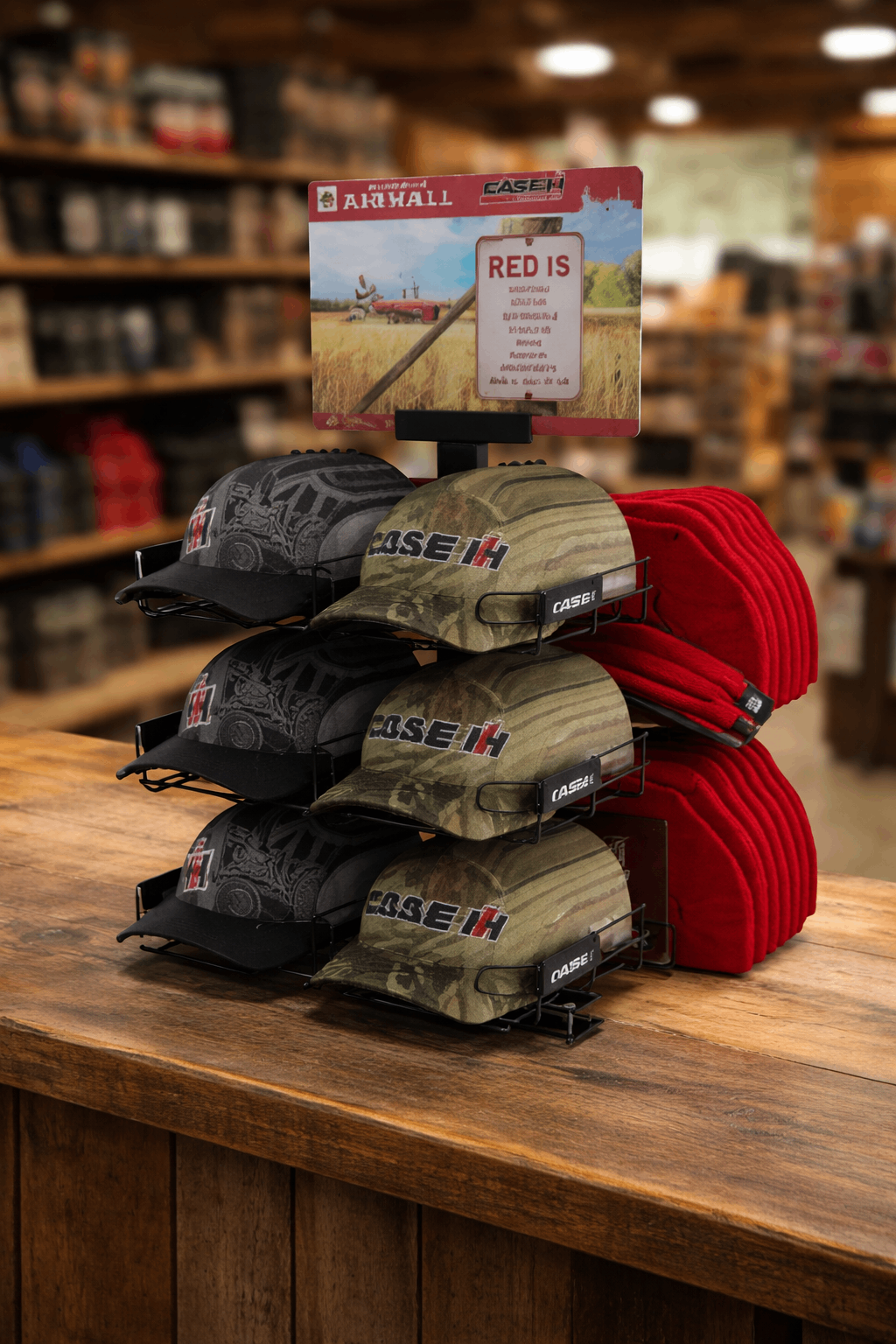
The product shown here uses a compact vertical metal wire structure with six cap pockets arranged across three tiers, four separate side beanie holders, and a detachable double-sided header sign for branding. That combination allows one countertop unit to present both structured ball caps and soft knit hats in a cleaner, more readable way. Instead of mixing products in one crowded zone, the fixture divides categories while keeping the footprint compact.
Its main structure is metal, which supports better stability, longer service life, and more reliable repeat production. Optional acrylic, wood, or cardboard elements can be added when a project needs a different visual effect, stronger campaign graphics, or a more specific budget balance. The result is a display that stays focused on product presentation while remaining adaptable for different retail accounts.
Headwear is often more difficult to merchandise than it first appears. Baseball caps need the crown and front logo area to stay visible. Beanies need support and separation so they do not collapse into an untidy pile. When both product types are placed together without a clear layout, even a small assortment can quickly look crowded.
That is why this fixture is designed around controlled presentation rather than simple storage. The countertop format helps retailers use high-value selling space more effectively, especially near checkout, feature tables, seasonal zones, and branded counter areas. Instead of stacking product loosely on a table, stores can create a cleaner and more intentional presentation.
For wholesale buyers, that matters because a compact fixture with broad application is easier to place across sports shops, gift stores, fashion accessory retailers, and promotional corners. A display that works across several store types usually has stronger resale value than one designed for only one narrow environment.
The frame uses metal as the main structural material because commercial display programs need stability, shape retention, and repeatable production quality. In everyday store use, shoppers touch products, compare styles, and return items to the rack throughout the day. A weak display quickly loses order under that kind of handling.
This metal fixture supports a cleaner and more durable presentation. It helps the display maintain its shape over time and gives buyers more confidence when the same design needs to be reordered for a chain program, promotional campaign, or seasonal launch.
The layout is equally important. Caps and beanies do not behave the same way in a display. In this design, the front section uses six cap pockets across three tiers, which helps keep the crown visible and the front branding readable while separating individual styles more clearly. The side section provides four separate beanie holders, allowing knit hats to be shown in a neater and more consistent arrangement.
By separating these product types within one compact unit, the fixture helps retailers present a mixed assortment without visual conflict. The vertical structure uses countertop space efficiently while still creating clear product zones. That makes browsing easier for shoppers and helps store staff maintain a more organized display during busy trading hours.
A countertop display does not need to be large to be effective. In many retail settings, the counter area naturally receives strong shopper attention because customers pause there, compare products there, or complete payment there. That makes it a useful location for fast-moving caps, seasonal beanies, limited-edition headwear, or promotional lines.
This countertop display helps stores use that space with more discipline. A good layout improves visibility without taking floor space away from core categories. For buyers, that matters because fixtures that are easy to place are usually easier to sell into multiple retail accounts.
The format also supports flexibility. Floor fixtures often need more space commitment and more permanent planning. A countertop unit is easier to reposition, refresh, or adapt to changing promotional themes. That gives buyers and retailers a more practical option for short campaigns, rotating assortments, and mixed-product programs.
One reason this product performs well is that it does not force all headwear into one presentation method. The front six cap pockets are better suited to structured ball caps that need logo visibility and shape retention. The side beanie display section with four holders is better suited to softer knit hats that need separation without looking compressed or untidy.
That is where the value of combining cap display and beanie presentation in one unit becomes clear. The fixture supports mixed headwear merchandising while helping each product type stay visible in its own way. This improves product clarity without making the display feel complicated.
For retailers, that means a cleaner and more premium presentation. For buyers, it means a fixture that can support a wider product assortment without becoming visually confusing. That wider application is useful when the same customer account sells sports caps in one season and knit hats in another.
A display fixture is also a communication tool. The detachable double-sided header on this design can carry a logo, campaign message, licensed image, or seasonal graphic. In retail, that kind of visual cue helps shoppers understand the product story faster and makes the display easier to identify from a short distance.
A detachable header also increases the fixture’s value across multiple programs because the graphic area can be updated more easily for different retail accounts, seasonal campaigns, or licensed collections. For brand-led retail, the display is not only holding product. It is helping the merchandise look official, organized, and consistent with the wider presentation standard of the store.
For wholesale buyers, this is one of the most practical customization points. A header change can adapt the same base fixture for different retail accounts, different markets, or different promotions without requiring a complete structural redesign.
Overseas buyers usually evaluate more than appearance. They want to know how the fixture is built, whether the finish is suitable for commercial use, how much product it can hold without looking crowded, and whether the design can be packed efficiently for export.
The table below focuses on the points that matter most during sourcing and quotation.
| Key Item | What Buyers Usually Check |
|---|---|
| Main material | Metal wire structure for durability, visibility, and repeatable production |
| Optional materials | Acrylic, wood, or cardboard for branding or visual contrast |
| Display format | Countertop / table display |
| Surface finish | Powder coating or project-based finish matching |
| Branding area | Detachable double-sided header sign, logo panel, graphic section |
| Capacity | Six front cap pockets plus four side beanie holders, balanced between visibility and SKU quantity |
| Packing | Assembled or knock-down based on shipment planning and export efficiency |
| Customization | Size, layout, color, signage, mixed materials |
In many projects, capacity should be judged together with visibility. A display that holds too many units can weaken product presentation and make the assortment harder to browse. Buyers who manage multi-store programs usually prefer a layout that shows the product clearly while still fitting a practical countertop footprint.
Useful customization does not start with decoration. It starts with the merchandising goal. Some buyers need a compact fixture for checkout counters. Others need a branded display for sports merchandise, licensed products, or seasonal promotions. Some need one layout that can support both caps and beanies in a limited space.
That is why size, holder arrangement, header proportion, finish, and material mix can all be adjusted. For example, buyers may keep the same six-pocket cap layout while changing the side holder depth, header size, overall width, or graphic panel design to match a different retail program. The display can be developed around available counter dimensions, target product quantity, and the type of message the retailer wants to present.
The main structure remains metal because that is the most practical base for long-term store use. Acrylic can add a cleaner visual effect, wood can soften the look for lifestyle retail, and cardboard can support campaign graphics where cost efficiency matters. Used correctly, these materials add value without weakening the core structure.
For B2B buyers, that flexibility is important because different retail accounts have different priorities. One customer may focus on stronger branding. Another may care more about shipping efficiency. Another may need a layout that works across several stores with slightly different counter sizes.
Wholesale sourcing decisions are often shaped by logistics as much as by design. A fixture that looks good but ships poorly can create avoidable cost. That is why buyers usually ask early about packing format, sample development, and bulk production planning.
This product can be supplied in either assembled or knock-down form depending on the program. For export orders, a knock-down structure often helps save shipping space and improve container efficiency, especially when buyers need a countertop cap and beanie display fixture for multi-store rollout. For other projects, an assembled format may be more practical when faster in-store setup matters more than freight savings.
The sample stage is also important. When buyers review a sample to confirm size, holder spacing, header treatment, and finish quality, they reduce risk before moving into bulk production. That is especially useful for importers and distributors who need confidence that the final fixture will match the approved concept.
For export projects, packaging details should be aligned with the destination market, order quantity, and store setup requirements. Strong display sourcing is not only about the display itself. It is also about how design, packing, and shipment work together.
A strong display is one that continues to perform after delivery. In day-to-day store use, it needs to stay neat, support product interaction, and keep the assortment readable. That is where a metal-based fixture has a clear advantage over lighter temporary solutions.
This display works as a practical retail tool rather than a decorative accessory. It supports visibility, branding, and assortment control in one compact structure. For wholesale buyers, that makes the product easier to justify because it addresses both presentation and operational concerns.
For buyers who need a compact display with a metal wire structure, six cap pockets, four beanie holders, and a detachable header, this fixture offers a balanced solution. It is suitable for mixed headwear presentation, brand-led promotions, and repeat retail programs where durability and shipment planning both matter.
If you would like a quotation, send the hat types, approximate quantity, counter size, and any logo or header requirements. That is usually enough to evaluate a suitable display direction quickly.
Yishang Display specializes in crafting bespoke display solutions. From initial concept and prototyping through to full-scale production, our in-house team manages every phase—delivering a seamless, one-stop experience for your brand.
If you have any questions or need a quote, please send us a message. One of our specialists will get back to you within 24 hours and help you select the correct valve for your needs.
All of our products are available for sampling