Overseas wholesale buyers usually do not spend much time on generic product pages. They scan quickly, compare fast, and decide whether a fixture looks commercially usable before they read in depth. For a product like a clothing display rack, the first questions are practical: Is the structure stable enough for daily store use? Can it fit different shop layouts? Is it suitable for repeat orders, custom projects, and bulk purchasing programs?
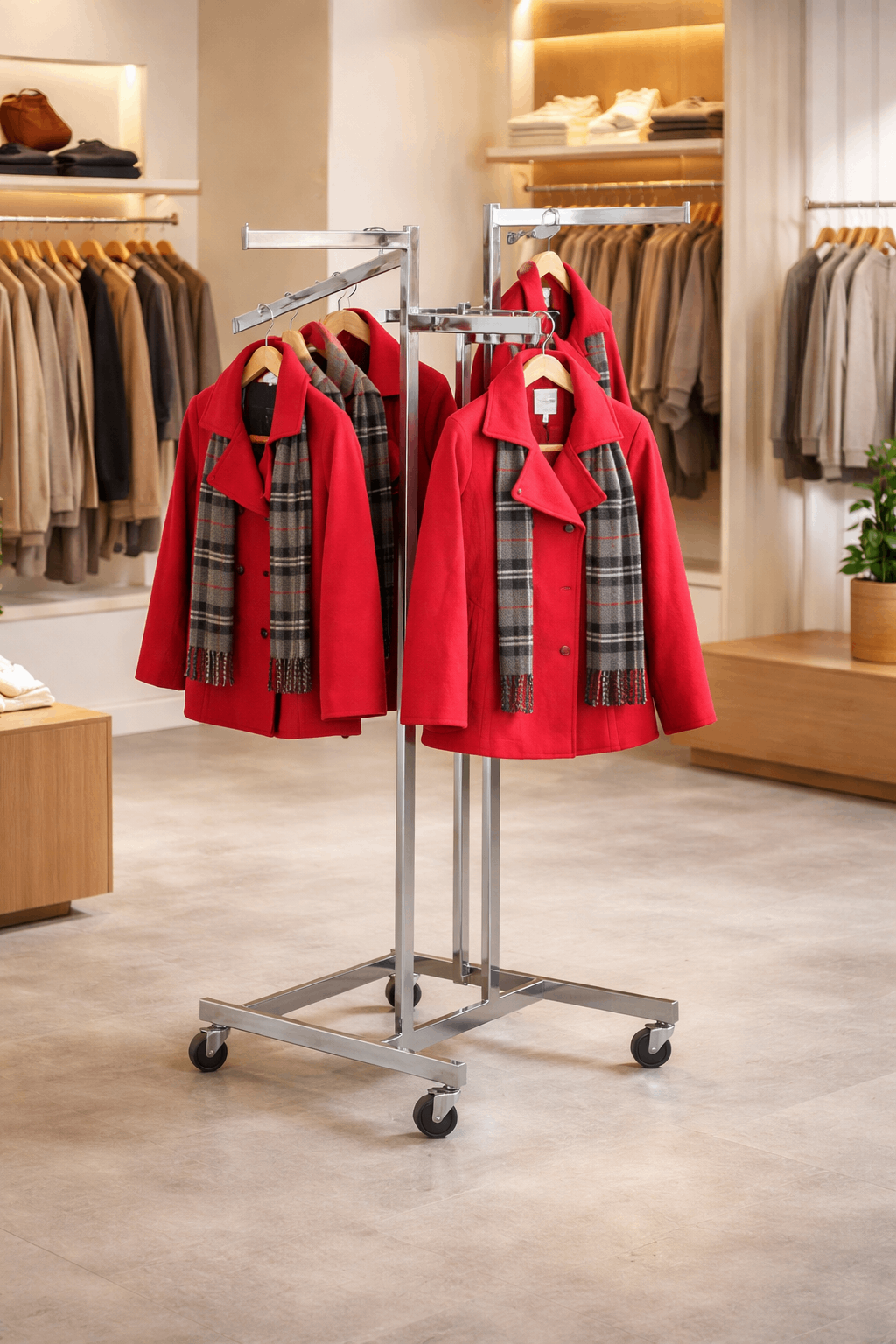
The Stylish Movable 4-Side Silver Metal Garments Shop Clothing Display Rack is designed for exactly that kind of evaluation. It is a commercial garment display rack made for apparel stores that need better visibility, flexible layout changes, and durable metal construction. The design and specifications reflect the practical criteria professional buyers typically evaluate before adding a fixture to a sourcing shortlist.
For importers, distributors, and retail project buyers, a good display unit should do three things well. It should present garments clearly, use floor space efficiently, and maintain reliable performance in day-to-day retail operations. This movable retail clothing rack is built around those priorities, with a four-arm layout, lockable wheels, and a reinforced base that supports practical merchandising rather than just visual appearance.
The silver finish also helps from a project planning perspective. Neutral metallic tones are easier to use across boutiques, department stores, brand showrooms, and seasonal retail concepts, which means buyers can source the same base model for different customers with fewer visual conflicts.
In apparel stores, visibility affects browsing behavior directly. When products are easier to see from different directions, customers are more likely to stop, compare styles, and interact with the merchandise. That is one reason multi-directional display fixtures remain popular in fashion retail and why this kind of 4 way clothing rack continues to be specified for central floor areas, seasonal display zones, and promotional spaces.
A straight rail works well against a wall, but it is less efficient in open-floor positions where customers approach from multiple traffic paths. A four-sided structure improves exposure by opening garments outward around the center column. This makes the display easier to notice and easier to shop, especially in busy stores where every fixture must justify its floor footprint.
The format also supports cleaner merchandising. Each arm can carry a specific category, such as jackets, dresses, knitwear, or new arrivals. That helps store teams build a clear display story without mixing too many garments on one side. For buyers supplying chain stores or independent boutiques, this makes the rack more commercially useful because it can support both product density and display logic.
There is also a space-efficiency advantage. In compact stores, retailers often want to increase assortment visibility without creating visual clutter. A 4-way garment rack for boutiques can hold a meaningful product selection while keeping walkways open. That balance between capacity and accessibility is one of the strongest commercial reasons these fixtures remain widely used.
For B2B buyers, structure usually matters more than styling claims. A rack may look clean in a product photo, but the real test is whether it stays stable in stores, moves smoothly when layouts change, and keeps garments readable when fully merchandised. This movable garment rack is designed with those daily retail conditions in mind.
The core layout uses a central upright with four horizontal display arms arranged in a cross pattern. This creates a true 360-degree presentation zone and allows garments to be distributed more evenly around the rack. Compared with a crowded single bar, the display feels more organized and easier to browse.
For retail teams, the structure supports category separation without requiring multiple small fixtures. One side can carry outerwear, another knitwear, another seasonal fashion pieces, and the last a promotional group. That makes the rack a useful garments shop display solution for stores that update collections frequently.
The spacing between the arms also matters. Good spacing reduces overlap, keeps products visible, and lowers the chance that garments wrinkle or become visually compressed. That may sound like a detail, but to a wholesale buyer evaluating long-term usability, readable presentation is part of fixture value.
Retail environments are rarely static. New campaigns, end-cap promotions, visual resets, and seasonal launches all require fixtures to move. A display unit that cannot be repositioned easily slows down store operations and increases labor time.
This retail clothing display rack with wheels uses caster mobility so the fixture can be moved across common retail surfaces without excessive effort. For buyers serving multi-store clients, that feature is commercially relevant because stores increasingly prefer flexible fixtures over fixed presentation systems.
Once in position, the wheels can be locked to keep the rack steady during customer handling. This gives the unit a good balance between mobility and control. In practice, that means staff can refresh layouts faster while maintaining safe and reliable presentation on the sales floor.
Mobility only works if the rack stays stable after repositioning. In apparel stores, customers frequently remove garments, compare items, and return products unevenly. A weak base can wobble, lean, or create a poor impression even if the upper structure looks attractive.
This rack uses a reinforced rectangular metal base to distribute weight more evenly. The center post is securely connected to the frame, which improves balance when the fixture is carrying heavier garments such as coats, denim, or layered collections. That makes it more suitable as a metal display stand for apparel stores rather than a light decorative unit.
From a sourcing perspective, stable construction also helps reduce complaints after installation. Buyers placing repeat orders usually prefer fixtures that create fewer post-delivery issues, especially when products are being supplied across several locations.
Material choice plays a central role in commercial retail fixtures. Wholesale buyers evaluating a metal rack usually prioritize structural reliability, durability during transport, and long service life in busy stores. A rack that maintains its shape and finish under daily use reduces replacement costs and keeps store presentation consistent.
This display unit uses steel construction because steel delivers dependable strength for retail fixtures. Compared with lightweight alternatives, steel supports higher load capacity and maintains its structural shape during long‑term use. Stores that display jackets, dresses, knitwear, or seasonal apparel benefit from the additional rigidity that metal provides.
Industry references such as the American Institute of Steel Construction highlight how commercial equipment frequently relies on steel structures due to their strength, durability, and predictable long‑term performance. For retail fixtures, these qualities help ensure that racks remain stable and visually consistent even after repeated repositioning and daily customer interaction.
Manufacturers typically apply powder coating or chrome‑style
Technical specifications are often reviewed early in the sourcing process to determine whether a fixture matches project requirements. Specifications help them judge whether a fixture fits a target store concept, shipping plan, and merchandising strategy.
| Specification | Details |
|---|---|
| Product Type | 4-side apparel display rack |
| Main Material | Steel construction |
| Finish Options | Silver powder coating or chrome-style finish |
| Display Layout | Four-arm garment presentation |
| Mobility | Lockable caster wheels |
| Base Structure | Reinforced rectangular metal frame |
| Height | Customizable to project needs |
| Standard Use | Apparel display in retail environments |
| Surface Protection | Anti-corrosion treatment |
| Optional Features | Branding panel, finish adjustment, dimensional changes |
In practical use, this rack is suitable for shirts, dresses, lightweight outerwear, knitwear, and many seasonal collections. Depending on arm length and spacing, it can also support heavier garments when the display density is planned correctly.
For wholesale buyers, customization of dimensions can be just as important as the base specification. Many sourcing teams reviewing retail clothing display racks also compare other fixture formats such as boutique garment racks, commercial apparel display stands, and free standing clothing racks with wheels when planning store layouts. Smaller boutiques may need a more compact footprint, while larger chain stores often prefer increased arm span or slightly adjusted overall height to fit local floor-planning standards.
A useful fixture is rarely limited to one narrow application. Buyers often prefer products that can work in several retail environments because that makes them easier to resell, easier to specify, and easier to integrate into future projects.
This apparel store fixture works especially well in boutiques where product selection needs to stay visible without crowding the interior. The four-sided format allows a compact merchandise story to be presented in one place, which helps smaller stores maintain order and presentation quality.
In department stores and apparel chains, the rack can be used in central aisles, promotional islands, or seasonal highlight zones. Because garments face outward from multiple directions, the fixture performs better than a linear rail in areas where shopper traffic crosses from several angles.
It is also useful in showrooms, pop-up retail, and event merchandising. In these settings, staff often need fixtures that move quickly, present neatly, and adapt to changing layouts. A movable retail clothing rack is often more practical than a fixed display system when speed and flexibility matter.
For distributors, this kind of cross-format usability improves product value. A rack that works in boutiques, showrooms, and chain stores is easier to position across different customer accounts.
Retail buyers do not purchase fixtures only to hold inventory. In modern apparel merchandising, fixtures are part of the visual presentation strategy used by fashion retailers worldwide. According to retail merchandising guidelines published by organizations such as the National Retail Federation (NRF), effective product presentation can significantly influence customer browsing time and purchase decisions. They purchase fixtures to help merchandise sell more effectively. That means display logic matters almost as much as physical construction.
A four-arm format supports several useful merchandising approaches. Stores can group garments by color family to create a stronger visual block, or divide by product category so shoppers can understand the assortment at a glance. Both methods improve readability and can reduce the chaotic look that sometimes appears on overloaded linear rails.
The rack is also useful for seasonal launches. A spring capsule, limited promotion, back-to-school story, or new-arrival edit can all be displayed in one self-contained zone. This helps retailers create focus without overbuilding the layout.
For wholesale buyers, this merchandising versatility has a direct commercial benefit. A product that can support more than one display strategy is easier to recommend to different retail clients. In that sense, the fixture functions not just as a metal stand, but as a more complete shop clothing display solution.
In B2B sourcing, standard products are useful, but adaptable products usually perform better. Buyers often need one proven base model that can be adjusted for different store sizes, brand identities, and retail formats.
This rack can be customized in dimensions, finish, and selected display details. That allows the same structural concept to be used across boutique programs, chain rollouts, or branded shop-in-shop environments. For a custom clothing display rack supplier, this kind of flexibility increases the practical value of the product portfolio.
Finish customization is especially relevant. While silver remains a safe and versatile option, some projects need black, white, brushed metallic, or other brand-aligned tones. Small changes in finish can significantly improve how well a fixture integrates into a store environment.
Sign holders, logo headers, and display accessories can also be added where required. These details help transform a standard metal rack into a more complete branded merchandising unit, which is often important for importers serving private-label or chain-store customers.
For wholesale buyers, the reliability of supply is just as important as the design of the product itself. A retail fixture that looks good in a sample but cannot be reproduced consistently across multiple orders quickly becomes a sourcing risk. Importers and distributors therefore tend to look for suppliers who can maintain the same structure, finish, and workmanship across production batches.
This display rack is produced using standard metal fabrication processes including precision cutting, welding, grinding, and surface finishing. Consistency across these processes ensures that the final rack maintains the same structural balance and visual appearance even when produced for large retail rollout programs.
For projects involving chain stores or multi‑location retail brands, repeatability matters. Buyers often need fixtures that can be reordered months or even years later without noticeable changes in finish or construction. Maintaining stable production processes helps reduce installation issues and ensures that replacement units match the original fixtures already installed in stores.
Yishang Display supports these sourcing requirements by focusing on consistent manufacturing practices and project‑based communication. The goal is not simply to ship a single order, but to support wholesale buyers who require dependable product quality across ongoing supply programs.
Wholesale buyers usually check a few practical details before moving forward with an inquiry. The information below summarizes the typical procurement considerations for this type of commercial clothing display rack.
| Item | Reference Information |
|---|---|
| Product Category | 4‑way retail garment display rack |
| Manufacturing Type | Custom production for retail projects |
| MOQ | Small quantity or trial order can be discussed |
| Lead Time | Typically 25–35 days depending on order size |
| Trade Terms | EXW / FOB commonly supported |
| Packaging | Export carton or protective packing for bulk shipment |
| Customization | Size, finish, logo panel and display structure available |
| Application | Boutiques, apparel chains, showrooms, retail islands |
These details help buyers quickly evaluate whether the rack fits their sourcing strategy. For distributors and project buyers, the ability to start with a sample or small trial order is often useful when testing fixtures for new retail programs.
The following questions address practical considerations that retail buyers commonly review before requesting a quotation.
What is a 4-way clothing rack used for?
It is mainly used to display garments from four directions around one center post, which improves product visibility and makes the fixture suitable for central floor areas, promotional zones, and curated apparel collections.
Why is metal preferred for retail garment racks?
Metal offers stronger structural support, better long-term shape retention, and more reliable performance in commercial environments where garments are handled frequently.
Can this display rack be customized for different store projects?
Yes. Dimensions, finish, branding elements, and some display details can be adjusted to fit different retail concepts and project requirements.
Is this suitable for small-quantity trial orders?
That depends on the project and production arrangement, but many wholesale buyers first ask about sample development or small trial quantities before moving to larger orders.
If you are sourcing a wholesale garment display fixture for boutiques, showrooms, or chain-store programs, this model offers a strong mix of display efficiency, metal durability, and customization flexibility.
Contact Yishang Display for project details, finish options, or bulk-order discussion.


Yishang Display specializes in crafting bespoke display solutions. From initial concept and prototyping through to full-scale production, our in-house team manages every phase—delivering a seamless, one-stop experience for your brand.
If you have any questions or need a quote, please send us a message. One of our specialists will get back to you within 24 hours and help you select the correct valve for your needs.
All of our products are available for sampling