Overseas wholesale buyers usually evaluate retail display fixtures with a practical mindset. Instead of focusing on decoration alone, they want to know whether a display can be produced consistently, shipped efficiently, and used reliably across multiple stores. Accessories such as socks are typically sold in compact packaging, which makes clear product presentation important for retail visibility.
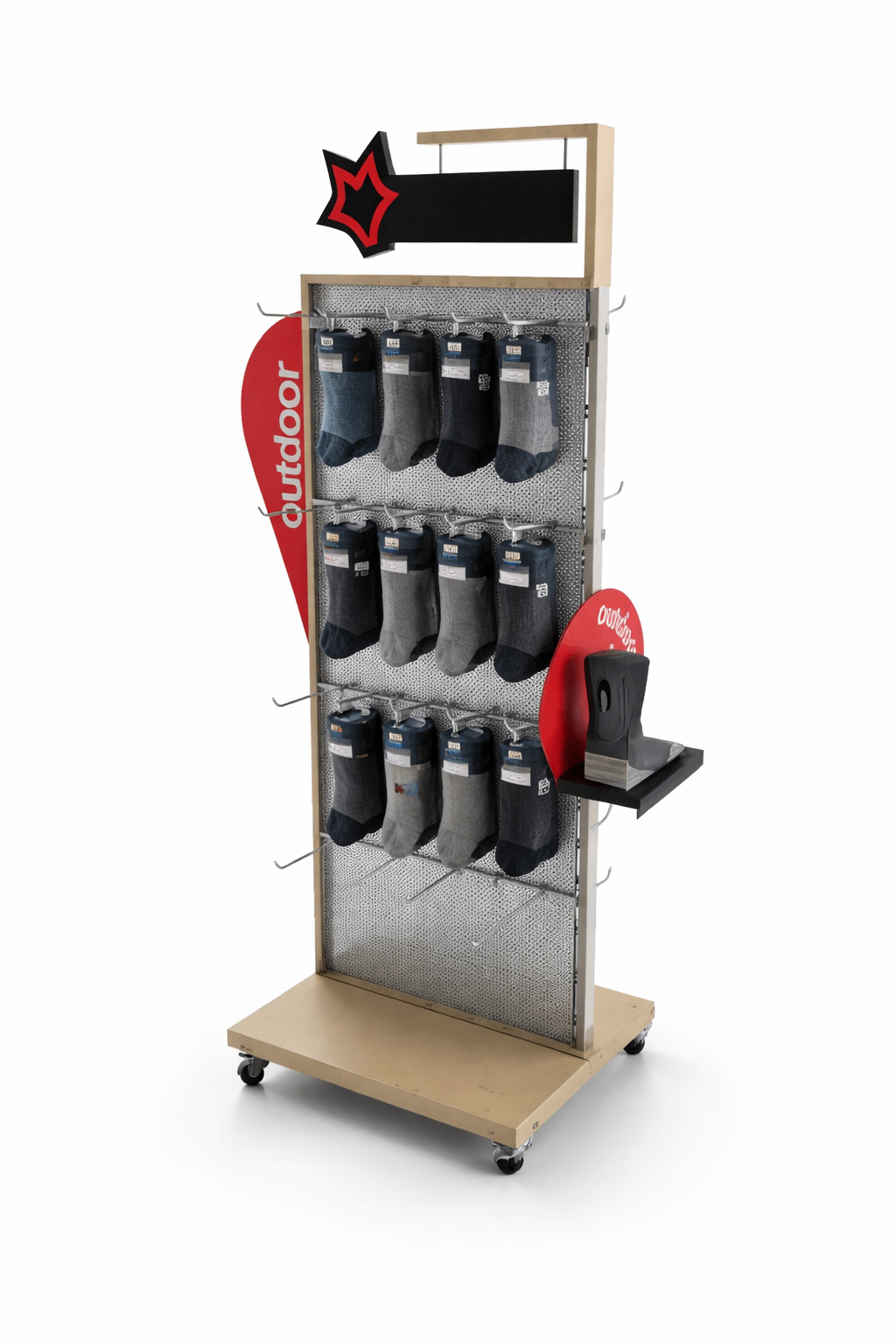
A moveable customized metal floor mannequin foot sock display rack is designed to address this challenge. The fixture combines a durable steel structure, modular pegboard display panel, adjustable merchandising hooks, and a mannequin foot sample presentation. Together these elements create a practical retail display solution that improves product visibility while keeping inventory organized.
For distributors, brand owners, and retail fixture buyers, the key consideration is whether the display can support long‑term merchandising across different store environments. This product page therefore focuses on structural reliability, merchandising flexibility, and wholesale customization options rather than purely decorative descriptions.
A mannequin foot sock display rack is designed to present socks in two complementary ways. Packaged inventory is displayed on hooks so shoppers can browse product variety, while a mannequin foot sample demonstrates how the socks appear when worn. This dual presentation allows customers to understand style, length, and texture quickly without opening packaging.
Retail studies consistently show that accessories such as socks benefit from clear visual presentation. Customers often make quick purchasing decisions while browsing footwear or apparel areas, so a display that communicates product appearance immediately can improve engagement. The mannequin sample acts as a visual reference, helping shoppers imagine how the socks will look in real use.
As a floor standing merchandising fixture, the rack also increases visibility compared with wall‑mounted hooks. Because it can be viewed from multiple directions, it works effectively in aisles, near checkout areas, or beside footwear displays where cross‑selling opportunities occur.
For wholesale buyers, the design offers a balance between marketing impact and operational practicality. The display supports frequent restocking, accommodates different packaging sizes, and can be adapted for brand graphics without changing the underlying structure.
The core structure of the rack is built from a reinforced steel frame. Steel remains the preferred material for commercial retail fixtures because it provides high load capacity and long service life. In high‑traffic stores where customers frequently interact with displays, structural stability is essential.
The wide base distributes weight evenly and helps prevent tipping when customers remove products from hooks. Stable fixtures reduce maintenance issues for retailers and help maintain a professional store appearance over time.
Wholesale buyers often evaluate frame durability carefully because unstable displays can result in product damage or additional replacement costs. A well‑constructed metal frame ensures that the rack continues performing reliably during long retail service cycles.
Retail layouts often change due to promotions, seasonal product launches, or category resets. A movable display rack with lockable wheels allows store staff to reposition the fixture easily when merchandising plans change.
Once the rack is placed in the desired location, the locking mechanism keeps it stable during customer interaction. This mobility allows retailers to reposition the display near entrances, footwear sections, or promotional areas without installing permanent fixtures.
For buyers managing multiple stores, mobility also increases flexibility. The same rack can be used as a promotional display during campaigns and later returned to its regular category position.
The central panel of the rack uses a perforated metal pegboard system. Pegboard displays are widely used in retail merchandising because they allow flexible product arrangement while maintaining a clean visual structure.
Uniform perforations allow hooks to be repositioned depending on packaging size or assortment changes. Retailers can modify the layout without altering the fixture itself, which is especially useful when product packaging evolves over time.
Pegboard panels also improve alignment across product rows. This structured layout makes browsing easier for customers and ensures that merchandise remains visually organized even when the display holds many items.
Mounted on the pegboard panel is an adjustable hook display system designed for hanging packaged socks. Hooks allow products to face forward so customers can easily identify different styles and sizes.
Proper hook spacing improves accessibility and reduces clutter. Retailers can adjust hook density depending on the merchandising goal, whether highlighting premium products or maximizing capacity for promotional assortments.
This flexibility allows the same rack design to support multiple merchandising strategies across different stores or product lines.
The mannequin foot unit provides a realistic demonstration of how socks appear when worn. While packaging may include printed images, a physical sample often communicates product details more clearly.
For performance or athletic socks, the sample presentation helps highlight features such as cushioning zones or compression structure. For fashion socks, it allows customers to visualize pattern scale and color combinations more easily.
Using standardized mannequin samples also helps store staff maintain consistent visual presentation across locations, which is important for brand‑driven merchandising strategies.
The header panel located at the top of the display acts as a visual identifier for the product category. It can display brand logos, product names, or promotional messages that attract attention from a distance.
For international buyers, interchangeable header graphics allow the same fixture to support different languages or marketing campaigns without redesigning the structure.
Side graphic panels provide additional space for branding or promotional messaging. Because these panels remain visible when customers approach from the aisle, they enhance product recognition and reinforce brand identity.
Removable graphic panels also provide practical value for wholesale buyers. Retailers can update campaign visuals without replacing the entire fixture, extending the display’s useful life.
A small side shelf is integrated into the design to showcase a featured product sample. Shoppers often prefer to touch fabric or inspect details before purchasing accessories like socks.
Providing a dedicated sample area encourages product interaction while keeping packaged inventory organized on the main display hooks.
The structural components of the rack are manufactured from commercial‑grade steel. Steel offers excellent load‑bearing capacity and maintains its shape even under continuous retail use, making it a common material for professional retail fixtures.
The frame surface is finished with powder coating, which forms a protective layer that resists corrosion, scratches, and everyday wear. Powder coating also ensures consistent color appearance across production batches, which is important for chain store rollouts.
Retail buyers often prefer powder‑coated metal displays because they require minimal maintenance and withstand frequent cleaning. Displays located near entrances or checkout areas may experience high customer contact, so durable finishing helps maintain a professional appearance.
Although the main structure is metal, additional materials such as acrylic signage holders can be incorporated when branding protection is required. These optional elements enhance visual presentation while maintaining structural strength.
Retail display fixtures are rarely standardized products. Wholesale buyers often request customization so that the rack fits their packaging formats, merchandising plans, and branding guidelines.
Different store layouts require different fixture dimensions. Some stores need compact displays that fit narrow aisles, while larger retailers prefer higher capacity racks that support wider product assortments.
Adjusting rack height, width, or hook quantity allows buyers to balance product capacity with visual clarity. Premium brands may choose wider spacing to emphasize individual products, while value retailers may increase hook density to support larger assortments.
Branding elements such as logos, product category labels, and promotional graphics can be integrated into the header sign and side panels. These visual components help shoppers quickly identify the brand and product type.
For international distribution, graphic panels can be localized for different markets without modifying the metal frame, allowing retailers to maintain consistent fixtures while updating marketing content.
Because the pegboard system allows modular hook placement, retailers can adjust product arrangement whenever assortments change. Additional mannequin display units or sample shelves can also be integrated depending on merchandising needs.
This adaptability helps wholesale buyers extend the lifespan of the fixture even when packaging formats or product collections evolve.
Effective merchandising plays a key role in the performance of accessory products. Socks are often purchased as add‑on items rather than planned purchases, so visibility and accessibility strongly influence sales.
Vertical display structures allow retailers to organize socks by style, material, or price category. This segmentation helps customers understand the assortment quickly and reduces browsing confusion.
Combining hook‑mounted inventory with mannequin samples creates a balanced presentation. Packaged items show product variety, while the sample demonstrates appearance and texture, encouraging shoppers to interact with the display.
Retailers frequently position these displays near footwear sections or checkout areas where impulse purchases are most likely to occur.
Display capacity directly affects store operations. A rack that holds too few items requires constant restocking, while overly dense displays can reduce product visibility.
With adjustable hooks and pegboard spacing, this rack typically accommodates 60 to 120 sock packages, depending on packaging width and merchandising layout.
Retailers can adjust hook spacing to emphasize premium collections or maximize capacity for promotional assortments. Standardized capacity also simplifies planogram planning across multiple store locations.
Pegboard panels remain one of the most practical display solutions for accessories such as socks, gloves, or small apparel items. The evenly spaced perforations allow retailers to adjust hooks quickly when product packaging changes.
This flexibility means the same fixture can support different assortments over time. Retailers can reorganize categories, introduce new collections, or modify hook spacing without replacing the display.
For distributors and wholesale buyers, pegboard systems reduce long‑term fixture replacement costs while maintaining a clean and organized retail presentation.
| Item | Specification |
|---|---|
| Product Name | Moveable Customized Metal Floor Mannequin Foot Sock Display Rack |
| Structure | Floor Standing Retail Display Rack |
| Frame Material | Steel |
| Display Panel | Perforated Metal Pegboard |
| Display Method | Adjustable Hooks + Mannequin Foot Sample |
| Mobility | Lockable Wheels |
| Branding Area | Header Sign + Side Panels |
| Additional Feature | Sample Display Shelf |
| Surface Finish | Powder Coated Steel |
| Customization | Size, Color, Branding, Layout |
These specifications represent a typical configuration. Wholesale buyers usually finalize dimensions and layout according to packaging size and store merchandising requirements.
Sock display racks are commonly used in retail environments where accessories complement footwear or apparel purchases. Specialty sock retailers use dedicated fixtures to organize product variations such as materials, colors, and patterns.
Footwear stores often position sock displays near shoe sections to encourage cross‑selling. When customers try on shoes, nearby socks naturally become part of the purchasing decision.
Sports retailers also benefit from mannequin samples because they help communicate technical features such as cushioning support or breathable knitting.
Department stores and supermarkets may use movable racks during seasonal promotions, relocating them to high‑traffic areas when featured products are introduced.
Professional purchasers searching for a sock display rack supplier, custom retail display manufacturer, or wholesale display fixture typically make decisions based on operational certainty. They need to know what will be consistent from order to order, what can be customized safely, and what will reduce downstream costs for stores.
Production consistency matters first. For multi-store rollouts, the fixture must match the approved sample in structure, hole alignment, coating appearance, and graphics placement. Consistent production reduces rollout delays and avoids mixed-looking fixtures across locations.
Shipping efficiency is the next factor. Buyers often compare knock-down versus fully assembled packing, carton protection for powder-coated surfaces, and container utilization. A design that ships efficiently reduces total landed cost and lowers the risk of transit scuffs on visible surfaces.
Long-term durability affects total cost of ownership. Stable bases, reliable wheel locks, and secure hooks reduce maintenance work in-store and help prevent premature replacement.
Reliable retail fixtures require precise fabrication. Structural welding, accurate pegboard hole placement, and stable base construction all contribute to long‑term durability.
Quality control processes typically include dimensional inspection, coating evaluation, and functional testing of hooks and wheels. These steps ensure that each display performs consistently when deployed in stores.
The powder‑coated steel frame further protects the structure from corrosion and surface wear, allowing retailers to maintain a clean and professional store environment.
Yishang Display focuses on practical engineering and stable production processes so that distributors and retail buyers receive fixtures that perform reliably in commercial environments.
Using a floor standing sock display rack with mannequin foot samples allows customers to visualize products while keeping packaged inventory organized.
Yes. Buyers commonly adjust rack dimensions, hook layout, color finishing, branding panels, and display accessories.
The rack uses a steel structure with powder‑coated finishing. Optional acrylic components may be added for signage or graphic protection.
Yes. Lockable wheels allow the display to be repositioned easily while maintaining stability during customer browsing.
Retail buyers searching for a custom sock display rack, metal floor display rack manufacturer, or OEM retail display supplier often start with three inputs: packaging dimensions, target display capacity, and branding artwork for the header and side panels.
Sharing these details helps suppliers propose a suitable hook layout, confirm capacity, and prepare an accurate quotation faster.
If you would like an RFQ template for this rack, contact Yishang Display and we will send a quick checklist to streamline sampling and bulk ordering.
Yishang Display specializes in crafting bespoke display solutions. From initial concept and prototyping through to full-scale production, our in-house team manages every phase—delivering a seamless, one-stop experience for your brand.
If you have any questions or need a quote, please send us a message. One of our specialists will get back to you within 24 hours and help you select the correct valve for your needs.
All of our products are available for sampling