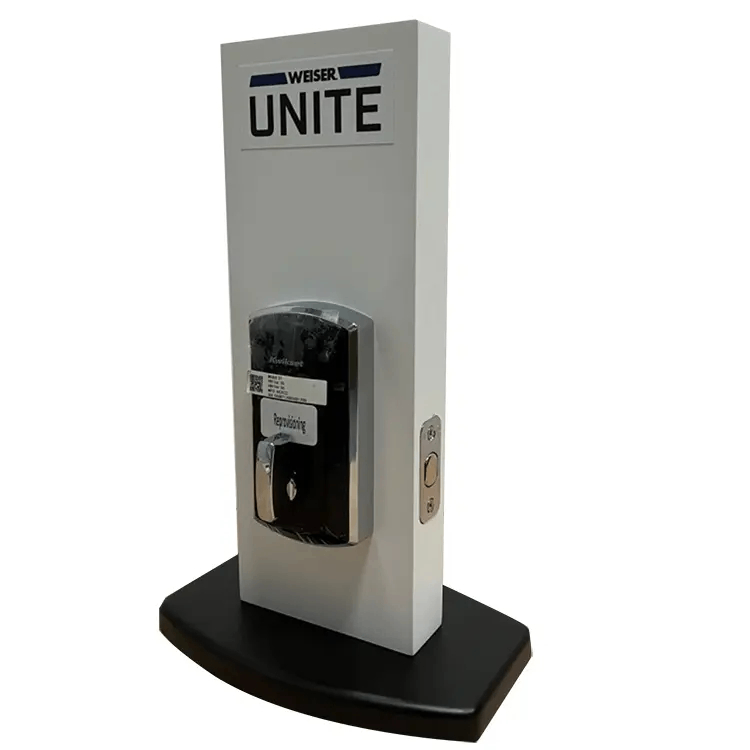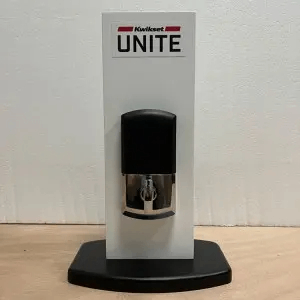
Wholesale buyers do not need a display stand that only looks good in photos. You need a fixture that helps retailers demonstrate locks faster, stays stable after thousands of interactions, and can be reproduced consistently across bulk orders. This single door mortise lock display format is built to simulate real installation so mortise locks and deadbolts can be tested the way customers expect—without a full door build-out.
Lock hardware is purchased with the hands as much as the eyes. Shoppers try the handle return, listen for clean engagement, and turn the deadbolt to judge smoothness. A realistic door lock display reduces uncertainty and makes it easier for store staff to sell higher-value lock sets with confidence. For distributors, that often means stronger sell-through and fewer “it didn’t feel right” objections downstream.
Procurement teams typically scan first and only read deeper once the program looks viable.
Key specs snapshot (program-level):
| Procurement Focus | What This Display Stand Delivers |
|---|---|
| Retail performance | Realistic demo of mortise + deadbolt operation; supports comparison merchandising |
| Durability | Metal-supported internal structure for long-term, high-frequency use |
| Custom program fit | Size, finish, branding, and mounting interface tailored to your lock models |
| Rollout readiness | Repeatable specs for multi-store deployments; export-grade packing options |
| Commercial clarity | Project-based MOQ and prototype + production timelines for bulk planning |
The core difference is context. Instead of mounting lock samples on a flat board, this single door mortise display recreates a door-form structure so customers interact with the hardware as installed. That realism matters most for mortise systems, where edge alignment and latch engagement influence perceived quality.
A second difference is consistency under stress. In hardware aisles and locksmith counters, a popular demo can be handled dozens of times per day. When a fixture loosens or shifts, the lock feels rough—even if the lock itself is premium. A stable base and rigid internal support help keep the demonstration accurate over the life of the program.
Presentation is designed to be retailer-friendly. Clean surfaces, controlled branding zones, and a tidy footprint support planograms and showroom layouts without looking like a temporary promo. That makes it easier for wholesalers to standardize display execution across accounts.
A display that “holds” a lock is not the same as a display that demonstrates a lock. This deadbolt display stand format is designed for repeated actuation while preserving geometry. When mounting geometry is correct, the handle feels smooth, the latch seats reliably, and the bolt turn remains consistent—so the demo reflects true product performance.
For buyers managing multiple SKUs, consistency supports fair comparison. When customers test two or three models side by side, they are comparing feel as much as price. A standardized locksmith deadbolt display stand layout reduces the risk that one lock feels worse simply because it is mounted on a weaker fixture.
The design can also support merchandising updates. Wholesale assortments evolve with new finishes, revised handles, or updated lock bodies. By planning adaptable mounting interfaces, the same display stand for a door-form demo can remain useful across refresh cycles—reducing fixture replacement cost and simplifying store rollout.
Durability in retail is not a slogan; it is the difference between a fixture that performs for months and one that needs constant tightening. Retail displays must remain rigid, resist wobble, and maintain a clean appearance under frequent contact and routine cleaning.
This display is engineered around a metal-supported internal structure to protect alignment and stability over time. The door-form body experiences repeated torque at the handle and bolt. A reinforced core reduces deformation and loosening, helping the lock continue to feel smooth after extended use.
This engineering approach fits how Yishang Display works as a metal products manufacturer: use metal where strength and rigidity matter, then apply exterior materials to match the merchandising concept. It is a practical way to deliver long-life performance while still offering varied aesthetics.
Many programs prefer a wood locksmith deadbolt presentation because it feels premium and aligns with residential and architectural hardware. Acrylic panels can support modern showroom styling and cleaner signage integration. Hybrid builds—metal-supported structure with wood or acrylic skins—balance durability, appearance, and maintenance.
Because wholesalers often operate across different retailer tiers, material choices can be tuned to the account. A chain may want wipe-clean surfaces with higher wear resistance, while a showroom may prioritize premium wood grain. The internal stability remains consistent while exterior finishes adapt.
| Component | Primary Function | Retail Value |
|---|---|---|
| Metal-supported internal frame | Load support and rigidity | Keeps mortise + bolt alignment stable for accurate demos |
| Stable base platform | Balance and anti-tip support | Safer in high-traffic aisles and during repeated testing |
| Exterior panels (wood / acrylic) | Visual finish and branding surface | Supports planograms and upgrades perceived value |
| Mounting interface | Secure lock installation | Enables accurate testing and easier model swaps |
Wholesale buyers typically want a repeatable display program, not a one-off sample. Customization should improve fit, reduce rollout friction, and protect long-term usability.
Mortise locks vary in case size, backset, trim, and handle sets. A door mortise lock display should reflect the installation style you want retailers to demonstrate. When the fit is correct, the lock feels premium. When fit is wrong, even a good lock can feel sticky or noisy.
This is especially relevant when your assortment includes both mortise and deadbolt products. A consistent door-form fixture can show how each system behaves in the same installation context, which helps customers understand value differences quickly.
Retailers and distributors often prefer clean, controlled branding that integrates with existing fixtures. The stand can include dedicated logo and messaging zones that reinforce your series identity without overwhelming the customer. Simple prompts that encourage interaction—without looking like a hard sell—often perform best.
For bulk orders, customization must be reproducible. That means consistent alignment, consistent finishing, and consistent packaging across shipments. This is where metal fabrication discipline matters: repeatable parts, stable assembly logic, and predictable QC checkpoints.
If your program spans multiple regions, you may also want consistent footprints and assembly methods so store teams can deploy quickly. That reduces rollout labor and helps ensure displays look identical across accounts.
This product is most effective wherever hands-on interaction improves decision quality. In locksmith shops, the door-form display supports credible demonstrations without building full doors in-store. It becomes a practical demo tool for upgrades and replacements.
In hardware retail chains, a structured door lock display keeps demos organized, reduces handling damage to loose samples, and improves category presentation. Customers can test a lock without opening retail packaging, and staff can keep the aisle cleaner.
In brand showrooms and distributor showrooms, door-form demos help buyers compare feel and finish across premium series. At trade fairs, an interactive display often generates higher engagement than static brochures, supporting better follow-up conversations with professional buyers.
For B2B teams, a display stand is part of an operational program. Predictability across design, prototyping, and production is the difference between a smooth rollout and a costly series of reworks.
Projects typically start with lock model confirmation, demo goals, and store constraints such as footprint, stability expectations, and branding requirements. These inputs guide the door-form dimensions, mounting interfaces, and surface finishing approach.
A prototype validates function and feel. It confirms that the mortise lock alignment is correct, the handle return remains smooth, and the base stays stable during repeated use. It also allows branding placement and finish selection to be approved before production.
Mass production focuses on repeatability. For multi-store programs, every unit should operate the same way, look the same way, and assemble the same way. Export-grade packing protects the display during international transit and simplifies deployment. These are not cosmetic details; they directly affect landed cost and rollout timelines.
Retail fixtures are evaluated in real environments: stability, safety, and long-term appearance. Stable base geometry reduces tipping risk. Secure mounting reduces loosening. Wear-resistant surfaces stay presentable under frequent cleaning.
Quality management processes support consistency across bulk orders. ISO 9001-aligned workflows help maintain process control. Where required by customer programs, RoHS-compliant material choices can be specified for components and finishes.
Program-focused QC checkpoints emphasize what affects retail performance most: mounting accuracy, operational smoothness, surface finish consistency, stability verification, and packaging inspection prior to dispatch. These checks reduce after-sales noise and protect rollout schedules.
Warranty (program-based): workmanship coverage is available for wholesale orders, aligned to the agreed specification and usage profile. This helps procurement teams manage risk across multi-store deployments.
Wholesale buyers evaluate displays through commercial lenses as well as performance. Programs commonly require clarity on MOQ, lead time, packing method, and shipping terms. Clear parameters reduce internal approval time and help procurement teams forecast landed cost.
Typical planning ranges (project-based):
Below is a buyer-facing specification block often used for internal comparison. Final values depend on customization scope, volume, and rollout schedule.
| Item | Buyer-Facing Specification (Project-Based) |
|---|---|
| Product type | Locksmith deadbolt display stand / mortise lock door-form demo |
| Structure | Metal-supported core + wood or acrylic exterior |
| Keywords buyers search | mortise lock display, deadbolt display stand, door lock display |
| Branding | Logo, finish, and message zones by program |
| MOQ | Project-defined for custom runs |
| Lead time | Prototype + production schedule by confirmation |
| Packing | Export-grade protective packing |
| Shipping terms | EXW, FOB, CIF, or DDP by agreement |
Procurement teams also consider total cost of ownership. A display that maintains alignment reduces maintenance and replacement cost. Across a multi-store rollout, that difference compounds.
Buyers often ask whether the display can support future product updates. Planning adaptable mounting interfaces helps protect fixture investment as lock series evolve.
Logistics and store deployment are also common concerns. Efficient packing, straightforward assembly, and consistent footprints reduce rollout time and damage rates. If you supply multiple accounts, these operational details matter as much as appearance.
Finally, buyers look for proof that the display supports retail selling. A realistic door-form demo reduces uncertainty. It helps customers feel the difference between models quickly and supports a cleaner selling story for staff.
For wholesale programs that need a family of fixtures, adjacent formats can help standardize category presentation while fitting different store footprints. Reference options typically include single-door and double-door door-form displays, compact counter-height demos for space-limited locations, wall-mounted variants for showroom walls, and versions with integrated signage or lighting for premium series. Aligning these formats under one specification family simplifies rollout, replenishment, and visual consistency across accounts.
If your assortment spans multiple lock categories, maintaining a consistent door-form language across related displays helps customers navigate the category and compare models without relearning the demo format.
A single door mortise lock display is a working interface between product and customer. When it supports realistic interaction, remains stable under heavy use, and scales across bulk programs, it strengthens retail performance without adding operational burden.
Yishang Display supports wholesale programs with metal-supported structures and customizable finishes such as mortise lock display wood styling where appropriate. If you share your lock models, target retail environment, and rollout plan, we can recommend a specification direction that balances stability, presentation, and deployment efficiency.
For quotations or a quick technical discussion, a short inquiry is welcome.


Yishang Display specializes in crafting bespoke display solutions. From initial concept and prototyping through to full-scale production, our in-house team manages every phase—delivering a seamless, one-stop experience for your brand.
If you have any questions or need a quote, please send us a message. One of our specialists will get back to you within 24 hours and help you select the correct valve for your needs.
All of our products are available for sampling