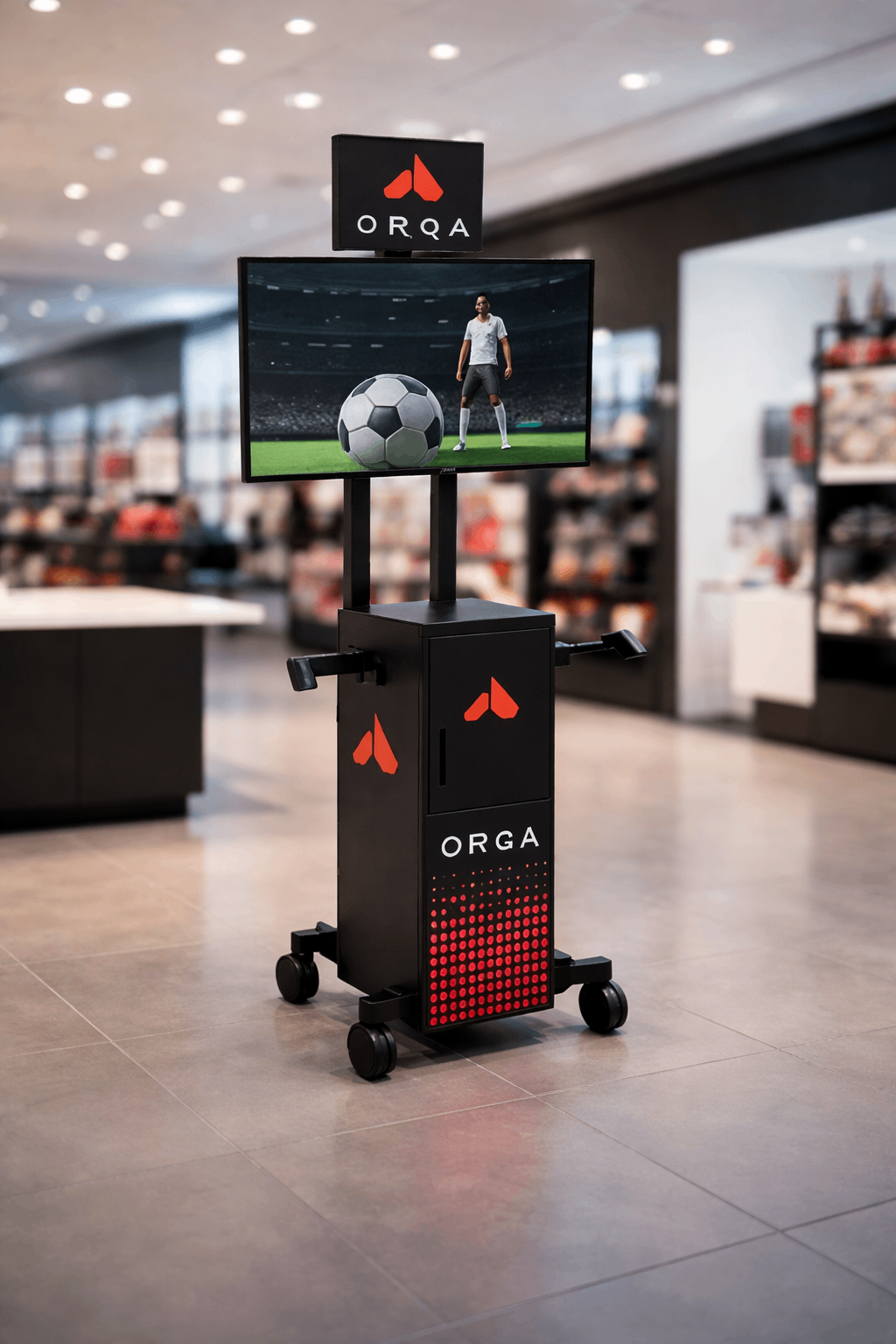
A movable freestanding iron display stand with an acrylic logo and TV mount is designed for retail programs that need consistent in‑store presentation across multiple locations. It combines a stable metal structure, a branded acrylic logo panel, and an integrated screen mount in one mobile unit that can be repositioned as campaigns change.
For overseas wholesale buyers, the practical questions are usually straightforward: Is it stable with a screen installed? Is it easy to deploy in many stores? Will cable routing look clean? Can the configuration match our footprint and branding guidelines? This page answers those questions in a procurement-friendly way—without turning into a company profile.
If you are comparing suppliers or building an internal sourcing note, this snapshot summarizes the purchase-relevant points buyers typically verify first.
| What buyers look for | What this display stand addresses | Why it matters in bulk programs |
|---|---|---|
| Stability with a mounted screen | Iron frame + low center of gravity design logic | Reduces wobble and tip risk on busy retail floors |
| Store-ready deployment | Freestanding structure + mobility | Speeds rollouts without wall installation |
| Digital signage readiness | Integrated TV mount + cable routing considerations | Cleaner presentation and easier maintenance |
| Brand consistency | Acrylic logo panel as a dedicated branding element | Keeps identity visible across changing campaigns |
| Project adaptability | Configurable footprint, finish, and mount plan | Fits different store formats and planograms |
This display stand is positioned as a mobile retail communication unit rather than a fixed piece of shop furniture. Its primary function is to combine digital content delivery with physical brand presence in a single, freestanding structure that can be moved as retail layouts evolve. For retail stores display planning teams, this means greater control over where and how messaging appears on the sales floor.
The integrated TV mount enables functional product showcasing through video content, which has become increasingly important in categories where explanation, demonstration, or lifestyle context influences purchasing decisions. At the same time, the acrylic logo element ensures that brand identity remains visible even as screen content changes from one campaign to the next.
From a wholesale procurement perspective, this product is intended for repeatable deployment. It is designed so that multiple units can be produced, shipped, and installed across different retail locations while maintaining a consistent appearance and functional behavior. This consistency is often a key requirement for brand owners and distributors managing regional or international retail programs.
A mobile display stand experiences very different stresses compared to fixed retail displays. Movement introduces vibration, turning creates lateral forces, and repeated handling exposes weaknesses in joints, casters, and mounting points. The structural design of this freestanding iron display stand is driven by these real‑world conditions rather than by appearance alone.
The main structure is built around an iron frame, chosen for its rigidity and long‑term stability. In retail environments, a metal display stand must remain square and stable after repeated repositioning. Iron provides predictable strength and resists deformation, helping the stand maintain alignment even when supporting a mounted screen.
Weight distribution is a critical factor for any freestanding iron display. A properly engineered base keeps the center of gravity low, reducing the risk of tipping when the stand is moved or when customers pass close by. For wholesale buyers, this stability is not only a safety consideration but also a practical requirement for meeting internal risk and compliance standards in retail stores.
A display stand with TV mount must treat the screen as part of the structure, not as an accessory. The mounting position, support geometry, and connection points all influence how the screen behaves during movement and how stable it remains when parked.
From a retail operations standpoint, integrated screen support simplifies deployment. There is no need to coordinate separate wall mounts or ceiling fixtures, and digital content can be positioned closer to products or promotional zones. This approach also supports faster campaign changes, as content updates can be made without physical reinstallation.
The acrylic logo panel is designed as a non‑structural element dedicated to brand visibility. Acrylic is widely used in retail displays because it offers clean edges, consistent color reproduction, and a refined surface that performs well under store lighting. In this configuration, the logo reinforces brand recognition while remaining visually separate from the metal load‑bearing components.
For buyers managing long‑term programs, this separation has a practical advantage. Branding elements can be updated or replaced without altering the core structure, extending the useful life of the display stand across multiple marketing cycles.
Mobility is a functional requirement, not a decorative feature. The wheel system allows the stand to be repositioned within retail stores without dismantling the structure. Locking mechanisms ensure that once placed, the stand remains secure and does not drift or rotate unintentionally.
Freestanding stability ensures that the display stand performs reliably without wall or floor anchoring. This is particularly valuable in temporary retail setups, shop‑in‑shop areas, and promotional zones where permanent installation is not permitted or practical.
As a complete system, the movable freestanding iron display stand integrates structural support, digital display capability, and branded presentation into a single unit. The lower section typically provides mass and stability, while also offering space for concealed cable routing or enclosed compartments depending on configuration requirements.
Vertical metal supports carry the TV mount at a viewing height suited to typical retail sightlines. The acrylic logo remains visible from multiple angles, ensuring brand presence even when customers approach from different directions. Together, these elements form a balanced display rack for retail use that supports both digital and physical merchandising.
Rather than being defined by fixed dimensions, the configuration is usually adapted to the specific retail environment. What remains consistent is the design logic: a stable iron structure, integrated digital display support, and mobility that allows the stand to be repositioned as needed.
Wholesale buyers sourcing display racks for retail typically require a degree of customization to match store layouts, branding guidelines, and operational needs. This display stand is configured on a project basis, allowing key parameters to be defined according to deployment conditions rather than fixed catalog values.
Material selection usually centers on iron for the main structure, with acrylic used for logo and branding components. Surface finishes can be specified to align with brand color standards or store interior concepts. Screen mounting interfaces are defined based on the planned TV size and orientation, ensuring compatibility without over‑engineering.
Cable routing and power access are often decisive factors in procurement decisions. A configuration that allows cables to be concealed and accessed for maintenance reduces visual clutter and supports safer operation on the sales floor. These details, while sometimes overlooked, directly affect the day‑to‑day usability of the display stand in retail stores.
To support internal evaluation and supplier comparison, buyers often verify the following integration points during the RFQ stage:
| Evaluation item | Typical configuration range | Why buyers check this |
|---|---|---|
| TV mount interface | Standard VESA patterns (project-defined) | Ensures compatibility with planned screens |
| Recommended screen size | Defined by mount position and stability design | Maintains viewing comfort and balance |
| Screen + mount load | Calculated within frame capacity | Prevents long-term deformation |
| Caster system | Lockable casters, project-specified diameter | Controls movement and parking safety |
| Base footprint | Adjusted to store space and traffic | Balances stability with aisle clearance |
| Cable routing | Internal channels or rear access | Keeps presentation clean and serviceable |
| Logo panel | Acrylic thickness, finish, mounting method | Supports brand consistency across stores |
In retail stores display planning, mobile stands are commonly placed in high‑traffic areas such as entrances, promotional islands, or end‑of‑aisle locations. The ability to reposition a mobile retail display stand with TV mount allows teams to respond to customer flow, seasonal changes, and campaign priorities without modifying store fixtures.
For promotional campaigns, pop‑up stores, and distributor‑led roadshows, a movable display stand offers logistical advantages. Units can be reused across locations, reducing the need to invest in new fixtures for each event. Digital content updates are handled centrally, while the physical stand remains a consistent merchandising asset.
These use scenarios highlight why many wholesale buyers prefer racks for retail stores that combine mobility with durability. A single configuration can support multiple campaigns over its service life, improving return on investment and simplifying inventory planning.
Fixed retail displays offer a clean, permanent appearance but are limited in flexibility. Once installed, their position rarely changes, and adapting them for new campaigns often requires additional fixtures or printed materials.
A freestanding iron display stand with mobility provides a different operational model. It can be repositioned to follow seasonal traffic patterns, moved closer to featured products, or relocated entirely as store layouts change. The integrated TV mount further extends this flexibility by allowing content updates without physical modifications.
For wholesale programs involving multiple stores, this adaptability can simplify rollout planning and reduce installation complexity compared to fixed solutions.
While versatile, this display stand is not intended for every application. It may not be the best choice for projects requiring permanent architectural integration or for environments exposed to outdoor conditions without additional protection.
It is also not designed as a heavy‑load storage rack. Its primary role is communication and presentation rather than supporting large product weights. Understanding these boundaries helps buyers select the right display solution and avoid over‑specifying the product for unsuitable tasks.
Professional buyers often assess a freestanding digital signage display stand based on performance under real operating conditions. Stability during movement, predictable behavior when parked, and secure TV mounting are typically reviewed before visual details.
Consistency across units is another critical factor. For multi‑store rollouts, buyers expect each display stand to assemble the same way, align the screen consistently, and maintain the same footprint across locations. This repeatability reduces downstream issues during installation and store operations.
Maintenance and serviceability also influence purchasing decisions. Access to cable routing, ease of replacing logo panels, and straightforward caster maintenance help reduce total cost of ownership over long retail programs.
Cross‑border retail programs often include a documentation review step during sourcing. Buyers typically look for confirmation that materials and production processes align with common retail expectations—such as stable freestanding behavior, secure screen mounting, and availability of material compliance documentation where applicable (for example, RoHS for certain markets).
From a practical standpoint, most procurement teams focus less on abstract standards and more on whether the display stand performs safely and consistently in real store environments. Clear communication of intended use, structure, and integration limits supports smoother approval and onboarding.
For overseas wholesale programs, deployment efficiency and shipping protection are part of the product decision. This type of movable freestanding iron display stand is commonly supplied in a knock‑down configuration to optimize container utilization and reduce freight cost. Key load‑bearing components are packaged to protect coated surfaces, acrylic logo panels, and TV mount interfaces during transit.
At store level, installation time is typically driven by screen mounting and cable routing rather than structural assembly. A configuration that allows straightforward access to internal channels and mounting points helps store teams complete setup efficiently and consistently across locations.
If you are sourcing a movable freestanding iron display stand with acrylic logo and TV mount for wholesale distribution or multi‑store deployment, it helps to define three inputs early: planned screen size, intended placement zones, and expected movement frequency. With these details, the footprint, mount position, finish, and cable routing can be aligned to your rollout requirements.
For quotation or technical discussion, a brief message with target quantity, destination market, and usage scenario is sufficient to start the process.
Yishang Display specializes in crafting bespoke display solutions. From initial concept and prototyping through to full-scale production, our in-house team manages every phase—delivering a seamless, one-stop experience for your brand.
If you have any questions or need a quote, please send us a message. One of our specialists will get back to you within 24 hours and help you select the correct valve for your needs.
All of our products are available for sampling