
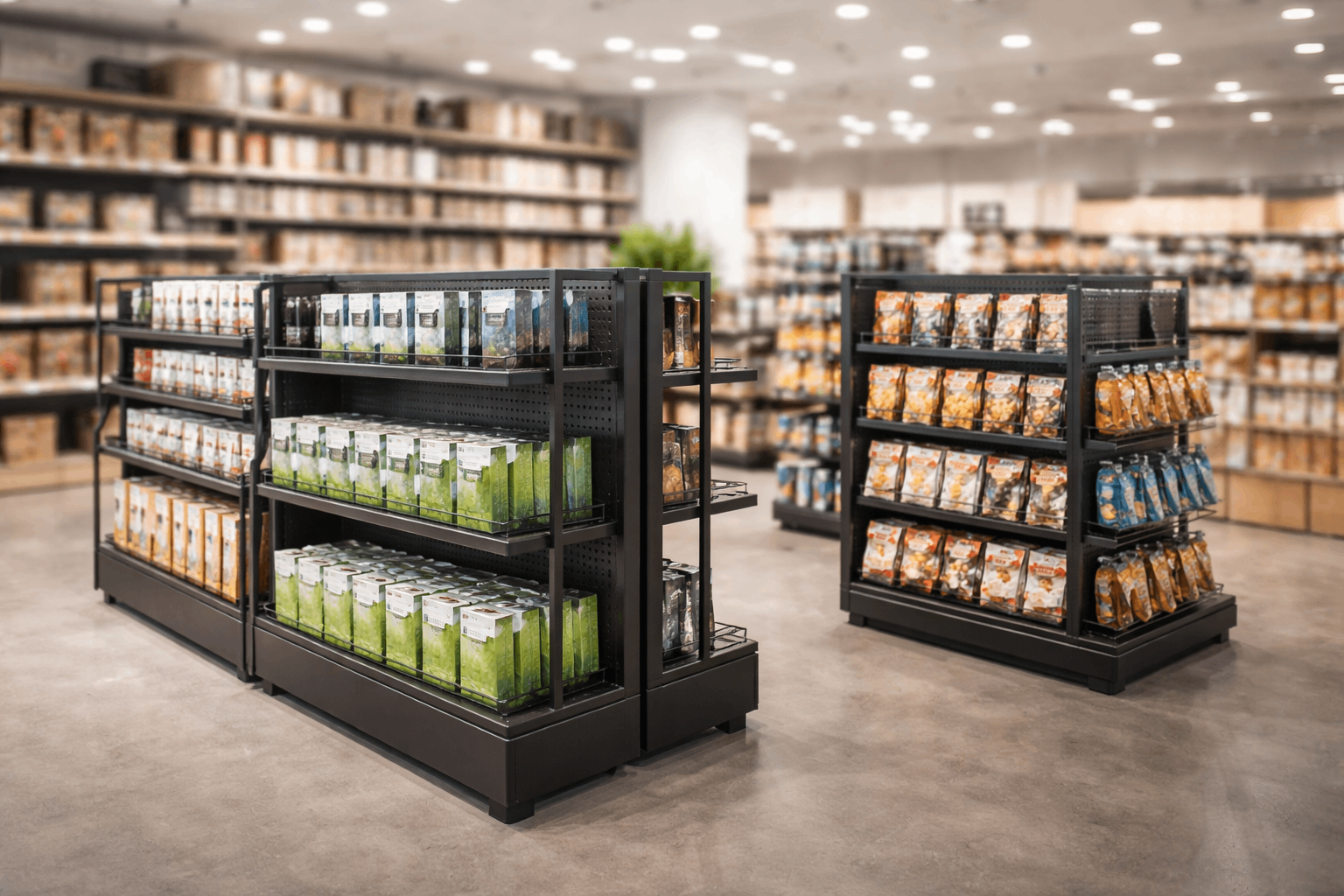
A procurement-focused guide for wholesale buyers who need durable, repeatable retail display programs—not one-off store setups
Overseas sourcing teams often search for best practices for setting up retail displays because they need a reliable way to evaluate options quickly. In practice, that search usually sits behind a more specific procurement question: How do we select a retail display supplier and system that will scale without hidden cost or rollout risk? They are not looking for “pretty display ideas.” They want confidence that a retail display setup will hold up in real stores, ship safely, install consistently, and keep products presented the same way across locations.
Many top-ranking articles are written for store managers or retail marketing teams. They emphasize visual appeal, basic merchandising tips, and frequent refresh cycles. Those topics are useful, but they leave out the issues procurement teams get judged on: rollout risk, replacement frequency, maintenance workload, and cross-store consistency.
This article fills that gap. It is written for wholesale procurement and brand operations—especially teams sourcing custom or metal retail displays where durability, load capacity, supplier consistency, and lifecycle cost matter. The tone is practical and collaborative rather than prescriptive. The goal is to help buyers evaluate quality, compare suppliers on the right criteria, and reduce downstream risk in RFQs and rollouts.
If you only take one idea away, take this: a retail display is a physical system that degrades. The best practices that matter most are the ones that slow that degradation and keep store execution consistent.
A Practical Way to Read This Guide as a Buyer
Procurement teams tend to scan first, then read deeply where risk is highest. The structure below is designed for that habit. Each section answers one decision question, in the same order it typically appears in real sourcing: define objectives, choose the display system, validate durability, protect visual order, manage repetition, plan lifecycle, scale rollout, then measure performance.
You can use the section headers as a short internal checklist when comparing suppliers. When you need more detail, each section expands the “why” behind the decision so you can turn it into RFQ language and acceptance criteria.
Start With Display Objectives — but Accept Physical Constraints First
Retail display objectives often sound simple: improve visibility, boost conversion, support a new product launch, or strengthen brand presentation at the point of purchase. The challenge is not agreeing with those goals. The challenge is turning them into physical requirements that a display system can actually sustain.
A common sourcing failure starts when objectives are written like marketing slogans. “Hold more SKUs.” “Look premium.” “Create impact.” Those goals can conflict with stability, weight distribution, replenishment speed, and store realities. The display may pass a photo review but drift out of alignment after repeated customer handling.
For procurement teams, the first step in setting up retail displays is clarifying what the display must physically do over time. This includes defining the load each shelf must support, understanding how frequently products will be removed and replaced, assessing the level of stability required on uneven floors, and determining how quickly store staff should be able to restore the display after normal disturbance.
When objectives include these constraints, the rest of the program becomes easier. Suppliers can quote more accurately, prototypes become more predictive, and rollout risk drops because the system is designed for the real environment.
Translating Business Intent Into Physical Display Behavior
Business intent can be translated into display behavior in a way that is both measurable and procurement-friendly. If the objective is speed and throughput, the display should minimize friction: clear access, obvious product slots, and fast restocking. If the objective is premium positioning, the display must preserve clean geometry and tight alignment so products look intentional week after week.
This translation is also where long-tail search intent appears. Buyers often search for phrases like “retail fixture specification” or “retail display design standards” because they want a bridge between creative concept and production reality. A concept without a behavior definition forces suppliers to guess.
A useful rule is to describe the display as a repeatable interface. The objective is not a perfect install in one store. The objective is a system that installs correctly in many stores and behaves the same across different teams and conditions.
Choosing the Right Display Is a Risk Management Decision
From a sourcing perspective, this section addresses supplier selection and system risk rather than store-level styling decisions.
Retail teams often begin by comparing types of retail displays—floor stands, endcaps, gondola attachments, counter units, and point-of-purchase displays. That’s a reasonable starting point, but procurement outcomes improve when selection is framed as risk management rather than styling.
Displays fail in predictable ways. Frames deform under load. Joints loosen with repeated handling. Bases become unstable on imperfect floors. Finishes scratch or dull from cleaning and contact. And perhaps most importantly, the display loses “visual order” as products drift and spacing breaks down.
From a buyer perspective, each failure mode has a cost. Some costs are visible—replacement parts, rework, damaged units. Others are hidden—extra staff time to maintain order, lower planogram compliance, inconsistent brand presentation across stores. The right display system is the one that reduces these risks for your category and rollout scale.
Material Choice Without the Marketing Noise
Materials are often discussed in overly simple terms: metal is strong, acrylic is clear, wood is premium, cardboard is cheap. In reality, material choice is about lifecycle fit.
Metal retail displays are often the best choice when load is high, interaction is frequent, or programs must last through multiple seasons. For procurement teams, this advantage is easiest to justify when comparing replacement interval, rework frequency, and tolerance drift over time rather than initial unit cost alone. Acrylic can work well for visibility and light products, but it may scratch and crack under impacts. Cardboard display stands can be effective for short promotions and fast swaps, but they typically trade away stiffness and long-term shape retention. Wood can look premium, but humidity and cleaning routines can influence warping and finish wear.
The buyer question is not “which is best.” It is “which is best for the expected abuse cycle.” That framing matches how procurement teams actually evaluate options.
Product Weight, Interaction Frequency, and Structural Fatigue
Two variables dominate long-term display durability: product weight distribution and interaction frequency. Weight creates continuous static load. Interaction creates dynamic load through repeated removal and replacement. Together, they create structural fatigue.
Fatigue is rarely dramatic at first. It appears as small deflections and micro-movements. Shelves tilt slightly. Frames lose squareness. Connections loosen. Over time, these small changes become visible, and the display no longer presents products as intended.
This is why a pilot can mislead. A short trial may not include enough cycles to reveal fatigue. A display that looks stable on day one can start drifting by week six when replenishment and customer handling accumulate.
For metal display racks, a key advantage is shape retention when properly designed. Reinforced frames, controlled joints, and stable bases can resist fatigue better than lightweight systems. That does not mean metal is always the answer, but it explains why procurement programs designed for longevity often prioritize metal structures.
A Procurement-Ready Specification Layer
To reduce risk, it helps to add a basic specification layer to your sourcing documents. You do not need a complex engineering package to do this. You need enough clarity that suppliers quote and build the same intent.
Below is a practical table procurement teams can adapt. The ranges and thresholds should match your category and loads, but the structure improves repeatability.
| Spec area | What to define in RFQ / drawing | What to verify in sampling | Why it matters |
|---|---|---|---|
| Load assumption | Target load per shelf and distribution | Static load check and visible deflection | Prevents sagging and poor perceived quality |
| Stability | Base footprint and anti-tip expectation | Push / tilt check on uneven floor | Reduces safety risk and store modifications |
| Geometry control | Key dimensions and tolerance intent | Alignment across multiple units | Protects consistency across stores |
| Connections | Joint method and fastener approach | Re-assembly cycles and loosening | Prevents wobble over time |
| Finish durability | Coating intent and cleaning compatibility | Abrasion / wipe checks | Keeps displays looking new longer |
| Packaging | Edge protection and transit protection | Drop / corner damage inspection | Cuts damage rate and rollout delays |
This approach supports better supplier communication without turning procurement into paperwork. It makes the hidden risks visible early.
Visual Appeal Depends on Survival Under Daily Disturbance
Visual merchandising matters, but procurement teams benefit from treating visual appeal as an outcome, not a styling task. In real stores, customers approach from imperfect angles, touch products quickly, and rarely replace items exactly as intended.
A display that relies on perfect behavior will degrade. Products drift. Spacing breaks. The display begins to look cluttered. Even when the assortment is strong, disorder reduces perceived value and can lower conversion.
This is where long-tail queries like “in-store display tactics” become relevant. Many tactics fail because the physical system cannot maintain the intended order. When the display can hold structure and recover from disturbance, tactics become sustainable.
Designing Displays That Recover Their Form
The most reliable displays do not aim to prevent disturbance. They aim to recover from it with minimal effort. Recovery can come from simple physical guidance: dividers that maintain spacing, shelf lips that prevent slippage, and frames that remain rigid so products stay aligned.
For metal display systems, recovery often depends on geometry control. A rigid frame keeps shelf pitch consistent. Reinforced joints reduce twist. A stable base keeps the center of gravity predictable even when shelves are partially empty.
These design qualities translate into buyer value. If a display returns to order naturally, staff time drops and cross-store consistency increases. That is a direct contributor to total cost of ownership.
Merchandising Breaks Down When Displays Are Designed for Placement, Not Repetition
This section focuses on procurement and tolerance risk, not store execution behavior. It explains how small design freedoms translate into large cost and consistency issues at scale.
Many retail display programs are approved based on a first setup photo. In practice, the display’s life is defined by repetition: replenishment, cleaning, seasonal resets, and continuous customer handling.
Each repetition introduces small stresses. Shelves get reinserted at slightly different angles. Fasteners loosen marginally. Products get placed back inconsistently. Over time, these small variations accumulate into visible drift.
Procurement teams often see this as a “store execution problem,” but it is frequently a design tolerance problem. If the display allows multiple near-correct assembly outcomes, different stores will produce different results.
A practical procurement question is: how many cycles can the system withstand before it needs intervention. If the answer is “it depends on who installs it,” the design is too dependent on human precision.
Designing for Order Without Staff Dependence
B2B buyers know store staff are busy. A display that requires constant re-facing or precise adjustment becomes fragile in the real world.
Well-designed display systems reduce variability by limiting degrees of freedom. Components key into fixed positions. Shelves seat in only one correct way. Spacing is guided mechanically rather than procedurally.
This is especially important for wholesale programs where the same display must work across diverse retail environments. When the display enforces order, store execution becomes more consistent without requiring extra training.
Refreshing Displays as a Lifecycle Decision
Many retail articles recommend frequent refresh cycles to fight visual fatigue. Procurement teams should treat that advice carefully. A display often looks tired because the structure is degrading, not because the shopper is bored.
Structural fatigue shows up as sagging, loosened joints, wobble, and inconsistent alignment. In those cases, new graphics or rearranged products may mask the issue temporarily, but the system continues to decline.
Separating visual lifecycle from structural lifecycle is a more cost-effective approach. Visual elements can often be updated while the underlying structure stays in service. Structural elements, once compromised, may require reinforcement or replacement.
When Structural Degradation Signals Replacement
Structural degradation is typically irreversible past a point. Permanent deflection or loss of squareness cannot be “reset” reliably. These are end-of-life indicators.
Defining replacement criteria early reduces reactive decisions. It also helps procurement teams negotiate programs that include spare parts, serviceability, or modular replacement of high-wear components.
If the program is designed for multi-season use, the buyer value of a durable metal display system often comes from fewer replacements and fewer store-level modifications over time.
Why Displays That Work in Pilot Stores Fail at Scale
Pilot installs are controlled. Rollouts are variable. Differences in installation teams, store conditions, and logistics introduce variation that small trials often miss.
Assembly tolerance is a common failure point. If the design requires precise alignment, different installers will produce different results. Those differences become visible across a chain.
Logistics adds another layer. Displays can be dropped, stacked, or exposed to moisture. Packaging that works for small shipments may fail for large distribution.
Procurement teams can reduce rollout surprises by validating not only the display, but also the packaging, assembly method, and tolerance robustness before scale.
Designing for Consistency Across Large Rollouts
Scalable display programs prioritize repeatability. Parts are standardized. Interfaces are controlled. Assembly is simplified and self-guided.
Metal display systems often support this approach well because they allow rigid frames and repeatable joints. The key is not material alone. The key is whether the system installs in one correct way and holds geometry under real conditions.
This section is also where buyers often ask “what’s the difference between POP and POS displays.” In practice, both benefit from the same procurement logic: consistency, stability, and repeatable presentation at the point of purchase.
Measuring Performance Beyond Short-Term Sales
Early sales spikes are tempting to use as proof of success, but they often reflect novelty rather than durability. Displays that degrade quickly can show strong first-week results and then decline quietly.
Long-term retail display performance is more useful for procurement decisions. It includes maintenance time, replacement frequency, damage rate in transit, and consistency across locations.
Below is a simple scorecard structure that helps align measurement with sourcing reality.
| Metric | What it indicates | Why buyers care |
|---|---|---|
| Cross-store consistency | Repeatability of assembly and geometry | Protects brand standards and reduces exceptions |
| Maintenance time | Operational burden on staff | Impacts labor cost and display quality |
| Transit damage rate | Packaging and structural resilience | Influences rollout schedule and replacement cost |
| Replacement interval | True lifecycle durability | Determines total cost of ownership |
| Order retention | Resistance to product drift | Maintains perceived value and conversion |
When you measure displays this way, procurement can defend decisions with operational logic, not only marketing outcomes.
Procurement FAQ for Retail Display Programs
This FAQ reflects common long-tail buyer searches around retail display quality, supplier comparison, and cost-versus-lifespan decisions.
Where to start when sourcing a retail display program? Start by defining the physical requirements behind the business goal: load assumptions, stability expectations, interaction frequency, and expected lifecycle. That foundation makes supplier quotes comparable and reduces redesign later.
How should a buyer compare metal vs. acrylic vs. cardboard displays? Compare them against the intended abuse cycle and program length. Metal often supports long-term shape retention and repeatable rollout. Acrylic can support visibility for lighter loads. Cardboard can be efficient for short campaigns where replacement is planned.
How can buyers reduce rollout variability across stores? Favor designs that assemble in only one correct way, specify tolerances clearly, and validate packaging and assembly robustness before mass production. Consistency is a design feature, not a training outcome.
POP vs POS displays—what’s the difference for procurement? The commercial intent differs, but the sourcing risks are similar: stability, repeatable presentation, and lifecycle cost. Evaluate both as systems that must remain consistent at the point of purchase.
How should buyers evaluate retail display quality beyond price? Look at tolerance control, joint durability, finish wear after cleaning cycles, packaging protection, and expected replacement interval. These factors usually explain long-term cost differences better than unit price alone.
Conclusion: Building Retail Displays for Reality
The most useful best practices for setting up retail displays are grounded in reality. They assume disturbance, repetition, imperfect handling, and scale. They prioritize durability, recoverability, and repeatability—because those are the factors that protect long-term ROI.
For overseas wholesale buyers and sourcing teams, this procurement-first approach reduces hidden costs and increases rollout reliability. If you are evaluating a display program, comparing multiple suppliers, or preparing an RFQ, a short discussion with an experienced manufacturing partner such as Yishang Display can help clarify specifications, tolerance expectations, and risk points before commitments are locked in. Two or three details resolved early often prevent months of downstream rework.