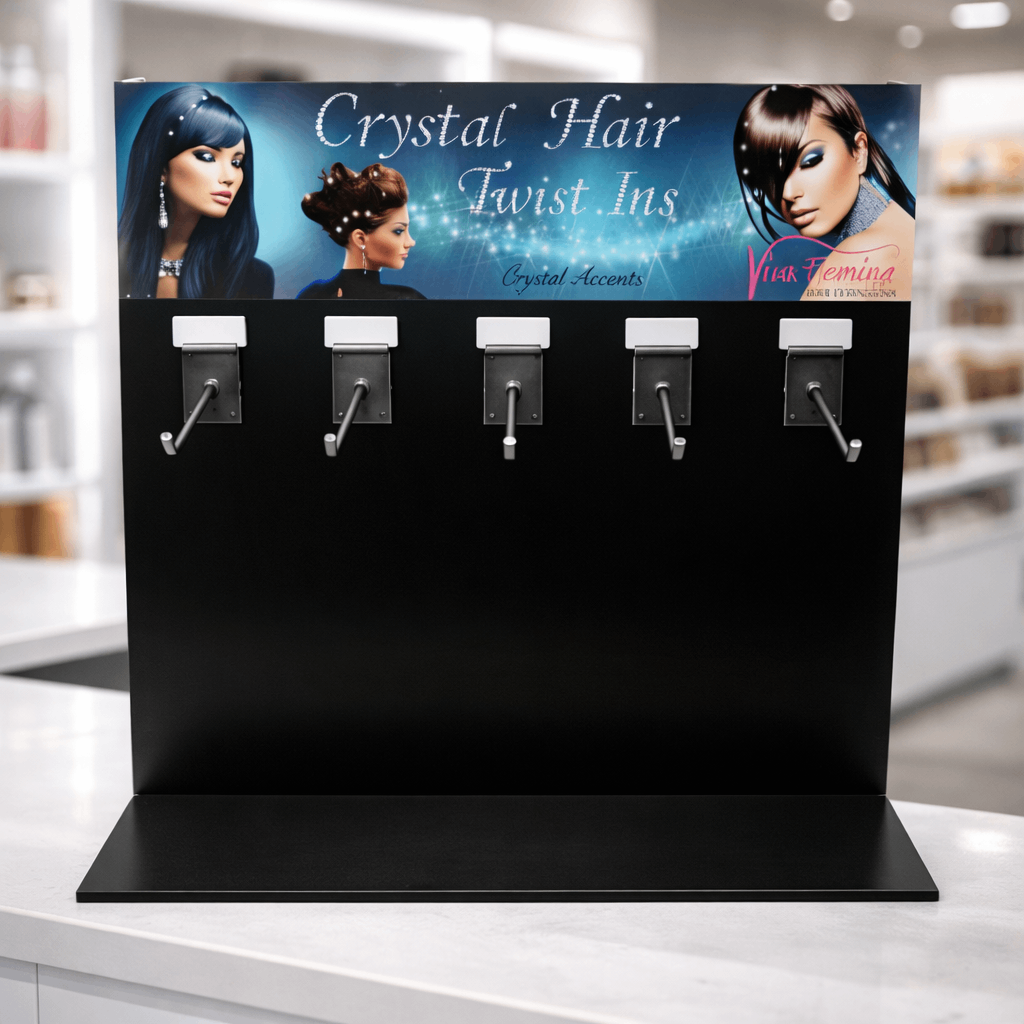
Hair extensions are a visual, comparison-driven category. At store counters—where shoppers pause, wait, and make last-minute decisions—presentation often determines whether a pack gets picked up or ignored.
For overseas wholesale procurement teams, the question is not whether a display “looks good.” It is whether the fixture stays organized after weeks of handling, remains stable on real counters, and supports fast replenishment across many stores.
This page focuses on one solution: a countertop metal hair extensions display stand for stores. It is written in buyer language—clarity, stability, usable capacity, packaging fit, and controlled customization—so you can screen fit quickly and reduce rollout risk.
Most sourcing teams want basic fit confirmed before they discuss samples or pricing. This snapshot reflects common screening questions for a countertop program.
| Screening Item | What Buyers Usually Confirm |
|---|---|
| Display position | Countertop use (checkout & consultation counters) |
| Structure | Metal frame with stabilized, retail-ready base |
| Product holding | Hanging packs with euro-hole or reinforced hang tabs |
| Visual element | Header panel for category or brand messaging |
| Custom scope | Hook spacing, hook quantity, overall width/height |
| Order type | Wholesale / bulk procurement |
If this matches your store setup and packaging format, the sections below explain how the stand behaves in daily use and what to lock down for production.
Counters are high-noise zones. Payment terminals, bags, receipts, small accessories, and sampling cards compete for the same horizontal space. Hair extension packs laid flat or stacked behind the counter rarely win attention.
Even when customers want to browse, they often avoid disrupting a messy pile or asking staff to pull out multiple packs for comparison. That friction is small, but it is enough to reduce interaction in a category that relies on touch and visual comparison.
For wholesale buyers, this is not only a marketing problem. It is an execution problem. Displays that require constant straightening create labor friction, and in multi-store rollouts anything that adds staff time tends to be ignored, moved aside, or removed.
A dedicated hair extension display designed for countertop placement solves the problem by design. It uses vertical space, fixes each pack’s position, and gives customers a clean scan–compare–select path without slowing checkout.
Procurement teams usually evaluate a hair extension display stand through a few practical lenses that predict store compliance. These lenses are simple, but they separate fixtures that work at scale from fixtures that look good only in photos.
The first lens is visual consistency after use. A stand that looks organized on day one but loses alignment after repeated handling becomes a liability. Buyers look for a fixture that keeps packs front-facing and evenly spaced after customers remove and rehang items throughout the day.
The second lens is usable capacity. Buyers do not measure capacity by “maximum hooks.” They measure how many SKUs can be presented clearly without overlap, tangling, or blocked labels. On counters, clarity often outperforms density because it shortens decision time.
The third lens is counter compatibility. Store counters vary in width, surface friction, and workflow constraints. A countertop display must sit flat, resist tipping under uneven loading, and avoid interfering with payment equipment.
The fourth lens is restock simplicity. Hair extensions are high-touch, and staff need a display that can be replenished quickly with minimal adjustment. The easiest fixture is the one stores keep using.
This countertop metal hair display uses vertical organization to reduce clutter. Hair extension packs hang on forward-facing hooks so each pack stays separated and readable. Hanging presentation works especially well because packs are typically uniform in height, while label information differs by length, texture, and shade.
When packs face forward and do not overlap, customers compare quickly. That matters at the counter, where browsing time is short and product choice needs to be low-effort.
The stand’s footprint is designed for counters. Instead of consuming horizontal space, it extends upward to create a focused visual column. This is why countertop fixtures often outperform small countertop trays for high-value items: vertical orientation keeps the counter functional while still creating a clear product zone.
A header area above the hooks supports category recognition and branded messaging. In practice, a header helps shoppers notice the display first and evaluate individual packs second. For wholesale programs, it also supports consistent presentation across stores.
Hair extensions displays are handled repeatedly. Customers remove packs, compare options, return items, and rehang them—often quickly and unevenly. Over time, a fixture that flexes or drifts out of alignment becomes messy, even if the product itself is premium.
A metal hair extensions display uses metal as the structural core because it preserves geometry. A rigid frame keeps hooks evenly spaced and maintains a consistent facing line. That stability directly affects perceived quality on the counter and reduces the need for staff to “fix” the presentation.
Metal also enables a stable base strategy. Countertop displays must resist tipping when one side empties first. A stabilized metal base provides the mass and rigidity needed for secure placement on laminate, stone, or composite counters.
Many buyers also prefer metal for long-term appearance. With a retail-friendly finish, metal surfaces are easy to wipe clean and maintain a consistent look across locations.
In an extensions display stand, hooks determine whether the display stays clear or becomes crowded. Hooks must match your packaging style—euro-hole hang tabs, reinforced tabs, or hanger-style attachments—without forcing packs to collide or hide labels.
Spacing is the controlled variable. Too tight, and packs overlap. Too wide, and capacity drops unnecessarily. Procurement teams typically set spacing based on pack width and on how they want customers to compare SKUs.
This stand is designed to balance clarity and capacity so the display remains tidy without constant adjustment. In practice, a balanced spacing layout helps stores keep the fixture in place because it continues to look clean even after heavy interaction.
The header panel is a category sign in buyer terms. It helps shoppers understand what the fixture is presenting before they focus on pack details. On a busy counter, that top cue reduces browsing friction.
For procurement, the header panel is also a standardization point. Many programs keep the structure constant and update only printed artwork for seasonal campaigns. That approach lowers change risk while keeping presentation fresh.
If you want a stronger branded look without changing the fixture, a header update is one of the simplest ways to do it. Some buyers label the header with category language for quicker scanning, while others prioritize brand and collection messaging.
A rigid back panel improves both structure and presentation. It reinforces the hook line, helps prevent drift under load, and provides a clean background that improves contrast for product labels.
This matters in-store because hair extension packaging is often glossy or semi-transparent. A neutral backdrop reduces visual noise and improves readability under typical retail lighting.
Counter surfaces vary widely. A flat base reduces wobble and tipping on polished stone, laminate, and composite counters. Stability is not a nice-to-have at checkout. It protects workflow, avoids safety complaints, and keeps the display looking premium.
Optional anti-slip pads or additional base weight can be used where counters are especially smooth or where customer interaction is heavy.
Wholesale buyers often need customization, but successful customization is controlled. The safest approach adjusts hook configuration, overall dimensions, and header communication while keeping the underlying load path and center of gravity stable.
Hook spacing can be matched to pack width and hang-tab style. If you merchandise by length, texture, or collection, hook groupings can be configured to support that logic. Because the fixture is vertical, customers naturally scan top-to-bottom and left-to-right, so clear grouping improves comprehension without extra signage.
Overall size can be matched to counter constraints. Narrow counters may require a slimmer footprint. Wider counters can support additional hooks. In procurement reviews, the key is keeping the stand stable when weight distribution changes during shopping.
Header panels can be customized with brand graphics or category messaging. Many overseas buyers standardize the structure and swap printed headers as campaigns change, which simplifies reorders and helps maintain consistent store execution.
If your brand program requires consistent global presentation, small controlled changes—such as a standardized header size and a fixed hook grid—often scale better than frequent structural redesigns.
This is a countertop solution for display in store counters. It performs best where customers pause and interact briefly with products, rather than in fast-moving aisles.
Checkout counter scenario. The stand is typically positioned beside, not in front of, payment terminals. Its vertical format keeps the counter surface clear while allowing customers waiting in line to browse hair extensions without disrupting checkout flow.
In this scenario, buyers usually prioritize stability and footprint. Stores do not want anything that shifts during scanning or blocks receipt printers. A stable base and a compact counter footprint help maintain compliance across multiple locations.
Salon consultation counter scenario. In hair salons, the display is often placed near mirrors or consultation desks. Stylists can reference options during recommendations, and clients can view packs without opening drawers or storage cabinets.
In this environment, buyers often prioritize presentation consistency and easy cleaning. A metal structure with a retail-friendly finish can maintain a neat look under frequent handling and routine wipe-downs.
Clear placement scenarios help buyers deploy the stand consistently across locations, which improves overall program performance.
Many displays look impressive on day one and degrade in real use. Counters amplify this problem because they are touched constantly and exposed to regular wiping and cleaning.
This stand is engineered to keep its alignment. Fixed hook positions reduce drift, the metal structure maintains spacing, and the stabilized base minimizes wobble when customers interact with products.
For wholesale programs, maintenance matters because labor cost is part of the true purchase price. A stand that stays tidy reduces staff time spent reorganizing and increases the chances that the fixture remains at the counter—where it can keep generating attention.
In practice, stores are more likely to keep a display in place when it “self-maintains” visual order. That store compliance is often the difference between a display program that performs and one that fades.
When approving an extension display stand for bulk procurement, buyers typically confirm a defined set of parameters early. These checks reduce rollout risk and prevent downstream adjustments at store level.
| Item | Typical Buyer Focus |
|---|---|
| Display type | Countertop hair extensions display stand |
| Core structure | Metal frame with stable metal base |
| Product holding | Forward-facing hooks for hanging packs |
| Branding area | Header panel for category or brand graphics |
| Custom variables | Hook count, hook spacing, overall width and height |
| Intended placement | Checkout counters and salon counters |
Finish durability is commonly reviewed alongside structure. Because countertop displays are high-touch fixtures, buyers expect the surface finish to remain clean after repeated wiping and handling. Depending on the destination market, procurement teams may reference industry practices such as coating adhesion checks or abrasion resistance benchmarks to define acceptable quality.
Dimensional consistency is another approval factor. While tight machining tolerances are rarely required, hooks must align correctly and the base must sit flat. Consistent geometry supports uniform in-store presentation and reduces complaints during deployment.
If your program is sensitive to appearance consistency across stores, it is worth confirming the acceptable range for hook alignment and base flatness on the sample stage rather than after rollout.
Before mass production, wholesale buyers typically evaluate a physical sample against a short list of practical checkpoints. These checks are less about laboratory testing and more about retail readiness.
Buyers commonly confirm that hook alignment remains straight under load, that edges and weld points feel smooth during handling, and that the base sits flat without rocking on a reference surface. These details directly influence store acceptance.
Surface finish is also reviewed at this stage. Procurement teams look for consistent coating coverage, clean corners, and resistance to visible scratching from routine wiping. A stand that looks clean after basic handling is far more likely to pass internal approval.
Many teams also check “presentation behavior” by loading the stand unevenly—removing product from one side first—to see if the base remains stable. That quick check often predicts whether the fixture will behave well at checkout counters.
Packaging influences freight cost, damage risk, and store deployment speed. Countertop displays are typically packed in cartons with protection around coated surfaces and edges to prevent abrasion during transit.
Depending on final size, the stand may ship assembled or partially assembled. Flat-packed configurations can reduce shipping volume, but setup should remain simple and repeatable. In multi-store rollouts, fewer assembly variables mean fewer store-level errors.
Clear carton labeling helps distribution across warehouses and store groups, especially when buyers ship mixed SKU programs. Procurement teams often approve packaging together with the physical sample because transit performance is part of total cost.
If your program involves multiple regions, it can also help to align carton labeling to your store rollout plan. Simple labeling reduces receiving mistakes and speeds deployment.
When comparing options, procurement teams typically look past appearance and evaluate three performance points: packaging compatibility, stability under uneven loading, and maintainability.
Packaging compatibility means packs hang cleanly and labels remain readable without overlap. Stability means the display stays upright when one side empties first. Maintainability means the display can be wiped clean and remains visually consistent without constant straightening.
Buyers also consider whether customization requests change the underlying stability. Hook count and spacing changes are usually straightforward. Changes that increase height or shift weight distribution should be reviewed carefully to avoid tipping risk.
If you are evaluating multiple suppliers, it is useful to compare stands using the same sample loading method and the same counter surface type. That keeps the evaluation fair and reveals differences quickly.
This page is written to match how professional buyers search, without keyword stuffing. Phrases such as hair extension display stand, hair extensions display, metal hair extensions display, display stand in stores, and countertop metal hair appear only where they fit naturally.
Related buyer-search language is also included for semantic coverage, such as retail counter display, point-of-sale presentation, in-store merchandising, checkout counter display, and salon counter display. This improves relevance while keeping the copy readable for B2B visitors.
If your brand team prefers a consistent naming style across product pages, Yishang Display can align the page title, header messaging, and metadata to match the terms your buyers already use.
A countertop metal hair extensions display stand is a practical merchandising tool built to improve visibility and maintain order at store counters. By combining vertical presentation, a rigid metal core, and stable countertop placement, this stand supports consistent in-store performance.
For overseas wholesale buyers, the value is reliability, controlled customization, and compatibility with real counters and real staff behavior. If you are sourcing a countertop hair extensions display for stores, this design offers a balanced approach that aligns visual attention with operational efficiency.
If you’d like to confirm pack width, hang-tab type, target counter footprint, and SKU count for your rollout, a short inquiry is usually the fastest way to align specifications and quotation.


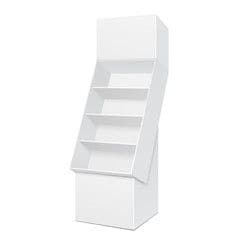
Yishang Display specializes in crafting bespoke display solutions. From initial concept and prototyping through to full-scale production, our in-house team manages every phase—delivering a seamless, one-stop experience for your brand.
If you have any questions or need a quote, please send us a message. One of our specialists will get back to you within 24 hours and help you select the correct valve for your needs.
All of our products are available for sampling