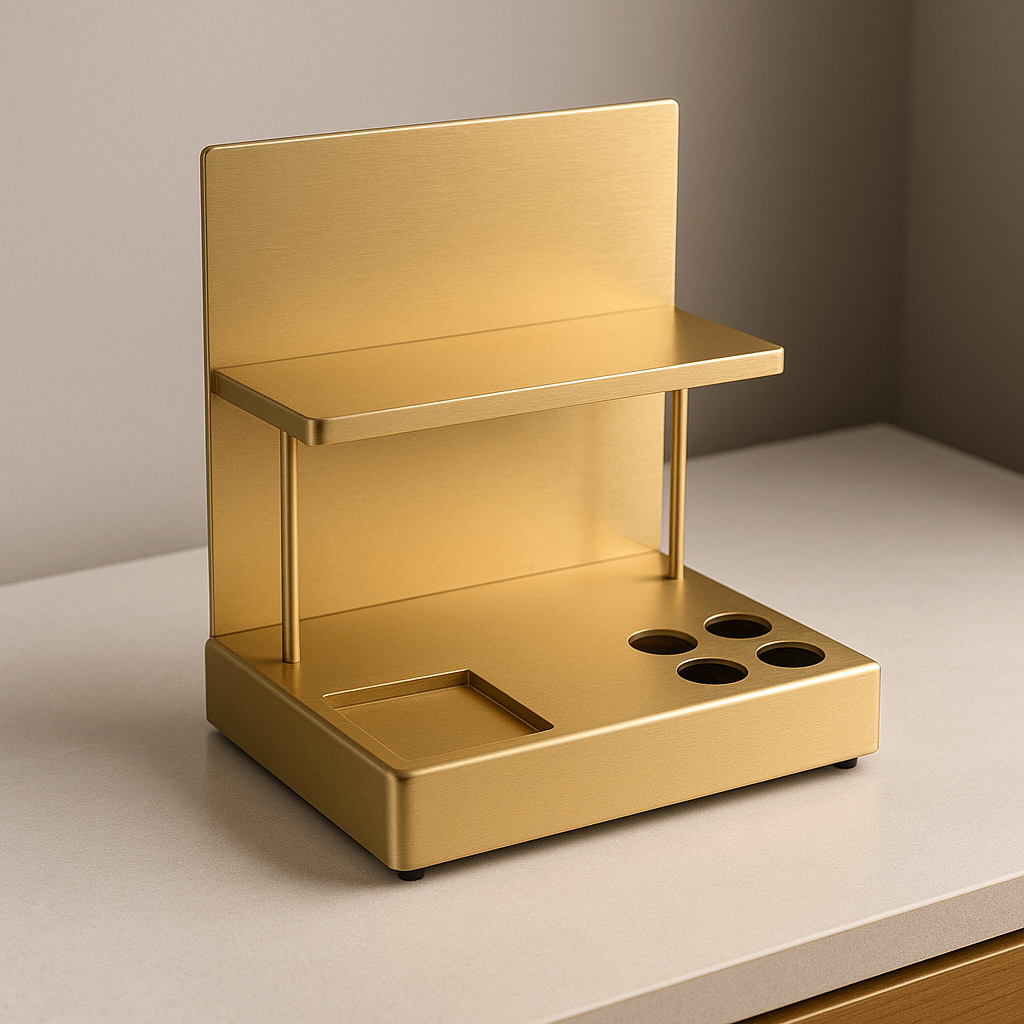
For overseas wholesale buyers, a makeup counter display is evaluated very differently from how an end consumer views a retail fixture. The priority is not novelty or decoration, but whether the display can be produced consistently, shipped efficiently, and perform reliably across multiple retail locations. This product page focuses on those practical concerns and explains how a 2-tiered golden cosmetic makeup counter display addresses them.
This display is designed for countertop use in department stores, travel retail, and premium beauty shop-in-shop environments. These counters share common constraints: limited depth, constant customer interaction, frequent cleaning, and strict visual standards. A two-tier structure increases display capacity vertically while keeping the footprint compact, which is why this format is widely used in professional cosmetic merchandising.
Rather than presenting generic selling points, the sections below follow a buyer’s natural evaluation sequence: structure first, then materials and finish, followed by size, capacity, and customization boundaries. Each part of the content is directly tied to the same product type and use case, avoiding unrelated descriptions or broad lifestyle narratives.
Single-level trays often look acceptable at installation but quickly lose order once a counter is in daily use. Testers move, products are picked up repeatedly, and new SKUs are added. A two-tier makeup counter display introduces clear physical separation, which helps maintain structure even under heavy interaction.
The upper tier functions as a controlled visual zone for hero products or new launches, positioned closer to eye level. The lower tier becomes the interaction zone where customers handle testers and compare items. This separation improves cosmetic product visibility on counter without increasing counter depth, which is critical for standardized retail fixtures.
For wholesale projects, the two-tier layout also reduces store-to-store variation. Staff can more easily understand where products belong, helping maintain planogram consistency across locations. Over time, this reduces maintenance effort and supports more predictable in-store presentation.
Stability is one of the first things professional buyers assess, even if it is not always stated explicitly. A counter display unit must feel solid when touched. The base of this display is designed to distribute load evenly across the countertop, reducing movement during daily use.
Tier spacing is defined by real handling behavior rather than visual preference alone. Adequate clearance allows customers to access products without disturbing adjacent items and gives staff room to clean and restock efficiently. Poor spacing is one of the main reasons cosmetic displays age poorly in store.
A back panel is often included to improve rigidity and provide a controlled visual backdrop. Instead of acting as an aggressive promotional surface, it frames the products and supports subtle branding or campaign visuals. This approach aligns with luxury cosmetics, where restraint usually performs better than overt messaging.
Material choice directly affects service life and consistency across batches. For this display, metal is used as the primary load-bearing structure. A metal cosmetic display maintains alignment and strength under continuous use, especially when supporting products packaged in glass or metal.
Metal construction also supports tighter tolerances, which is important when multiple units are placed side by side across different stores. Wholesale buyers often manage replenishment orders, and visible variation between batches can undermine brand presentation.
Acrylic elements may be added where transparency or visual lightness is needed, such as tester holders or signage areas. This metal and acrylic cosmetic display combination is common in beauty retail because it balances durability with refined appearance. Wood accents can be considered in some concepts, but Chanel-style counters typically favor cleaner, more restrained material palettes.
Material selection also takes international distribution into account. Displays shipped across markets benefit from materials and finishes that align with common compliance expectations, reducing downstream risk for importers and distributors.
A golden cosmetic makeup counter display must support the products without dominating the counter. In practice, this means controlling reflectivity and tone. Satin or matte gold finishes are often preferred because they reduce glare under strong retail lighting and keep attention on the cosmetics themselves.
Finish durability matters as much as appearance. Cosmetic counters are cleaned frequently, and fixtures are touched throughout the day. A suitable gold finish should resist fingerprints, minor abrasions, and routine cleaning without visible degradation. These factors directly influence replacement cycles and long-term cost for wholesale buyers.
Consistency across reorders is another practical concern. Defining tone, gloss level, and surface texture clearly helps ensure that future production runs match existing fixtures, which is essential for chain retail rollouts.
Cosmetic counters vary by retailer, region, and store format. As a result, cosmetic makeup counter display dimensions are usually adapted to the project rather than fixed. Counter depth limits the base footprint, while height affects sightlines and staff interaction.
A two-tier structure helps balance these constraints by adding vertical display space without increasing depth. This allows buyers to increase SKU count while keeping counters functional and compliant with store layouts.
Load capacity is equally important. Displays must support multiple products without flexing or shifting. A stable structure improves safety and reinforces perceived quality. For international buyers, efficient dimensions also support better carton utilization and lower shipping costs.
For overseas wholesale buyers, evaluating a makeup counter display unit often goes beyond design and materials. Practical procurement factors such as order quantity, lead time, packaging method, and inspection points directly affect project feasibility. This display format is typically supplied for wholesale programs rather than one-off retail needs, and procurement planning usually starts once the structural concept and finish direction are confirmed.
In most cosmetic counter projects, buyers prefer configurations that allow efficient packing and international shipping. Knock-down (KD) packaging is commonly selected to reduce carton volume and optimize container loading, while fully assembled units may be chosen for smaller rollouts where speed of installation is prioritized. Lead time is usually influenced by finish confirmation, sample approval, and final dimension sign-off rather than by structure alone.
From a quality control perspective, wholesale buyers often focus on finish consistency, tier alignment, and stability checks during pre-shipment inspection. These checkpoints are directly related to in-store performance and help ensure that displays arriving in different regions maintain the same visual and functional standard.
Although the two-tier structure remains consistent, configuration details are often adapted based on the cosmetics being displayed. This flexibility allows the same cosmetic counter display concept to support different product assortments without compromising stability or presentation.
For powder-based assortments such as blushes or compacts, the lower tier is frequently designed with shallow recesses or positioning guides that keep testers aligned while allowing easy pickup. The upper tier may be used for boxed refills or hero shades, creating a clear separation between interaction and presentation zones.
When lipstick or small-format products dominate the assortment, tier spacing is often reduced to keep items within comfortable reach and maintain a compact visual profile. In gift-set or boxed-product scenarios, additional load support and anti-slip surfaces may be introduced to handle increased weight and packaging size. These adjustments preserve the overall two-tier logic while tailoring the display to specific retail needs.
The following snapshot reflects how professional buyers typically evaluate counter displays. It focuses on flexibility and performance rather than rigid specifications.
The following snapshot reflects how professional buyers typically evaluate counter displays. It focuses on flexibility and performance rather than rigid specifications.
| Item | Typical Configuration |
|---|---|
| Display Type | Countertop cosmetic display unit |
| Structure | Two-tier layout |
| Primary Material | Metal load-bearing frame |
| Secondary Materials | Acrylic elements; optional wood accents |
| Finish | Gold tone (matte or satin) |
| Branding Area | Back panel for subtle visuals |
| Size | Custom size based on counter footprint |
| Use Environment | Department stores, beauty boutiques, travel retail |
Customization is most effective when it preserves proven structure. For this makeup counter display unit, adjustments usually focus on proportion, tier spacing, and finish definition.
Tier geometry can be adapted to different packaging sizes, from compact powders to boxed sets. This allows the same two-tier concept to support different planograms while maintaining stability and order.
Branding is typically integrated in a restrained way. Back panels can support logos or campaign imagery without overwhelming the display. Finish adjustments may also be specified to match existing store fixtures, with clear definitions supporting repeatability across production cycles.
This display format is suited to environments where cosmetics are handled frequently and presentation standards are high. Department store counters benefit from the organized layout and compact footprint, while beauty boutiques and duty-free locations value the refined appearance and durability.
For wholesale buyers supplying multiple locations, consistency and longevity reduce operational friction. Displays that remain stable and visually consistent support a cohesive brand experience across stores.
This product is intended for long-term use. Short-term promotions that prioritize low cost and rapid turnover may require temporary materials. Price-driven retail channels may also not require the level of finish and durability offered by a gold-finished metal structure.
Clarifying these boundaries helps buyers avoid mismatched solutions and supports more efficient sourcing decisions.
Within the same design logic, other counter display units can be developed with different proportions or emphasis. Adjusting tier balance, back panel size, or material ratios allows the structure to support different merchandising strategies while remaining within a coherent system.
Buyers often ask whether the two-tier structure can accommodate different product sizes. In practice, spacing and shelf depth are adjusted based on SKU dimensions. Another common concern is finish performance under daily cleaning, which is addressed through appropriate surface treatment and finish selection.
The underlying structure is not limited to one brand reference. By adjusting proportions, graphics, and finish definition, the same design logic can support a range of premium cosmetic brands.
Before moving forward with a makeup counter display project, wholesale buyers typically review a small set of practical inputs to confirm suitability. Counter footprint dimensions, approximate SKU count, and packaging size ranges help define tier spacing and overall proportions. Finish direction, such as champagne gold versus warmer gold tones, also influences final appearance under store lighting.
Timeline expectations and rollout scale are equally important. Whether the project involves a single region or multiple markets affects production planning and finish repeatability requirements. Clarifying these points early helps align expectations and reduces revision cycles during development.
If you are evaluating makeup counter display units for Chanel-style premium cosmetics, reviewing your counter footprint, SKU mix, and rollout timeline is usually enough to determine whether this two-tier golden structure fits your project. Sharing these details can help move discussions forward efficiently without unnecessary iterations.
Yishang Display specializes in crafting bespoke display solutions. From initial concept and prototyping through to full-scale production, our in-house team manages every phase—delivering a seamless, one-stop experience for your brand.
If you have any questions or need a quote, please send us a message. One of our specialists will get back to you within 24 hours and help you select the correct valve for your needs.
All of our products are available for sampling