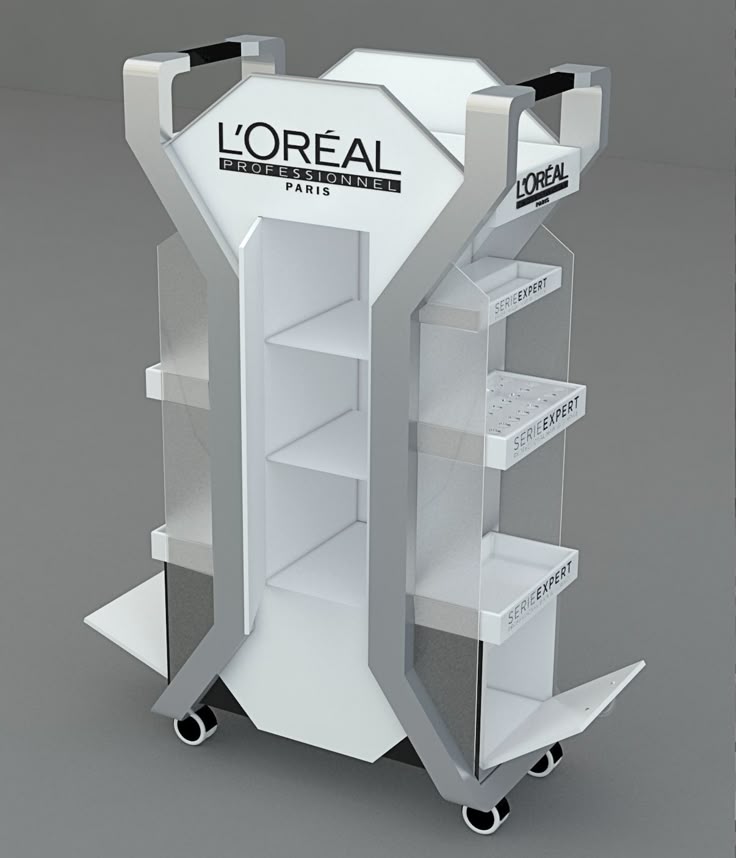
Global retailers increasingly expect suppliers—not store staff—to provide stable, compliant, and visually effective display systems. For overseas wholesalers and importers, retail signage becomes more than a communication tool. It is a structural component that influences shopper navigation, category visibility, and sell‑through performance. A display may look well‑designed in a PDF, yet fail in-store due to poor visibility, weak materials, or difficult graphic updates.
At
Yishang Display, we collaborate with buyers supplying supermarket chains, convenience retail, automotive stores, hardware channels, and beverage brands across 50+ countries. Over 26 years of metal display engineering has taught us that retail signage succeeds only when design principles align with structural durability, transport stability, and multi-market needs. This guide reflects that firsthand experience. Each section follows a clear progression—from understanding shopper behavior to strategic planning, design refinement, structural execution, and long-term maintenance—ensuring all content remains relevant to B2B procurement.
How Shoppers Interact with Signage—and Why This Influences Procurement Decisions
Most shoppers scan retail environments rather than consciously reading every panel. Recognition happens within seconds, influenced by contrast, structure height, viewing angle, and store lighting. A well‑designed sign can still underperform if it sits too high, bends over time, or loses clarity under bright LEDs.
For procurement teams, this means evaluating signage not only as printed artwork but as an integrated system:
material + structure + visibility + update method. Understanding how shoppers actually interact with displays helps you source fixtures that perform consistently across different store formats, regions, and retail conditions.
Strategy-Level Considerations for Procurement Professionals
1. Assign a Single Purpose to Each Sign Panel
Buyers frequently receive artwork containing branding, pricing, claims, instructions, and promotions—all competing for space. Yet in-store performance improves when each signage zone serves one clear purpose.
A header panel should define category or brand presence. Shelf-edge strips are suited for pricing or promotional messages. Blade signs help drive aisle-side visibility. When the roles are defined upfront, engineering teams can design corresponding metal frames or brackets precisely, reducing revisions, installation errors, and inconsistent execution across markets.
2. Translate Store Format and Shopper Behavior into Practical Signage Requirements
Convenience store shoppers respond quickly to bold contrast and short messages. Hardware shoppers prefer readable specifications at eye level. Beverage shoppers rely more on color and brand cues. These behavioral variations matter because they determine optimal viewing distance, letter height, and placement.
Sharing these details early enables your supplier to recommend suitable signage dimensions, anti-glare treatments, and structural mounting options. This improves compliance and ensures signage works effectively across the retail environments your clients operate in.
3. Standardize Structures While Allowing Market-Level Flexibility
Global brands need consistent fixture design, yet regional markets require local pricing, languages, or promotions. Modular metal signage structures—with slide-in acrylic holders, interchangeable magnetic panels, or snap frames—allow buyers to balance global consistency with local agility.
This approach reduces tooling costs, streamlines multi-country rollouts, and helps retailers update graphics without replacing entire structures. For high-volume deployments, such flexibility becomes a major procurement advantage.
Design-Level Considerations That Influence Real In-Store Performance
4. Use Short, High‑Impact Messaging for Faster Recognition
Short, benefit-oriented messages—such as “New Upgrade,” “Fast Installation,” or “Chill & Enjoy”—perform consistently across diverse markets. Concise text reduces printing errors, maintains clarity from different angles, and ensures visibility even when signage is placed at varying heights.
Buyers who guide clients toward shorter messaging reduce redesign rounds and strengthen the success of large international deployments.
5. Choose Typography That Survives Real Retail Conditions
Typography is a structural decision, not just a design preference. Letter height should follow the practical rule of
2.5 cm per meter of intended viewing distance. Sans-serif fonts with stable stroke weights retain clarity when printed on acrylic, PVC, or laminated sheets.
Full-size print samples are essential for validation. This prevents readability issues that only appear after mass production and long-distance freight. Procurement teams who request this early demonstrate strong risk management.
6. Use Color and Contrast That Work with Store Lighting and Metal Structures
Retail lighting varies by region—cool LED, warm halogen, or mixed lighting. Regardless of palette, contrast determines whether signage can be recognized quickly. Light backgrounds with dark typography perform best on black or charcoal metal frames; dark backgrounds require highly opaque printing to avoid fading under LEDs.
Color should support brand identity while maintaining visual clarity. Buyers who understand contrast principles can better evaluate artwork before approving production.
7. Build a Clear Visual Hierarchy That Aligns with Fixture Design
Metal display structures naturally support multiple communication layers: headers for brand identity, mid-level panels for benefits, and shelf strips for pricing. A strong visual hierarchy reduces clutter, improves navigation, and enhances the store’s professional appearance.
When procurement teams match message priority with fixture zones, they help retailers execute consistent and effective merchandising across locations.
Execution & Structural Engineering Considerations
8. Select Durable Materials That Match Retail Conditions
Purchasing decisions must consider durability, maintenance cycles, and long-term cost. Below is a practical comparison relevant to high-volume procurement:
| Material Combination |
Durability |
Best Use Case |
Reference Lifespan* |
| Metal frame + acrylic insert |
Very High |
Category signage, premium branding |
3–5+ years |
| Metal frame + PVC foam board |
High |
Semi-permanent campaigns |
1–2 years |
| Magnetic panels on metal frame |
Medium |
Fast-changing promotions |
6–12 months |
| Foamboard / coated paper |
Low |
Short-term discounts |
1–8 weeks |
* Lifespan depends on store humidity, cleaning routines, and traffic volume.
Engineered metal fixtures—welded steel frames, powder-coated surfaces, reinforced brackets—prevent bending and maintain alignment over years of use. For international shipments, metal structures provide freight stability and lower risk of deformation.
9. Optimize Height, Angle, and Lighting Interaction
The best signage fails when placed incorrectly. Effective ranges include: headers at 1.6–1.8 m, information panels at 1.3–1.5 m, and shelf-edge labels at 1.2–1.4 m. Adjustable brackets enable fine positioning during store installation.
Lighting matters equally. In markets with strong LEDs, matte or anti-glare acrylic improves legibility. Structural adjustability helps accommodate different ceiling heights and aisle widths.
10. Use Structural Features to Guide Shopper Flow
End-cap displays, sidekick racks, double-sided headers, and blade signs can anchor attention and direct movement. For high-traffic categories—beverages, snacks, hardware—metal signage structures give visual weight and stability.
Buyers sourcing displays for multi-chain deployments benefit from structures designed for compatibility with standard planogram layouts. This avoids conflicts during store installation and improves adoption.
11. Ensure Structural Stability and Support Efficient Graphic Updates
Global supply chains demand fixtures that withstand long-distance shipping and repeated assembly. Weld quality, joint reinforcement, and powder coating signal reliability and batch consistency.
Modular graphic systems—snap frames, magnetic inserts, slide-in acrylic holders—enable retailers to update campaigns with minimal labor. Procurement teams who prioritize update efficiency help clients maintain visual freshness while controlling operating cost.
Maintenance & Long-Term Optimization
12. Treat Signage as a Renewable Component, Not a Fixed Asset
Retail signage requires periodic refresh to maintain visual quality. Metal structures enable retailers to update only the graphic inserts without replacing the frame, providing long-term cost efficiency.
Markets with frequent price changes or seasonal promotions benefit from fast-swap signage systems. Buyers who recommend modular solutions help clients achieve stronger store-level performance with lower operational burden.
Why a Manufacturer’s Engineering Perspective Benefits Procurement Teams
Many articles on signage focus only on visual design. However, high-performing retail signage depends equally on engineering: material selection, weld quality, surface treatment, mounting method, freight stability, and batch consistency.
This manufacturer-backed perspective helps procurement teams reduce risk, improve quality assurance, support multi-market deployments, and gain stronger control over total cost of ownership.
Final Thought: High‑Impact Signage Begins with Smart Sourcing
Signage delivers value when structure, visibility, and messaging support each other. By applying the principles above, procurement professionals can deliver displays that communicate clearly, endure long-term use, and meet retailer expectations.
If you need export-ready metal display racks or modular signage systems engineered for durability and efficient updates,
Yishang Display is ready to support your next program.