
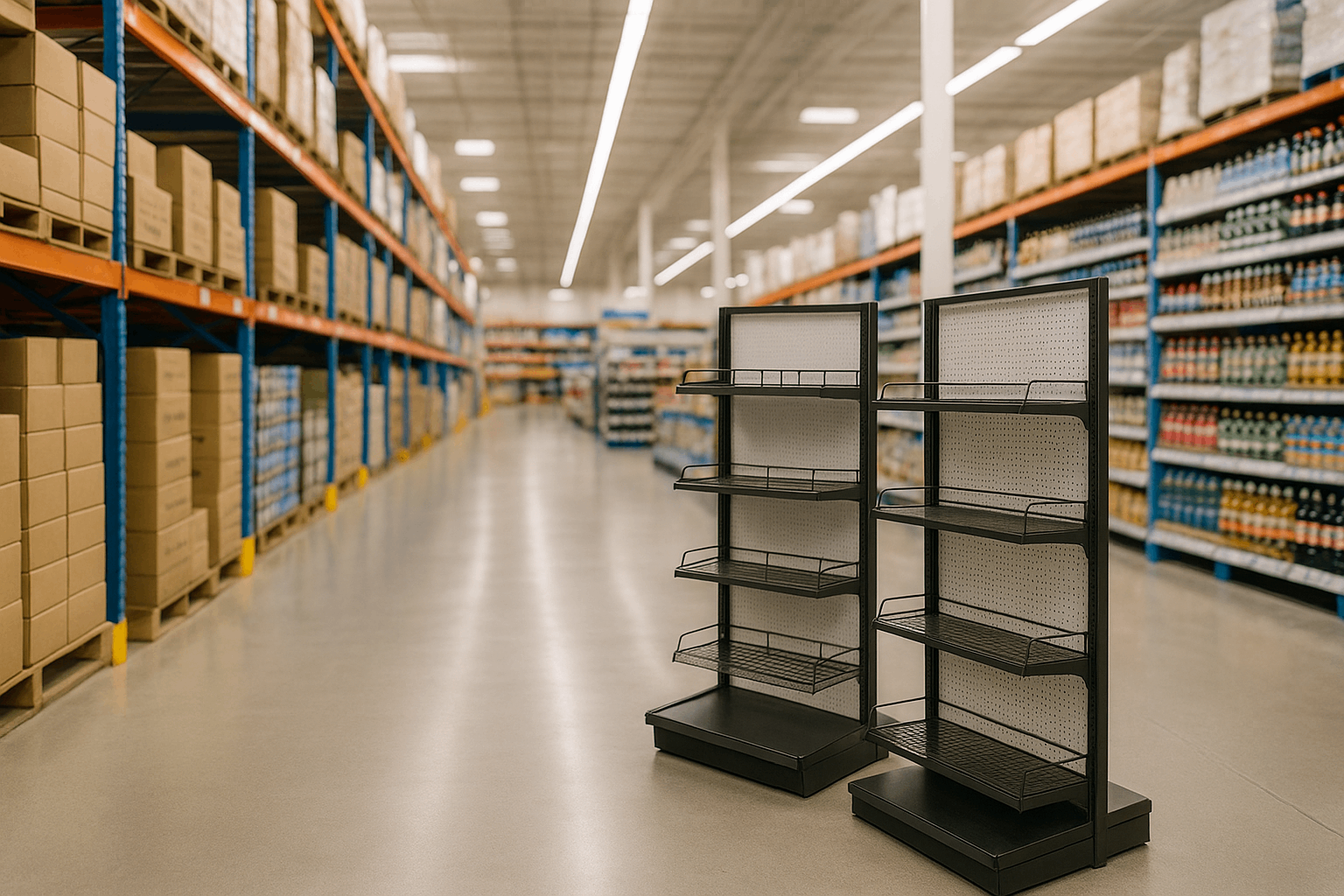
Big-box retailers remain one of the most influential channels for physical product distribution, shaping how shoppers discover, compare and purchase items across entire categories. For international wholesale buyers, these retailers represent more than volume—they represent an operational standard. Every decision you make about products, fixtures, packaging and supply-chain readiness impacts your ability to pass buyer reviews, minimize risk and scale programs.
This guide is written specifically for overseas wholesale buyers, importers and distributors who supply—or plan to supply—large-format retailers. It provides a practical, procurement-focused perspective on why big-box stores matter, how display execution affects buyer decisions and how manufacturing partners like Yishang Display support retail-ready programs through durable metal fixtures, compliant engineering and scalable production.
How Big-Box Stores Influence Shopper Discovery and Buyer Expectations
Foot Traffic, Sightlines and Why Displays Matter for Buyers
Big-box stores generate predictable customer circulation patterns. Shoppers follow wide main aisles into category zones, making product visibility a measurable advantage. But visibility does not depend on packaging alone—fixtures shape first impressions. A metal display rack that maintains consistent facings, elevates key SKUs and minimizes clutter improves both shopper navigation and category performance. What this means for buyers: fixture quality directly affects whether your product gets the attention it needs. When you present retail-ready metal displays that support clean facings and fast restocking, category managers view your proposal as lower risk and easier to execute.Retail Trust and the Power of Physical Validation
Shoppers assume that items stocked in big-box stores have passed quality screens. Retailers maintain this perception by raising expectations for structural safety, product durability and fixture performance. This places pressure on procurement teams to select manufacturers who can provide:- documented load testing
- welding and structural reinforcement standards
- corrosion resistance data
- finish adhesion reports
Why Big-Box Programs Offer Strategic Advantages for Wholesale Buyers
Long-Term Exposure Without Continuous Marketing Spend
In high-traffic environments, fixtures act as silent marketers. A stable, clean display system drives visibility without recurring advertising cost. This makes durable metal racks an investment—not an expense. Well-engineered fixtures increase the likelihood of:- gaining end-cap rotations
- sustaining visibility during promotional cycles
- improving category reset performance
Regional Tests Create Scalable Growth Opportunities
Retailers often use regional pilots to validate assortment, merchandising and operational performance. When pilots succeed, scaling can happen quickly—sometimes within a single quarter. To capitalize on this, buyers need suppliers who can:- increase production without quality drift
- maintain consistent welding and coating standards
- align lead times with retail rollout schedules
- prepare pallet-optimized packaging for large shipments
Retailer Validation Strengthens Negotiation Power
When one large retailer already accepts your program, it gives you leverage with others. Buyers can point to proven performance, strong fixture durability and measurable sell-through. Practical application: You’re not just selling a product. You’re selling a tested system—a combination of product line + engineered display—that has already succeeded under real retail conditions.Which Products Perform Best in Big-Box Retail?
Categories That Depend on Structured Presentation
Categories such as hardware, automotive accessories, tools, sports equipment and storage systems require more than packaging—they require clear merchandising architecture. Metal fixtures help buyers:- present multiple SKUs in logical vertical/horizontal sequences
- support heavy items safely
- highlight premium SKUs
- create clear segmentation within sub-categories
Products Compatible With Planograms and Retail Layout Constraints
Retailers rely on planograms to keep stores uniform. Products that integrate well into pegboard, shelf or end-cap layouts perform better and reduce room for errors. Wholesale buyers value suppliers who can produce fixtures that match:- peg spacing standards
- shelf width and depth tolerances
- sign holder requirements
- ADA aisle clearance rules
High-Replenishment Products with Predictable Demand Cycles
Fast-moving goods work best in big-box channels when manufacturers can support predictable replenishment. These programs require:- stable capacity
- consistent QC outputs
- repeatable fixture dimensions
- reliable coating adhesion over large batches
Why Merchandising and Display Engineering Should Influence Procurement
Fixture Quality as a Retail Acceptance Factor
Fixtures shape not only presentation but also operational efficiency. Big-box chains review fixtures for:- stability under load
- ease of restocking
- safety under customer handling
- compatibility with store equipment
Material Selection Based on Real Retail Conditions
Metal provides the structural reliability needed for high-traffic environments. When necessary, acrylic or wood elements can add premium appeal or brand warmth—but they must be engineered correctly. Considerations include:- metal tubing gauge for load capacity
- weld strength for push/pull impact
- powder-coating durability in cleaning cycles
- acrylic scratch resistance
Custom Fixtures That Support Retail Workflow
Modular, adjustable and easy-to-service displays reduce store labor. Buyers can present stronger proposals when they include:- adjustable shelf heights
- standardized hook spacing
- integrated label holders
- removable branding plates
Operational Requirements Buyers Must Evaluate Before Approving Suppliers
1. Production Stability and Scalability
Retailers expect repeatability. Factories must prove they can deliver consistent fixtures across thousands of units. Buyers should look for:- documented capacity plans
- bottleneck analysis
- stable defect rates
- multiple-stage QC checks
2. Packaging, Labeling and Palletization Compliance
Big-box retailers have strict requirements for:- GS1 barcode formats
- carton ECT ratings
- pallet size and height limits
- stack stability guidelines
- KD packaging efficiency
3. Documented Fixture Testing and Quality Assurance
Big-box chains expect evidence of durability and safety. Testing may include:- load-bearing verification
- impact resistance
- corrosion resistance (salt-spray hours)
- coating adhesion
4. Logistics Coordination and Forecast Alignment
Retail demand fluctuates. Suppliers must be able to partner with buyers on:- seasonal forecast alignment
- safety-stock planning
- container optimization
- lead-time transparency
How Yishang Display Strengthens Buyer Outcomes in Big-Box Programs
Custom Metal Fixtures Designed for Category Goals
Yishang Display helps buyers translate category strategies into engineered fixtures. Whether the goal is improved vertical blocking, stronger SKU storytelling or better weight distribution, custom metal displays are built to support real retail usage.Engineering Built for In-Store Realities
Fixtures must resist frequent customer contact and operational wear. Yishang Display focuses on:- reinforced welds
- high-tolerance bending accuracy
- durable powder-coating
- stable base geometry
Prototypes and Visual Tools That Improve Buyer Approval Rates
Procurement teams gain an advantage when they can show retailers exactly how fixtures will perform. Yishang Display provides:- 3D renderings
- prototypes
- assembly and compliance documentation
Preparing for the Future of Big-Box Retail
Sustainability as a Sourcing Requirement
Retailers increasingly evaluate fixtures on environmental impact. Metal’s recyclability and long service life make it a preferred material. Yishang Display supports sustainable sourcing through:- recyclable steel
- low-VOC powder coating
- material-efficient engineering
Modular Merchandising for Faster Category Resets
Retailers conduct multiple resets per year. Modular displays allow buyers to support seasonal shifts without redesigning entire systems. Standardized mounting points and adjustable components extend fixture life and reduce program cost.Displays Designed for Operational Efficiency
Retail operations teams value fixtures that:- simplify restocking
- reduce product damage
- maintain aisle clarity