
Introduction: The $4 Trillion Paradox — Why Physical Stores Are a Critical Asset (And How Your Displays Are Undermining It)
A defining paradox shapes the modern retail landscape. Although e-commerce dominates headlines, the physical store continues to drive the majority of retail sales.
Projections from Forrester indicate that brick-and-mortar locations will still command nearly 80% of global retail sales in 2025. Interestingly, digital-native Gen Z—despite growing up online—actively prefers the in-store shopping experience.
However, a troubling disconnect has emerged. Just as the strategic value of physical retail is reaffirmed, the quality of the in-store customer experience (CX) has noticeably declined.
This creates an urgent business problem we call the “Experience Gap”—the divide between the financial importance of physical stores and the subpar experiences they often deliver. Closing this gap is a critical objective for brands aiming to stay competitive.
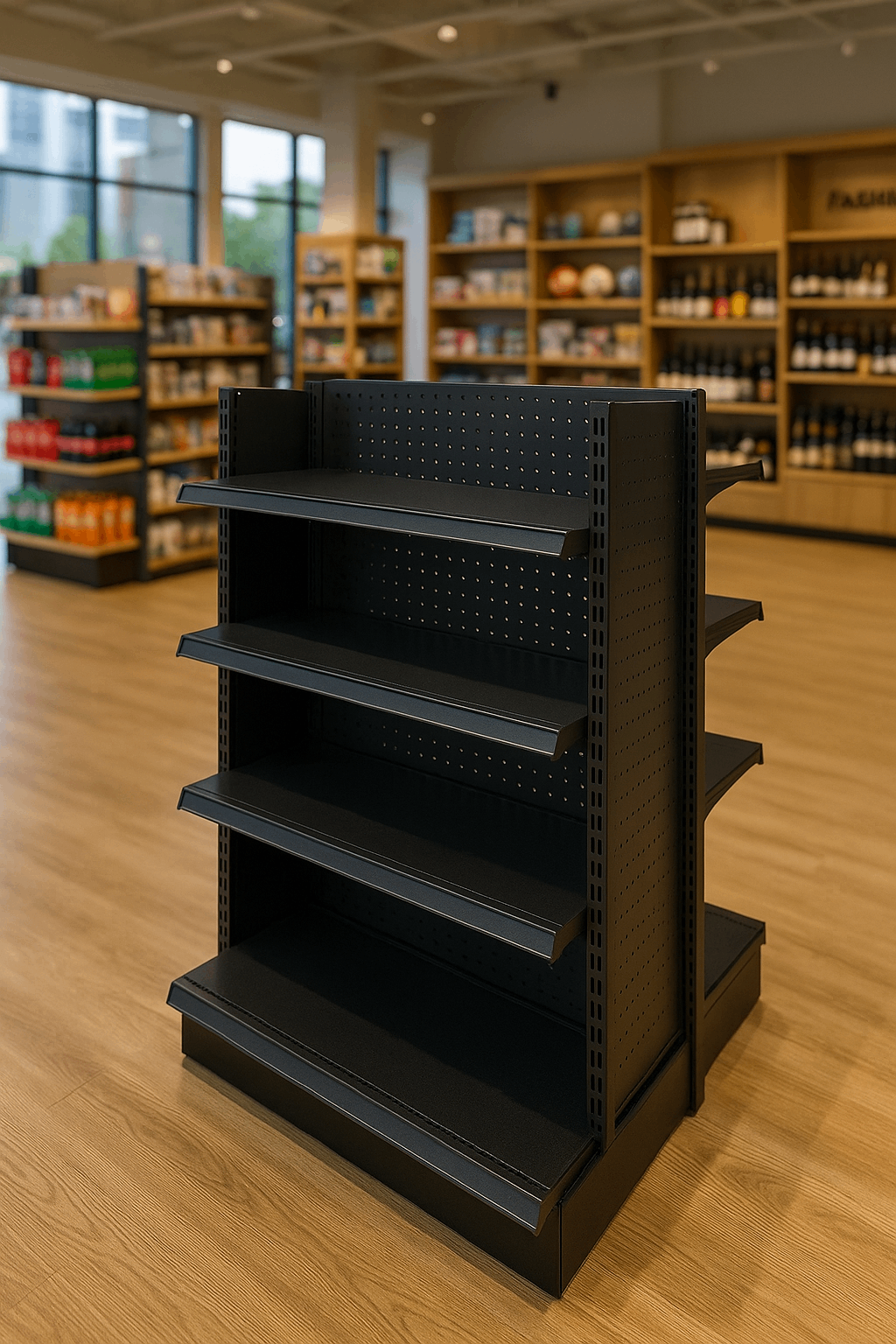
Retail displays, therefore, are no longer static product holders. Instead, they serve as engineered solutions to this challenge. These physical touchpoints transform brand strategy into tangible moments, creating the critical “First Moment of Truth” that turns a browser into a buyer.
Unlike trend articles, this guide is a manufacturer’s playbook tailored for procurement and brand leaders. It deconstructs shopper psychology and outlines the materials and engineering required for adaptable, modern displays. From modular display systems to customizable retail display solutions, this resource offers strategic value—especially for wholesale buyers seeking durable, high-performing in-store fixtures.
Most importantly, it provides a step-by-step process to execute a refresh with measurable return on investment (ROI), empowering decision-makers to invest with confidence.
Part 1: The Foundation — Decoding the Shopper’s Mind
Before specifying a single fixture, understanding the subconscious drivers of shopper behavior is essential. After all, visual merchandising is as much science as art. For procurement managers, this insight ensures that investments in physical displays are backed by strategies proven to drive sales.
A manufacturing partner like Yishang Display, who applies this knowledge, becomes more than just a vendor. They function as strategic collaborators offering display solutions for wholesale buyers.
The Unseen Forces of Store Flow
A shopper’s path through a store typically follows predictable patterns. Notably, retail science highlights the “invariant right”—the tendency of most shoppers to turn right upon entry and navigate in a counter-clockwise direction.
Additionally, the area immediately inside the entrance is known as the “transition zone.” Here, shoppers acclimate to the store environment. Therefore, placing key products in this zone often fails to drive engagement.
By understanding these patterns, brands can lay out stores intelligently, placing displays along natural shopper paths to maximize visibility and influence.
The ROI of Light
Lighting no longer serves purely functional purposes—it has become a quantifiable sales driver.
Research shows that a 1% increase in customer dwell time correlates to an average 1.3% increase in spending. Strategic lighting design plays a direct role in this uplift.
For example, a 2022 case study revealed that on-shelf LED lighting led to a 37% increase in unit sales and a 43% rise in dollar sales.
Moreover, lighting alters perception. Environments illuminated with high-quality LEDs are perceived as cleaner, and products appear fresher—shaping consumer perception of quality.
The Psychology of Touch and Texture
Engaging displays extend beyond visual appeal. The tactile experience they offer communicates brand values on a subconscious level.
For instance, the cool, smooth feel of brushed metal suggests modernity and durability—qualities that enhance consumer confidence.
Similarly, reclaimed wood’s rich grain evokes authenticity and craftsmanship. By encouraging tactile interaction, well-engineered displays convert casual observers into active participants.
The Digital Layer: Engineering for Interaction
Digital integration within displays is now a necessity. Yet successful execution requires more than sleek screens; it demands engineering foresight.
Important questions arise: How are digital elements securely mounted? How is cabling routed safely and invisibly? How can these components be serviced easily?
Yishang Display addresses these concerns with robust engineering. We embed technology directly into the physical structure, delivering reliable interactive point of sale displays that enhance shopper engagement without compromising durability.
Part 2: The Manufacturer’s Toolkit — Building Displays That Last and Adapt
Retail strategies need a physical infrastructure that can keep up. For wholesale buyers and procurement professionals, investing in adaptable, durable display systems is a long-term play.
Forward-thinking concepts demand high-performance foundations. And this is where a manufacturer’s engineering expertise delivers transformative value.
The Agile Advantage: Why Modular Metal Systems Are the Smartest Long-Term Investment
Retail calendars move fast—with seasonal launches and product promotions. Traditional, fixed fixtures often lack the flexibility to keep pace.
In contrast, modular display systems—particularly those made from metal—offer unmatched agility. These systems consist of interlocking parts that can be assembled, adjusted, and repurposed with ease.
Procurement managers benefit from significantly lower Total Cost of Ownership (TCO). Although initial costs may align with conventional fixtures, modular solutions yield long-term savings on materials, transport, and labor.
Furthermore, metal’s durability ensures core components perform reliably across multiple campaigns. This scalability supports global retail rollouts with consistent branding.
Material Intelligence: The Convergence of Durability and Sustainability
Modern consumers value sustainability, and display materials must reflect that.
Fortunately, metal fits this brief. Steel and aluminum are among the world’s most recycled materials, offering both strength and environmental credibility.
At Yishang Display, we supplement this with sustainable alternatives like bamboo, recyclable Re-board, and recycled acrylics. Our approach balances form and function, aligning aesthetic goals with eco-conscious standards.
Part 3: The Execution Playbook — A Step-by-Step Guide to a Flawless Refresh
A great strategy is only as good as its execution. Here’s how to plan and deliver a high-impact retail display update.
Step 1: The Audit — Diagnosing “Display Fatigue”
Outdated displays erode brand value. Before reimagining, auditing the current setup is essential.
Look for wear, visual inconsistency, or poor shopper flow. A detailed merchandising checklist provides structure for this evaluation.
Step 2: The Seasonal Sprint — A Manufacturer’s Timeline for Timely Themes
Timely execution is everything. Retail display planning should mirror product launch workflows:
- 90 Days Out: Finalize concept and materials.
- 60 Days Out: Build and prototype.
- 30 Days Out: Ship, install, and test.
This ensures seamless, stress-free seasonal execution.
Step 3: The Scorecard — A Modern Framework for Measuring ROI
Results matter. A structured KPI framework ensures display performance can be tracked and optimized.
| Metric Category | KPI | Measurement Method | Procurement Value |
|---|---|---|---|
| Engagement | Dwell Time | Video analytics or motion sensors | Links display to time spent and potential sales increase |
| Interaction Rate | Touchscreen activity, QR code scans | Validates investment in interactive features | |
| Traffic Flow | Heat Mapping | Visual data on shopper movement patterns | Informs layout decisions |
| Attribution | Direct Conversion | Tracking from interaction (e.g., QR code) to purchase | Demonstrates campaign-specific ROI |
Part 4: Blueprints for Success — Deconstructing Winning Displays
Let’s analyze proven concepts and the engineering behind them.
Blueprint #1: The Immersive Behemoth (Nike’s House of Innovation)
Nike’s flagship stores redefine experience. With app-based journeys and instant product customization, the physical space becomes interactive.
Manufacturer’s Insight: These environments require durable fixtures that support tech integration and handle high traffic—without compromising style.
Blueprint #2: The Shelf War (How CPG Giants Win at the Point of Purchase)
For CPG brands, retail success hinges on shelf presence. P&G’s “First Moment of Truth” strategy proves that milliseconds matter.
Manufacturer’s Insight: Execution at scale demands cost-effective, easy-to-assemble POP displays. Yishang’s custom metal retail displays ensure consistency across global campaigns.
Blueprint #3: The Agile Innovator (Boutique Impact Without the Budget)
Small spaces can still create massive impact. Creative design, vertical shelving, and accent walls can amplify presence.
Manufacturer’s Insight: Slim, wall-mounted fixtures combine aesthetics and efficiency—ideal for boutiques seeking custom solutions on a budget.
Conclusion: You Are the Architect of the In-Store Experience
In-store displays are no longer optional—they are core components of brand strategy.
As the physical store evolves into a hybrid experience hub, displays must become smarter, more adaptive, and more personal. Predictive, participatory, and performance-driven environments will define the next era of retail.
With Yishang Display, you gain more than a supplier. You gain a manufacturing partner with the engineering depth and global experience to help you build durable in-store displays for global brands.
Frequently Asked Questions (FAQ)
- How often should retail displays be updated? Minor refreshes should occur monthly. Major updates should follow seasonal schedules. Complete fixture overhauls are ideal every 3–5 years.
- What is the Rule of Three in merchandising? Grouping items in threes attracts the eye and creates visual balance. It’s a proven psychological principle.
- What types of retail displays are most common? Displays typically fall into four types: single-item, same-product, similar-product, and complementary-product groupings.
Ready to roll out your next retail display update? Yishang Display is here to help—contact us for a consultation today.