

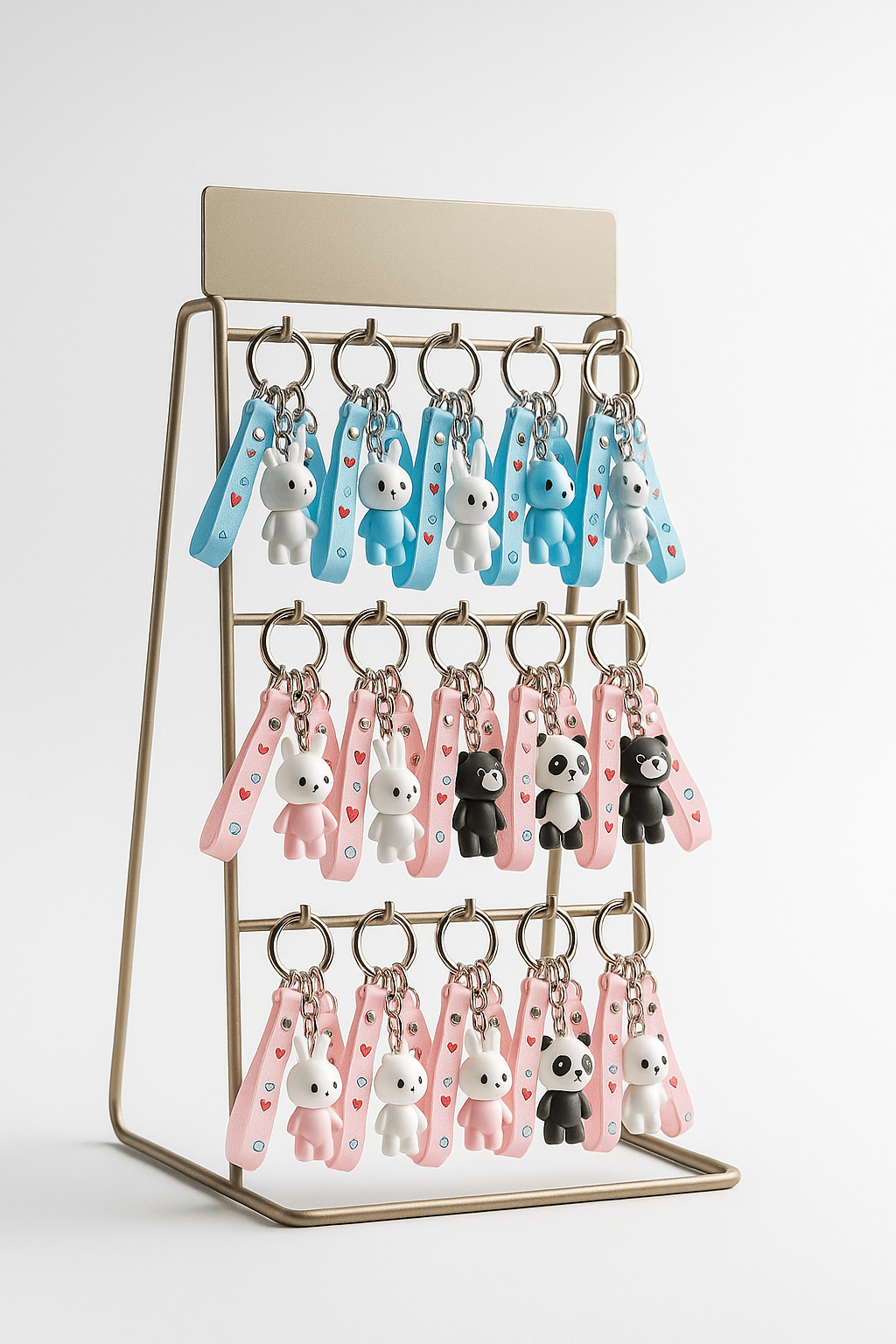
For international wholesalers, importers and large‑volume purchasing teams, a keychain display is not just a decorative stand for a shop. It is part of a selling system that needs to support clear keychain collection display, quick restocking and consistent execution across different regions and store formats.
Keychains are high‑mix, high‑turnover items. Many retail chains carry 80–200 SKUs at any time, often in limited space near checkout. Without a structured keychain display rack, stores quickly end up with cluttered hooks, mixed pricing and lost selling opportunities. A 4‑layer metal keychain display stand introduces vertical zoning and predictable positions for each SKU, making it easier for teams to follow planograms and maintain a clean, profitable impulse zone.
In the following sections, this article looks at the 4‑layer metal keychain rack from a B2B procurement perspective—focusing on construction, capacity, logistics, lifecycle cost and how the rack supports scalable merchandising programs rather than one‑off displays.
What Wholesale Buyers Prioritize in a Keychain Display Rack
Wholesale buyers review displays through a pragmatic lens. Their decision-making revolves around reliability, capacity, freight optimization and store‑level usability, not just appearance. The first priority is SKU organization and visual clarity, because messy displays reduce conversion and complicate replenishment. A 4‑layer structure distributes items across distinct levels, simplifying assortment planning and making it easier to maintain compliance across stores.
Another factor is structural lifespan. Displays in high‑traffic settings endure constant browsing, frequent restocking and repeated handling during seasonal resets. A rack must maintain shape under load and resist finish degradation. A failure in durability results in replacement costs, program disruption and lower store satisfaction.
Buyers also focus on operational efficiency: assembly speed, KD (knock‑down) packaging, pallet density and container utilization. When hundreds of units are deployed, even saving one minute during assembly or reducing carton volume by a small percentage can significantly influence total landed cost. A practical display rack must therefore combine merchandising versatility with logistical efficiency.
Product Overview: A 4‑Layer Metal Keychain Display Rack Built for Retail Efficiency
The 4‑layer keychain display rack is engineered as a high‑capacity, small‑footprint fixture ideal for retail chains, distributors and franchise programs. Its four-tier configuration creates structured zoning to support clear product segmentation while maximizing the number of SKUs displayed per vertical meter.
The open‑frame design ensures visibility from multiple angles, allowing customers to browse quickly without obstruction. Each tier accommodates diverse keychain styles—acrylic charms, metal rings, resin ornaments, plush pendants, PVC figures—making the rack suitable for mixed-product categories often seen in gift shops, souvenir stores or pop‑culture retailers.
Its compact dimensions allow the rack to be placed at checkout counters, gondola ends or promotional areas where impulse conversions are strongest. For wholesalers, this rack functions not only as a display but also as a practical, freight‑efficient solution that reduces storage volume and simplifies rollout across multiple locations.
Structural Design Breakdown: Engineering That Meets Wholesale Requirements
Metal Frame Construction
At the core of the rack is a welded steel structure designed to withstand the intensity of daily retail operations. Steel tubes with 1.0–1.5 mm wall thickness provide excellent rigidity while keeping the rack lightweight enough for cost‑effective shipping. The bending process maintains structural consistency, and welds at load‑bearing points ensure the rack remains stable even when fully loaded.
After fabrication, edges are smoothed to protect store staff during assembly. A durable powder‑coated or plated finish shields the surface from scratches and humidity. For retailers in tropical regions or high‑traffic entertainment venues, this coating prevents rusting and keeps the rack visually presentable over extended seasons.
Four‑Layer Hanging Rod Configuration
The four‑tier layout is engineered for optimized SKU presentation. With 80–120 mm of vertical spacing, each tier accommodates different keychain lengths without overlap. This separation is essential for chains carrying bulkier plush items or long acrylic pendants.
Rounded rods allow smooth sliding of keychain rings, reducing wear on product hardware. This detail matters when wholesalers manage licensed or collectible merchandise where maintaining product quality affects brand image.
From a merchandising perspective, the tiered layout supports repeatable planograms across store networks. Buyers can assign themes or price points per tier, such as highlighting new items at the top while dedicating mid‑tiers to best sellers.
Base Stability and Anti‑Tipping Design
The weighted base lowers the rack’s center of gravity, preventing tipping even when front‑loaded. Anti‑slip pads enhance stability on smooth countertops. For international rollouts, this reduces damage rates and minimizes store complaints.
Optional Header Panel for Branding
A removable header plate supports interchangeable branding. It allows distributors to localize messaging, add promotional artwork or adjust pricing without altering the hardware. For seasonal campaigns, this feature simplifies updates and protects long‑term fixture investment.
Material Options: Supporting Different Visual Directions
Metal provides load‑bearing strength, but supplementary materials enhance the rack’s visual adaptability. Acrylic components introduce a clean, transparent look beneficial for fashion and pop‑culture retailers. They keep focus on the merchandise while creating a modern aesthetic.
Wood or MDF headers suit lifestyle boutiques or eco‑themed stores seeking a warmer tone. When branding consistency is essential across multiple markets, mixed‑material racks allow wholesalers to align the display with store identity while preserving structural performance.
All material combinations are evaluated through three buyer priorities: durability, cost efficiency and packing performance.
Practical Merchandising and Rollout Strategies for Chain‑Store Programs
For multi‑store buyers, consistency is key. The 4‑layer rack creates a predictable framework that simplifies planogram creation. Many wholesalers allocate six positions per tier, enabling structured placement of up to 24 SKUs per rack. This prevents SKU overcrowding and helps stores maintain a clean visual standard.
Category‑based organization is another proven method. Retailers often dedicate tiers to themes such as anime franchises, travel souvenirs or seasonal assortments. This improves customer navigation and supports higher selling efficiency.
During store setup, fast assembly matters. KD packaging allows store associates to complete assembly in 3–5 minutes, reducing labor costs during large rollouts. This efficiency is particularly valuable for buyers supporting franchise chains or fast‑expanding retail networks.
Product Specifications
| Feature | Specification / Description |
|---|---|
| Structure | Four-tier horizontal display system |
| Main Material | Steel tube, approx. 1.0–1.5 mm wall thickness |
| Surface Finish | Powder coating or plating for rust and scratch resistance |
| Height Range | 350–550 mm (customizable) |
| Width Range | 200–350 mm for countertop efficiency |
| Layer Spacing | 80–120 mm for different keychain lengths |
| Load Capacity | Suitable for mixed loads of metal, acrylic, plush and PVC keychains |
| Base | Weighted metal base with anti-slip rubber feet |
| Assembly | Knock-down structure, minimal screws required |
| Net Weight | Optimized for single‑person handling |
| Packing | Protective wrap + inner box + master carton |
| Shipping Efficiency | Flat-packed for pallet and container optimization |
These specifications support procurement comparison and allow buyers to assess compatibility with existing store fixtures.
Quality, Testing and Durability: Built for Multi‑Season Retail Use
Durability directly affects a display’s lifecycle value. Stores expect fixtures to withstand heavy browsing and repeated restocking. To ensure long‑term usability, the rack can undergo static load tests where each tier is weighted to simulate real merchandising conditions.
Coating adhesion tests confirm resistance to scratches and peeling, especially in humid climates like Southeast Asia or coastal regions where humidity accelerates wear. Salt spray testing can also be performed for programs targeting tourist zones.
Consistency between production batches ensures repeatability across large‑volume orders. Uniform dimensions and finishes prevent mismatches in planograms and branded headers, maintaining professional store appearance.
Usage Scenarios Across Retail Channels
In independent gift shops, the rack becomes a multipurpose countertop unit that organizes novelty items and encourages impulse purchases. For anime, gaming and pop‑culture stores, each tier can represent different collections to support fan‑driven browsing.
Tourist retailers use the rack to categorize city‑specific keychains, landmarks and cultural icons. Meanwhile, convenience stores benefit from placing the rack near checkout, turning unused counter space into a high‑margin selling point.
For wholesalers managing diverse customers, a single standardized display helps maintain consistency across retail networks while simplifying supply planning.
Assembly, Packing and Shipping: Optimized for Overseas Procurement
For global buyers, freight efficiency is a major factor. The rack’s KD structure minimizes carton volume, helping maximize pallet density and reduce shipping cost per unit. Each component is packed flat, with protective buffers positioned at the most vulnerable areas.
Clear assembly guides reduce store‑level complexity. Even new staff can assemble the rack within minutes, which is essential for smooth rollout across many locations.
Master cartons are designed for stable pallet stacking, enabling accurate forecasting for full‑container loads and replenishment cycles.
Maintenance and Lifecycle Cost Considerations
The rack requires minimal upkeep. Routine wiping keeps the structure clean, and mild detergent can remove residues without damaging the finish.
Lifecycle cost advantages arise from structural stability and replaceable parts. If a single hanging rod is damaged, it can be replaced without discarding the entire display unit. This is a meaningful cost saver for multi‑store networks where minor damage is inevitable.
Wholesalers also value displays that remain functional across multiple product cycles. The metal structure supports year‑round assortment changes without requiring new hardware.
Key Sourcing Parameters for Wholesale Buyers
Beyond design and engineering, procurement teams look for clear sourcing details. Typical order discussions for this kind of metal keychain rack cover target order quantities, required delivery windows and preferred trade terms. A stable KD construction helps keep shipping volume low, which supports competitive landed cost in markets such as Europe, North America or the Middle East.
Because the rack is used in combination with changing keychain assortments, many buyers treat it as a long‑term fixture. They often plan hardware purchases in larger batches, then replenish only the keychains themselves. Clear specifications, sample review and, where needed, test reports give decision‑makers confidence that the display stand can support the full lifecycle of their program.
Sourcing FAQs: What Buyers Commonly Ask
How many pieces can each layer hold?
Depending on SKU thickness, each tier typically carries 20–40 keychains, supporting over 100 pieces per rack.
Is the rack strong enough for metal and plush items?
Yes. The welded steel frame supports mixed materials without deformation when loaded correctly.
Can the rack be customized according to our needs?
Dimensions, finishes, header panels and layer spacing can be adjusted to your specific program needs and keychain display ideas.
How long does assembly take?
Most users complete setup in 3–5 minutes, making it ideal for chain‑wide deployments.
What testing can be provided?
Static load, coating adhesion and salt spray tests can be conducted upon request.
Conclusion: A Reliable 4-Layer Metal Rack That Supports Your Retail Program
The 4‑layer metal keychain rack delivers high capacity, durability and operational efficiency — qualities that matter to global wholesalers managing large‑scale rollouts. With its stable construction, optimized packing and flexible merchandising potential, it provides a dependable foundation for any keychain display program.
If you are planning a new retail project or expanding an existing assortment, this rack can be customized according to your needs. Contact Yishang Display for tailored design support and detailed quotations.